Kirjahaku
Etsi kirjoja tekijän nimen, kirjan nimen tai ISBN:n perusteella.
1000 tulosta hakusanalla Judith Brough; Sherrell Bergmann; Larry Holt
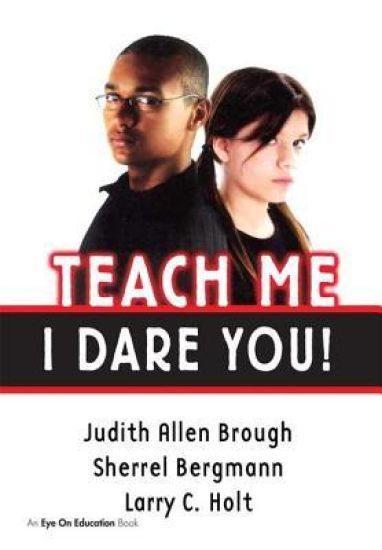
This book provides practical tools for educators who work with disenchanted and disengaged youths. It offers clear, research-based, and explicit strategies for motivating, connecting, and intervening with these students. The practical wisdom in this book demonstrates what you can do to connect these students to their schools and to a promising future.
Teach Me, I Dare You!
Judith Brough; Sherrell Bergmann; Larry Holt
Eye On Education, Inc
2006
nidottu
This book provides practical tools for educators who work with disenchanted and disengaged youths. It offers clear, research-based, and explicit strategies for motivating, connecting, and intervening with these students. The practical wisdom in this book demonstrates what you can do to connect these students to their schools and to a promising future.
In their new book, Bergmann and Brough provide a clear path to follow for helping your at-risk students achieve success in and out of the classroom. Packed with classroom-tested, practical strategies and lesson plans for teaching respect, responsibility, resilience, reading, and other essential skills to at-risk students, this is a must-have book for educators at all levels. Use the plans alone, or as part of a unit. Either way, the tools for success in this book will help you positively impact the lives of at-risk students every day. Each chapter is dedicated to a different skill and offers easy-to-implement activities and strategies based on achieving success in that essential skill. For example: Strategies for establishing positive peer relationships Cooperative treasure hunting for resilience building Keys to structured role-playing for conflict resolution Each chapter includes a component about what parents and caregivers can do to help their at-risk children achieve success, and provides a basis for effective communication between educator and parent, an important piece of the puzzle often overlooked.
This book shows you how to positively involve parents to raise student achievement. It offers 10 steps for designing a comprehensive parent involvement program to increase communication between students, parents, and schools. The authors offer practical strategies and activities for involving all parents, monitoring under-involved parents, balancing over-involved parents, and assisting parents in urgent situations.
This original book shows you how to understand and collaborate with the most difficult members of your staff. Tied together by real-world "success stories" about school change and succinct leadership tips, the practical advice in this book is supported by research and is presented in a conversational style.
This original book shows you how to understand and collaborate with the most difficult members of your staff. Tied together by real-world "success stories" about school change and succinct leadership tips, the parctical advice in this book is supported by research and is presented in a conversational style.
Teach My Kid- I Dare You!
Sherrell Bergmann; Judith Brough; David Shepard
Eye On Education, Inc
2008
nidottu
This book shows you how to positively involve parents to raise student achievement. It offers 10 steps for designing a comprehensive parent involvement program to increase communication between students, parents, and schools. The authors offer practical strategies and activities for involving all parents, monitoring under-involved parents, balancing over-involved parents, and assisting parents in urgent situations.
Reducing the Risk, Increasing the Promise
Sherrell Bergmann; Judith Brough
Eye On Education, Inc
2011
nidottu
In their new book, Bergmann and Brough provide a clear path to follow for helping your at-risk students achieve success in and out of the classroom. Packed with classroom-tested, practical strategies and lesson plans for teaching respect, responsibility, resilience, reading, and other essential skills to at-risk students, this is a must-have book for educators at all levels. Use the plans alone, or as part of a unit. Either way, the tools for success in this book will help you positively impact the lives of at-risk students every day. Each chapter is dedicated to a different skill and offers easy-to-implement activities and strategies based on achieving success in that essential skill. For example: Strategies for establishing positive peer relationships Cooperative treasure hunting for resilience building Keys to structured role-playing for conflict resolution Each chapter includes a component about what parents and caregivers can do to help their at-risk children achieve success, and provides a basis for effective communication between educator and parent, an important piece of the puzzle often overlooked.
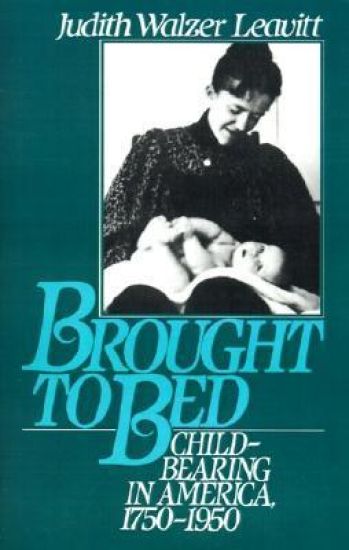
Based on personal accounts by birthing women and their medical attendants, Brought to Bed reveals how childbirth has changed from colonial times to the present. Judith Walzer Leavitt's study focuses on the traditional woman-centered home-birthing practices, their replacement by male doctors, and the movement from the home to the hospital. She explains that childbearing women and their physicians gradually changed birth places because they believed the increased medicalization would make giving birth safer and more comfortable. Ironically, because of infection, infant and maternal mortality did not immediately decline. She concludes that birthing women held considerable power in determining labor and delivery events as long as childbirth remained in the home. The move to the hospital in the twentieth century gave the medical profession the upper hand. Leavitt also discusses recent events in American obstetrics that illustrate how women have attempted to retrieve some of the traditional women--and family--centered aspects of childbirth. This 30th anniversary edition includes a new preface that discusses the writing of the history of childbirth over the past three decades.
Based on personal accounts by birthing women and their medical attendants, Brought to Bed reveals how childbirth has changed from colonial times to the present. Judith Walzer Leavitt's study focuses on the traditional woman-centered home-birthing practices, their replacement by male doctors, and the movement from the home to the hospital. She explains that childbearing women and their physicians gradually changed birth places because they believed the increased medicalization would make giving birth safer and more comfortable. Ironically, because of infection, infant and maternal mortality did not immediately decline. She concludes that birthing women held considerable power in determining labor and delivery events as long as childbirth remained in the home. The move to the hospital in the twentieth century gave the medical profession the upper hand. Leavitt also discusses recent events in American obstetrics that illustrate how women have attempted to retrieve some of the traditional women--and family--centered aspects of childbirth.
Just what IS a "Kissing Bough? Why do we love Santa Claus so much? Where do all those treasured customs and rituals come from? "The Kissing Bough is a wonderful collection of stories that explore the meaning of the holiday season. Some of the stories remind us why the spirit of Christmas is so important to families. Other stories remind us that human nature is what it is, no matter what the holiday says it should be! Long buried secrets will out. Murder happens even during this time of good cheer. Envy, jealousy and loneliness will rub shoulders with seasonal feelings of good will and brotherly love. "The Kissing Bough gives the reader insight into the ancient customs and traditions that make modern day Christmas what it is. For its annual publication, The Queens Writers Group has selected twelve of its most engaging and diverse stories. Coming from all walks of life, the group is centered in Charlotte, North Carolina.
Judith is Volume 40 in the acclaimed anchor Bible series of new book-by-book translations of the Old and New Testaments and Apocrypha. In the Apocrypha, Judith is the saint who murdered for her people. She offered herself to Holofernes, the Assyrian general sent by Nebuchadnezzar to destroy the Israelites. After she had charmed Holofernes with flattery and drink, Judith chopped of his head while he lay in a drunken stupor, thereby leaving his troops “headless” and in a state of total panic and confusion. Her victory was celebrated in song and brought peace to her land for years to come. In his illuminating new translation and commentary, Carey A. Moore considers the historicity of the story and explores the author’s true intent: Was it to describe actual events or to compose a fictitious story of other purposes? Was his concern more historical or theological? The story of Judith abounds in ironies. There is Judith, the beautiful woman who lived a stark, celibate existence after her husband’s death had left her a wealthy widow. Born into a sexist society with rigidly defined roles, Judith better “played the man” than did any of her male compatriots. There is Holofernes, the Assyrian conqueror, unable to defeat a small Israelite village after dozens of countries had fallen under his sword. Intent on seducing Judith, Holofernes instead lost his head to her. Perhaps the ultimate irony of all is the story of Judith itself: the timeless tale of a deeply religious woman who became revered not for her poverty but for an act of murder. Dr. Moore’s study of the canonicity of Judith brings perspective to the story’s varied acceptance among both Jews and Christians. It also notes the similarity between this work and the equally popular story of Esther; each woman, through different means, served her people through acts of bravery. The photographs and maps illustrating Judith include depictions of the story of Judith by such masters as Machiavelli, Botticelli, Caravaggio, and Donatello.
The 1960s was a time when Australia was changing and the old ways were being left behind. At 21 Judith is ready to conquer the world, she has a new job working for the government, and a new life ahead of her that will test her resolve. Moving to the city will take her from naive romantic notions and the protection of small town living to discovering that around the corner life's twists and turns carry you along paths you never anticipated. The communist movement is looking for converts to infiltrate the government. Will they draw her in? Women are living and loving more freely. Will she ignore the promises she made and allow the lure of this new life to change her? Will she find romance or tragedy? What will her family think if she tells them? She will need wisdom, courage and faith for the journey as the road to independence always comes at a price.
Judith tells the story of a beautiful Jewish woman who enters the tent of an invading general, gets him drunk, and then slices off his head, thus saving her village and Jerusalem. This short novella was somewhat surprisingly included in the early Christian versions of the Old Testament and has played an important role in the Western tradition ever since. This commentary provides a detailed analysis of the text's composition and its meaning in its original historical context, and thoroughly surveys the history of Judith scholarship. Lawrence M. Wills not only considers Judith's relation to earlier biblical texts--how the author played upon previous biblical motifs and interpreted important biblical passages--but also addresses the rise of Judith and other Jewish novellas in the context of ancient Near Eastern and Greek literature, as well as their relation to cross-cultural folk motifs. Because of the popularity of Judith in art and culture, this volume also addresses the book's history of interpretation in paintings, sculpture, music, drama, and literature. A number of images of artistic depictions of Judith are included and discussed in detail.
2023 Catholic Media Association First Place Award, Scripture – Academic Studies The striking scene of Judith cutting off Holofernes’s head with his own sword in his own bed has inspired the imaginations of readers for millennia. But there is more to her story than just this climactic act and more to her character than just beauty and violence. This volume offers a comprehensive examination of gender ideologies in the book of Judith, from the hyper-masculine machinations of war and empire to the dynamics of class in Judith’s relationship with her enslaved handmaid. Overall, this commentary investigates the book of Judith through a feminist lens, informed by critical masculinity studies, queer theory, and reception criticism.
Judith
University of Exeter Press
1997
nidottu
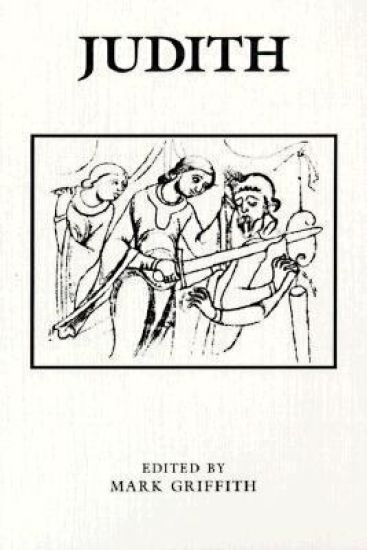
Undergraduates frequently find the fine Old English poem JUDITH the most stimulating of the surviving texts from the Anglo-Saxon period. In the past thirty years it has attracted a wide range of literary criticism both in the UK and the US. Feminist critics of English literature have been particularly interested by the ways in which the poet has adapted the traditional masculine heroic ethos of Old English poetry to a story figuring a violently active female protagonist.Yet there is no available edition of Judith which is either comprehensive or up to date, or which at all explains how and why the poem is worthy of our attention. This new edition aims to fill this gap. It includes a full Introduction and commentary by the editor, plus a comprehensive glossary, bibliography and appendices.
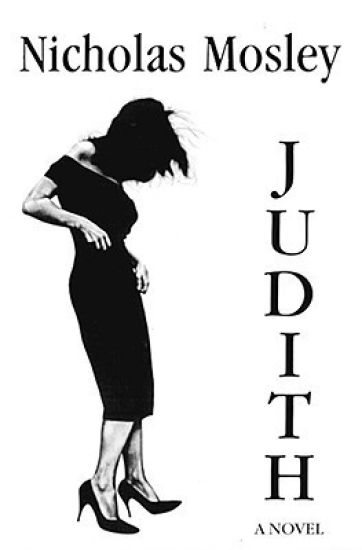
Judith is an aspiring young actress and the mistress of a writer on a popular satirical magazine. We learn of her involvement with drugs and increasing self-delusion. After a crack-up, she seeks healing in an Indian ashram run by an eccentric and possibly mad guru. But what is at the back of appearances; how calculated is the self-destructiveness from which a new order might emerge?