

Kirjahaku
Etsi kirjoja tekijän nimen, kirjan nimen tai ISBN:n perusteella.
1000 tulosta hakusanalla Judith Byron Schachner
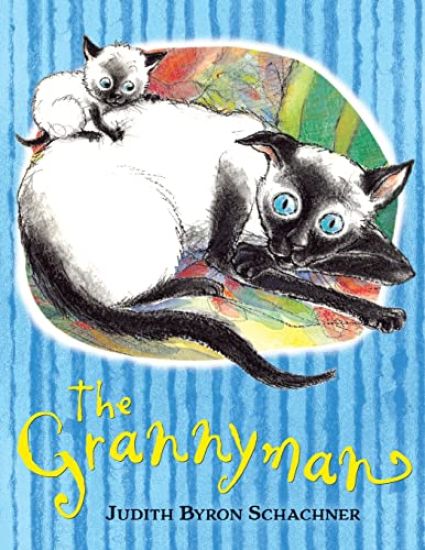
Simon is an old cat. His family adores him and they do everything they can to keep him comfortable. After a full life of chasing butterflies, pruning houseplants and playing the piano, he now feels useless. Then one day his family drops something soft and small on this tummy. A kitten There is much the kitten needs to learn about the world. Suddenly Simon has lots to do Judith Byron Schachner pays homage to one special, very old feline in a book for anyone who has lived with and loved a cat. She is the bestselling author of Skippyjon Jones, Mr. Emerson's Cook and bits & pieces.
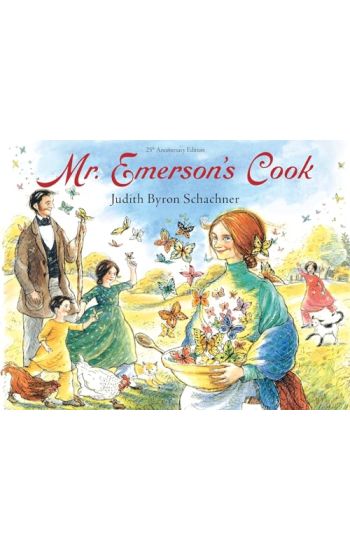
Your work should be in praise of what you love. -Ralph Waldo EmersonWhen Annie Burns, newly arrived from Ireland, takes a job as cook to Mr. Ralph Waldo Emerson, it is almost more than she can manage. For the brilliant Mr. Emerson is not interested at all in the food she makes. This poet prefers the warm colors of the sunset to a warm bowl of soup, and he professes to live by imagination alone.Annie is afraid she will fail in her job. But she solves her dilemma by taking inspiration from the great man himself. It is only when she lets loose her own poetic imagination that she achieves the success Mr. Emerson writes about so stirringly.This story, which weaves fact and fiction, is as rich and satisfying as the warm apple pie that Annie cooks. With lyrical language that begs to be read aloud and illustrations full of whimsy and warmth, this book extols not only the extraordinary Mr. Emerson but the power of imagination to find the magic in a starry night and the sunshine in a cook's creations. Young readers will want to explore again and again Mr. Emerson's world as portrayed in the heartfelt book. Judith Byron Schachner is the great-granddaughter of Annie Burns Byron, Ralph Waldo Emerson's cook. She is the author and illustrator of The Grannyman, bits & pieces, and the Skippyjon Jones series. Ms. Schachner lives with her family in Pennsylvania.
Adapted from Judith Byron Schachner's acclaimed book of the same name Yo Vikings! is the mini-saga of 10-year-old Emma Katz the fiercest Viking in Swarthmore PA and her quest for real adventure. Yo Vikings! combines sweeping melodies thrilling Viking chants and funky rock 'n roll with a beautiful heart-warming story to engage and excite every member of the family.
Takes a scholarly approach to bring Denon to life and to the attention of contemporary readers. To make his acquaintance is to recapture the aristocracy and the world of art and letters at the turn of the 19th century in several European capitals.
Empath: Guide: This Books Includes: Empath and Enneagram
Judith Guise; Ian Ian Baron
Independently Published
2018
nidottu
Keys to the Elementary Classroom
Moran Carrol E.; Judith C Stobbe; Baron Wendy E.; Miller Janette; Moir Ellen R.
SAGE Publications Inc
2008
nidottu
Best practices to help you start the school year in a powerful way! This updated edition of the bestseller, Keys to the Classroom, provides new teachers with strategies for establishing clear classroom procedures and building a foundation for a successful first year. Readers will find a practical, easy-to-use guidebook that includes lesson plans, tips for organizing the first day, and sample parent letters in English and Spanish. The third edition features: - An added chapter on planning and creating the classroom environment - Voices of novice and experienced teachers - Updated assessment materials - Revised instructional materials for English as a second language - New classroom activities
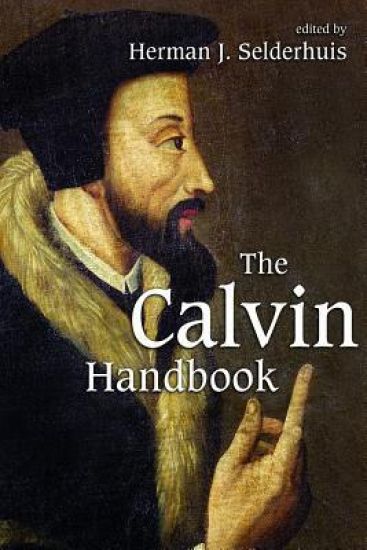
The Calvin Handbook
Herman J. (EDT) Selderhuis; Henry J. (TRN) Baron; Judith J. (TRN) Guder
William B Eerdmans Publishing Co
2009
pokkari
Research on French theologian John Calvin is flourishing around the world, and his quincentennial in 2009 has given such research even greater momentum. Designed to support and stimulate this research, The Calvin Handbook gathers contributions from internationally renowned scholars. Offering a comprehensive view of Calvin's life, his theology, and the history of his reception, this handbook is a uniquely helpful resource on Calvin for readers of every interest level.

Judith is Volume 40 in the acclaimed anchor Bible series of new book-by-book translations of the Old and New Testaments and Apocrypha. In the Apocrypha, Judith is the saint who murdered for her people. She offered herself to Holofernes, the Assyrian general sent by Nebuchadnezzar to destroy the Israelites. After she had charmed Holofernes with flattery and drink, Judith chopped of his head while he lay in a drunken stupor, thereby leaving his troops “headless” and in a state of total panic and confusion. Her victory was celebrated in song and brought peace to her land for years to come. In his illuminating new translation and commentary, Carey A. Moore considers the historicity of the story and explores the author’s true intent: Was it to describe actual events or to compose a fictitious story of other purposes? Was his concern more historical or theological? The story of Judith abounds in ironies. There is Judith, the beautiful woman who lived a stark, celibate existence after her husband’s death had left her a wealthy widow. Born into a sexist society with rigidly defined roles, Judith better “played the man” than did any of her male compatriots. There is Holofernes, the Assyrian conqueror, unable to defeat a small Israelite village after dozens of countries had fallen under his sword. Intent on seducing Judith, Holofernes instead lost his head to her. Perhaps the ultimate irony of all is the story of Judith itself: the timeless tale of a deeply religious woman who became revered not for her poverty but for an act of murder. Dr. Moore’s study of the canonicity of Judith brings perspective to the story’s varied acceptance among both Jews and Christians. It also notes the similarity between this work and the equally popular story of Esther; each woman, through different means, served her people through acts of bravery. The photographs and maps illustrating Judith include depictions of the story of Judith by such masters as Machiavelli, Botticelli, Caravaggio, and Donatello.

The 1960s was a time when Australia was changing and the old ways were being left behind. At 21 Judith is ready to conquer the world, she has a new job working for the government, and a new life ahead of her that will test her resolve. Moving to the city will take her from naive romantic notions and the protection of small town living to discovering that around the corner life's twists and turns carry you along paths you never anticipated. The communist movement is looking for converts to infiltrate the government. Will they draw her in? Women are living and loving more freely. Will she ignore the promises she made and allow the lure of this new life to change her? Will she find romance or tragedy? What will her family think if she tells them? She will need wisdom, courage and faith for the journey as the road to independence always comes at a price.
Judith tells the story of a beautiful Jewish woman who enters the tent of an invading general, gets him drunk, and then slices off his head, thus saving her village and Jerusalem. This short novella was somewhat surprisingly included in the early Christian versions of the Old Testament and has played an important role in the Western tradition ever since. This commentary provides a detailed analysis of the text's composition and its meaning in its original historical context, and thoroughly surveys the history of Judith scholarship. Lawrence M. Wills not only considers Judith's relation to earlier biblical texts--how the author played upon previous biblical motifs and interpreted important biblical passages--but also addresses the rise of Judith and other Jewish novellas in the context of ancient Near Eastern and Greek literature, as well as their relation to cross-cultural folk motifs. Because of the popularity of Judith in art and culture, this volume also addresses the book's history of interpretation in paintings, sculpture, music, drama, and literature. A number of images of artistic depictions of Judith are included and discussed in detail.

2023 Catholic Media Association First Place Award, Scripture – Academic Studies The striking scene of Judith cutting off Holofernes’s head with his own sword in his own bed has inspired the imaginations of readers for millennia. But there is more to her story than just this climactic act and more to her character than just beauty and violence. This volume offers a comprehensive examination of gender ideologies in the book of Judith, from the hyper-masculine machinations of war and empire to the dynamics of class in Judith’s relationship with her enslaved handmaid. Overall, this commentary investigates the book of Judith through a feminist lens, informed by critical masculinity studies, queer theory, and reception criticism.
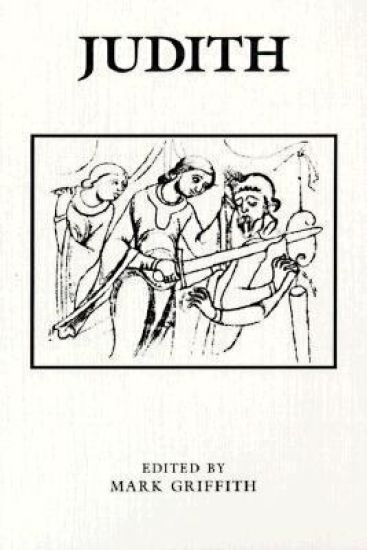
Judith
University of Exeter Press
1997
nidottu
Undergraduates frequently find the fine Old English poem JUDITH the most stimulating of the surviving texts from the Anglo-Saxon period. In the past thirty years it has attracted a wide range of literary criticism both in the UK and the US. Feminist critics of English literature have been particularly interested by the ways in which the poet has adapted the traditional masculine heroic ethos of Old English poetry to a story figuring a violently active female protagonist.Yet there is no available edition of Judith which is either comprehensive or up to date, or which at all explains how and why the poem is worthy of our attention. This new edition aims to fill this gap. It includes a full Introduction and commentary by the editor, plus a comprehensive glossary, bibliography and appendices.
Judith is an aspiring young actress and the mistress of a writer on a popular satirical magazine. We learn of her involvement with drugs and increasing self-delusion. After a crack-up, she seeks healing in an Indian ashram run by an eccentric and possibly mad guru. But what is at the back of appearances; how calculated is the self-destructiveness from which a new order might emerge?
The 18th century was a wealth of knowledge, exploration and rapidly growing technology and expanding record-keeping made possible by advances in the printing press. In its determination to preserve the century of revolution, Gale initiated a revolution of its own: digitization of epic proportions to preserve these invaluable works in the largest archive of its kind. Now for the first time these high-quality digital copies of original 18th century manuscripts are available in print, making them highly accessible to libraries, undergraduate students, and independent scholars.Western literary study flows out of eighteenth-century works by Alexander Pope, Daniel Defoe, Henry Fielding, Frances Burney, Denis Diderot, Johann Gottfried Herder, Johann Wolfgang von Goethe, and others. Experience the birth of the modern novel, or compare the development of language using dictionaries and grammar discourses. ++++The below data was compiled from various identification fields in the bibliographic record of this title. This data is provided as an additional tool in helping to insure edition identification: ++++British LibraryT109299W- H- = William Huggins. Libretto only, in verse.London: printed in the year, 1733. 29, 1]p., plate; 8

