Kirjahaku
Etsi kirjoja tekijän nimen, kirjan nimen tai ISBN:n perusteella.
1000 tulosta hakusanalla Judith E. Harper
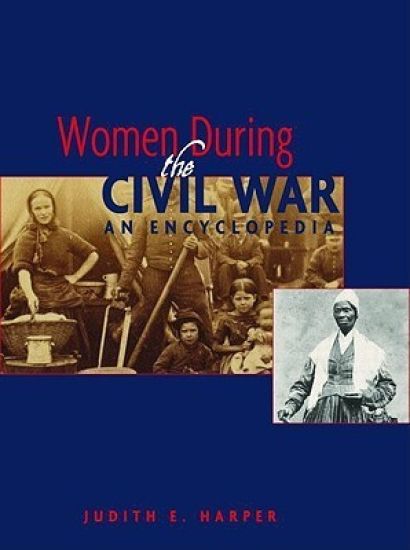
For more information, including a full list of entries, a generous selection of sample entries, and more, visit the Women During the Civil War website.Women During theCivil War: An Encyclopedia is the first A-Z reference work to offer a panoramic presentation of the contributions, achievements, and personal stories of American women during one of the most turbulent eras of the nation's history. Incorporating the most recent scholarship as well as excerpts from diaries, letters, newspapers, and other primary source documents, this Encyclopedia encompasses the wartime experiences of famous and lesser-known women of all ethnic groups and social backgrounds throughout the United States during the Civil War era.
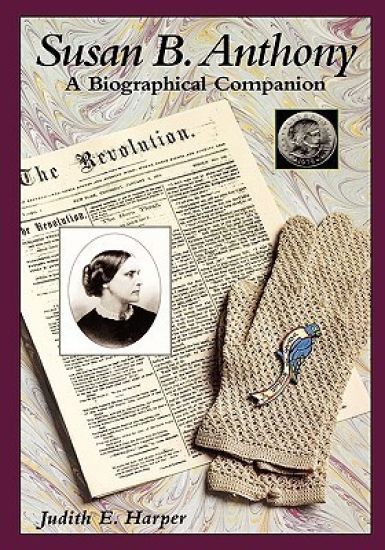
Universally acknowledged as one of the most prolific activists of the 19th century, Susan B. Anthony devoted most of her adult life to humanitarian reform. She was an integral player in nearly every social reform movement of her time, including temperance, women's suffrage, and abolitionism.The publication of Susan B. Anthony: A Biographical Companion coincides with the 150th anniversary of the women's rights movement in the United States. More than 100 entries cover the significant events, people, publications, movements, and organizations associated with Anthony, and each entry describes the topic in historical context.More than 100 entries cover the significant events, people, publications, movements, and organizations associated with Susan B. Anthony
A thorough, illustrated biography discussing the childhood, career, family, and term of Andrew Johnson, seventeenth president of the United States. Includes a table of contents, time line, phonetic glossary, sources for further research, an index, and detailed captions and sidebars to aid in comprehension.
I am Nnena, a young woman living in a world that has always felt too small for the powerful gift I possess. For years, I have struggled to understand the strange abilities that lie dormant within me, and I have lived in fear of the consequences that they might bring. My life is turned upside down when I uncover a secret buried deep within my lineage-a secret that reveals me to be the "Gifted One," destined to wield powers that could shape the very fabric of reality. I soon realize that my gift is not just a blessing but a heavy responsibility. I am pulled into an ancient conflict between forces that seek to control or destroy the power that flows through me. With the help of Ekene, my trusted ally, I embark on a journey to uncover the truth about my heritage, confronting dangerous enemies who are willing to stop at nothing to harness my abilities for their own gain. I find myself drawn to a forgotten temple, hidden deep within a treacherous forest, where the answers I seek lie waiting. Inside the temple, I meet figures who reveal the ancient forces at play and the dark history that has led to this moment. They tell me that I was chosen long ago to wield this power, and now I must decide whether I will embrace my destiny or let it slip away forever. I face a harrowing choice, torn between the fear of my power and the potential it holds to change the world. The fear of what I could become overwhelms me, but I realize that this is my birthright and my responsibility. I can no longer hide from who I am. With newfound courage, I choose to embrace the power within me, knowing that the path ahead will be fraught with danger ii and uncertainty. I step into the role I was always meant to play, ready to face the storm that is coming. I now understand that my power is not just a tool for destruction, but for creation. It is a force that, if controlled, can reshape the world for the better. As I prepare for the challenges ahead, I know one thing for certain: I will stand strong, unshaken, and ready to face whatever comes my way.
I am Amara, a woman who has spent most of her life building walls around her heart, afraid to truly let anyone in. I have always been cautious about love, choosing to protect myself from the vulnerability that comes with giving my heart to another person. When Efe entered my life, he seemed to be the one who could break those walls down, but I quickly discovered that love, for all its beauty, also carries pain and betrayal. I had my heart broken by Efe, a man I trusted deeply. I never expected to find myself in a relationship where deception and hurt became the foundation. I confronted him about his lies, and while he begged for forgiveness, I struggled to find the courage to believe in him again. The betrayal left me questioning everything I thought I knew about love and trust. I couldn't ignore the deep emotional conflict that brewed within me. I wanted to walk away, to protect myself from the hurt, but at the same time, I felt a part of me still loved him. I couldn't bring myself to completely close the door on what we once had, even though the scars of his betrayal ran deep. It was a constant battle between my heart and my mind, between wanting to move on and the lingering hope that we could rebuild. I found myself at a crossroads, unsure of how to move forward. I wondered if forgiveness was truly possible or if it would only lead to more heartache. I couldn't ignore the fear that giving him another chance might lead me down the same painful path. But I also couldn't deny the possibility of healing, of working through the hurt together, and finding a way back to each other. I began to understand that love isn't always perfect. It isn't just about grand gestures and happy moments; it's about learning to navigate the imperfections, the mistakes, and the disappointments. As I started to open my heart again, I realized that forgiveness wasn't a simple decision-it was a ii process, a willingness to take the first step toward healing. I chose to give Efe another chance, not because I was certain everything would work out, but because I believed in the possibility of growth, both individually and together. We slowly started rebuilding our relationship, piece by piece, learning from the mistakes we had made. It wasn't easy, and at times, it felt like we were moving in circles, but I couldn't ignore the quiet hope that things could be different. I came to understand that trust takes time to rebuild. I had to be patient with Efe, just as I had to be patient with myself. There were moments of doubt, moments where I wondered if we were making a mistake, but I chose to believe in the power of second chances, in the possibility of a love that could heal and grow stronger through adversity. I saw the changes in Efe, his commitment to proving that he was capable of change. It wasn't an overnight transformation, but it was real. I began to see him not as the man who betrayed me but as the man who was willing to make things right. In his eyes, I saw a glimpse of the love that had drawn me to him in the first place, and it was enough to reignite the spark within me. I realized that love is not just about the happy moments, but about how you handle the difficult ones. It's about facing the challenges head-on, not running away from them. I had once believed that love meant everything would always be perfect, but now I understood that true love is about growing together, through the good and the bad. I grew stronger through the process of forgiveness, both for Efe and for myself. I learned that healing doesn't mean forgetting; it means learning to live with the scars and choosing to love despite them. I found peace in the knowledge that we were not perfect, but we were trying, and that was enough. I look toward the future with hope, knowing that no relationship is without its struggles.
LMS Integration
Judith E Liskin-Gasparro; Paloma Lapuerta; Elizabeth Guzman; Estate of Matilde Olivella de Castells
PEARSON EDUCATION (US)
2016
lisenssiavain
The 19th-century Italian singing teacher Giovanni Battista Lamperti once wrote, "'Know thyself' applies to the singer more than to other professions, because to sing well, body, soul, and mind are tuned together." Yoga, with its focus on connecting mind, body, and soul, is a tool that can greatly enhance the art of singing in this very way. In Yoga for Singing, author Judith Carman outlines the many connections between the two arts, presenting a systematic approach to yoga practices to support the development of singing technique as well as to lay a foundation for confident performance and a long and healthy singing career. She demonstrates how closely practices such as physical postures, breathing practices, and deep relaxation techniques match the needs of singers. Included in the book and its extensive companion website are copious illustrations and specific exercises designed to be used by singers and voice teachers, regardless of their level of experience with yoga. With a unique take on technique and performance improvement, this book is an excellent resource for both vocal students and professionals at any stage of their career.
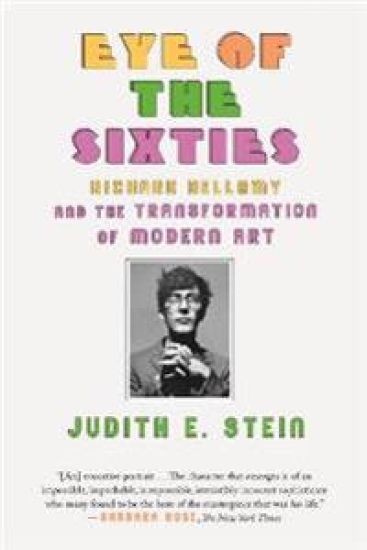
A man with a preternatural ability to find emerging artists, Richard Bellamy was one of the first advocates of pop art, minimalism, and conceptual art. The founder and director of the fabled Green Gallery on Fifty-Seventh Street, this witty, poetry-loving art aficionado became a legend of the avant-garde, showing the work of artists such as Mark di Suvero, Claes Oldenburg, James Rosenquist, Donald Judd, and others. Born to an American father and a Chinese mother in a Cincinnati suburb, Bellamy moved to New York and made a life for himself between the Beat orbits of Provincetown and white-glove events such as the Guggenheim's opening gala. He partied with Norman Mailer, was friends with Diane Arbus and Yoko Ono, and frequently hosted or performed in Allan Kaprow's happenings. Always more concerned with art than with making a profit, Bellamy withdrew when the market mushroomed around him, letting his contemporaries and friends, such as Leo Castelli and Sidney Janis, capitalize on the stars he first discovered. Bellamy's life story is a fascinating window into the transformation of art in the late twentieth century.
Gender Development
Judith E. Owen Blakemore; Sheri A. Berenbaum; Lynn S. Liben
Psychology Press Ltd
2014
nidottu
This text offers a unique developmental focus on gender. Gender development is examined from infancy through adolescence, integrating biological, socialization, and cognitive perspectives. The book’s current empirical focus is complemented by a lively and readable style that includes anecdotes about children’s everyday experiences. The book’s accessibility is further enhanced with the use of bold face to highlight key terms when first introduced along with a complete glossary of these terms. All three of the authors are respected researchers in divergent areas of children’s gender role development and each of them teaches a course on the topic. The book’s primary focus is on gender role behaviors – how they develop and the roles biological and experiential factors play in their development. The first section of the text introduces the field and outlines its history. Part 2 focuses on the differences between the sexes, including the biology of sex and the latest research on behavioral sex differences, including motor and cognitive behaviors and personality and social behaviors. Contemporary theoretical perspectives on gender development – biological, social and environmental, and cognitive approaches – are explored in Part 3 along with the research supporting these models. The social agents of gender development, including children themselves, family, peers, the media, and schools are addressed in the final part.Cutting-edge and comprehensive, this is the perfect text for those who have been searching for an advanced undergraduate and/or graduate book for courses in gender development, the psychology of sex roles and/or gender and/or women or men, taught in departments of psychology, human development, and educational psychology. Although chapters have been designed to be read sequentially, a full author citation is included the first time a reference is used within an individual chapter rather than only the first time it is used in the book, making it easy to assign chapters in a variety of orders. This referencing system will also appeal to scholars interested in using the book as a resource to review a particular content area.
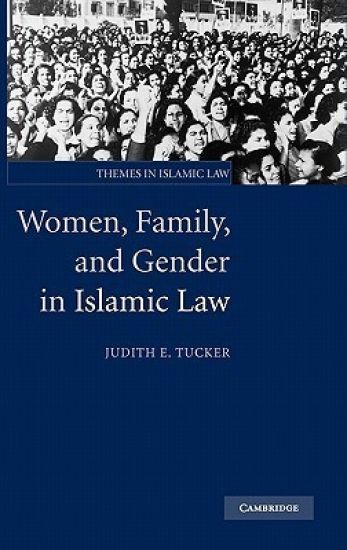
In an rewarding new study, Tucker explores the way in which Islamic legal thinkers understood Islam as it related to women and gender roles. In seventeenth and eighteenth century Syria and Palestine, Muslim legal thinkers gave considerable attention to women's roles in society, and Tucker shows how fatwas, or legal opinions, greatly influenced these roles. She challenges prevailing views on Islam and gender, revealing Islamic law to have been more fluid and flexible than previously thought. Although the legal system had a consistent patriarchal orientation, it was modulated by sensitivities to the practical needs of women, men, and children. In her comprehensive overview of a field long neglected by scholars, Tucker deepens our understanding of how societies, including our own, construct gender roles.
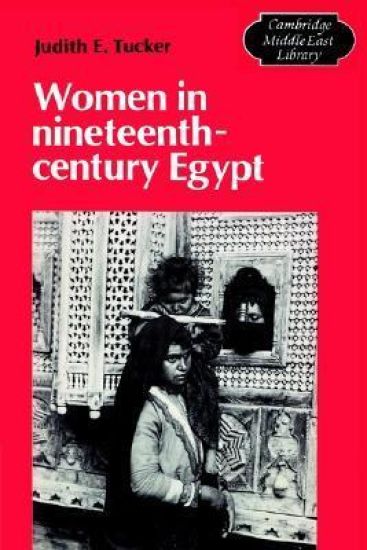
The nineteenth century in Egypt was a period of rapid social and economic change, brought about by the country’s developing ties with the European economy. Focusing on lower-class women, this study traces changes in the work role and family life of peasant women in the countryside and craftswomen and traders in Cairo, and explores the world of the slave woman. The effects of capitalist transformation on women are studied in detail, using material from the Islamic court records. The effects of the Egyptian process of state formation and colonial rule are discussed: the growth of the state apparatus, its social services and repressive means, brought new kinds of intervention into women’s lives. The book provides a unique account of the very active economic, social and political roles of nineteenth-century women, from the peasant and street pedlar to the slave of the harem.
In what ways has Islamic law discriminated against women and privileged men? What rights and power have been accorded to Muslim women, and how have they used the legal system to enhance their social and economic position? In an analysis of Islamic law through the prism of gender, Judith Tucker tackles these complex questions relating to the position of women in Islamic society, and to the ways in which the legal system impacted on the family, property rights, space and sexuality, from classical and medieval times to the present. Working with concepts drawn from feminist legal theory and by using particular cases to illustrate her arguments, the author systematically addresses questions of discrimination and expectation - what did men expect of their womenfolk - and of how the language of the law contributed to that discrimination, infecting the system and all those who participated in it.
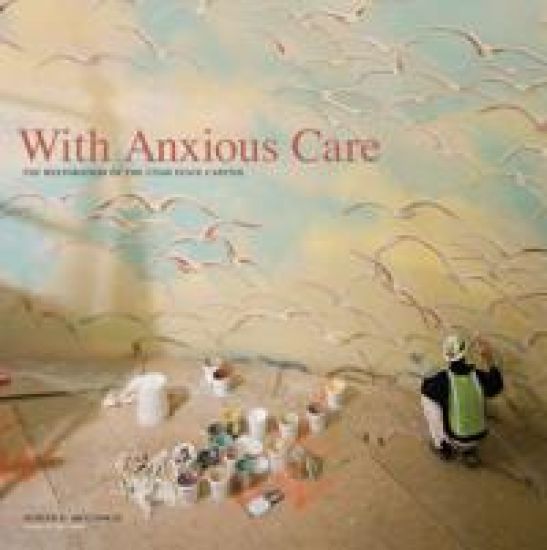
With Anxious Care
Judith E. (CON) Mcconkie; David H. (INT) Hart; Michael A. (PHT) Dunn
Utah State Capitol Preservation
2007
sidottu
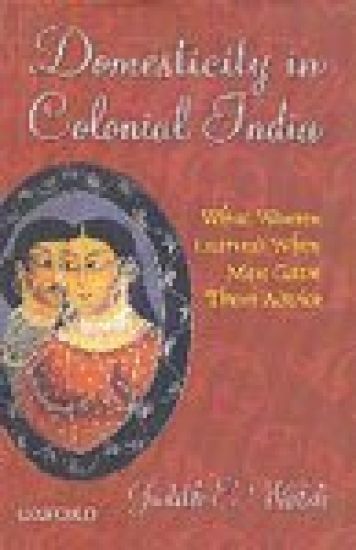
Domesticity in Colonial India offers a trenchant analysis of the impact of imperialism on the personal, familial, and daily structures of colonized people's lives. Exploring the 'intimacies of empire,' Judith E. Walsh traces changing Indian gender relations and the social reconstructions of the late nineteenth century. She sets both in the global context of a transnationally defined discourse on domesticity and in the Indian context of changing family relations and redefinitions of daily and domestic life. By the 1880s, Hindu domestic life and its most intimate relationships had become contested ground. For urban, middle-class Indians, the Hindu woman was at the center of a debate over colonial modernity and traditional home and family life. This book sets this debate within the context of a nineteenth-century world where bourgeois, European ideas on the home had become part of a transnational, hegemonic domestic discourse, a 'global domesticity.' But Walsh's interest is more in hybridity than hegemony as she explores what women themselves learned when men sought to teach them through the Indian advice literature of the time. As a younger generation of Indian nationalists and reformers attempted to undercut the authority of family elders and create a 'new patriarchy' of more nuclear and exclusive relations with their wives, elderly women in extended Hindu families learned that their authority in family life (however contingent) was coming to an end. But young women learned a different lesson. The author draws on an important advice manual by a woman poet from Bengal and women's life stories from other regions of India to show us how young women used competing patriarchies to launch their own explorations of agency and self-identity. The practices of family, home, and daily life that resulted would define the Hindu woman of the twentieth and twenty-first centuries and the domestic worlds in which she was embedded.
"You've got to read this book! You'll learn what to do, when to do it, and exactly how to go about it. A useful, practical tool to help any CEO or development officer position an organization for growth and success."--Karen SAndelback, executive director, American Kidney Fund"Candor is a missing commodity in many of today's dialogues. Judy Nichols' wisdom and sharp insights make this book a refreshing guide to honest organizational self-evaluation."--Jeannie Thompson, fund raising consultant and member, board of directors of the International Fund Raising Group In this practical and straightforward guide, Judith E. Nichols, an internationally renowned fundraising expert, introduces a proven method of fundraising evaluation: the Development Assessment Process. This formula will fundamentally transform the way nonprofit organizations approach evaluation and help them improve fund raising strategies to not only achieve their mission, but to keep pace with a changing world.Nichols' revolutionary Development Assessment Process is a unique evaluation tool that combines traditional internal evaluation practices with a method for appraising shifting philanthropic and demographic trAnds. Proven successful in a wide variety of nonprofit organizations, this innovative process creates opportunities for open dialogue among audiences inside and outside the organization, encourages useful feedback, and provides practical recommAndations that can be seamlessly incorporated into current operations. Transforming Fundraising walks readers step by step through the process of evaluating current fundraising programs, assessing their potential for improvement, and planning for change.Readers will also find a real-life, in-depth case that clearly demonstrates--from the first step through the last--how the Development Assessment Process works. Written in clear, accessible language and designed to be a hands-on guide and workbook, Transforming Fundraising is filled with easy-to-use worksheets, checklists, exhibits, and a resource guide. By using Nichols' groundbreaking Development Assessment Process, nonprofit organizations--of all sizes--will dramatically increase their fundraising results.
Teaching Cross–Culturally – An Incarnational Model for Learning and Teaching
Judith E. Lingenfelter; Sherwood G. Lingenfelter
Baker Academic, Div of Baker Publishing Group
2003
nidottu
Teaching Cross-Culturally is a challenging consideration of what it means to be a Christian educator in a culture other than your own. Chapters include discussions about how to uncover cultural biases, how to address intelligence and learning styles, and teaching for biblical transformation.Teaching Cross-Culturally is ideal for the western-trained educator or missionary who plans to work in a non-western setting, as well as for those who teach in an increasingly multicultural North America.
Gender Development
Judith E. Owen Blakemore; Sheri A. Berenbaum; Lynn S. Liben
Psychology Press
2008
sidottu
This text offers a unique developmental focus on gender. Gender development is examined from infancy through adolescence, integrating biological, socialization, and cognitive perspectives. The book’s current empirical focus is complemented by a lively and readable style that includes anecdotes about children’s everyday experiences. The book’s accessibility is further enhanced with the use of bold face to highlight key terms when first introduced along with a complete glossary of these terms. All three of the authors are respected researchers in divergent areas of children’s gender role development and each of them teaches a course on the topic. The book’s primary focus is on gender role behaviors – how they develop and the roles biological and experiential factors play in their development. The first section of the text introduces the field and outlines its history. Part 2 focuses on the differences between the sexes, including the biology of sex and the latest research on behavioral sex differences, including motor and cognitive behaviors and personality and social behaviors. Contemporary theoretical perspectives on gender development – biological, social and environmental, and cognitive approaches – are explored in Part 3 along with the research supporting these models. The social agents of gender development, including children themselves, family, peers, the media, and schools are addressed in the final part.Cutting-edge and comprehensive, this is the perfect text for those who have been searching for an advanced undergraduate and/or graduate book for courses in gender development, the psychology of sex roles and/or gender and/or women or men, taught in departments of psychology, human development, and educational psychology. Although chapters have been designed to be read sequentially, a full author citation is included the first time a reference is used within an individual chapter rather than only the first time it is used in the book, making it easy to assign chapters in a variety of orders. This referencing system will also appeal to scholars interested in using the book as a resource to review a particular content area.
Judith Fryer's study of novelists Edith Wharton and Willa Cather is a rich examination of the actual and imagined spaces women inhabit, perceive, and create. Turning to the period of ""America's coming of age,"" Fryer offers a woman-centered inquiry into an era whose traditional landmarks are the frontier, the rise of the city, and World War I.Fryer draws her analysis from history, philosophy, environmental psychology, anthropology, sociology, and geography as well as from literature, architechure, and painting. The book's conceptual bonds are women's structures of the period: the Woman's Building at the World's Columbian Exposition in Chicago in 1893 and the 1915 feminist utopian community, Herland, imagined by Charlotte Perkins Gilman.Focusing on the experience of women, Fryer presents a series of meditations that are concerned with the structures of fantasy -- a plan for a house, a room, a set of furnishings, a landscape, a story. Offering new readings of the fictions of Edith Wharton and Willa Cather that depart from existing biographical or psychological analyses, Fryer provides an original view of the meaning of space for such educated women.Wharton and Cather departed from the customary ""American"" expressions of the dominant culture, Fryer argues, to explore and inscribe their own experiences. She focuses on their imaginative structures, from Wharton's meticulously conceived interiors, which include all that the eye can encompass, to Cather's unfurnished rooms and landscapes, which are her physical and spiritual correlatives. In demonstrating the relationship between the spaces women inhabit and the language of their imaginative creations, Fryer brings new meaning to the ongoing investigations of creativity versus environment.A UNC Press Enduring Edition -- UNC Press Enduring Editions use the latest in digital technology to make available again books from our distinguished backlist that were previously out of print. These editions are published unaltered from the original, and are presented in affordable paperback formats, bringing readers both historical and cultural value.