Kirjojen hintavertailu. Mukana 11 244 527 kirjaa ja 12 kauppaa.

Kirjahaku

Etsi kirjoja tekijän nimen, kirjan nimen tai ISBN:n perusteella.

1000 tulosta hakusanalla Judith L. Gille

The View from Casa Chepitos: A Journey Beyond the Border
On a ten-day a visit to San Miguel de Allende, Judith Gille falls in love...with a hot pink house on a rundown alleyway. Without consulting her husband or knowing how she's going to pay for it, she makes the owners a full price offer. Despite a rough start in the new culture, Gille and her family eventually befriend their neighbors on callej n de Chepito and form a close bond with the Cordova clan. As their affection for the lively Mexican family grows, so do the complications of their cross-cultural relationship. When the oldest daughter seeks to cross the border illegally, the lives of the two families become inextricably entwined. The View from Casa Chepitos puts a human face on the immigration controversy and paints an intimate portrait of Mexican life. But the story also explores the deeper issues women of all ages and cultures face: affirming their self-worth and purpose, building enduring relationships, and discovering where it is they truly belong. -------------------------------------------------------------------------------------------------------------------------------------------

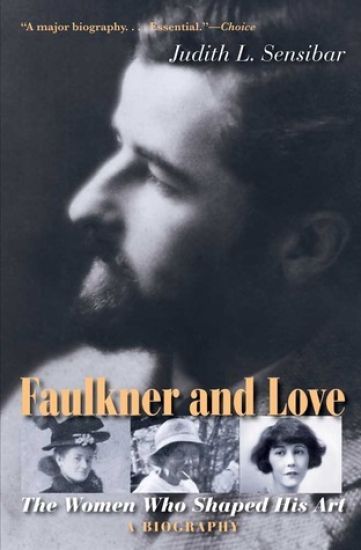
Faulkner and Love

Faulkner and Love

Judith L. Sensibar

Yale University Press
2010
pokkari
The deeply moving, untold story of America’s greatest twentieth-century novelist and the three women at the center of his imaginative life This book is about the making of the writer William Faulkner. It is the first to inquire into the three most important women in his life—his black and white mothers, Caroline Barr and Maud Falkner, and the childhood friend who became his wife, Estelle Oldham. In this new exploration of Faulkner’s creative process, Judith L. Sensibar discovers that these women’s relationships with Faulkner were not simply close; they gave life to his imagination. Sensibar brings to the foreground—as Faulkner did—this “female world,” an approach unprecedented in Faulkner biography.Through extensive research in untapped biographical sources—archival materials and interviews with these women's families and other members of the communities in which they lived—Sensibar transcends existing scholarship and reconnects Faulkner’s biography to his work. She demonstrates how the themes of race, tormented love, and addiction that permeated his fiction had their origins in his three defining relationships with women. Sensibar alters and enriches our understanding not only of Faulkner, his art, and the complex world of the American South that came to life in his brilliant fiction but also of darknesses, fears, and unspokens that Faulkner unveiled in the American psyche.
Psychoanalytic Technique and Theory

Psychoanalytic Technique and Theory

Judith L. Mitrani

Routledge
2019
sidottu
This volume consists of a series of essays inspired by Freud's paper on Jensen's novel Gradiva - "she who steps along." In the story a young archaeologist, Norbert Hanold, suffers from delusions but is able to unravel the mysteries of his emotional life and mind with the aid of a woman who does not challenge these delusions, but rather "steps along" with Hanold, gradually helping him to disentangle truth from fantasy, through what Freud called "cure by love". Gradiva, originally felt to be the source of Hanold's malady, eventually becomes the agent of its resolution and of his return to health. This extraordinary tale formed the basis for the author's concept of "taking the transference". Through clinical vignettes, various aspects of psychoanalytic technique - useful from the first encounter between patient and analyst and throughout the process of the development of mind to termination - are illustrated in detail.
A Framework for the Imaginary

A Framework for the Imaginary

Judith L. Mitrani

Routledge
2019
sidottu
An extraordinary depiction of one analyst's efforts to receive and respond to the vivid impressions of her patients raw and sometimes even unmentalized experiences as they are highlighted in the transference-countertransference connection. Mitrani attempts to feel, suffer, mentally transform, and, finally, verbally construct for and with the patient possible meanings for those immediate versions of lifes earliest experiences as they are re-enacted in the therapeutic relationship. She uses insights from this therapeutic work to contribute to the metapsychology of British and American object relations as well as to the psychoanalytic theory of technique. In these eleven essays, Dr Mitrani masterfully integrates the work of Klein, Winnicott, Bion and Tustin as she leads us on an expedition through primitive emotional territories. She clears the way toward detecting and understanding the survival function of certain pathological manoeuvres deployed by patients when confronted by unthinkable anxieties. In her vivid accounts of numerous clinical cases, she provides and demonstrates the tools needed to effect a transformation of unmentalized experiences within the context of the therapeutic relationship.
Thackeray?s Skeptical Narrative and the ?Perilous Trade? of Authorship
Drawing on the rhetorical work of James Phelan, Wayne Booth's ethical criticism, recent work on William Makepeace Thackeray, as well as an understanding of the role of skepticism in eighteenth- and nineteenth-century English thought, Thackeray's Skeptical Narrative and the "Perilous Trade" of Authorship makes a substantial contribution to nineteenth-century reading practices, as well as narratology in general. Judith Fisher combines in this study rhetorical and ethical analysis of Thackeray's narrative techniques to trace how his fiction develops to educate his reader into what she terms a "hermeneutic of skepticism." This is a kind of poised reading which enables his readers to integrate his fiction into their life in what Thackeray called "a world without God" without becoming pessimistic or fatalistic. Although Thackeray's narrative strategies have been the subject of study, most have focused on Vanity Fair and Henry Esmond only, and none look as closely as does this study at actual rhetorical techniques such as his use of pronominalization to interpolate the reader into his skeptical discourse. Fisher also brings her analysis to bear on The Adventures of Philip and The Virginians, Thackeray's last two complete novels, both of which were critical failures even as contemporary critics acknowledged their stylistic excellence. This is the first study to attempt to understand the puzzle of those two books; Fisher recovers them from their marginalized position in Thackeray's oeuvre. Fisher expertly weaves an accessible narrative theory with thoroughgoing knowledge of Thackeray's life in an integrated reading of his entire works. Reading Thackeray holistically in spite of his own disruptive practices, she does full justice to his critical skepticism while elucidating his canon for a new readership.
Leadership

Leadership

Judith L. Komaki

Routledge
1998
sidottu
How can managers motivate their employees? After conducting detailed field studies of work groups in settings as diverse as insurance company offices and regatta sailboats, Judith Komaki has identified two key behaviours that seem to distinguish effective from ineffective managers; monitoring workers' performance and communicating consequences. Drawing on her research over the last ten years, Komaki combines behavioural and cognitive theories of leadership and puts forward a new model for the study of leadership from an operant perspective.
Ordinary People and Extra-ordinary Protections
Many people come to analysis appearing quite 'ordinary' on the surface. However, once below that surface, we often come into contact with something quite unexpected: 'extra-ordinary protections' created to keep at bay any awareness of deeply traumatic happenings occurring at some point in life.Judith Mitrani investigates the development and the function of these protections, allowing the reader to witness the evolution of the process of transformation, wherein defensiveness steadily mutates into communication.She lucidly and artfully weaves detailed clinical with a variety of analytic concepts, and her original notions - including 'unmentalized experience' and its expression in enactments; 'adhesive pseudo-object relations' and the way in which this contracts and compares with normal and narcissistic object relations - provide valuable tools for understanding the infantile transference/countertransference and for the refinement of our technique with primitive mental states.Ordinary People and Extra-Ordinary Protections will prove stimulating and accessible in its style and substance to a broad analytic readership, from the serious student of psychoanalysis to the most seasoned professional.
The Charged Classroom

The Charged Classroom

Judith L. Pace

Routledge
2015
sidottu
At a time when debate over school reform commands unprecedented attention, Judith L. Pace argues we must grapple with the underlying challenges of classroom teaching and, at the same time, strive to realize the ideals of democratic education. Building on three qualitative studies in grades four through twelve, The Charged Classroom examines the deeply embedded tensions, escalating pressures, and exciting possibilities of the contemporary American public school classroom. Through detailed descriptions and analyses of social studies and English language arts classrooms, Pace disentangles how teachers and students navigate three charged arenas: academic expectations, discussion of provocative topics, and curricular demands. In each domain, democratic learning opportunities, such as promotion of positive student identity, dialogue across differences, and exploration of conflict, are both opened up and closed down. A passionate and persuasive call for education reform, the book offers crucial insights about the realities of teaching and key recommendations for advancing democratic education in a multicultural society.
The Charged Classroom

The Charged Classroom

Judith L. Pace

Routledge
2015
nidottu
At a time when debate over school reform commands unprecedented attention, Judith L. Pace argues we must grapple with the underlying challenges of classroom teaching and, at the same time, strive to realize the ideals of democratic education. Building on three qualitative studies in grades four through twelve, The Charged Classroom examines the deeply embedded tensions, escalating pressures, and exciting possibilities of the contemporary American public school classroom. Through detailed descriptions and analyses of social studies and English language arts classrooms, Pace disentangles how teachers and students navigate three charged arenas: academic expectations, discussion of provocative topics, and curricular demands. In each domain, democratic learning opportunities, such as promotion of positive student identity, dialogue across differences, and exploration of conflict, are both opened up and closed down. A passionate and persuasive call for education reform, the book offers crucial insights about the realities of teaching and key recommendations for advancing democratic education in a multicultural society.
The Boy Who Couldn't Stop Washing: The Experience and Treatment of Obsessive-Compulsive Disorder
In this classic study of Obsessive-Compulsive Disorder (OCD), a distinguished psychiatrist offers hope and help for those suffering from mental illness, suggesting pathways forward through behavioral therapies and mediation. Drawing on the extraordinary experiences of her patients, Dr. Judith Rapoport unravels the mysteries surrounding OCD, an emotionally crippling affliction that affects millions of Americans. The Boy Who Couldn't Stop Washing follows Dr. Rapaport's patient, the pseudonymous "David," who developed such severe OCD symptoms that he spent so long each day washing himself and cleaning his home that he could no longer keep a job. Through the example of her treatment of "David," Dr. Rapoport explores the ways in which OCD manifests, how it affects individuals and their families, and the treatment options available to those who suffer from this mental illness. Revealing breakthroughs in diagnosis, therapies, and medication, as well as offering guidelines for diagnosis, resources, and references, Dr. Rapaport offers hope and practical advice for those seeking help for themselves or their loved ones with OCD.
The Boy Who Couldn't Stop Washing: The Experience and Treatment of Obsessive-Compulsive Disorder
In this classic study of Obsessive-Compulsive Disorder (OCD), a distinguished psychiatrist offers hope and help for those suffering from mental illness, suggesting pathways forward through behavioral therapies and mediation. Drawing on the extraordinary experiences of her patients, Dr. Judith Rapoport unravels the mysteries surrounding OCD, an emotionally crippling affliction that affects millions of Americans. The Boy Who Couldn't Stop Washing follows Dr. Rapaport's patient, the pseudonymous "David," who developed such severe OCD symptoms that he spent so long each day washing himself and cleaning his home that he could no longer keep a job. Through the example of her treatment of "David," Dr. Rapoport explores the ways in which OCD manifests, how it affects individuals and their families, and the treatment options available to those who suffer from this mental illness. Revealing breakthroughs in diagnosis, therapies, and medication, as well as offering guidelines for diagnosis, resources, and references, Dr. Rapaport offers hope and practical advice for those seeking help for themselves or their loved ones with OCD.
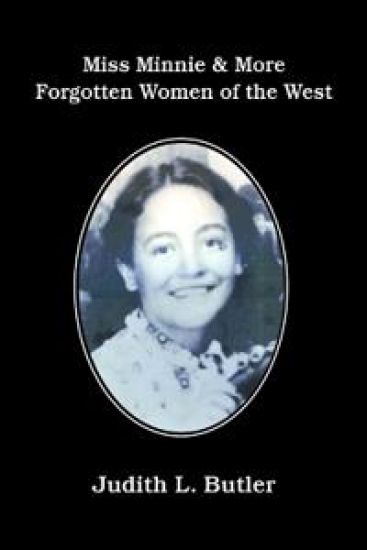
Miss Minnie & More Forgotten Women of the West
This Collection of Poems honors more of the remarkable strong Women of the West. Those amazing souls who bravely worked to build new towns and churches and businesses while keeping their families safe and together. Many faced poverty and loss still they forged on in faith and fortitude. The stories of Lady In Boomtown, Sheriff Dorothy & Lone Pine Pat make up the true tales of the West all too often left out of the history books.
West of the Big Road: Stories of the Land & Home

West of the Big Road: Stories of the Land & Home

Judith L. Butler

Judith L. Butler
2014
nidottu
"West of The Big Road is a Collection of short stories by author Judith L. Butler about home and place and the diverse people who became the true West. Stories of Basque herders, Native American families and small town America draw readers into their quiet and not so quiet lives beneath the tall Sierra mountains and beyond. The Lands of the West hold a sacred power. "Perhaps one day this Valley that claims me now will breathe the sounds of my remembrance.Time will write the last chapter of the wandering spirit. We go along mindful of the days. Hands open to the possibilities." "Had she never left that home soil she would carry that edge of wonder. That one day have borne a restlessness inside. That in time could cloud her seeing. Of that holy ground. The truth was painted on the open terrain. She belonged to those mountains as much as she would ever belong to any earthly soil. This was her true north. A place called home".(from "West of The Big Road") Butler who has written previous books on the Forgotten Women of the West now tells the stories of weathered cowpokes and salt of the earth farming folks whose names have been lost in the dust of time. Meet Santiago and Indian Dave and Basquo Pete and you will meet the real America. The heroes and settlers, drifters and storytellers who deserve a page in the crowded history books. "I can hear the dogs barking at falling leaves and children playing. It is both a fresh memory and a sad reminder I am too far away" from my sacred homeland. "Perhaps these stories will get some folks on the east road in search of truth, home and the raw power of the creator".(from "West of the Big Road") These are the stories of brave immigrants, God fearing souls and restless wanderers. The tapestry of the vivid rich soil and inhabitants of the West.
The Presbyterian Hymnal

The Presbyterian Hymnal

Judith L. Muck

Westminster/John Knox Press,U.S.
1997
nidottu
This is an essential companion to The Presbyterian Hymnal and Hymns, Psalms, & Spiritual Songs. Church musicians and pastors will welcome the ease with which they can locate keywords, topics, and scriptural references.
Thackeray?s Skeptical Narrative and the ?Perilous Trade? of Authorship
Drawing on the rhetorical work of James Phelan, Wayne Booth's ethical criticism, recent work on William Makepeace Thackeray, as well as an understanding of the role of skepticism in eighteenth- and nineteenth-century English thought, Thackeray's Skeptical Narrative and the "Perilous Trade" of Authorship makes a substantial contribution to nineteenth-century reading practices, as well as narratology in general. Judith Fisher combines in this study rhetorical and ethical analysis of Thackeray's narrative techniques to trace how his fiction develops to educate his reader into what she terms a "hermeneutic of skepticism." This is a kind of poised reading which enables his readers to integrate his fiction into their life in what Thackeray called "a world without God" without becoming pessimistic or fatalistic. Although Thackeray's narrative strategies have been the subject of study, most have focused on Vanity Fair and Henry Esmond only, and none look as closely as does this study at actual rhetorical techniques such as his use of pronominalization to interpolate the reader into his skeptical discourse. Fisher also brings her analysis to bear on The Adventures of Philip and The Virginians, Thackeray's last two complete novels, both of which were critical failures even as contemporary critics acknowledged their stylistic excellence. This is the first study to attempt to understand the puzzle of those two books; Fisher recovers them from their marginalized position in Thackeray's oeuvre. Fisher expertly weaves an accessible narrative theory with thoroughgoing knowledge of Thackeray's life in an integrated reading of his entire works. Reading Thackeray holistically in spite of his own disruptive practices, she does full justice to his critical skepticism while elucidating his canon for a new readership.
Family Therapy of Neurobehavioral Disorders

Family Therapy of Neurobehavioral Disorders

Judith L Johnson; William G. McCown

Routledge Member of the Taylor and Francis Group
1997
sidottu
Family Therapy of Neurobehavioral Disorders shows you a unique integration of neuropsychology and family therapy. Authors Judith L. Johnson and William G. McCown span these two broad areas by synthesizing family therapy principles and applying them specifically to traumatic brain injury and degenerative dementia. Family therapists, neuropsychologists, social workers, and counselors working with patients who experience brain dysfunction and their families learn to better address common issues and problems and of therapeutic interventions. This expert book includes case examples and working models of family reactions. The book then extends this information into practical clinical situations commonly confronted in work with these patients and their families. Readers of Family Therapy of Neurobehavioral Disorders are introduced to brain-behavior relationships including neuroanatomy of the brain as it relates to behavior, dynamics of neurologic disorders, and common symptoms of brain dysfunction. You can then use this information to help persons with traumatic brain injury and their families cope with and adjust to the issues and challenges they face. Specifically, you gain invaluable, informative insight into:the neuroanatomy of the brain and which structures mediate behavior, emotion, and cognition common issues families face when a member suffers traumatic brain injury therapeutic strategies and practical suggestions for assisting families mild head injury and familial reactions common issues faced by families confronting Alzheimer’s disease or other dementias a model of family reactions to dementia over timeChapters in Family Therapy of Neurobehavioral Disorders outline symptoms of brain dysfunction and family therapy designed to approach these symptoms. Divided into two sections, the book gives readers a model of traumatic brain injury beginning with the initial onset and proceeding through time. This section focuses on changes within the family and therapeutic strategies for helping these distressed families. Secondly, the authors address degenerative dementia with emphases on certain phases through which family members may progress as they acknowledge their loved one’s condition and then therapeutically work through the reality of it. Professionals in the medical and social sciences will find Family Therapy of Neurobehavioral Disorders a unique and irreplacable guide for developing and understanding the meshing of neuropsychology and family therapy. Also, the book serves as a solid text for students in courses such as rehabilitation, counseling, and family therapy.Translated into Spanish!
Family Therapy of Neurobehavioral Disorders

Family Therapy of Neurobehavioral Disorders

Judith L Johnson; William G. McCown

Routledge Member of the Taylor and Francis Group
1997
nidottu
Family Therapy of Neurobehavioral Disorders shows you a unique integration of neuropsychology and family therapy. Authors Judith L. Johnson and William G. McCown span these two broad areas by synthesizing family therapy principles and applying them specifically to traumatic brain injury and degenerative dementia. Family therapists, neuropsychologists, social workers, and counselors working with patients who experience brain dysfunction and their families learn to better address common issues and problems and of therapeutic interventions. This expert book includes case examples and working models of family reactions. The book then extends this information into practical clinical situations commonly confronted in work with these patients and their families. Readers of Family Therapy of Neurobehavioral Disorders are introduced to brain-behavior relationships including neuroanatomy of the brain as it relates to behavior, dynamics of neurologic disorders, and common symptoms of brain dysfunction. You can then use this information to help persons with traumatic brain injury and their families cope with and adjust to the issues and challenges they face. Specifically, you gain invaluable, informative insight into:the neuroanatomy of the brain and which structures mediate behavior, emotion, and cognition common issues families face when a member suffers traumatic brain injury therapeutic strategies and practical suggestions for assisting families mild head injury and familial reactions common issues faced by families confronting Alzheimer’s disease or other dementias a model of family reactions to dementia over timeChapters in Family Therapy of Neurobehavioral Disorders outline symptoms of brain dysfunction and family therapy designed to approach these symptoms. Divided into two sections, the book gives readers a model of traumatic brain injury beginning with the initial onset and proceeding through time. This section focuses on changes within the family and therapeutic strategies for helping these distressed families. Secondly, the authors address degenerative dementia with emphases on certain phases through which family members may progress as they acknowledge their loved one’s condition and then therapeutically work through the reality of it. Professionals in the medical and social sciences will find Family Therapy of Neurobehavioral Disorders a unique and irreplacable guide for developing and understanding the meshing of neuropsychology and family therapy. Also, the book serves as a solid text for students in courses such as rehabilitation, counseling, and family therapy.Translated into Spanish!