Kirjojen hintavertailu. Mukana 11 699 587 kirjaa ja 12 kauppaa.

Kirjahaku

Etsi kirjoja tekijän nimen, kirjan nimen tai ISBN:n perusteella.

1000 tulosta hakusanalla Judith Lorber; Lisa Jean Moore

Gendered Bodies: Feminist Perspectives

Gendered Bodies: Feminist Perspectives

Judith Lorber; Lisa Jean Moore

Oxford University Press
2010
nidottu
Designed for undergraduate students, Gendered Bodies: Feminist Perspectives, Second Edition, is a concise textbook/reader that provides a critical and multifaceted approach to the study of gendered bodies. Acclaimed scholars Judith Lorber and Lisa Jean Moore analyze the construction of gendered bodies in different contexts. Exploring a broad range of both long-established and more cutting-edge topics in feminist studies, Lorber and Moore present scholarly research, offer information on relevant laws and political events, and point to directions for social change. Gendered Bodies, Second Edition, focuses on key themes that reveal how gendered relations, ideologies, and practices shape human bodies. At the same time, it shows how human bodies are linked to other significant axes of inequality based on racial ethnic group, disability, sexuality, class, culture, religion, age, and nation. Thoroughly updated throughout, the second edition incorporates sixteen new selections--including non-Western perspectives--on such fascinating topics as evolution and motherhood; breastfeeding; breast cancer; the effects of height on men; job discrimination and transgendered people; world champion runner Caster Semenya and sex verification; disability, gender, and embodiment; and Palestinian female suicide bombers. It also adds new references and a concluding chapter, "Social Bodies in an Interconnected World." Gendered Bodies, Second Edition, is ideal for courses on the body, feminist theory, women and health, and the sociology of gender. Each chapter includes a list of key concepts, three readings, and suggested readings. The book also includes an appendix of class exercises.
Gender and the Social Construction of Illness

Gender and the Social Construction of Illness

Judith Lorber; Lisa Jean Moore

AltaMira Press,U.S.
2002
sidottu
Judith Lorber and Lisa Jean Moore consider the interface between the social institutions of gender and Western medicine in this brief, lively textbook. They offer a distinct feminist viewpoint to analyze issues of power and politics concerning physical illness. SIGNS labeled the first edition 'a rich and imaginative work.' In the extensively revised second edition of this successful text, the authors add chapters on disability and genital surgeries. They also update and expand their discussions of social epidemiology, AIDS, the health professions, PMS, menopause, and feminist health care. For a creative, feminist-oriented alternative to traditional texts on medical sociology, medical anthropology, and the history of medicine, this is an ideal choice.
Gender and the Social Construction of Illness

Gender and the Social Construction of Illness

Judith Lorber; Lisa Jean Moore

AltaMira Press,U.S.
2002
nidottu
Judith Lorber and Lisa Jean Moore consider the interface between the social institutions of gender and Western medicine in this brief, lively textbook. They offer a distinct feminist viewpoint to analyze issues of power and politics concerning physical illness. SIGNS labeled the first edition 'a rich and imaginative work.' In the extensively revised second edition of this successful text, the authors add chapters on disability and genital surgeries. They also update and expand their discussions of social epidemiology, AIDS, the health professions, PMS, menopause, and feminist health care. For a creative, feminist-oriented alternative to traditional texts on medical sociology, medical anthropology, and the history of medicine, this is an ideal choice.
Gender Inequality: Feminist Theories and Politics

Gender Inequality: Feminist Theories and Politics

Judith Lorber

Oxford University Press
2011
nidottu
In Gender Inequality: Feminist Theories and Politics, Fifth Edition, internationally renowned feminist Judith Lorber examines thirteen evolving theories of gender inequality. Tightly structured around Lorber's own paradigm of "reform, resistance, rebellion," this combination text/reader acknowledges feminism's significant contributions to redressing gender inequality and celebrates its enormous accomplishments over the last forty years. It also documents feminism's ongoing political activism, and with an exploration of postmodern and third-wave trends, points toward its future. Significantly rewritten, reorganized, and updated, the fifth edition includes: * More coverage of cultural feminism* New readings on such topics as deconstruction, ecofeminism, and Chicana feminism* An expanded discussion of postmodern feminism, including transgendering and its congruences and conflicts with feminist theory and politics* New references on transnational feminism and feminist studies of men
Paradoxes of Gender

Paradoxes of Gender

Judith Lorber

Yale University Press
1995
pokkari
In this pathbreaking book, a well-known feminist and sociologist—who is also the Founding Editor of Gender & Society—challenges our most basic assumptions about gender. Judith Lorber views gender as wholly a product of socialization subject to human agency, organization, and interpretation. In her new paradigm, gender is an institution comparable to the economy, the family, and religion in its significance and consequences. Drawing on many schools of feminist scholarship and on research from anthropology, history, sociology, social psychology, sociolinguistics, and cultural studies, Lorber explores different paradoxes of gender:—why we speak of only two "opposite sexes" when there is such a variety of sexual behaviors and relationships; —why transvestites, transsexuals, and hermaphrodites do not affect the conceptualization of two genders and two sexes in Western societies;—why most of our cultural images of women are the way men see them and not the way women see themselves;—why all women in modern society are expected to have children and be the primary caretaker;—why domestic work is almost always the sole responsibility of wives, even when they earn more than half the family income;—why there are so few women in positions of authority, when women can be found in substantial numbers in many occupations and professions;—why women have not benefited from major social revolutions. Lorber argues that the whole point of the gender system today is to maintain structured gender inequality—to produce a subordinate class (women) that can be exploited as workers, sexual partners, childbearers, and emotional nurturers. Calling into question the inevitability and necessity of gender, she envisions a society structured for equality, where no gender, racial ethnic, or social class group is allowed to monopolize economic, educational, and cultural resources or the positions of power.
Breaking the Bowls

Breaking the Bowls

Judith Lorber

WW Norton Co
2005
nidottu
Lorber argues that it is time to rebel against gender as a social institution—to challenge its basic processes and practices. Feminists have tried to restructure and change the dynamics of interaction between women and men, but they have not pushed their agenda to the point of calling for the abolition of gender boundaries and categories. Breaking the Bowls explores why undoing gender must be the ultimate feminist goal and how that goal can be reached. Breaking the Bowls is part of the Contemporary Societies series.
The New Gender Paradox

The New Gender Paradox

Judith Lorber

Polity Press
2021
sidottu
Today, in Western countries, we are seeing both the fragmentation of the gender binary (the division of the social world into two and only two genders) and its persistence. Multiple genders, gender-neutral pronouns and bathrooms, X designations, and other manifestations of degendering are becoming common, and yet the two-gender structure of our social world persists. Underneath the persistence of the binary and its discriminatory norms and expectations lurks the continuance of men’s power and privilege. So there is the continued need to valorize the accomplishments of women, especially those of denigrated groups. This succinct and thoughtful book by one of the world’s foremost sociologists of gender shines a light on both sides of this paradox – processes in the fragmentation of gender that are undermining the binary and processes in the performance of gender that reinforce the binary, and the pros and cons of each. The conclusion of the book discusses why we haven’t had a gender revolution and how degendering would go a long way in creating gender equality.
The New Gender Paradox

The New Gender Paradox

Judith Lorber

Polity Press
2021
nidottu
Today, in Western countries, we are seeing both the fragmentation of the gender binary (the division of the social world into two and only two genders) and its persistence. Multiple genders, gender-neutral pronouns and bathrooms, X designations, and other manifestations of degendering are becoming common, and yet the two-gender structure of our social world persists. Underneath the persistence of the binary and its discriminatory norms and expectations lurks the continuance of men’s power and privilege. So there is the continued need to valorize the accomplishments of women, especially those of denigrated groups. This succinct and thoughtful book by one of the world’s foremost sociologists of gender shines a light on both sides of this paradox – processes in the fragmentation of gender that are undermining the binary and processes in the performance of gender that reinforce the binary, and the pros and cons of each. The conclusion of the book discusses why we haven’t had a gender revolution and how degendering would go a long way in creating gender equality.
Medical Professionals and the Organization of Knowledge

Medical Professionals and the Organization of Knowledge

Eliot Freidson; Judith Lorber

AldineTransaction
2008
nidottu
"Medical Professionals and Their Work" conveys how medical people shape and organize the knowledge, perception, and experience of illness, as well as the substance of illness behavior, its management, and treatment. It is now well established that the unique symbolic equipment of the human animal is intimately connected with the functioning of the body. Freidson and Lorber believe that the proper understanding of specifically human rather than generally "animal" illness requires careful and systematic study of the social meanings surrounding illness.The content of social meanings varies from culture to culture and from one historical period to another. As important as the content of those social meanings, is the organization of groups who serve as carriers and, sometimes, creators. In the case of illness, a critical difference exists between those considered to be competent to diagnose and treat the sick and those excluded from this special privilege - a separation as old as the shaman or medicine-man. Such differences become solidified when the expert healer becomes a member of an organized, full-time occupation, sustained in monopoly over the work of diagnosis and treatment by the force of the state, and invested with the authority to make official designation of the social meanings to be ascribed to physical states.The medical profession in advanced nations is in a vise between professional needs and political demands. Its organization and its knowledge establish many of the conditions for being recognizably and legitimately ill, and the professional controls many of the circumstances of treatment. It thus plays a central role in shaping the experience of being ill. With this fact of modern life in mind, this collection on the character of experts or professionals in general and of medicine as a profession in particular is uniquely fashioned.
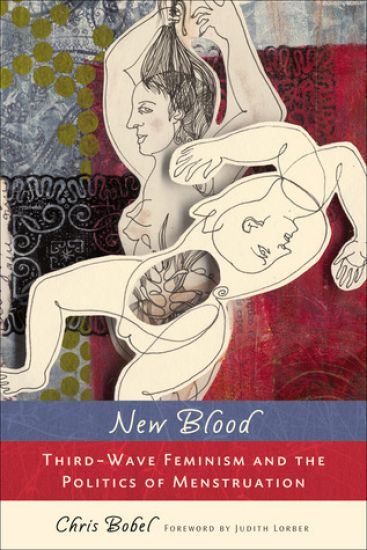
New Blood

New Blood

Chris Bobel; Judith Lorber

Rutgers University Press
2010
nidottu
New Blood offers a fresh interdisciplinary look at feminism-in-flux. For over three decades, menstrual activists have questioned the safety and necessity of feminine care products while contesting menstruation as a deeply entrenched taboo. Chris Bobel shows how a little-known yet enduring force in the feminist health, environmental, and consumer rights movements lays bare tensions between second- and third-wave feminisms and reveals a complicated story of continuity and change within the women's movement. Through her critical ethnographic lens, Bobel focuses on debates central to feminist thought (including the utility of the category "gender") and challenges to building an inclusive feminist movement. Filled with personal narratives, playful visuals, and original humor, New Blood reveals middle-aged progressives communing in Red Tents, urban punks and artists "culture jamming" commercial menstrual products in their zines and sketch comedy, queer anarchists practicing DIY health care, African American health educators espousing "holistic womb health," and hopeful mothers refusing to pass on the shame to their pubescent daughters. With verve and conviction, Bobel illuminates today's feminism-on-the-ground--indisputably vibrant, contentious, and ever-dynamic.
Medical Professionals and the Organization of Knowledge

Medical Professionals and the Organization of Knowledge

Eliot Freidson; Judith Lorber

Routledge
2017
sidottu
"Medical Professionals and Their Work" conveys how medical people shape and organize the knowledge, perception, and experience of illness, as well as the substance of illness behavior, its management, and treatment. It is now well established that the unique symbolic equipment of the human animal is intimately connected with the functioning of the body. Freidson and Lorber believe that the proper understanding of specifically human rather than generally "animal" illness requires careful and systematic study of the social meanings surrounding illness.The content of social meanings varies from culture to culture and from one historical period to another. As important as the content of those social meanings, is the organization of groups who serve as carriers and, sometimes, creators. In the case of illness, a critical difference exists between those considered to be competent to diagnose and treat the sick and those excluded from this special privilege - a separation as old as the shaman or medicine-man. Such differences become solidified when the expert healer becomes a member of an organized, full-time occupation, sustained in monopoly over the work of diagnosis and treatment by the force of the state, and invested with the authority to make official designation of the social meanings to be ascribed to physical states.The medical profession in advanced nations is in a vise between professional needs and political demands. Its organization and its knowledge establish many of the conditions for being recognizably and legitimately ill, and the professional controls many of the circumstances of treatment. It thus plays a central role in shaping the experience of being ill. With this fact of modern life in mind, this collection on the character of experts or professionals in general and of medicine as a profession in particular is uniquely fashioned.
Judith

Judith

Carey A. Moore

Yale University Press
2007
pokkari
Judith is Volume 40 in the acclaimed anchor Bible series of new book-by-book translations of the Old and New Testaments and Apocrypha. In the Apocrypha, Judith is the saint who murdered for her people. She offered herself to Holofernes, the Assyrian general sent by Nebuchadnezzar to destroy the Israelites. After she had charmed Holofernes with flattery and drink, Judith chopped of his head while he lay in a drunken stupor, thereby leaving his troops “headless” and in a state of total panic and confusion. Her victory was celebrated in song and brought peace to her land for years to come. In his illuminating new translation and commentary, Carey A. Moore considers the historicity of the story and explores the author’s true intent: Was it to describe actual events or to compose a fictitious story of other purposes? Was his concern more historical or theological? The story of Judith abounds in ironies. There is Judith, the beautiful woman who lived a stark, celibate existence after her husband’s death had left her a wealthy widow. Born into a sexist society with rigidly defined roles, Judith better “played the man” than did any of her male compatriots. There is Holofernes, the Assyrian conqueror, unable to defeat a small Israelite village after dozens of countries had fallen under his sword. Intent on seducing Judith, Holofernes instead lost his head to her. Perhaps the ultimate irony of all is the story of Judith itself: the timeless tale of a deeply religious woman who became revered not for her poverty but for an act of murder. Dr. Moore’s study of the canonicity of Judith brings perspective to the story’s varied acceptance among both Jews and Christians. It also notes the similarity between this work and the equally popular story of Esther; each woman, through different means, served her people through acts of bravery. The photographs and maps illustrating Judith include depictions of the story of Judith by such masters as Machiavelli, Botticelli, Caravaggio, and Donatello.
Judith

Judith

Jennifer Johnston

Jennifer Johnston
2023
pokkari
The 1960s was a time when Australia was changing and the old ways were being left behind. At 21 Judith is ready to conquer the world, she has a new job working for the government, and a new life ahead of her that will test her resolve. Moving to the city will take her from naive romantic notions and the protection of small town living to discovering that around the corner life's twists and turns carry you along paths you never anticipated. The communist movement is looking for converts to infiltrate the government. Will they draw her in? Women are living and loving more freely. Will she ignore the promises she made and allow the lure of this new life to change her? Will she find romance or tragedy? What will her family think if she tells them? She will need wisdom, courage and faith for the journey as the road to independence always comes at a price.
Judith

Judith

Wills M.; White Crawford Sidnie

Fortress Press,U.S.
2019
sidottu
Judith tells the story of a beautiful Jewish woman who enters the tent of an invading general, gets him drunk, and then slices off his head, thus saving her village and Jerusalem. This short novella was somewhat surprisingly included in the early Christian versions of the Old Testament and has played an important role in the Western tradition ever since. This commentary provides a detailed analysis of the text's composition and its meaning in its original historical context, and thoroughly surveys the history of Judith scholarship. Lawrence M. Wills not only considers Judith's relation to earlier biblical texts--how the author played upon previous biblical motifs and interpreted important biblical passages--but also addresses the rise of Judith and other Jewish novellas in the context of ancient Near Eastern and Greek literature, as well as their relation to cross-cultural folk motifs. Because of the popularity of Judith in art and culture, this volume also addresses the book's history of interpretation in paintings, sculpture, music, drama, and literature. A number of images of artistic depictions of Judith are included and discussed in detail.
Judith

Judith

Jennifer L. Koosed; Robert Paul Seesengood

Liturgical Press
2022
sidottu
2023 Catholic Media Association First Place Award, Scripture – Academic Studies The striking scene of Judith cutting off Holofernes’s head with his own sword in his own bed has inspired the imaginations of readers for millennia. But there is more to her story than just this climactic act and more to her character than just beauty and violence. This volume offers a comprehensive examination of gender ideologies in the book of Judith, from the hyper-masculine machinations of war and empire to the dynamics of class in Judith’s relationship with her enslaved handmaid. Overall, this commentary investigates the book of Judith through a feminist lens, informed by critical masculinity studies, queer theory, and reception criticism.
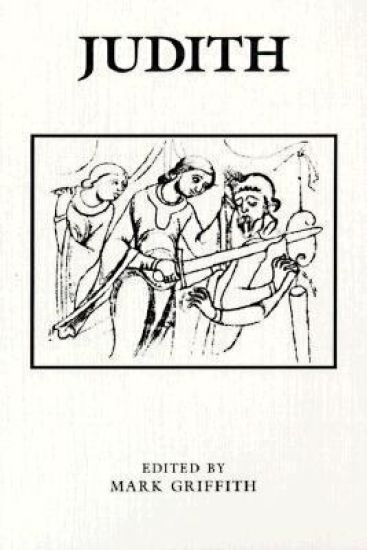
Judith

Judith

University of Exeter Press
1997
nidottu
Undergraduates frequently find the fine Old English poem JUDITH the most stimulating of the surviving texts from the Anglo-Saxon period. In the past thirty years it has attracted a wide range of literary criticism both in the UK and the US. Feminist critics of English literature have been particularly interested by the ways in which the poet has adapted the traditional masculine heroic ethos of Old English poetry to a story figuring a violently active female protagonist.Yet there is no available edition of Judith which is either comprehensive or up to date, or which at all explains how and why the poem is worthy of our attention. This new edition aims to fill this gap. It includes a full Introduction and commentary by the editor, plus a comprehensive glossary, bibliography and appendices.
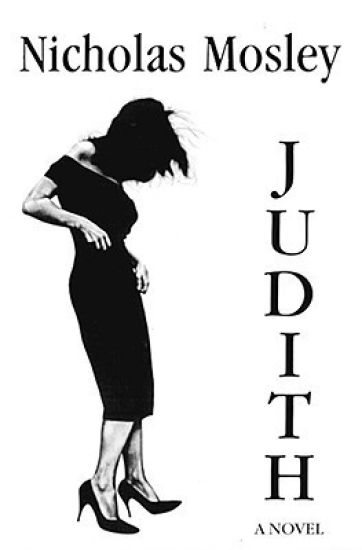
Judith

Judith

Nicholas Mosley

Dalkey Archive Press
1992
nidottu
Judith is an aspiring young actress and the mistress of a writer on a popular satirical magazine. We learn of her involvement with drugs and increasing self-delusion. After a crack-up, she seeks healing in an Indian ashram run by an eccentric and possibly mad guru. But what is at the back of appearances; how calculated is the self-destructiveness from which a new order might emerge?