Kirjojen hintavertailu. Mukana 11 244 527 kirjaa ja 12 kauppaa.

Kirjahaku

Etsi kirjoja tekijän nimen, kirjan nimen tai ISBN:n perusteella.

1000 tulosta hakusanalla Judith M. Hughes

Freudian Analysts/Feminist Issues

Freudian Analysts/Feminist Issues

Judith M. Hughes

Yale University Press
1999
sidottu
In this important book Judith M. Hughes makes a highly original case for conceptualizing gender identity as potentially multiple. She does so by situating her argument within the history of psychoanalysis.Hughes traces a series of conceptual lineages, each descending from Freud. In the study Helene Deutsch, Karen Horney, and Melanie Klein occupy prominent places. So too do Erik H. Erikson and Robert J. Stoller. Among contemporary theorists Carol Gilligan and Nancy Chodorow are included in Hughes’s roster.In each lineage Hughes discerns an evolutionary narrative: Deutsch tells a story of retrogression; Erikson names his epigenesis, and Gilligan continues in that vein; Horney’s discussion recalls sexual selection; Stoller’s and Chodorow’s theorizing brings artificial selection to mind; and finally in Klein’s work Hughes sees a story of natural selection and adds to it her own notion of multiple gender identities.
Guilt and Its Vicissitudes

Guilt and Its Vicissitudes

Judith M. Hughes

Routledge
2007
sidottu
How do psychoanalysts explain human morality?Guilt and Its Vicissitudes: Psychoanalytic Reflections on Morality focuses on the way Melanie Klein and successive generations of her followers pursued and deepened Freud's project of explaining man's moral sense as a wholly natural phenomenon.With the introduction of the superego, Freud laid claim to the study of moral development as part of the psychoanalytic enterprise. At the same time he reconceptualized guilt: he thought of it not only as conscious, but as unconscious as well, and it was the unconscious sense of guilt that became a particular concern of the discipline he was founding. As Klein saw it, his work merely pointed the way. Judith M. Hughes argues that Klein and contemporary Kleinians went on to provide a more consistent and comprehensive psychological account of moral development. Hughes shows how Klein and her followers came to appreciate that moral and cognitive questions are complexly interwoven and makes clear how this complexity prompted them to extend the range of their theory.Hughes demonstrates both a detailed knowledge of the major figures in post-war British psychoanalysis, and a keen sensitivity to the way clinical experience informed theory-building. She writes with vigor and grace, not only about Freud and Klein, but also about such key thinkers as Riviere, Isaacs, Heimann, Segal, Bion and Joseph. Guilt and Its Vicissitudes speaks to those concerned with the clinical application of psychoanalytic theory and to those interested in the contribution psychoanalysis makes to understanding questions of human morality.
Guilt and Its Vicissitudes

Guilt and Its Vicissitudes

Judith M. Hughes

Routledge
2007
nidottu
How do psychoanalysts explain human morality?Guilt and Its Vicissitudes: Psychoanalytic Reflections on Morality focuses on the way Melanie Klein and successive generations of her followers pursued and deepened Freud's project of explaining man's moral sense as a wholly natural phenomenon.With the introduction of the superego, Freud laid claim to the study of moral development as part of the psychoanalytic enterprise. At the same time he reconceptualized guilt: he thought of it not only as conscious, but as unconscious as well, and it was the unconscious sense of guilt that became a particular concern of the discipline he was founding. As Klein saw it, his work merely pointed the way. Judith M. Hughes argues that Klein and contemporary Kleinians went on to provide a more consistent and comprehensive psychological account of moral development. Hughes shows how Klein and her followers came to appreciate that moral and cognitive questions are complexly interwoven and makes clear how this complexity prompted them to extend the range of their theory.Hughes demonstrates both a detailed knowledge of the major figures in post-war British psychoanalysis, and a keen sensitivity to the way clinical experience informed theory-building. She writes with vigor and grace, not only about Freud and Klein, but also about such key thinkers as Riviere, Isaacs, Heimann, Segal, Bion and Joseph. Guilt and Its Vicissitudes speaks to those concerned with the clinical application of psychoanalytic theory and to those interested in the contribution psychoanalysis makes to understanding questions of human morality.
Reshaping the Psychoanalytic Domain

Reshaping the Psychoanalytic Domain

Judith M. Hughes

University of California Press
1990
pokkari
Tracing the line of succession from Sigmund Freud, through Melanie Klein to Fairbairn and Winnicott, Judith Hughes demonstrates the internal development of the British school of psychoanalysis and the coherence of its legacy. Both lay reader and professional will find the book illuminating.
To the Maginot Line

To the Maginot Line

Judith M. Hughes

Harvard University Press
2006
nidottu
“[A] stimulating and excellently documented book…Individual personalities are particularly well handled. Foch and Pétain, Poincaré and Blum—all emerge with veritable life in them. The trends of French interwar history are deftly carried through onto these pages with an unobtrusive lucidity and persuasiveness.”—Michael Hurst, American Historical Review“Admirable…Instead of working backward from 1940, seeking causes and culprits of collapse in the 1930s, Ms. Hughes has wisely chosen to begin in 1918 and to focus upon the 1920s. This chronology has given her a fresher perspective and a wider scope for sympathy than other commentators of the period. It is the great merit of this book that it passes judgments with compassion and restraint. Indeed, Professor Hughes insists upon viewing French military policy in the broadest possible context of international developments, domestic politics, economic problems, and intellectual moods; from these elements, she weaves a dilemma of tragic dimensions in which the confusions and mistakes of individuals are reviewed with kindness and realism.”—Charles C. Bright, Political Science QuarterlyThe decision to fortify northeastern France has usually been considered a tragic mistake, an example of bad planning and missed opportunities. Not so, says Judith M. Hughes, who provides a convincing view of how France’s military and political leaders tried to safeguard their nation—and why they failed.
The Holocaust and the Revival of Psychological History

The Holocaust and the Revival of Psychological History

Judith M. Hughes

Cambridge University Press
2014
sidottu
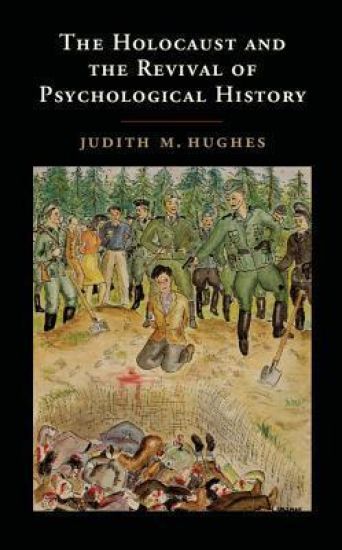
Why did men and women in one of the best educated countries in the Western world set out to get rid of Jews? In this book, Judith M. Hughes focuses on how historians' efforts to grapple anew with matters of actors' meanings, intentions, and purposes have prompted a return to psychoanalytically informed ways of thinking. Hughes makes her case with fine-grained analyses of books by Hugh Trevor-Roper, Ian Kershaw, Daniel Goldhagen, Saul Friedländer, Christopher Browning, Jan Gross, Hannah Arendt and Gitta Sereny. All of the authors pose psychological questions; the more astute among them shed fresh light on the Holocaust - without making the past any less disturbing.
The Holocaust and the Revival of Psychological History

The Holocaust and the Revival of Psychological History

Judith M. Hughes

Cambridge University Press
2014
pokkari
Why did men and women in one of the best educated countries in the Western world set out to get rid of Jews? In this book, Judith M. Hughes focuses on how historians' efforts to grapple anew with matters of actors' meanings, intentions, and purposes have prompted a return to psychoanalytically informed ways of thinking. Hughes makes her case with fine-grained analyses of books by Hugh Trevor-Roper, Ian Kershaw, Daniel Goldhagen, Saul Friedländer, Christopher Browning, Jan Gross, Hannah Arendt and Gitta Sereny. All of the authors pose psychological questions; the more astute among them shed fresh light on the Holocaust - without making the past any less disturbing.
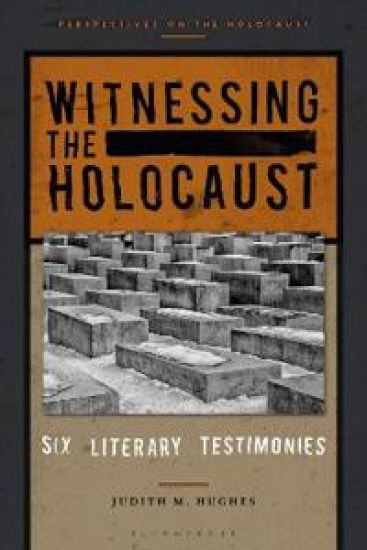
Witnessing the Holocaust

Witnessing the Holocaust

Judith M. Hughes

Bloomsbury Academic
2018
nidottu
Witnessing the Holocaust presents the autobiographical writings, including diaries and autobiographical fiction, of six Holocaust survivors who lived through and chronicled the Nazi genocide. Drawing extensively on the works of Victor Klemperer, Ruth Kluger, Michal Glowinski, Primo Levi, Imre Kertész and Béla Zsolt, this books conveys, with vivid detail, the persecution of the Jews from the beginning of the Third Reich until its very end. It gives us a sense both of what the Holocaust meant to the wider community swept up in the horrors and what it was like for the individual to weather one of the most shocking events in history. Survivors and witnesses disappear, and history, not memory, becomes the instrument for recalling the past. Judith M. Hughes secures a place for narratives by those who experienced the Holocaust in person. This compelling text is a vital read for all students of the Holocaust and Holocaust memory.
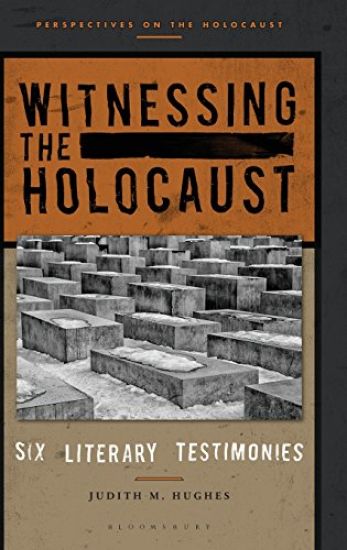
Witnessing the Holocaust

Witnessing the Holocaust

Judith M. Hughes

Bloomsbury Academic
2018
sidottu
Witnessing the Holocaust presents the autobiographical writings, including diaries and autobiographical fiction, of six Holocaust survivors who lived through and chronicled the Nazi genocide. Drawing extensively on the works of Victor Klemperer, Ruth Kluger, Michal Glowinski, Primo Levi, Imre Kertész and Béla Zsolt, this books conveys, with vivid detail, the persecution of the Jews from the beginning of the Third Reich until its very end. It gives us a sense both of what the Holocaust meant to the wider community swept up in the horrors and what it was like for the individual to weather one of the most shocking events in history. Survivors and witnesses disappear, and history, not memory, becomes the instrument for recalling the past. Judith M. Hughes secures a place for narratives by those who experienced the Holocaust in person. This compelling text is a vital read for all students of the Holocaust and Holocaust memory.
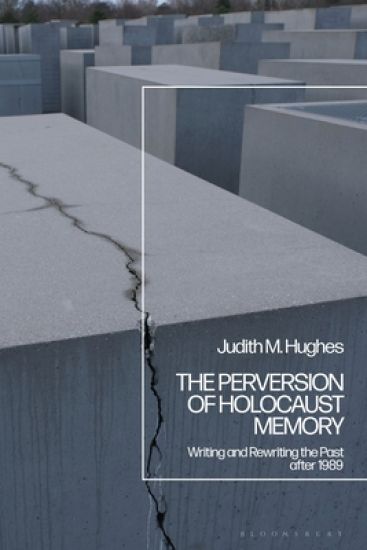
The Perversion of Holocaust Memory

The Perversion of Holocaust Memory

Judith M. Hughes

BLOOMSBURY PUBLISHING PLC
2022
sidottu
In the early years of the 21st century it appeared that the memory of the Holocaust was secure in Western Europe; that, in order to gain entry into the European Union, the countries of Eastern Europe would have to acknowledge their compatriots’ complicity in genocide. Fifteen year later, the landscape looks starkly different. Shedding fresh light on these developments, The Perversion of Holocaust Memory explores the politicization and distortion of Holocaust remembrance since 1989.This innovative book opens with an analysis of events across Europe which buttressed confidence in the stability of Holocaust memory and brought home the full extent of nations' participation in the Final Solution. And yet, as Judith M. Hughes reveals in later chapters, mainstream accountability began to crumble as the 21st century progressed: German and Jewish suffering was equated; anti-Semitic rhetoric re-entered contemporary discourse; populist leaders side-stepped inconvenient facts; and, more recently with the revival of ethno-nationalism, Holocaust remembrance has been caught in the backlash of the European refugee crisis.The four countries analyzed here – France, Germany, Hungary, and Poland – could all claim to be victims of Nazi Germany, the Allies or the Communist Soviet Union but they were also all perpetrators. Ultimately, it is this complex legacy which Hughes adroitly untangles in her sophisticated study of Holocaust memory in modern Europe.
The Perversion of Holocaust Memory

The Perversion of Holocaust Memory

Judith M. Hughes

BLOOMSBURY PUBLISHING PLC
2023
nidottu
In the early years of the 21st century it appeared that the memory of the Holocaust was secure in Western Europe; that, in order to gain entry into the European Union, the countries of Eastern Europe would have to acknowledge their compatriots’ complicity in genocide. Fifteen year later, the landscape looks starkly different. Shedding fresh light on these developments, The Perversion of Holocaust Memory explores the politicization and distortion of Holocaust remembrance since 1989.This innovative book opens with an analysis of events across Europe which buttressed confidence in the stability of Holocaust memory and brought home the full extent of nations' participation in the Final Solution. And yet, as Judith M. Hughes reveals in later chapters, mainstream accountability began to crumble as the 21st century progressed: German and Jewish suffering was equated; anti-Semitic rhetoric re-entered contemporary discourse; populist leaders side-stepped inconvenient facts; and, more recently with the revival of ethno-nationalism, Holocaust remembrance has been caught in the backlash of the European refugee crisis.The four countries analyzed here – France, Germany, Hungary, and Poland – could all claim to be victims of Nazi Germany, the Allies or the Communist Soviet Union but they were also all perpetrators. Ultimately, it is this complex legacy which Hughes adroitly untangles in her sophisticated study of Holocaust memory in modern Europe.
From Obstacle to Ally

From Obstacle to Ally

Judith M. Hughes

Brunner-Routledge
2004
sidottu
From Obstacle to Ally explores the evolution of the theory and practice of psychoanalysis through an investigation of historical examples of clinical practice. Beginning with Freud's experience of the problem of transference, this book is shaped around a series of encounters in which psychoanalysts have managed effectively to negotiate such obstacles and on occasion, convert them into allies. Judith Hughes succeeds in bringing alive the ideas, clinical struggles and evolving practices of some of the most influential psychoanalysts of the last century including Sandor Ferenczi, Anna Freud, Melanie Klein, Wilfred Bion, Betty Joseph and Heinz Kohut. Through an examination of the specific obstacles posed by particular diagnostic categories, it becomes evident that it is often when treatment fails or encounters problems that major advances in psychoanalytic practice are prompted. As well as providing an excellent introduction to the history of fundamental psychoanalytic concepts, From Obstacle to Ally offers an original approach to the study of the processes that have shaped psychoanalytic practice as we know it today and will fascinate practising psychoanalysts and psychotherapists.
From Obstacle to Ally

From Obstacle to Ally

Judith M. Hughes

Brunner-Routledge
2004
nidottu
From Obstacle to Ally explores the evolution of the theory and practice of psychoanalysis through an investigation of historical examples of clinical practice. Beginning with Freud's experience of the problem of transference, this book is shaped around a series of encounters in which psychoanalysts have managed effectively to negotiate such obstacles and on occasion, convert them into allies. Judith Hughes succeeds in bringing alive the ideas, clinical struggles and evolving practices of some of the most influential psychoanalysts of the last century including Sandor Ferenczi, Anna Freud, Melanie Klein, Wilfred Bion, Betty Joseph and Heinz Kohut. Through an examination of the specific obstacles posed by particular diagnostic categories, it becomes evident that it is often when treatment fails or encounters problems that major advances in psychoanalytic practice are prompted. As well as providing an excellent introduction to the history of fundamental psychoanalytic concepts, From Obstacle to Ally offers an original approach to the study of the processes that have shaped psychoanalytic practice as we know it today and will fascinate practising psychoanalysts and psychotherapists.
Medieval Europe

Medieval Europe

Judith M. Bennett; Sandy Bardsley

Oxford University Press Inc
2020
nidottu
For five decades, Medieval Europe: A Short History has been the best-selling text for courses on the history of Medieval Europe. This acclaimed book has long been applauded for both its scholarship and its engaging narrative. Oxford University Press is pleased to continue this tradition of excellence with a new, affordable, and streamlined twelfth edition featuring a new coauthor, Sandy Bardsley. The new edition offers increased coverage of race and ethnicity, more incorporation of archaeological data, an overall streamlining of the text, and more.
Women in the Medieval English Countryside

Women in the Medieval English Countryside

Judith M. Bennett

Oxford University Press Inc
1987
sidottu
In this book, Judith Bennett addresses the gap in our knowledge of medieval country women by examining how their lives differed from those of rural men. Drawing on her study of an English manor in the early-fourteenth century, she finds that rural women were severely restricted in their public roles and rights primarily because of their household status as dependents of their husbands, rather than because of a notion of female inferiority. Adolescent women and widows, by virtue of their unmarried status, enjoyed greater legal and public freedom than did their married counterparts.
Ale, Beer and Brewsters in England

Ale, Beer and Brewsters in England

Judith M. Bennett

Oxford University Press Inc
1997
sidottu
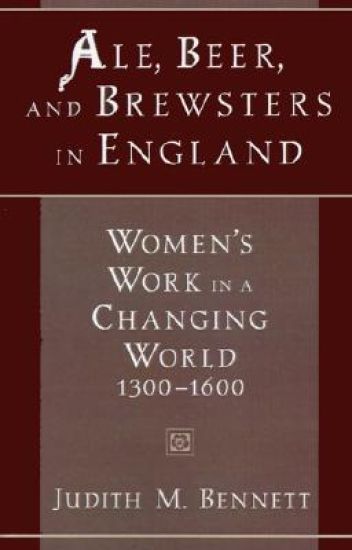
Women brewed and sold most of the ale drunk in medieval England, but after 1350, men slowly took over the trade. By 1600, most brewers in London--as well as in many towns and villages--were male, not female. Drawing on a wide variety of sources--such as literary and artistic materials, court records, accounts, and administrative orders--Judith Bennett vividly describes how brewsters (that is, female brewers) slowly left the trade. She tells a story of commercial growth, gild formation, changing technologies, innovative regulations, and finally, enduring ideas that linked brewsters with drunkenness and disorder. Examining this instance of seemingly dramatic change in women's status, Bennett argues that it included significant elements of continuity. Women might not have brewed in 1600 as often as they had in 1300, but they still worked predominantly in low-status, low-skilled, and poorly remunerated tasks. Using the experiences of brewsters to rewrite the history of women's work during the rise of capitalism, Ale, Beer, and Brewsters in England offers a telling story of the endurance of patriarchy in a time of dramatic economic change.
Ale, Beer and Brewsters in England

Ale, Beer and Brewsters in England

Judith M. Bennett

Oxford University Press Inc
1999
nidottu
Women brewed and sold most of the ale drunk in medieval England, but after 1350, men slowly took over the trade. By 1600, most brewers in London--as well as in many towns and villages--were male, not female. Drawing on a wide variety of sources--such as literary and artistic materials, court records, accounts, and administrative orders--Judith Bennett vividly describes how brewsters (that is, female brewers) slowly left the trade. She tells a story of commercial growth, gild formation, changing technologies, innovative regulations, and finally, enduring ideas that linked brewsters with drunkenness and disorder. Examining this instance of seemingly dramatic change in women's status, Bennett argues that it included significant elements of continuity. Women might not have brewed in 1600 as often as they had in 1300, but they still worked predominantly in low-status, low-skilled, and poorly remunerated tasks. Using the experiences of brewsters to rewrite the history of women's work during the rise of capitalism, Ale, Beer, and Brewsters in England offers a telling story of the endurance of patriarchy in a time of dramatic economic change.
Pragmatism and Social Hope

Pragmatism and Social Hope

Judith M. Green

Columbia University Press
2008
sidottu
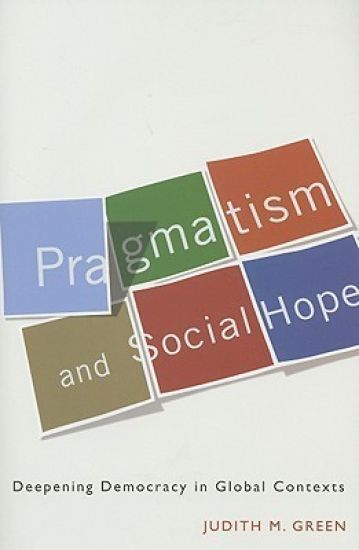
Since 9/11, citizens of all nations have been searching for a democratic public philosophy that provides practical and inspiring answers to the problems of the twenty-first century. Drawing on the wisdom of past and present pragmatist thinkers, Judith M. Green maps a contemporary form of citizenship that emphasizes participation and cooperation and reclaims the critical role of social movements and nongovernmental organizations. Starting with empowering processes of storytelling, truth and reconciliation, and collaborative vision-questing that allow individuals to give voice and new meaning to their loss, anxiety, and hope, Green frames cooperative inquiries to guide transformative actions. From this "second strand" of the democratic experience, leaders and participating citizens can help to shape a more desirable democratic future. In dialogue with Richard Rorty, Judith Butler, James Baldwin, Martin Luther King Jr., Elie Wiesel, Viktor Frankl, Cornel West, and other contemporary thinkers, Green defines the need for deeper understanding and fulfillment of the potentials of the democratic ideal. Drawing insights from Thomas Jefferson, Walt Whitman, William James, John Dewey, Jane Adams, and other earlier thinkers, Green frames a pragmatist understanding of emerging realities and possibilities, growing wells of shared truths, multifaceted histories, and mutually transformative experiences of citizenship. Employing examples from America's complex history and from recent world events, Green locates four sites for effective citizen activism: government at all levels, nonprofit organizations, issue-focused campaigns and social movements, and daily urban living. Green shows how citizens can revive social hope and deepen the democratic experience by drawing on their own knowledge and developing their capabilities through inclusive civic participation.