Kirjojen hintavertailu. Mukana 11 244 527 kirjaa ja 12 kauppaa.

Kirjahaku

Etsi kirjoja tekijän nimen, kirjan nimen tai ISBN:n perusteella.

1000 tulosta hakusanalla Judith M. Lieu

The Theology of the Johannine Epistles

The Theology of the Johannine Epistles

Judith M. Lieu

Cambridge University Press
1991
sidottu
The Johannine Epistles have long been recognised as contributing a vital element to the theology of the New Testament. Usually it is to the Gospel that the reader turns first in order to explore that contribution; the First Epistle is treated as a supplement, while 2 and 3 John - on account of their brevity - receive little attention. This book allows the Epistles to speak for themselves, and shows that they sound a distinctive note within Johannine theology, in particular, and the thought of the New Testament, in general. Dr Lieu carefully outlines their most important theological themes (comprising, for example, tensions-in-unity between confidence and imperative, individual and community, and faith and tradition) which - when understood in their original setting - are seen to have rich potential for the continuing theology of the Church. By focusing on the Johannine Epistles in their proper context and in their own right, the author of this book thus provides a timely reassessment of the substantial theological contribution they have to make.
The Theology of the Johannine Epistles

The Theology of the Johannine Epistles

Judith M. Lieu

Cambridge University Press
1991
pokkari
The Johannine Epistles have long been recognised as contributing a vital element to the theology of the New Testament. Usually it is to the Gospel that the reader turns first in order to explore that contribution; the First Epistle is treated as a supplement, while 2 and 3 John - on account of their brevity - receive little attention. This book allows the Epistles to speak for themselves, and shows that they sound a distinctive note within Johannine theology, in particular, and the thought of the New Testament, in general. Dr Lieu carefully outlines their most important theological themes (comprising, for example, tensions-in-unity between confidence and imperative, individual and community, and faith and tradition) which - when understood in their original setting - are seen to have rich potential for the continuing theology of the Church. By focusing on the Johannine Epistles in their proper context and in their own right, the author of this book thus provides a timely reassessment of the substantial theological contribution they have to make.

Marcion and the Making of a Heretic

Marcion and the Making of a Heretic

Judith M. Lieu

Cambridge University Press
2015
sidottu
A comprehensive and authoritative account of the 'heretic' Marcion, this volume traces the development of the concept and language of heresy in the setting of an exploration of second-century Christian intellectual debate. Judith M. Lieu analyses accounts of Marcion by the major early Christian polemicists who shaped the idea of heresy, including Justin Martyr, Irenaeus, Tertullian, Epiphanius of Salamis, Clement of Alexandria, Origen, and Ephraem Syrus. She examines Marcion's Gospel, Apostolikon, and Antitheses in detail and compares his principles with those of contemporary Christian and non-Christian thinkers, covering a wide range of controversial issues: the nature of God, the relation of the divine to creation, the person of Jesus, the interpretation of Scripture, the nature of salvation, and the appropriate lifestyle of adherents. In this innovative study, Marcion emerges as a distinctive, creative figure who addressed widespread concerns within second-century Christian diversity.
Marcion and the Making of a Heretic

Marcion and the Making of a Heretic

Judith M. Lieu

Cambridge University Press
2017
pokkari
A comprehensive and authoritative account of the 'heretic' Marcion, this volume traces the development of the concept and language of heresy in the setting of an exploration of second-century Christian intellectual debate. Judith M. Lieu analyses accounts of Marcion by the major early Christian polemicists who shaped the idea of heresy, including Justin Martyr, Irenaeus, Tertullian, Epiphanius of Salamis, Clement of Alexandria, Origen, and Ephraem Syrus. She examines Marcion's Gospel, Apostolikon, and Antitheses in detail and compares his principles with those of contemporary Christian and non-Christian thinkers, covering a wide range of controversial issues: the nature of God, the relation of the divine to creation, the person of Jesus, the interpretation of Scripture, the nature of salvation, and the appropriate lifestyle of adherents. In this innovative study, Marcion emerges as a distinctive, creative figure who addressed widespread concerns within second-century Christian diversity.
Explorations in the Second Christian Century
As allegiance to Jesus Christ spread across the Roman Empire in the second century, writings, practices, and ideas erupted in a creative maelstrom. Many of the patterns of practice and belief that later become normative emerged, in the midst of debate and argument with neighbours who shared or who rejected that allegiance. Authoritative texts, principles of argument, attitudes to received authority, the demands of allegiance in the face of opposition, identifying who belonged and who did not, all demanded attention. These essays explore those divergent voices, and the no-less diverse and lively debates they have inspired in recent scholarship.
The Gospel of Luke

The Gospel of Luke

Judith M Lieu

Wipf Stock Publishers
2012
pokkari
This commentary explores how Luke was retelling the story of Jesus in the light of the challenges faced by the early church as it spread through the Roman Empire, and shows how the gospel can be preached today both in faithfulness to the past and as a response to contemporary questions.
Medieval Europe

Medieval Europe

Judith M. Bennett; Sandy Bardsley

Oxford University Press Inc
2020
nidottu
For five decades, Medieval Europe: A Short History has been the best-selling text for courses on the history of Medieval Europe. This acclaimed book has long been applauded for both its scholarship and its engaging narrative. Oxford University Press is pleased to continue this tradition of excellence with a new, affordable, and streamlined twelfth edition featuring a new coauthor, Sandy Bardsley. The new edition offers increased coverage of race and ethnicity, more incorporation of archaeological data, an overall streamlining of the text, and more.
Women in the Medieval English Countryside

Women in the Medieval English Countryside

Judith M. Bennett

Oxford University Press Inc
1987
sidottu
In this book, Judith Bennett addresses the gap in our knowledge of medieval country women by examining how their lives differed from those of rural men. Drawing on her study of an English manor in the early-fourteenth century, she finds that rural women were severely restricted in their public roles and rights primarily because of their household status as dependents of their husbands, rather than because of a notion of female inferiority. Adolescent women and widows, by virtue of their unmarried status, enjoyed greater legal and public freedom than did their married counterparts.
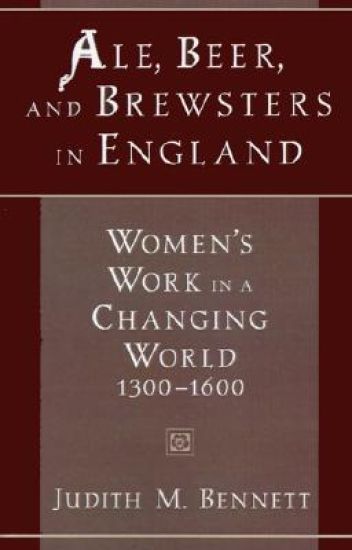
Ale, Beer and Brewsters in England

Ale, Beer and Brewsters in England

Judith M. Bennett

Oxford University Press Inc
1997
sidottu
Women brewed and sold most of the ale drunk in medieval England, but after 1350, men slowly took over the trade. By 1600, most brewers in London--as well as in many towns and villages--were male, not female. Drawing on a wide variety of sources--such as literary and artistic materials, court records, accounts, and administrative orders--Judith Bennett vividly describes how brewsters (that is, female brewers) slowly left the trade. She tells a story of commercial growth, gild formation, changing technologies, innovative regulations, and finally, enduring ideas that linked brewsters with drunkenness and disorder. Examining this instance of seemingly dramatic change in women's status, Bennett argues that it included significant elements of continuity. Women might not have brewed in 1600 as often as they had in 1300, but they still worked predominantly in low-status, low-skilled, and poorly remunerated tasks. Using the experiences of brewsters to rewrite the history of women's work during the rise of capitalism, Ale, Beer, and Brewsters in England offers a telling story of the endurance of patriarchy in a time of dramatic economic change.
Ale, Beer and Brewsters in England

Ale, Beer and Brewsters in England

Judith M. Bennett

Oxford University Press Inc
1999
nidottu
Women brewed and sold most of the ale drunk in medieval England, but after 1350, men slowly took over the trade. By 1600, most brewers in London--as well as in many towns and villages--were male, not female. Drawing on a wide variety of sources--such as literary and artistic materials, court records, accounts, and administrative orders--Judith Bennett vividly describes how brewsters (that is, female brewers) slowly left the trade. She tells a story of commercial growth, gild formation, changing technologies, innovative regulations, and finally, enduring ideas that linked brewsters with drunkenness and disorder. Examining this instance of seemingly dramatic change in women's status, Bennett argues that it included significant elements of continuity. Women might not have brewed in 1600 as often as they had in 1300, but they still worked predominantly in low-status, low-skilled, and poorly remunerated tasks. Using the experiences of brewsters to rewrite the history of women's work during the rise of capitalism, Ale, Beer, and Brewsters in England offers a telling story of the endurance of patriarchy in a time of dramatic economic change.
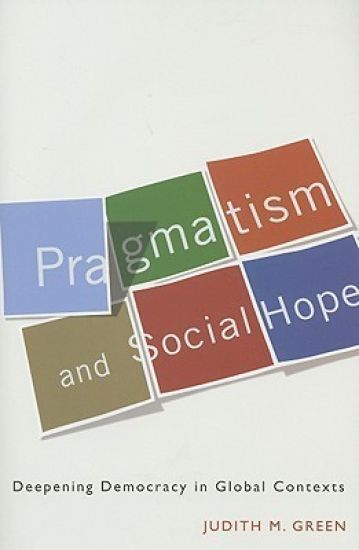
Pragmatism and Social Hope

Pragmatism and Social Hope

Judith M. Green

Columbia University Press
2008
sidottu
Since 9/11, citizens of all nations have been searching for a democratic public philosophy that provides practical and inspiring answers to the problems of the twenty-first century. Drawing on the wisdom of past and present pragmatist thinkers, Judith M. Green maps a contemporary form of citizenship that emphasizes participation and cooperation and reclaims the critical role of social movements and nongovernmental organizations. Starting with empowering processes of storytelling, truth and reconciliation, and collaborative vision-questing that allow individuals to give voice and new meaning to their loss, anxiety, and hope, Green frames cooperative inquiries to guide transformative actions. From this "second strand" of the democratic experience, leaders and participating citizens can help to shape a more desirable democratic future. In dialogue with Richard Rorty, Judith Butler, James Baldwin, Martin Luther King Jr., Elie Wiesel, Viktor Frankl, Cornel West, and other contemporary thinkers, Green defines the need for deeper understanding and fulfillment of the potentials of the democratic ideal. Drawing insights from Thomas Jefferson, Walt Whitman, William James, John Dewey, Jane Adams, and other earlier thinkers, Green frames a pragmatist understanding of emerging realities and possibilities, growing wells of shared truths, multifaceted histories, and mutually transformative experiences of citizenship. Employing examples from America's complex history and from recent world events, Green locates four sites for effective citizen activism: government at all levels, nonprofit organizations, issue-focused campaigns and social movements, and daily urban living. Green shows how citizens can revive social hope and deepen the democratic experience by drawing on their own knowledge and developing their capabilities through inclusive civic participation.
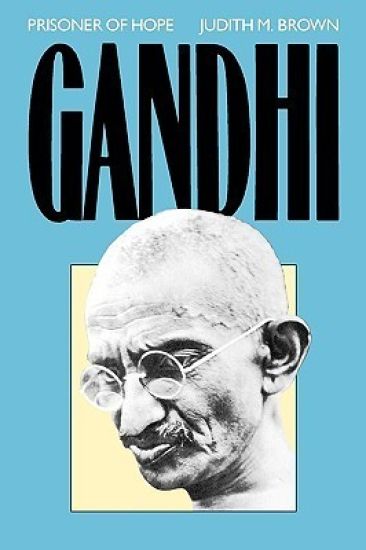
Gandhi

Gandhi

Judith M. Brown

Yale University Press
1991
pokkari
The definitive biography of one of this century’s most important—and controversial—figures. Drawing on sources only recently made available, Judith M. Brown sketches a fresh and surprising portrait of Gandhi within the context of his time, in which the Indian leader emerges as neither a plaster saint nor a wily politician, but as a complex man whose actions followed honorably from his convictions. "This is the best biography of Gandhi so far and deserves to be read by everyone interested in him and in modern India."—Bhikhu Parekh, New Statesman and Society "Judith Brown has written the most systematic, balanced, and clear biography of Gandhi I have yet seen."—Howard Spodek, Annals of the American Academy of Political and Social Science "In fascinating detail, Brown chronicles the fate of nonviolent tactics in South Africa and, after 1915, in India, where Gandhi—now clad in loincloth and sandals—quickly became a patriotic hero."—Jim Miller, Newsweek "It is a superb book, elegantly written, and I would recommend it to anyone who wants to know more about Gandhi as well as the social context which helped to mould him as a man and a politician."—Tariq Ali, Guardian "This is as fine an exposition of Gandhi’s religious beliefs as we are likely to get. … [Brown] has clearly established herself as [Gandhi’s] leading interpreter to her generation."—Antony Copley, History Today Judith M. Brown is Beit Professor of the History of the British Commonwealth at Oxford University.
Freudian Analysts/Feminist Issues

Freudian Analysts/Feminist Issues

Judith M. Hughes

Yale University Press
1999
sidottu
In this important book Judith M. Hughes makes a highly original case for conceptualizing gender identity as potentially multiple. She does so by situating her argument within the history of psychoanalysis.Hughes traces a series of conceptual lineages, each descending from Freud. In the study Helene Deutsch, Karen Horney, and Melanie Klein occupy prominent places. So too do Erik H. Erikson and Robert J. Stoller. Among contemporary theorists Carol Gilligan and Nancy Chodorow are included in Hughes’s roster.In each lineage Hughes discerns an evolutionary narrative: Deutsch tells a story of retrogression; Erikson names his epigenesis, and Gilligan continues in that vein; Horney’s discussion recalls sexual selection; Stoller’s and Chodorow’s theorizing brings artificial selection to mind; and finally in Klein’s work Hughes sees a story of natural selection and adds to it her own notion of multiple gender identities.
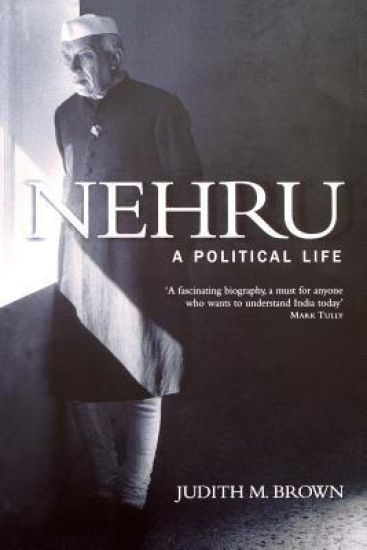
Nehru

Nehru

Judith M. Brown

Yale University Press
2005
pokkari
The first Prime Minister of India after independence from British rule, Jawaharlal Nehru (1889-1964) was a major architect of India as a nation state. His dedication to politics led to imprisonment, a deeply disturbed family life, and eventually to nearly two decades in power. This compelling biography depicts the phases of Nehru's life and shows how each phase reflected ongoing developments in Indian politics. Drawing on new sources Judith M. Brown offers the most complete and penetrating account of Nehru yet written. The book also provides an array of insights into the complexity of constructing a new nation state in the aftermath of imperial rule. 'Brown's fine biography shows vividly how much the subcontinent and its first leader have in common.' Philip Ziegler, 'Literary Review' 'an absorbing, scrupulously researched and convincing assessment of one of the most important political figures of the 20th century.' Katherine Frank, 'New Statesman' 'A superb book, Judith Brown catches the spirit of Nehru's times as well as his own tribulations and achievements.' Wm. Roger Louis, University of Texas at Austin Judith M. Brown is Beit Professor of Commonwealth History, University of Oxford, and professorial fellow of Balliol College, Oxford.
Endangered Peoples of Oceania

Endangered Peoples of Oceania

Judith M. Fitzpatrick

Greenwood Press
2000
sidottu
The peoples of Oceania are struggling to be economically independent and autonomous while maintaining their distinctive cultural traditions. Each chapter in Endangered Peoples of Oceania: Struggles to Survive and Thrive is devoted to a specific people, including a cultural overview of their history, subsistence strategies, social and political organization, and religion and world view; threats to their survival; and their response to these threats. A section entitled Food for Thought poses questions that encourage a personal engagement with the experience of these peoples, and a resource guide suggests further reading and lists films and videos as well as pertinent organizations and web sites. As the curriculum expands to include more multicultural and indigenous peoples, this unique volume will be valuable to both students and teachers.
Religious Scandals

Religious Scandals

Judith M. Buddenbaum

Greenwood Press
2009
sidottu
This volume looks at headline-grabbing scandals involving American religious figures from the 19th century to the present, showing how the media and society in general reacted to these controversies. Religious Scandals brings together real-life controversies involving men and women of faith, from the media frenzy over the 1811 New York blasphemy case of People v. Ruggles that shaped American law for well over 100 years to the 2008 government raid on the fundamentalist Mormon Yearning for Zion community in Texas. Religious Scandals focuses on two types of subjects: religious figures whose lapses put them at the center of scandals involving sex, money, or crime; and those who scandalized their fellow citizens by acting out according to their own religious beliefs. Together, these stories—some familiar, some little known—offer a fascinating portrait of American religious culture, as well insights into the role of the media in religious scandals, constitutional protections of religious freedom, and the overriding issue of public curiosity versus individual privacy.
NEHRU

NEHRU

JUDITH M. BROWN

TAYLORFRANCIS
2019
nidottu
Judith Brown explores Nehru as a figure of power and provides an assessment of his leadership at the head of a newly independent India with no tradition of democratic politics.
Enterprise Systems Integration

Enterprise Systems Integration

Judith M. Myerson

CRC Press
2019
nidottu
The convergence of knowledge, technology, and human performance which comprises today's enterprise allows creative business process design. Thus, an organization can create new and innovative ways to service customers or to do business with suppliers and make itself a leader in its field. This capability relies on a successful strategy that integrates the enterprise. Enterprise Systems Integration, Second Edition continues to provide you with the business insight and the technical know-how that ensures successful systems integration. The book combines the perspectives, knowledge, and experience of more than 70 experts in the various areas that involve enterprise integration. Their expertise ranges from hands-on experience with technology and project management to the higher-level issues of business and management strategy. Each chapter examines an issue or technology relevant to today's enterprise. Collectively, these chapters span the range of enterprise computing and systems integration. Once armed with the strategy and technologies, you must successfully deploy ERP systems within budget and on time. In addition, you must be able to integrate them into the rest of the enterprise. Still, ERP software does not make up the full picture of today's enterprise. Legacy systems, e-commerce and other Web-based systems, client/server applications, networks and communications systems, data warehousing, and integrated databases enter into the mix. Enterprise Systems Integration, Second Edition paints a comprehensive picture of the technologies that comprise today's enterprise and shows you how to make them work together.