Kirjahaku
Etsi kirjoja tekijän nimen, kirjan nimen tai ISBN:n perusteella.
1000 tulosta hakusanalla Judith Petres Balogh



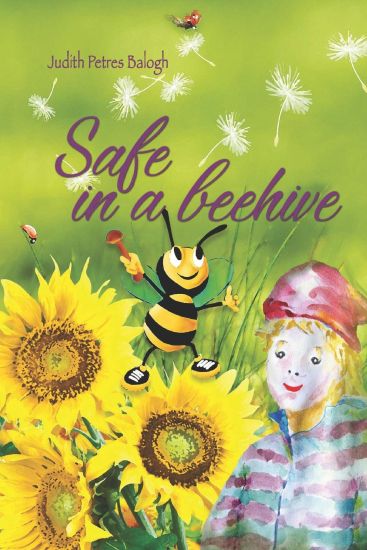
Through an accident, Mike is shrunk to the size of a bee. Lost and scared he finally finds refuge in a beehive, where he learns about the society of bees and gradually accepts the different culture, never fogetting his own. He has to rely on his own skills to survive, but also invents new ways to help himself. Gradually he changes from his former belligerent self into a gentler and better version of himself. By the time he wakes up, because of course his adventure was just a magical dream, he is a changed boyIt is a realistic fantasy, with correct information and adventurous elements involving bees.
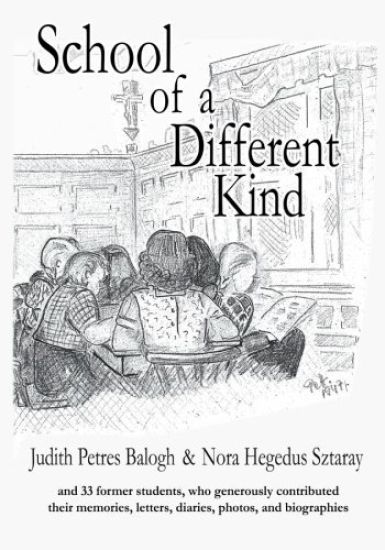
School of a Different Kind
Nóra Hegedus Sztaray; Judith Petres Balogh
Createspace Independent Publishing Platform
2015
nidottu


Lead Mining Land the Northern Pennines
Judith Milton; Chrissie Peters
Stemple Sike Press
2023
nidottu
An informal, informative introduction to lead mining in the Northern Pennines. Uniquely, the theme and structure are both guided by the "Pennine Poems" of the late W.H.Auden. Chapters on geology, technology, the environmental legacy of mining, social history, industrial history and heritage tourism are all introduced by lines from poetry as the authors respond to Auden's claim (made in the poem, The Watershed) that the land he saw before him refused to communicate. Well researched, colourfully illustrated and thoughtfully formatted, the book describes the ways the land does speak. The book contains two complete Auden poems and extracts from five others. Worldwide copyright permission has been granted.
The Common Core, an Uncommon Opportunity
March Judith K.; Peters Karen H.
Corwin Press Inc
2014
nidottu
This book shows school leaders how to redesign their instructional delivery system, both at primary and secondary level. What’s more, March and Peters describe how to integrate 21st Century Skills at the very same time. This will help readers: Develop consistent and structured teaching and learning practices across content areas Ensure sustainable processes through continuous curriculum review and revision Strategically use data to monitor student performance goals Support and sustain enacted reforms through district-wide infrastructure adjustments Provide teachers with Common Core-aligned course tools, including sample curriculum maps, lessons, and specific teaching suggestions
"A fresh new approach that strengthens the need for teaching with creative thinking strategies for administrative leadership teams. Few textbooks have such detailed examples combined with the background study of best practices. The authors have great credibility, experience, resources, and abundant research to support their proposal. A very well-written text offering ample review of the research."—Sara E. Spruce, Professor of EducationOlivet Nazarene UniversityUse this research-based instructional model to meet students' achievement goals!As the achievement gap between advantaged and disadvantaged students gets wider, teachers and administrators need a proven process to help all students meet the requirements of NCLB. This practitioner-friendly guidebook provides a step-by-step approach to a complete standards-based curriculum and the integration of best practices into the delivery and assessment of instruction in every classroom.The authors present three capacity-building features of the design process: (1) training for building leadership teams to help teachers plan and lead the reform process, (2) stewardship training to assist district administrators and principals in supporting and sustaining the implemented reforms, and (3) a collaborative observation process to help teachers work together and in partnership with principals to monitor and improve classroom instruction.Offering an education model that has been field-tested with more than 50 school districts in the U.S. and Canada, this book shows school leaders how to maximize collaborative observation and other team leadership processes to integrate reforms into a school's existing culture. Educators will learn ways to:Integrate instructional design with successful instructional reformStrengthen the learning culture through standardsDevelop effective performance indicatorsApply curriculum mapping to instructional designDesigning Instruction supports teachers and administrators working together to raise student achievement by using proven instructional design and best practices.

Judith is Volume 40 in the acclaimed anchor Bible series of new book-by-book translations of the Old and New Testaments and Apocrypha. In the Apocrypha, Judith is the saint who murdered for her people. She offered herself to Holofernes, the Assyrian general sent by Nebuchadnezzar to destroy the Israelites. After she had charmed Holofernes with flattery and drink, Judith chopped of his head while he lay in a drunken stupor, thereby leaving his troops “headless” and in a state of total panic and confusion. Her victory was celebrated in song and brought peace to her land for years to come. In his illuminating new translation and commentary, Carey A. Moore considers the historicity of the story and explores the author’s true intent: Was it to describe actual events or to compose a fictitious story of other purposes? Was his concern more historical or theological? The story of Judith abounds in ironies. There is Judith, the beautiful woman who lived a stark, celibate existence after her husband’s death had left her a wealthy widow. Born into a sexist society with rigidly defined roles, Judith better “played the man” than did any of her male compatriots. There is Holofernes, the Assyrian conqueror, unable to defeat a small Israelite village after dozens of countries had fallen under his sword. Intent on seducing Judith, Holofernes instead lost his head to her. Perhaps the ultimate irony of all is the story of Judith itself: the timeless tale of a deeply religious woman who became revered not for her poverty but for an act of murder. Dr. Moore’s study of the canonicity of Judith brings perspective to the story’s varied acceptance among both Jews and Christians. It also notes the similarity between this work and the equally popular story of Esther; each woman, through different means, served her people through acts of bravery. The photographs and maps illustrating Judith include depictions of the story of Judith by such masters as Machiavelli, Botticelli, Caravaggio, and Donatello.


The 1960s was a time when Australia was changing and the old ways were being left behind. At 21 Judith is ready to conquer the world, she has a new job working for the government, and a new life ahead of her that will test her resolve. Moving to the city will take her from naive romantic notions and the protection of small town living to discovering that around the corner life's twists and turns carry you along paths you never anticipated. The communist movement is looking for converts to infiltrate the government. Will they draw her in? Women are living and loving more freely. Will she ignore the promises she made and allow the lure of this new life to change her? Will she find romance or tragedy? What will her family think if she tells them? She will need wisdom, courage and faith for the journey as the road to independence always comes at a price.
Judith tells the story of a beautiful Jewish woman who enters the tent of an invading general, gets him drunk, and then slices off his head, thus saving her village and Jerusalem. This short novella was somewhat surprisingly included in the early Christian versions of the Old Testament and has played an important role in the Western tradition ever since. This commentary provides a detailed analysis of the text's composition and its meaning in its original historical context, and thoroughly surveys the history of Judith scholarship. Lawrence M. Wills not only considers Judith's relation to earlier biblical texts--how the author played upon previous biblical motifs and interpreted important biblical passages--but also addresses the rise of Judith and other Jewish novellas in the context of ancient Near Eastern and Greek literature, as well as their relation to cross-cultural folk motifs. Because of the popularity of Judith in art and culture, this volume also addresses the book's history of interpretation in paintings, sculpture, music, drama, and literature. A number of images of artistic depictions of Judith are included and discussed in detail.

2023 Catholic Media Association First Place Award, Scripture – Academic Studies The striking scene of Judith cutting off Holofernes’s head with his own sword in his own bed has inspired the imaginations of readers for millennia. But there is more to her story than just this climactic act and more to her character than just beauty and violence. This volume offers a comprehensive examination of gender ideologies in the book of Judith, from the hyper-masculine machinations of war and empire to the dynamics of class in Judith’s relationship with her enslaved handmaid. Overall, this commentary investigates the book of Judith through a feminist lens, informed by critical masculinity studies, queer theory, and reception criticism.
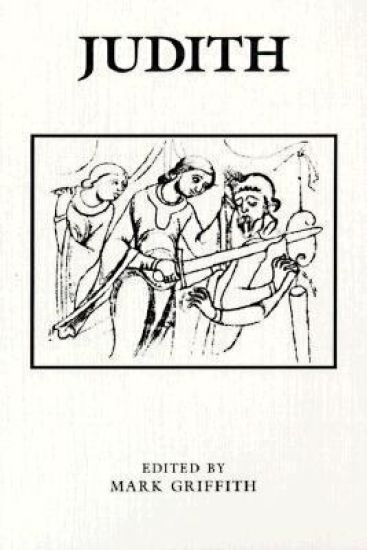
Judith
University of Exeter Press
1997
nidottu
Undergraduates frequently find the fine Old English poem JUDITH the most stimulating of the surviving texts from the Anglo-Saxon period. In the past thirty years it has attracted a wide range of literary criticism both in the UK and the US. Feminist critics of English literature have been particularly interested by the ways in which the poet has adapted the traditional masculine heroic ethos of Old English poetry to a story figuring a violently active female protagonist.Yet there is no available edition of Judith which is either comprehensive or up to date, or which at all explains how and why the poem is worthy of our attention. This new edition aims to fill this gap. It includes a full Introduction and commentary by the editor, plus a comprehensive glossary, bibliography and appendices.
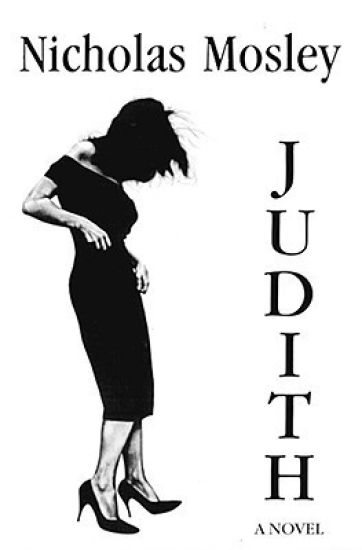
Judith is an aspiring young actress and the mistress of a writer on a popular satirical magazine. We learn of her involvement with drugs and increasing self-delusion. After a crack-up, she seeks healing in an Indian ashram run by an eccentric and possibly mad guru. But what is at the back of appearances; how calculated is the self-destructiveness from which a new order might emerge?