As an institutional, political, and cultural oral history of the struggle to unionize the River Rouge Plant near Detroit during the 1930s and 40s, this book affords us a rare insight into the difficulties of organizing a union in the face of the then anti-union Ford Motor Company. Against a backdrop of the depression and entrenched racism, history was made by courageous individuals whose rich, eloquent stories illuminate the character and views of others like them across the nation, from all backgrounds: left, right, and center; black and white; native and foreign born, Jew and gentile.
From the late 1930s through the mid-1950s, the Congress of Industrial Organizations (CIO) brought together America's working men and women under a united class banner. Of the 38 CIO unions, 18 were 'left-wing' or 'Communist-dominated'. Yet the political struggle between the CIO's 'Communist dominated' and right-leaning unions was immensely divisive and self-destructive. How did the Communists win, hold, and wield power in the CIO unions? Did they subordinate the needs of workers to those of the Soviet regime? The authors of this book, first published in 2002, provide testable answers to these questions with historically specific quantitative analyses of data on the CIO's origins, internal struggles, and political relations. They find that among the CIO unions, the Communists were more egalitarian, the most progressive on class, race, and gender issues, and leading fighters in struggles to enlarge the freedom and enhance the human dignity of America's workers.
From the late 1930s through the mid-1950s, the Congress of Industrial Organizations (CIO) brought together America’s working men and women under a united class banner. Of the 38 CIO unions, 18 were ‘left-wing’ or ‘Communist-dominated’. Yet the political struggle between the CIO’s ‘Communist dominated’ and right-leaning unions was immensely divisive and self-destructive. How did the Communists win, hold, and wield power in the CIO unions? Did they subordinate the needs of workers to those of the Soviet regime? The authors provide testable answers to these questions with historically specific quantitative analyses of data on the CIO’s origins, internal struggles, and political relations. They find that among the CIO unions, the Communists were more egalitarian, the most progressive on class, race, and gender issues, and leading fighters in struggles to enlarge the freedom and enhance the human dignity of America’s workers.
Union Booms and Busts takes a bird's eye view of the shifting fortunes of U.S. workers and their unions on the one hand, and employers and their organizations on the other. Using detailed data, this book analyses union density across 11 industries and 115 years, contrasting the organizing and union building successes and failures across decades. With attention to historical developments and the economic, political, and legal contexts of each period, it highlights workers' and their unions' actions, including strikes, union elections, and organizing strategies as well those of employers, who aimed to disrupt union organizing using legal maneuvers, workforce-based strategies, and race and gender divisions. By demonstrating how workers used strikes, elections, and other strategies to win power and employers used legal maneuvers, workforce-based strategies, and race and gender divisions to disrupt unions, the authors reveal data-driven truths about the ongoing history of unionization. Chapters follow time periods: the early unregulated period where unions took hold in only a handful of industries; the mid-century regulated period where strikes, elections, and union density grew across industries; and the later dis-regulated period where union trajectories diverged, with some industries seeing drastic decline and others holding steady. The book concludes by turning toward what might come next for workers and unions in America and provides access to on-line data for readers who want to take a closer look
When (re-)designing organizations, one must first be clear about what is meant by the structures of an organization and what can be done in order to change them. In this book, we present communication channels, programs and personnel as central structures. We also unfold the aspects that come to the forefront when one focuses on either the formal, the informal or the display side of an organization. At the core, we elaborate on how structures cause blind spots, and how these can be utilized for processes of change.
In diesem Buch werden Kommunikationswege, Programme und Personal als zentrale Organisationsstrukturtypen vorgestellt. Denn um Organisationen gestalten zu können, muss man sich klarmachen, was die Strukturen einer Organisation sind und wie man die Strukturen verändern kann. Es wird gezeigt, welche unterschiedlichen Aspekte ins Blickfeld kommen, wenn man die formale Seite, die informale Seite oder die Schauseite in den Fokus nimmt. Im Mittelpunkt steht, wie die blinden Flecken einer Organisation durch die Strukturbildung entstehen und wie Veränderungsprozesse an diesen blinden Flecken ansetzen können.
In der Führungsdiskussion wird der Scheinwerfer bisher vorrangig auf Personen gerichtet. Es werden kleine interaktionelle Tipps und Tricks gegeben, mit denen man effektiver führen kann. Die Wirksamkeit dieser Vorgehensweisen sind jedoch begrenzt. In diesem Buch wird gezeigt, wie die Ausbildung von Führungsmöglichkeiten durch die Gestaltung von Organisationsstrukturen beeinflusst werden kann. Durch „gute Organisation“ können dabei Führungsnotwendigkeiten reduziert werden. Wer sinnvoll über Führung reden will, sollte deswegen über Organisation nicht schweigen.
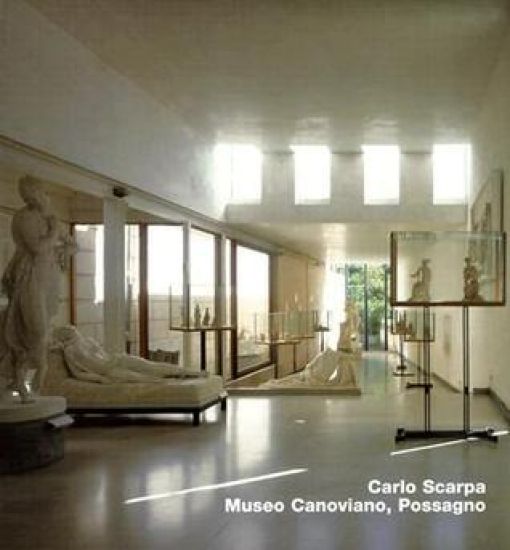
Text in English and Italian. In a letter from London, dated 9 November 1815, Antonio Canova wrote: "...Here I am in London, dear and best friend, a wonderful city...I have seen the marbles arriving from Greece. Of the basreliefs we had some ideas from engravings, but of the full colossal figures, in which an artist can display his whole power and science, we have known nothing...The figures of Phidias are all real and living flesh, that is to say are beautiful nature itself." With his admiring words for the famous Elgin Marbles Canova, one of the last great artists embodying the grandiose heritage of the classical world, gave at the same time an appropriate description of his own artistic aims. It was his half-brother who decided to assemble most of Canova's plaster originals and to place them in a museum he had built in the garden of his brother's home in Possagno, a small village north of Venice, where the artist saw the light of day on 1 November 1757. This basilica-like building erected in 1836 now holds the great majority of Canova's compositions.To commemorate the bicentenary of his birth, the Venetian authorities decided to have an extension added to the overcrowded basilica, and they commissioned the Venetian architect Carlo Scarpa for this delicate task. Scarpa composed a small, but highly articulated building that is in a strong contrast to the Neo-Classical, monumental basilica. The subtly designed sequence of spaces is unique even among Scarpa's so many extraordinary museum interiors as the architect was here in the rare position to compose the spaces as well as the placings of the exhibits. The placing of the sources of natural light which infuses the plaster surfaces with the softness of real life is in itself a rare achievement and it took an equally rare photographer to record such symphonies in white in all their magic.
Many sociological, historical and cultural stories can be and have already been told about why it is that parents in post-industrial, western societies face an often overwhelming array of advice on how to bring up their children. At the same time, there have been several philosophical treatments of the legal, moral and political issues surrounding issues of procreation, the rights of children and the duties of parents, as well as some philosophical accounts of the shifts in our underlying conceptualization of childhood and adult-child relationships. While this book partly builds on the insights of this literature, it is significantly different in that it offers a philosophically-informed discussion of the actual practical experience of being a parent, with its deliberations, judgements and dilemmas. In probing the ethical and conceptual questions suggested by the parent-child relationship, this unique volume demonstrates the irreducible philosophical richness of this relationship and thus provides an important counter-balance to the overly empirical and largely psychological focus of a great deal of “parenting” literature. Unlike other analytic work on the parent-child relationship and the educational role of parents, this work draws on first-person accounts of the day-to-day experience of being a parent in order to explore the ethical and epistemological aspects of this experience. In so doing it exposes the limitations of some of the languages within which contemporary “parenting” is conceptualized and discussed, and opens up a space for thinking about childrearing and the parent-child relationship beyond and other than in terms of the languages which dominate the ways in which we generally think about it today.
Many sociological, historical and cultural stories can be and have already been told about why it is that parents in post-industrial, western societies face an often overwhelming array of advice on how to bring up their children. At the same time, there have been several philosophical treatments of the legal, moral and political issues surrounding issues of procreation, the rights of children and the duties of parents, as well as some philosophical accounts of the shifts in our underlying conceptualization of childhood and adult-child relationships. While this book partly builds on the insights of this literature, it is significantly different in that it offers a philosophically-informed discussion of the actual practical experience of being a parent, with its deliberations, judgements and dilemmas. In probing the ethical and conceptual questions suggested by the parent-child relationship, this unique volume demonstrates the irreducible philosophical richness of this relationship and thus provides an important counter-balance to the overly empirical and largely psychological focus of a great deal of “parenting” literature. Unlike other analytic work on the parent-child relationship and the educational role of parents, this work draws on first-person accounts of the day-to-day experience of being a parent in order to explore the ethical and epistemological aspects of this experience. In so doing it exposes the limitations of some of the languages within which contemporary “parenting” is conceptualized and discussed, and opens up a space for thinking about childrearing and the parent-child relationship beyond and other than in terms of the languages which dominate the ways in which we generally think about it today.
mso-bidi-language: AR-SA;">When (re-)designing organizations, one must first be clear about what is meant by the structures of an organization and what can be done in order to change them. At the core, we elaborate on how structures cause blind spots, and how these can be utilized for processes of change.
Judith S. McKenzie; Joseph A. Greene; Andres T. Reyes; Catherine S. Alexander; Deirdre G. Barrett; Brian Gilmour; John F. Healey; Margaret O’Hea; Nadine Schibille; Stephan G. Schmid; Wilma Wetterstrom; Sara Whitcher Kansa
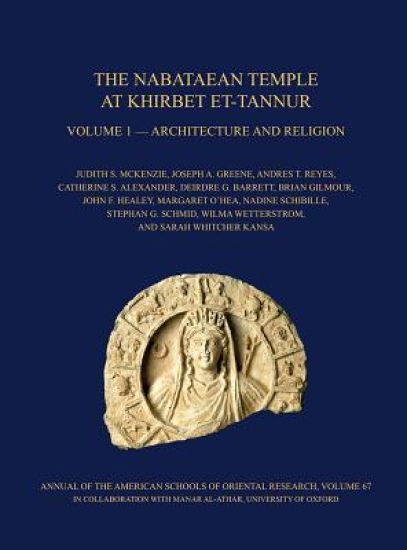
Khirbet et-Tannur is a Nabataean site dating from the second century B.C. to the fourth to sixth centuries A.D. located on a hilltop above the Wadi el-Hasa near Khirbet edh-Dharih, 70 km north of Petra along the King’s Highway. In 1937, Nelson Glueck excavated Khirbet et-Tannur on behalf of the American Schools of Oriental Research and the Department of Antiquities of Transjordan, but died before completing a final report. Now, in two extensively illustrated volumes, the results of Glueck’s excavations are finally published, based on previously unstudied excavation records and archaeological materials in the ASOR Nelson Glueck Archive at the Semitic Museum, Harvard University. Volume 1 is devoted to the architecture of the temple, the dating of its successive phases, its sculptural decoration and iconography,and to a discussion of Nabataean religion, including the evidence for its connections with the religion of Iron Age Edom and its continuation at the temple of Khirbet et-Tannur well into the Christian era, before the A.D. 363 earthquake brought an end to the site. The volume closes with observations about iconoclasm at Khirbet et-Tannur, Khirbet edh-Dharih and Petra. Annual of ASOR 67
Judith S. McKenzie; Joseph A. Greene; Andres T. Reyes; Catherine S. Alexander; Deirdre G. Barrett; Brian Gilmour; John F. Healey; Margaret O’Hea; Nadine Schibille; Stephan G. Schmid; Wilma Wetterstrom; Sara Whitcher Kansa
Khirbet et-Tannur is a Nabataean site dating from the second century B.C. to the fourth to sixth centuries A.D. located on a hilltop above the Wadi el-Hasa near Khirbet edh-Dharih, 70 km north of Petra along the King’s Highway. In 1937, Nelson Glueck excavated Khirbet et-Tannur on behalf of the American Schools of Oriental Research and the Department of Antiquities of Transjordan, but died before completing a final report. Now, in two extensively illustrated volumes, the results of Glueck’s excavations are finally published, based on previously unstudied excavation records and archaeological materials in the ASOR Nelson Glueck Archive at the Semitic Museum, Harvard University. Volume 2 offers a systematic reorganization of Glueck’s original excavation records and presents detailed specialist analyses of the Khirbet et-Tannur faunal and botanical remains, metal, glass, lamps and pottery collected by Glueck in 1937 and now preserved in Semitic Museum’s ASOR Nelson Glueck Archive, along with fresh examinations of the Nabataean inscriptions and altars from the site. Annual of ASOR 68
Richard Taylor; Damian Taylor Taylor; Emily Finch; Stefan Fafinski; Judith Embley; Peter Goodchild; Catherine Shephard; Scott Slorach; Colin Faragher; Jill Poole; James Devenney; Adam Shaw-Mellors
Das Buch bietet neue Erkenntnisse zu Vertrauen als Modus sozialer Regulierung in der Arbeitswelt. Das hier entwickelte Konzept des reflexiv-erfahrungsbasierten Vertrauens eröffnet einen Zugang zu Vertrauen jenseits traditioneller Vertrautheit und moderner rationaler Kalkulation. Ausgelotet wird die Möglichkeit und Notwendigkeit einer kooperativen Arbeitspolitik trotz antagonistischer Interessen. Eine leitende These: Der Wandel von Arbeit führt zu Anforderungen und Potenzialen in der Arbeitspolitik, die über explizite und formelle Regelungen hinausgehen. Vertrauen in Unternehmen wird zumeist auf den Handlungsspielraum der Mitarbeiter bezogen und damit als Vertrauen von Unternehmen gegenüber den Arbeitnehmern diskutiert. Hier wird hingegen das Vertrauen der Arbeitnehmer gegenüber den Unternehmen in den Blick gerückt, das speziell bei selbstverantwortlicher Arbeit notwendig ist. In fünf Fallstudien werden Wege aufgezeigt, wie sich Unternehmen als vertrauenswürdig erweisen können und welche Voraussetzungen, Chancen und Risiken für Unternehmen und Arbeitnehmer damit verbunden sind.
Herrschaft an der Grenze' ist eine Mikrostudie zur Herrschaftspraxis im ungarischen Komitat Szatmar an der Peripherie der Habsburgermonarchie. Es zeigt, wie Entscheidungen innerhalb von standischen, staatlichen und stadtischen Institutionen durch die Abhangigkeitsverhaltnisse zwischen der Magnatenfamilie Karolyi und dem lokalen Adel beeinflusst wurden. In biographischen Miniaturen wird dem Wandel dieser Loyalitatsbeziehungen im Zeitalter der Aufklarung nachgegangen. Dabei geht es nicht allein um einen Beitrag zur ungarischen Geschichte, sondern auch um die Weiterentwicklung des Konzepts 'Klientelismus', das fur die Geschichte des fruhneuzeitlichen Europas insgesamt bedeutungsvoll ist.