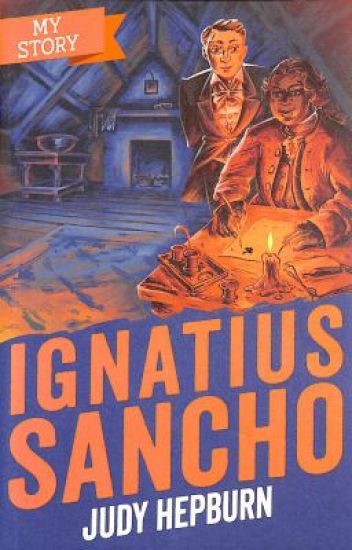
My Story: Ignatius Sancho is the extraordinary true story of a young boy's life: a slave, a servant, a business owner, a campaigner, a composer, a writer. Greenwich 1738, and eight-year-old Ignatius lives with three sisters. Not as a member of their family, but more or less a pet – a toy. He serves them breakfast, lunch and dinner, fetches and carries, does their bidding and all without thanks or a smile. He lives with the constant possibility of being sent away to a sugar plantation – to endure back-breaking work away from everything and everyone he has ever known. When the threat of being sent back to the West Indies to be enslaved on a plantation becomes suddenly all too real, Ignatius must escape and start to build a real and brilliant life for himself. an inspirational story based on real life perfect for anyone wanting to understand more about Britain's role in the transatlantic slave trade an empowering and important read. "I have to sit down. I need to wipe my eyes. Imagine, me, the little boy who slaved for the sisters and had to fight so hard to be able to read and write, has become the first black man to have a say in who governs England." Experience history first-hand with My Story.
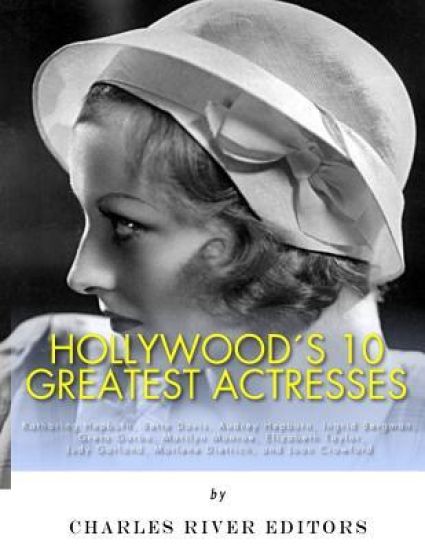
*Includes pictures. *Includes a unique introduction of each actress. *Includes quotes by the actresses about their lives and careers. *Includes bibliographies of each actress for further reading. In 1999, the American Film Institute released its list of the 50 greatest Hollywood stars of the 20th century, and selecting the 10 best actresses out of the bunch was certainly a tall task. The competition was so stacked that women like Ginger Rogers, Grace Kelly and Rita Hayworth were not even among the Top 10. So who were the Top 10 women selected by the AFI? Aside from being one of the most recognized and acclaimed actresses in history, Katharine Hepburn's career is also of great importance because she forced Americans to reevaluate their expectations for female behavior, both in films themselves and off the movie set as well. As society began to pay greater attention to the importance of strong roles for women, Hepburn's career gained an even greater importance as a fiercely individual figure who offered a daring alternative to the conventions of femininity that had long existed in American culture. Bette Davis presided over Hollywood at a time in which the film industry was at its most influential. Every actress from Katharine Hepburn to Ingrid Bergman and Ginger Rodgers, themselves now considered among Hollywood's greatest icons, lived in the shadow of Bette Davis. For someone whose career ended over 30 years ago, Audrey Hepburn continues to retain her popularity and exert a strong influence over how people view beauty and sophistication. She remains an American icon, despite the fact that she did not even move to the United States until 1953 (at the age of 24) and spent the majority of her life living in Europe, while her characters in films such as Roman Holiday (1953) and Breakfast at Tiffany's (1961) are still held up as the paragon of delicate femininity and elegance. At times during her career, Bergman was the darling of Hollywood, but at other times she was literally a pariah. It is all too common to remember Bergman for her performance in Casablanca, forgetting the fact that she was effectively exiled from Hollywood for several years during her romance with Roberto Rossellini. Of all the great movie stars, there may be none more enigmatic than Greta Garbo, who remains internationally famous despite the fact her life and career raise more questions than answers. How did a Swedish actress with very little film acting experience in her native land arrive in the United States and achieve instant stardom? Few actresses lived their lives in the public eye more than Marilyn Monroe, and yet her life remains shrouded in mystery to this day. While it is common knowledge that Marilyn's life is a rags-to-riches story, her life is bookended by hazy details surrounding her early life and even more mysterious death. In many ways, Elizabeth Taylor enjoyed being in the public spotlight and living the lifestyle of the rich and famous, and her personal life very much resembled a performance suitable for Hollywood. Taylor faced great adversity throughout her life, including being married on eight different occasions to seven different spouses and fighting battles with weight and drug addiction. Judy Garland might be known today based more on her demise than anything else, and there's no denying that one of the most fascinating (and tragic) aspects of her life story is the manner in which her downward spiral occurred with the same rapid progression as her meteoric ascent. When Marlene Dietrich first became a household name in the United States, she introduced a new standard for female sexuality on screen. Her performance in The Blue Angel (1930) not only stands as one of the most glamorous roles ever played but also one of the frankest depictions of the femme fatale ever captured on screen.
*Includes pictures. *Includes a unique introduction of each actress. *Includes quotes by the actresses about their lives and careers. *Includes bibliographies of each actress for further reading. In 1999, the American Film Institute released its list of the 50 greatest Hollywood stars of the 20th century, and selecting the 10 best actresses out of the bunch was certainly a tall task. The competition was so stacked that women like Ginger Rogers, Grace Kelly and Rita Hayworth were not even among the Top 10. So who were the Top 10 women selected by the AFI? Aside from being one of the most recognized and acclaimed actresses in history, Katharine Hepburn's career is also of great importance because she forced Americans to reevaluate their expectations for female behavior, both in films themselves and off the movie set as well. As society began to pay greater attention to the importance of strong roles for women, Hepburn's career gained an even greater importance as a fiercely individual figure who offered a daring alternative to the conventions of femininity that had long existed in American culture. Bette Davis presided over Hollywood at a time in which the film industry was at its most influential. Every actress from Katharine Hepburn to Ingrid Bergman and Ginger Rodgers, themselves now considered among Hollywood's greatest icons, lived in the shadow of Bette Davis. For someone whose career ended over 30 years ago, Audrey Hepburn continues to retain her popularity and exert a strong influence over how people view beauty and sophistication. She remains an American icon, despite the fact that she did not even move to the United States until 1953 (at the age of 24) and spent the majority of her life living in Europe, while her characters in films such as Roman Holiday (1953) and Breakfast at Tiffany's (1961) are still held up as the paragon of delicate femininity and elegance. At times during her career, Bergman was the darling of Hollywood, but at other times she was literally a pariah. It is all too common to remember Bergman for her performance in Casablanca, forgetting the fact that she was effectively exiled from Hollywood for several years during her romance with Roberto Rossellini. Of all the great movie stars, there may be none more enigmatic than Greta Garbo, who remains internationally famous despite the fact her life and career raise more questions than answers. How did a Swedish actress with very little film acting experience in her native land arrive in the United States and achieve instant stardom? Few actresses lived their lives in the public eye more than Marilyn Monroe, and yet her life remains shrouded in mystery to this day. While it is common knowledge that Marilyn's life is a rags-to-riches story, her life is bookended by hazy details surrounding her early life and even more mysterious death. In many ways, Elizabeth Taylor enjoyed being in the public spotlight and living the lifestyle of the rich and famous, and her personal life very much resembled a performance suitable for Hollywood. Taylor faced great adversity throughout her life, including being married on eight different occasions to seven different spouses and fighting battles with weight and drug addiction. Judy Garland might be known today based more on her demise than anything else, and there's no denying that one of the most fascinating (and tragic) aspects of her life story is the manner in which her downward spiral occurred with the same rapid progression as her meteoric ascent. When Marlene Dietrich first became a household name in the United States, she introduced a new standard for female sexuality on screen. Her performance in The Blue Angel (1930) not only stands as one of the most glamorous roles ever played but also one of the frankest depictions of the femme fatale ever captured on screen.
During a period of tumultuous change in the 1950's there still existed an underlying attitude of sultry romance and betrayal in the deep south. Meet James and Judy. He is a small town preacher of strong character stemming to bridge the gap between the way things were and how they may ultimately evolve, using morals and spiritual principles as a guide. Her, a woman who craved the change and felt the fires of inner passions fanned as she experienced the changes. How could their love survive as he struggled to adapt to change and she embraced the new freedom in a way he could never accept. Having grown up in the south during a period in which many only dreamed of the ways things could be while others struggled to keep things the way they were, DJ Hart shares her first published story. A mother of three who experienced these changes first hand.
"Each Fudge book] is packed with wacky earthy disasters that are her trademark and that children love to read about . . . Judy Blume has a knack for knowing what children think about and an honest, highly amusing way of writing about it." --The New York Times The complete five-book set of Judy Blume's bestselling Fudge books A perfect gift for anyone dealing with the universal experience of grade school--or any adult looking for a classic read from a beloved author. In this box set you'll find: - Tales of a Fourth Grade Nothing - Otherwise Known as Sheila the Great - Superfudge - Fudge-a-Mania - Double Fudge The incredible wit and humor of Peter Hatcher and his mischievous brother Fudge have been captivating and delighting readers for decades - not to mention making them laugh out loud. These books are a classroom favorite and an all-time classic.
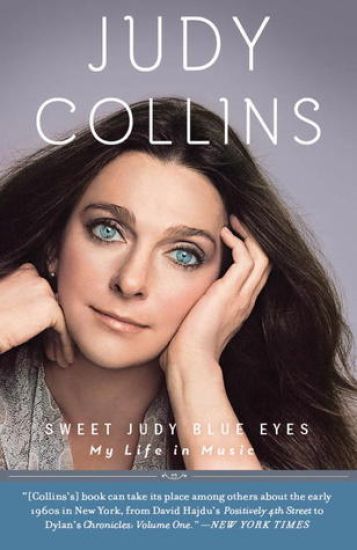
A vivid, highly evocative memoir of one of the reigning icons of folk music, highlighting the decade of the '60s, when hits like "Both Sides Now" catapulted her to international fame. Sweet Judy Blue Eyes is the deeply personal, honest, and revealing memoir of folk legend and relentlessly creative spirit Judy Collins. In it, she talks about her alcoholism, her lasting love affair with Stephen Stills, her friendships with Joan Baez, Richard and Mimi Fari a, David Crosby, and Leonard Cohen and, above all, the music that helped define a decade and a generation's sound track. Sweet Judy Blue Eyes invites the reader into the parties that peppered Laurel Canyon and into the recording studio so we see how cuts evolved take after take, while it sets an array of amazing musical talent against the backdrop of one of the most turbulent decades of twentieth-century America. Beautifully written, richly textured, and sharply insightful, Sweet Judy Blue Eyes is an unforgettable chronicle of the folk renaissance in America.
Judy Blume is one of the most popular authors of children's and young adult fiction in American history. For over 30 years, her books and career have withstood the test of time and she continues to resonate with new generations of young readers. While she is arguably one of the most important authors of the twentieth century, she is also one of the most banned. What is perhaps the most surprising aspect of Blume's career is that despite today's proliferation of cable channels and easy Internet access, books of hers written decades ago about every day life events that all teenagers experience still manage to find themselves at the center of censorship debates. Rather than change her style, the efforts to censor her books turned Blume into an activist and champion for the First Amendment. Inside this biography Kathleen Tracy explores the life and career of Judy Blume, one of the most successful-and most controversial-authors of twentieth century.In addition to tracing the events of Bloom's life, this engaging biography discusses historic and current censorship issues in classrooms and libraries across the country. Her association with the National Coalition Against Censorship, a group that Blume says changed her life, as did her friendship with the organization's longtime director, Leanne Katz, is examined in detail as well as how libraries, teachers, publishers and grass-roots activists have responded to the ever-growing attempts to censor children's reading material. In-depth chapters are supplemented with a bibliography of print and electronic sources that provide suggested readings for students and general readers alike. Also included is a timeline, photos, and an appendix of free speech resources.
A new work from Judy Chicago, fifty years in the making: Judy Chicago: Revelations is the work she thought would never see the light of day. Her captivating narrative combatting the erasure of women from history unites seamlessly with illustrations first made in the 1970s and new work in a striking, contemporary design. Revelations is the work that Judy Chicago believed would never be published: a radical retelling of human history in the form of an illuminated manuscript, recovering stories of women that society sought to erase. Begun alongside her iconic installation The Dinner Party in the mid-1970s, and drawing on her intensive research into goddess worship and women’s history, Revelations is foundational to Chicago’s decades-long practice. It is at once a vibrant narrative and a work of art, fifty years in the making. Publication coincides with an exhibition at the Serpentine, London, from 22 May to 1 September, Judy Chicago’s first solo presentation in a major London institution.
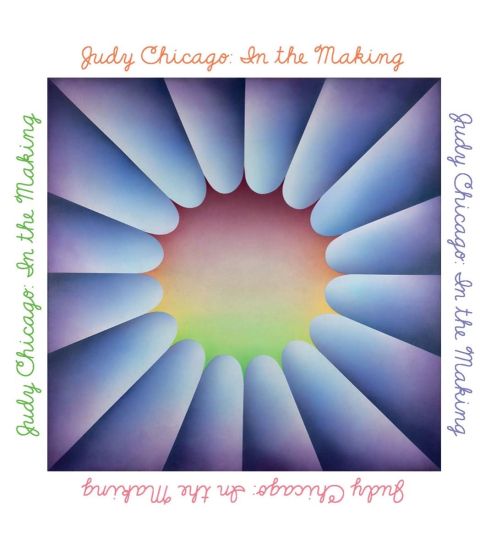
One of the founding forces behind the 1970s feminist art movement, Judy Chicago became widely known for The Dinner Party, a massive installation turning women’s traditional household-bound role on its head by setting a feast for thirty-nine remarkable women – from Hildegarde of Bingen to Emily Dickinson – to shine a spotlight on women’s contributions to history. Concluded in 1979, it was presented in San Francisco to popular success and proceeded to be shown internationally to an audience of over one million viewers through an unprecedented grassroots effort. Art critics, however, responded differently, annihilating it for its celebration of vaginal imagery and embrace of 'feminine' craft. For decades Chicago operated on the margins of the art world, her work shunned by most critics and institutions and her evolution as an artist eclipsed by the notoriety of The Dinner Party. Judy Chicago: In the Making accompanies the first exhibition to offer a thorough overview of Chicago's career. It traces the artist’s practice back to its roots, revealing her unique working process and the origins of the formal and conceptual strategies she has applied throughout her oeuvre. Bringing together a selection drawn from every major series of her work, it also reproduces sketchbooks, journals and preparatory drawings that document her extensive process of research and development.With 225 illustrations in colour
Judy Chicago is America’s most dynamic living artist. Her works comprise a dizzying array of media from performance and installation to the glittering table laid for thirty- nine iconic women in The Dinner Party (now permanently housed at the Brooklyn Museum), the groundbreaking Birth Project, and the meticulously researched Holocaust Project. She designed the monumental installation for Dior’s 2020 Paris couture show and, in 2019, established the Judy Chicago Portal, which will help to accomplish her lifelong goal of overcoming the erasure that has eclipsed the achievements of so many women. The Flowering is her vivid and revealing autobiography, fully illustrated with photographs of her work, as well as never-before-published personal images and a foreword by Gloria Steinem. Chicago has revised and updated her earlier, classic works with previously untold stories, fresh insights, and an extensive afterword covering the last twenty years. This powerful narrative weaves together the stories behind some of Chicago’s most significant artworks and her journey as a woman artist with the chronicles of her personal relationships and her understanding, from decades of experience and extensive research, of how misogyny, racism and other prejudices intersect to erase the legacies of artists who are not white and male while dismissing the suffering of millions of creatures who share the planet. With the first career retrospective of her work forthcoming at the de Young Museum in 2021, Chicago reinforces her message of resilience for a new generation of artists and activists. The Flowering is an essential read for anyone interested in making change.With 90 illustrations in colour
Judy Chicago is America's most dynamic living artist. Her works comprise a dizzying array of media from performance and installation to the glittering table laid for thirty-nine iconic women in The Dinner Party (now permanently housed at the Brooklyn Museum), the groundbreaking Birth Project, and the meticulously researched Holocaust Project. She designed the monumental installation for Dior's 2020 Paris couture show and, in 2019, established the Judy Chicago Portal, which will help to accomplish her lifelong goal of overcoming the erasure of women's achievements. The Flowering is her vivid and revealing autobiography, fully illustrated with photographs of her work, as well as never-before-published personal images and a foreword by Gloria Steinem. Chicago has revised and updated her classic first autobiography with previously untold stories, fresh insights, and an extensive afterword covering the last twenty years. This powerful narrative weaves together the stories behind some of Chicago's most significant artworks and her journey as a woman artist with the chronicles of her personal relationships and her understanding, from decades of experience and extensive research, of how misogyny, racism, and other prejudices intersect to erase the legacies of artists who are not white and male while dismissing the suffering of millions of creatures who share the planet. The Flowering is an essential read for anyone interested in making change, now available in paperback.
Holiday Musical Comedy / Characters: 7m, 6f / Simple Set Judy Garland is primed for her biggest comeback ever - the dazzling star of her own TV special, broadcast live on Christmas Eve, 1959. Judy's guests include Bing Crosby (making some holiday "grog"), Ethel Merman (plugging her Hawaiian album), and Liberace (with a handsome sailor in tow). However, mysterious snafus behind the scenes and cameo appearances by commie-baiting Vice President Richard Nixon (who performs a magic act) and blacklisted writer, Lillian Hellman, (who's forced to read "Children's Letter to Santa" with a puppet) throw Judy's program off course. The surprises climax when the arrival of Joan Crawford is interrupted by the spectral figure of...Death. The evening takes a detour into the twilight zone as the celebrities are forced to confront the lies behind their legends. Devastated and alone, Judy meets a special fan who ultimately proves that, despite her flaws, her shining legacy still endures. "Magical! A side-splitting musical parody...wickedly funny!" - Los Angeles Times "Fascinating, hilarious and wildly entertaining!" - Gerard Alessandrini, Creator of Forbidden Broadway "Wonderfully strange...a true holiday treat! " - Hollywood Reporter "A non-stop hoot!" - Back Stage West "Hilarious! A surreal snow globe highball; a Hollywood Christmas card from beyond the grave!" - Portland Mercury