Kirjojen hintavertailu. Mukana 12 459 402 kirjaa ja 12 kauppaa.

Kirjahaku

Etsi kirjoja tekijän nimen, kirjan nimen tai ISBN:n perusteella.

1000 tulosta hakusanalla Julia Davis; Timothy Snyder

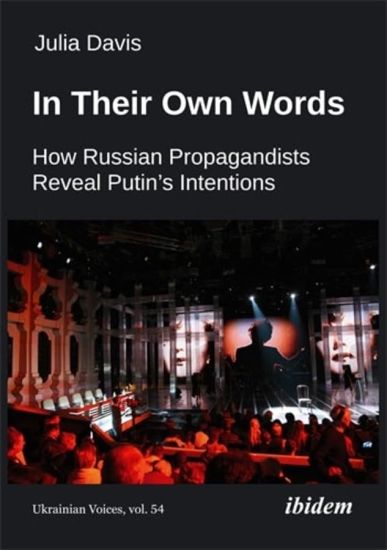
In Their Own Words

In Their Own Words

Julia Davis; Timothy Snyder

ibidem-Verlag, Jessica Haunschild u Christian Schon
2024
nidottu
This collection of essays and articles, written between 2019 and 2023 for such outlets as The Daily Beast and The Center for European Policy Analysis (CEPA), illuminates recent Russian international affairs through the lens of Moscow’s propaganda tactics. For more than two decades, the Kremlin’s agitators have been tasked to lay, in advance, the groundwork for various domestic and foreign actions by the regime of Vladimir Putin. Thus, Russian state-controlled media provides crucial clues for deciphering the—often sinister—goals that the government of Russia was and is planning to pursue abroad, from election interference to military invasions. The goal of the sum of these activities is the establishment of a new world order—with Russia at its helm. Before the large invasion of 24 February 2022, Russian state media portrayed the West as incapable of opposing Russian aggression. Putin’s propagandists cheered for war against Ukraine, predicting it would be quick and victorious. Misreading the ability of the West to unite and miscalculating Russia’s capabilities in confronting determined Ukrainians, Russia ended up in a quagmire of its own creation. In 2024, Putin’s decorated propagandists face the possibility of future scrutiny and potential prosecutions for their proactive incitement of genocide. They unravel, along with the Kremlin, having to tell multiple conflicting stories and condemn the same players they used to lionize. Backed into the corner, they resort to nuclear threats and demand even more blood from Ukraine, whose only crime is its desire for democracy and freedom.

Handbook of Chronic Myeloid Leukemia

Handbook of Chronic Myeloid Leukemia

Timothy P Hughes; David M Ross; Junia V Melo

Adis
2014
nidottu
This concise, clinically focused pocket handbook assembles and synthesizes the latest developments and trends in the diagnosis and treatment of CML and provides an authoritative and convenient summary of the latest progress in TKI trials, the molecular monitoring of CML responses, and the development of new therapies to overcome resistance and improve patient care. Chronic myeloid leukemia (CML) is a rare type of leukemia (1–2 per 100,000 people) but is the most common chronic myeloproliferative neoplasm. CML remains a key model for the improved understanding of the pathophysiology of a malignancy at a molecular level; CML was the first cancer to be associated with a recurring chromosome abnormality, which generates the Philadelphia (Ph) chromosome and its associated fusion gene BCR-ABL1. The clinical outcome for patients with CML has changed dramatically in the past 15 years and this has been due to the development of tyrosine kinase inhibitors (TKIs), compounds that inhibit the activity of the oncogenic BCR-ABL1 protein. A number of first-, second- and third-generation TKIs are now available for the treatment of CML, although a number of treatment challenges remain, not least the development of treatment-resistant CML. Parallel to the development of specific drugs for treating CML, major advances have been made in the field of disease monitoring and standardization of response criteria.
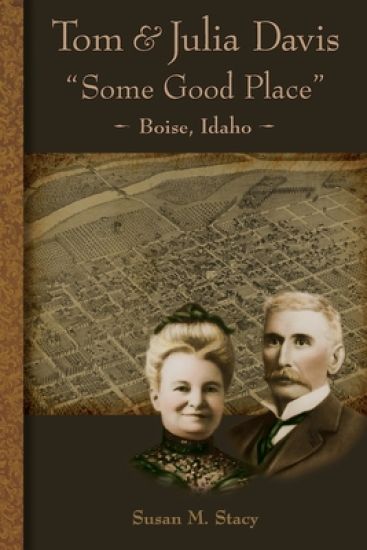
Tom and Julia Davis Some Good Place Boise, Idaho
Tom Davis and his brother left Illinois in 1861, headed for the mining frontier of the West. Surviving an unusual-and unusually harrowing-journey across Idaho's central mountains, they found themselves looking out for Indians on the banks of the Boise River as they built Boise's first cabin in 1863.Tom found his life partner when Julia McCrum left her parents' home in Galt, Canada, for her own adventure in the West, demonstrating that the "Wander Lust" could infect women just as readily as men."Tom and Julia Davis: Some Good Place", the fifth Idaho history written by Boise historian Susan M. Stacy, tells what happened next-the creation of a city sometimes called an "Eden," business successes, the joys and tragedies of family life.This remarkable couple gave Boise City the land for Julia Davis Park. What were they thinking? Stacy has a pretty good idea, and tells the story of Tom and Julia with compelling detail, sympathy, and insight."Boise has for a long time needed a book-length introduction of this kind, and it has finally arrived."About the Author: Susan M. Stacy, award-winning Idaho historian, is the author of numerous books and articles on Idaho subjects. Her range of interests is broad-from the Women's Ward at the Old Idaho State Penitentiary to the formidable 52 nuclear reactors that once populated Idaho's National Reactor Testing Station.Whatever the subject, Susan Stacy's particular talent is telling a good story. Her multi-archival research pays off for readers, as she knits together the themes of her subjects along with memorable details and convincing insight into what it means for us today."Tom and Julia Davis" will introduce all Idahoans, especially Boiseans, to this extraordinary couple and to the much-loved city they worked so deliberately to build up and make into "some good place."
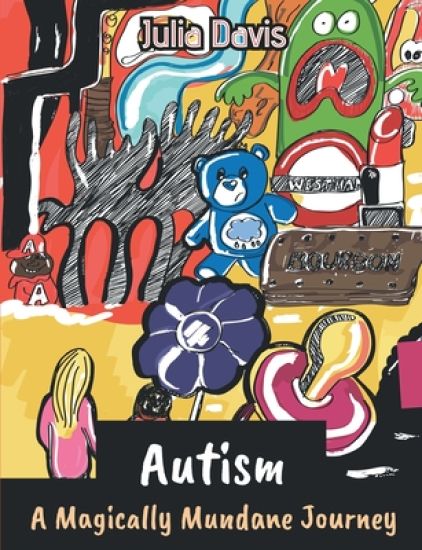
Autism

Autism

Julia Davis

Publishing Push LTD
2023
pokkari
If autism has touched your life, or if you are simply curious about it, then this book is for you. You will go on a personal journey detailing some of the experiences my son Tristan and I have had over the years. Using cartooning to communicate our message, I've documented our experiences. We really hope you get something from our sharing this messy and meandering journey we have been on
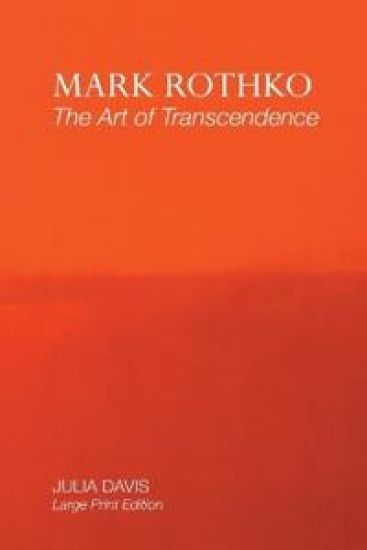
Mark Rothko

Mark Rothko

JULIA DAVIS

Crescent Moon Publishing
2011
pokkari
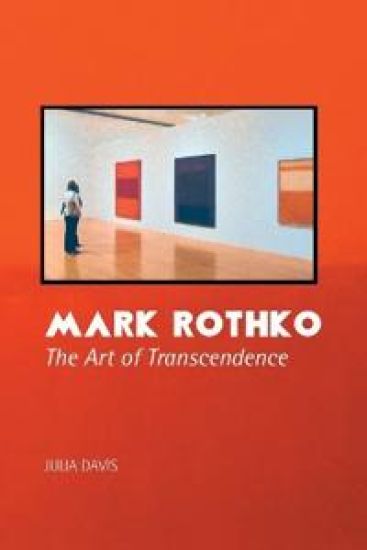
MARK ROTHKO Mark Rothko (1903-1970, born Marcus Rothkowitz in Dvinsk, Russia) is one of the great 20th century American artists. A huge amount of material that has grown up around Rothko. Like Vincent van Gogh, Pablo Picasso, Claude Monet and Leonardo da Vinci, Mark Rothko has been lionized by hundreds of art critics. Rothko remains a greatly admired painter. His works will not, it seems, reach the same mass audiences as Monet or van Gogh, perhaps because Rothko is an abstract artist, and very few abstract artists achieve the mega stature of figurative painters such as van Gogh or Monet. Abstract art of the Mark Rothko kind - the colourfield skeins of Morris Louis, or the black stripes of polychrome shaped canvases of Frank Stella, or the bold, black, calligraphic brushstrokes of Franz Kline - has yet to become as widely accepted as Gustav Klimt's nudes or Sandro Botticelli's Madonnas. In the art world itself, though, Mark Rothko is a highly celebrated painter. He appears in the 20th century Olympian pantheon alongside Jackson Pollock, Piet Mondrian, Paul Klee, Robert Rauschenberg and Jasper Johns. Mark Rothko's art has been seen by critics as 'transcendent' (Ashton, Robertson), 'a sort of spiritual Stonehenge' (Brookner), 'lavish self-indulgence' (Kozloff), 'Dionysian' (Hobbs), 'sensuous and and spiritual' (Waldman), 'enormous, beautiful, opaque surfaces' (Selz), 'enigmatic, gripping presence' (Goldwater), 'incandescent color' (Greenberg), 'haunting' (Sylvester), 'visionary simplicity' (Sandler) and 'tinted hallucinatory cloth' (de Kooning). For poet John Ashbery, Rothko 'seems to eliminate criticism'. The archetypal response to Mark Rothko's art is that it is a (1) 'heroic', (2) 'transcendent', (3) 'spiritual' and (4) 'tragic' art. These are four of the most commonly deployed adjectives in Rothko art criticism (others include 'Buddhist', 'Faustian' and 'death-conscious'). Rothko's painting is seen as (1) 'heroic' because it attempts achieve something great in a world of Existential suffering. Out the slime and the pain and the horror of modern life rise Rothko's 'heroic' canvases. His canvases become a gesture of affirmation in amongst the global angst (as with Rothko's contemporaries, such as Pollock and Newman). Includes new illustrations.
Mark Rothko

Mark Rothko

JULIA DAVIS

CRESCENT MOON PUBLISHING
2011
sidottu
MARK ROTHKO Mark Rothko (1903-1970, born Marcus Rothkowitz in Dvinsk, Russia) is one of the great 20th century American artists. A huge amount of material that has grown up around Rothko. Like Vincent van Gogh, Pablo Picasso, Claude Monet and Leonardo da Vinci, Mark Rothko has been lionized by hundreds of art critics. Rothko remains a greatly admired painter. His works will not, it seems, reach the same mass audiences as Monet or van Gogh, perhaps because Rothko is an abstract artist, and very few abstract artists achieve the mega stature of figurative painters such as van Gogh or Monet. Abstract art of the Mark Rothko kind - the colourfield skeins of Morris Louis, or the black stripes of polychrome shaped canvases of Frank Stella, or the bold, black, calligraphic brushstrokes of Franz Kline - has yet to become as widely accepted as Gustav Klimt's nudes or Sandro Botticelli's Madonnas. In the art world itself, though, Mark Rothko is a highly celebrated painter. He appears in the 20th century Olympian pantheon alongside Jackson Pollock, Piet Mondrian, Paul Klee, Robert Rauschenberg and Jasper Johns. Mark Rothko's art has been seen by critics as 'transcendent' (Ashton, Robertson), 'a sort of spiritual Stonehenge' (Brookner), 'lavish self-indulgence' (Kozloff), 'Dionysian' (Hobbs), 'sensuous and and spiritual' (Waldman), 'enormous, beautiful, opaque surfaces' (Selz), 'enigmatic, gripping presence' (Goldwater), 'incandescent color' (Greenberg), 'haunting' (Sylvester), 'visionary simplicity' (Sandler) and 'tinted hallucinatory cloth' (de Kooning). For poet John Ashbery, Rothko 'seems to eliminate criticism'. The archetypal response to Mark Rothko's art is that it is a (1) 'heroic', (2) 'transcendent', (3) 'spiritual' and (4) 'tragic' art. These are four of the most commonly deployed adjectives in Rothko art criticism (others include 'Buddhist', 'Faustian' and 'death-conscious'). Rothko's painting is seen as (1) 'heroic' because it attempts achieve something great in a world of Existential suffering. Out the slime and the pain and the horror of modern life rise Rothko's 'heroic' canvases. His canvases become a gesture of affirmation in amongst the global angst (as with Rothko's contemporaries, such as Pollock and Newman). Includes new illustrations.
The Shenandoah

The Shenandoah

Julia Davis

West Virginia University Press
2011
sidottu
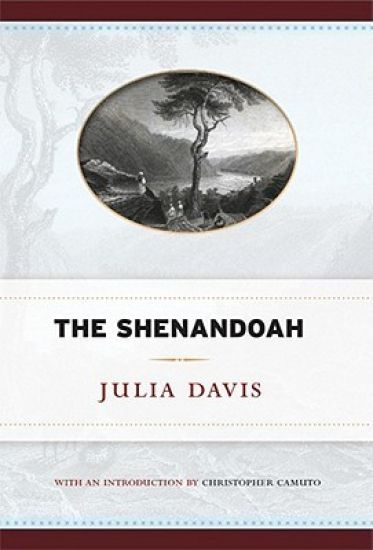
In 1945, West Virginia author Julia Davis penned The Shenandoah as part of the Rivers of America Series, a landmark collection of books written by literary figures over a period of thirty years. In this classic reprint, now with an introduction by Christopher Camuto, Davis tells the history of the Shenandoah Valley and River, drawing on her own research and the experiences of ancestors who settled and lived in the area. Her book provides a poetic vision of both the river and the valley, preserving a fragment of America's landscape.
Circle Holding

Circle Holding

Julia Davis; Tessa Venuti Sanderson

JESSICA KINGSLEY PUBLISHERS
2024
pokkari
In an increasingly fast-paced world, talking and listening circles are a helpful tool for yoga teachers and other wellbeing professionals to offer connection, build community, and address specific topics in a safe and professional manner. This practical resource guides the reader through the various stages of talking and listening circles, including the initial intention for setting up a circle, opening the circle, sharing guidelines, introducing topics, and closing the circle.Filled with valuable insights from interviews held with circle holders, this book offers advice on a wide range of topics and styles. This includes grief circles and LGBTQ+ circles, as well as an in-depth chapter on how to work with children and teens, complete with activities and embodiment practices. Written with professionals in mind, it also offers advice on managing group dynamics, the differences between online and in-person circles, and marketing. Each chapter includes practical exercises, templates, and stories to support you in running your first circle or improving the quality of existing circles.
Preparing for Adoption

Preparing for Adoption

Hugh Thornbery; Julia Davis

Jessica Kingsley Publishers
2014
pokkari
The ideal first book for prospective adopters.When you decide to adopt a child, you might assume that all the important work begins when the child comes to live with you. In fact the preparation stage before is crucial in ensuring that the adopted child will arrive to a safe and secure family. Preparing for Adoption provides clear advice on how to prepare for your adoptive child and create a strong foundation for a healthy and loving relationship. Julia Davis explains how many different factors can shape preparations for adoption, such as finding out about your child's history and using this information to establish a family environment which will meet your child's specific attachment needs. There is also advice on how to prepare your home to create a sense of safety for your child and how to prepare your family to support you as adoptive parents. Primarily for adopters, foster carers and professionals supporting adopters, this book offers ideas and strategies to help parents prepare a happy and settled home for children before their arrival and ways to parent them in the early days of becoming a family that addresses their attachment needs.
Connecting with Australian Tort Law

Connecting with Australian Tort Law

Marco Rizzi; Kate Offer; Jamie Walvisch; Julia Davis

Cambridge University Press
2026
pokkari
Connecting with Australian Tort Law is a practical introduction to the principles and application of tort law. It guides students to expand their knowledge of tort law, improve their problem-solving and communication skills and advance their professional development. Now in its third edition, Connecting with Australian Tort Law maintains its clear two-part structure. Part 1 introduces students to the fundamentals of tort law, and provides practical tools needed to succeed academically. Students will learn how to structure a legal argument and answer complex questions before arriving at Part 2. This Part covers specific areas of tort law, including trespass to the person, trespass to land and personal property, nuisance, defamation and negligence. It examines the principles of tort law and uses case examples and legislation to demonstrate their application. Pedagogically rich, Connecting with Australian Tort Law includes problem-solving questions, tips and legislation alerts to keep students engaged and actively learning.