Kirjojen hintavertailu. Mukana 11 342 296 kirjaa ja 12 kauppaa.

Kirjahaku

Etsi kirjoja tekijän nimen, kirjan nimen tai ISBN:n perusteella.

1000 tulosta hakusanalla Julia M. Wright

Ireland, India and Nationalism in Nineteenth-Century Literature
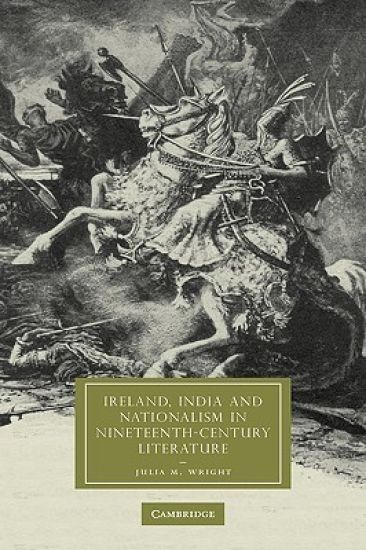
In this innovative study Julia M. Wright addresses rarely asked questions: how and why does one colonized nation write about another? Wright focuses on the way nineteenth-century Irish writers wrote about India, showing how their own experience of colonial subjection and unfulfilled national aspirations informed their work. Their writings express sympathy with the colonised or oppressed people of India in order to unsettle nineteenth-century imperialist stereotypes, and demonstrate their own opposition to the idea and reality of empire. Drawing on Enlightenment philosophy, studies of nationalism, and postcolonial theory, Wright examines fiction by Maria Edgeworth and Lady Morgan, gothic tales by Bram Stoker and Oscar Wilde, poetry by Thomas Moore and others, as well as a wide array of non-fiction prose. In doing so she opens up new avenues in Irish studies and nineteenth-century literature.
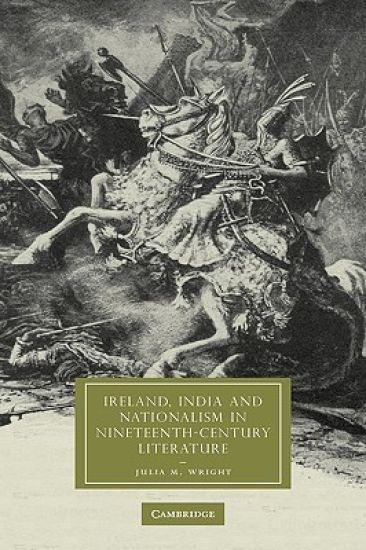
Ireland, India and Nationalism in Nineteenth-Century Literature
In this innovative study Julia M. Wright addresses rarely asked questions: how and why does one colonized nation write about another? Wright focuses on the way nineteenth-century Irish writers wrote about India, showing how their own experience of colonial subjection and unfulfilled national aspirations informed their work. Their writings express sympathy with the colonised or oppressed people of India in order to unsettle nineteenth-century imperialist stereotypes, and demonstrate their own opposition to the idea and reality of empire. Drawing on Enlightenment philosophy, studies of nationalism, and postcolonial theory, Wright examines fiction by Maria Edgeworth and Lady Morgan, gothic tales by Bram Stoker and Oscar Wilde, poetry by Thomas Moore and others, as well as a wide array of non-fiction prose. In doing so she opens up new avenues in Irish studies and nineteenth-century literature.
Representing the National Landscape in Irish Romanticism

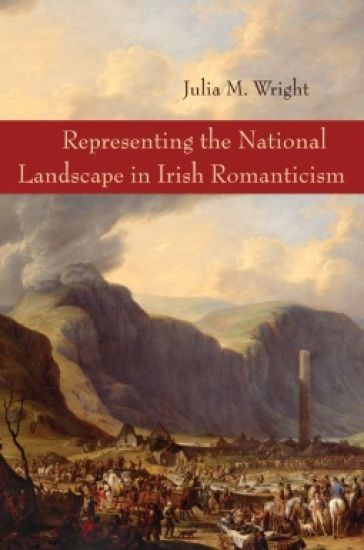
Representing the National Landscape in Irish Romanticism

Julia M. Wright

Syracuse University Press
2014
sidottu
Ireland is a country which has come to be defined in part by an ideology which conflates nationalism with the land. From the Irish Revival’s celebration of the Irish peasant farmer as the ideal Irishman to the fierce history of land claim battles between the Irish and their colonisers, notions of the land have become particularly bound up with conceptions of what Ireland is and what it is to be Irish. In this book, Wright considers this fraught relationship between land and national identity in Irish literature. In doing so, she presents a new vision of the Irish national landscape as one that is vitally connected to larger geographical spheres. By exploring issues of globalisation, international radicalism, trade routes, and the export of natural resources, Wright is at the cutting edge of modern global scholarly trends and concerns. In considering texts from the Romantic era such as Leslie’s Killarney, Edgeworth’s ""Limerick Gloves,"" and Moore’s Irish Melodies, Wright undercuts the nationalist myth of a ""people of the soil"" using the very texts which helped to construct this myth. Reigniting the field of Irish Romanticism, Wright presents original readings which call into question politically motivated mythologies while energising nationalist conceptions that reflect transnational networks and mobility.
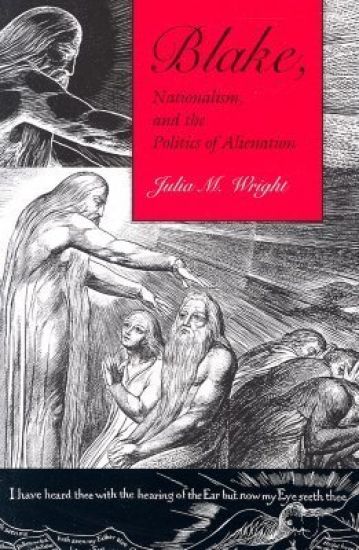
Blake, Nationalism, and the Politics of Alienation

Blake, Nationalism, and the Politics of Alienation

Julia M. Wright

Ohio University Press
2004
sidottu
William Blake's reputation as a staunch individualist is based in large measure on his repeated attacks on institutions and belief systems that constrain the individual's imagination. Blake, however, rarely represents isolation positively, suggesting that the individual's absolute freedom from communal pressures is not the ideal. Instead, as Julia Wright argues in her award-winning study Blake, Nationalism, and the Politics of Alienation, Blake's concern lies with the kind of community that is being established. Moreover, writing at the moment of the emergence of modern nationalism, Blake reveals a concern with the national community in particular. Beginning with a discussion of the priority of national narrative in late-eighteenth-century art theory and antiquarianism, Blake, Nationalism, and the Politics of Alienation traces its relevance in Blake's printed works, from The Poetical Sketches and the Lambeth Prophecies to The Laocoön. Professor Wright then turns to Europe, America, and Visions of the Daughters of Albion, focusing on Blake's portrayals of particular characters' alienation from the groups and ideologies represented in the texts. The book closes by arguing that Blake's major printed works, Milton and Jerusalem, are explicit and extensive engagements with the question of nation—and empire. Although nationalism existed in various forms during the Romantic period, Blake's contemporaries generally assumed that nations should progress continuously, producing a clear narrative line from an auspicious origin to the perfect fulfillment of that promise. Wright argues that these mutually determining constructs of national character and national narrative inform Blake's handling of the problem of the individual-within-a-community.
Transatlantic Literary Exchanges, 1790-1870

Transatlantic Literary Exchanges, 1790-1870

Julia M. Wright

TAYLOR FRANCIS LTD
2024
nidottu
Exploring the ways in which transatlantic relationships functioned in the nineteenth century to unsettle hierarchical models of gender, race, and national and cultural differences, this collection demonstrates the generative potential of transatlantic studies to loosen demographic frames and challenge conveniently linear histories. The contributors take up a rich and varied range of topics, including Charlotte Smith's novelistic treatment of the American Revolution, The Old Manor House; Anna Jameson's counter-discursive constructions of gender in a travelogue; Felicia Hemans, Herman Melville, and the 'Queer Atlantic'; representations of indigenous religion and shamanism in British Romantic literary discourse; the mid-nineteenth-century transatlantic abolitionist movement; the transatlantic adventure novel; the exchanges of transatlantic print culture facilitated by the Minerva Press; British and Anglo-American representations of Niagara Falls; and Charles Brockden Brown's intervention in the literature of exploration. Taken together, the essays underscore the strategic power of the concept of the transatlantic to enable new perspectives on the politics of gender, race, and cultural difference as manifested in late eighteenth- and nineteenth-century Britain and North America.
Thomas Moore and the Transatlantic, 18001840

Thomas Moore and the Transatlantic, 18001840

Julia M. Wright

EDINBURGH UNIVERSITY PRESS
2025
sidottu
Thomas Moore has long been considered Ireland's national bard and the face of colonial grievance in Ireland. But he also grew up in a port city and then travelled with and worked for the British Navy. Dubbing himself 'transatlantic Tom', Moore rode and wrote about the currents of the north Atlantic and coastal locations key to naval operations and trade routes. Following Moore on these lines of motion allows us to trace local and global circuits, including literary networks, agricultural trade, interests in the Atlantic fishery, migration, military activity and the coercions of the slave trade. Powered by water, such motion pulls against the fictions of stable, bounded property necessary to the British Empire and influential in British Romanticism. Moore not only transits Irish Romanticism and British Romanticism: he is also a window onto a sea-level view of the Romantic era.
Transatlantic Literary Exchanges, 1790-1870

Transatlantic Literary Exchanges, 1790-1870

Julia M. Wright

Ashgate Publishing Limited
2011
sidottu
Exploring the ways in which transatlantic relationships functioned in the nineteenth century to unsettle hierarchical models of gender, race, and national and cultural differences, this collection demonstrates the generative potential of transatlantic studies to loosen demographic frames and challenge conveniently linear histories. The contributors take up a rich and varied range of topics, including Charlotte Smith's novelistic treatment of the American Revolution, The Old Manor House; Anna Jameson's counter-discursive constructions of gender in a travelogue; Felicia Hemans, Herman Melville, and the 'Queer Atlantic'; representations of indigenous religion and shamanism in British Romantic literary discourse; the mid-nineteenth-century transatlantic abolitionist movement; the transatlantic adventure novel; the exchanges of transatlantic print culture facilitated by the Minerva Press; British and Anglo-American representations of Niagara Falls; and Charles Brockden Brown's intervention in the literature of exploration. Taken together, the essays underscore the strategic power of the concept of the transatlantic to enable new perspectives on the politics of gender, race, and cultural difference as manifested in late eighteenth- and nineteenth-century Britain and North America.
Rx Fitness for Weight Loss: The Medically Sound Solution to Get Fit and Save Your Life
This book will help anyone who desires to become physically fit, lose weight, and make a positive change in their lives to look better, feel better, and live longer. It is geared to inform, educate, and provide medically sound exercise guidance for the overweight to obese person who has always struggled with fitness specific to weight loss. The author will peel back the layers so that every person no matter what fitness level will thoroughly understand how to exericse, injury free, in order to maximize long-term weight loss and improved overall health.
Fuck It, I'm Fat: My Weight Loss Journey

Fuck It, I'm Fat: My Weight Loss Journey

Julia Press Simmons

Createspace Independent Publishing Platform
2012
nidottu
MY BIG AND SEXY HAS BECOME BIG AND DEADLY Well, actually, it has been deadly for quite some time. I was diagnosed with diabetes in 2005, but I've been fat-as-fuck since forever. I've lived a hard life, and food has always been my source of comfort. Whenever I'd go through something, anything, I'd eat, and eat, and eat. It didn't matter if I was full, I didn't eat to get full, I ate to feel better and it never ever worked. Dear Readers, I must have started this book hundreds of times over the last few years, but could never bring myself to complete it until now. I'm no longer afraid to face the truth. I'm 34 years old and I have a wicked food addiction and a serious lack of impulse control. They say the first step on the road to recovery is admitting you have a problem. Whoop, here it is. Thank you all so much for the love and support. Yours truly, Julia
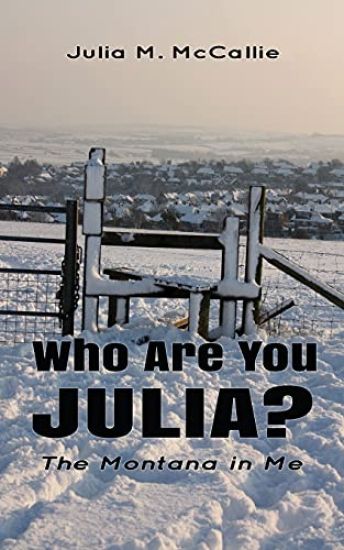
Who Are You Julia?

Who Are You Julia?

Julia M McCallie

Createspace Independent Publishing Platform
2018
pokkari
When asked, who are you Julia? I always picture my grandmother pulling me on and old wooden sled that is gliding through winter snow in Northern Montana....
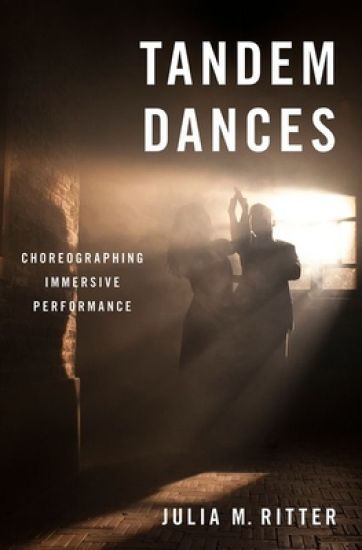
Tandem Dances

Tandem Dances

Julia M. Ritter

Oxford University Press Inc
2021
sidottu
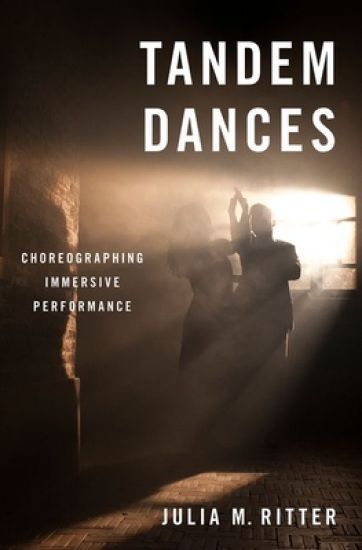
Tandem Dances: Choreographing Immersive Performance is the first book to propose dance and choreography as frames through which to examine immersive theatre, more broadly known as immersive performance. Indicative of a larger renaissance in storytelling during the digital age, immersive performance is influenced by emerging computer technologies, such as virtual reality and advances in video-gaming, as well as increased interest in new forms of experiential entertainment. The idea of tandemness — suggesting motion that is achieved by two bodies working together and acting in conjunction with one another — is critical throughout the book. Author Julia M. Ritter persuasively argues that practitioners of immersive productions deploy choreography as a structural mechanism to mobilize the bodies of cast and audience members to perform together. Furthermore, choreography is contextualized as an effective tool for facilitating audience participation towards immersion as an affect. Through a focus on Western dance histories, theories, and practices, Ritter's close choreographic analysis of immersive productions, along with unique insights from choreographers, directors, performers, and spectators, enlivens discourse across dramaturgy, kinesthesia, affect, and co-authorship. By foregrounding the choreographic in order to examine its specific impact on the evolution of immersive theater, Tandem Dances explores choreography as a discursive domain that is fundamentally related to creative practice, agendas of power and control, and concomitant issues of freedom and agency.
Tandem Dances

Tandem Dances

Julia M. Ritter

Oxford University Press Inc
2021
nidottu
Tandem Dances: Choreographing Immersive Performance is the first book to propose dance and choreography as frames through which to examine immersive theatre, more broadly known as immersive performance. Indicative of a larger renaissance in storytelling during the digital age, immersive performance is influenced by emerging computer technologies, such as virtual reality and advances in video-gaming, as well as increased interest in new forms of experiential entertainment. The idea of tandemness — suggesting motion that is achieved by two bodies working together and acting in conjunction with one another — is critical throughout the book. Author Julia M. Ritter persuasively argues that practitioners of immersive productions deploy choreography as a structural mechanism to mobilize the bodies of cast and audience members to perform together. Furthermore, choreography is contextualized as an effective tool for facilitating audience participation towards immersion as an affect. Through a focus on Western dance histories, theories, and practices, Ritter's close choreographic analysis of immersive productions, along with unique insights from choreographers, directors, performers, and spectators, enlivens discourse across dramaturgy, kinesthesia, affect, and co-authorship. By foregrounding the choreographic in order to examine its specific impact on the evolution of immersive theater, Tandem Dances explores choreography as a discursive domain that is fundamentally related to creative practice, agendas of power and control, and concomitant issues of freedom and agency.
Europe after Rome

Europe after Rome

Julia M. H. Smith

Oxford University Press
2007
nidottu
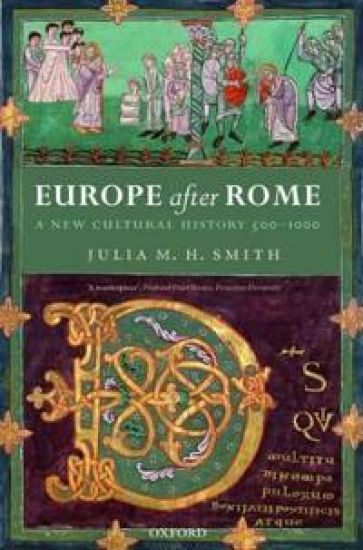
This is the first single-author study in over fifty years to offer an integrated appraisal of the early Middle Ages as a dynamic and formative period in European history. Written in an attractive and accessible style, it makes extensive use of original sources to introduce early medieval men and women at all levels of society from slave to emperor, and allows them to speak to the reader in their own words. It overturns traditional narratives and instead offers an entirely fresh approach to the centuries from c.500 to c.1000. Rejecting any notion of a dominant, uniform early medieval culture, it argues that the fundamental characteristic of the early middle ages is diversity of experience. To explain how the men and women who lived in this period ordered their world in cultural, social, and political terms, it employs an innovative methodology combining cultural history, regional studies, and gender history. Ranging comparatively from Ireland to Hungary and from Scotland and Scandinavia to Spain and Italy, the analysis highlights three themes: regional variation, power, and the legacy of Rome. The book's eight chapters examine the following subjects: Speaking and Writing; Living and Dying; Friends and Relations; Men and Women; Labour and Lordship; Getting and Giving; Kingship and Christianity; Rome and the Peoples of Europe. Collectively, they establish the complex cultural realities which distinguished Europe in the period between the end of the central institutions of the western Roman empire in the fifth century and the emergence of a Rome-centred papal monarchy from the late eleventh century onwards. In the context of debates about the social, religious and cultural meaning of 'Europe' in the early twenty-first century, this books seeks the origins of European cultural pluralism and diversity in the early Middle Ages.
Europe after Rome

Europe after Rome

Julia M. H. Smith

Oxford University Press
2005
sidottu
This is the first single-author study in over fifty years to offer an integrated appraisal of the early Middle Ages as a dynamic and formative period in European history. Written in an attractive and accessible style, it makes extensive use of original sources to introduce early medieval men and women at all levels of society from slave to emperor, and allows them to speak to the reader in their own words. It overturns traditional narratives and instead offers an entirely fresh approach to the centuries from c.500 to c.1000. Rejecting any notion of a dominant, uniform early medieval culture, it argues that the fundamental characteristic of the early middle ages is diversity of experience. To explain how the men and women who lived in this period ordered their world in cultural, social, and political terms, it employs an innovative methodology combining cultural history, regional studies, and gender history. Ranging comparatively from Ireland to Hungary and from Scotland and Scandinavia to Spain and Italy, the analysis highlights three themes: regional variation, power, and the legacy of Rome. The book's eight chapters examine the following subjects: Speaking and Writing; Living and Dying; Friends and Relations; Men and Women; Labour and Lordship; Getting and Giving; Kingship and Christianity; Rome and the Peoples of Europe. Collectively, they establish the complex cultural realities which distinguished Europe in the period between the end of the central institutions of the western Roman empire in the fifth century and the emergence of a Rome-centred papal monarchy from the late eleventh century onwards. In the context of debates about the social, religious and cultural meaning of 'Europe' in the early twenty-first century, this books seeks the origins of European cultural pluralism and diversity in the early Middle Ages.