

Kirjahaku
Etsi kirjoja tekijän nimen, kirjan nimen tai ISBN:n perusteella.
1000 tulosta hakusanalla Julian B. Arnold

Die soziale Lerntheorie Julian B. Rotters im Vergleich zu Albert Bandura
Monique Schwertfeger
Grin Verlag
2007
pokkari
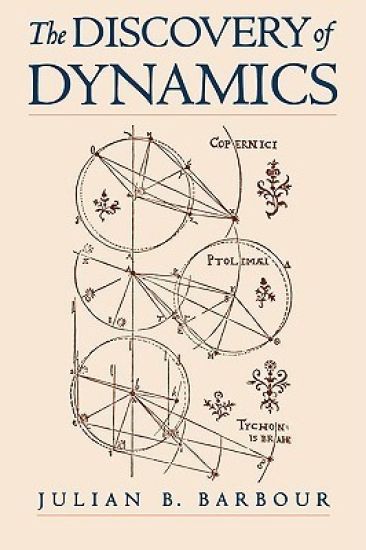
This is the first in a two volume series discussing the theories of Einstein, Newton and other ideas of late 19th and early 20th century physics as in-depth research and basis for Barbour's theory that time is an illusion. This first volume explains the history and philosophy that led to the development of classical dynamics by Newton, and then places Newtonian dynamics in the perspective of as yet unresolved questions relating to the basic concepts of space, time and motion. Most of the book is concerned with the preparatory work in astronomy and the mathematical study of terrestrial motions that made Newton's work possible, with the final sections analyzing Newton's own discoveries, his synthesis of a viable scheme of dynamics, and his introduction of the concept of universal gravitation.

Blackstone's Guide to the Extradition Act 2003
Julian B. Knowles
Oxford University Press
2004
nidottu
The Blackstone's Guide Series is a well established series of practical guides to the latest new legislation. The Guides all contain a full copy of the Act together with commentary on the effects, extent and scope of the legislation. The Guides are concise, accessible and clearly laid out, essential tools for those practising in the area. The Extradition Act 2003 came into force on 1st January 2004. The Act is a major piece of legislation and will radically overhaul current extradition procedure with the aim of simplifying and speeding up the extradition process. It will give effect to the European Arrest Warrant, which for the first time will allow foreign warrants to be directly enforced in the UK. The Act also contains important human rights protections for the fugitive and so the inter-relationship between extradition and human rights is fully covered in the text. This Guide places the new Act in the context of the previous extradition regime and provides a full commentary on the Act. Although the Act will replace the current wide array of provisions contained in the Extradition Act 1989, many of its provisions are derived from the existing regime. The Guide therefore draws on existing case law in order to make sense of the new Act for the reader. The Guide deals with the extradition process in chronological order and is fully cross-referenced, allowing for easy use in court. In addition, the Guide will contain useful appendices including the European Arrest Warrant making it an essential reference work for all those practising in the extradition and international crime field.

The Southern Subculture of Drinking and Driving
Julian B. Roebuck; Komanduri S. Murty
CRC Press Inc
1996
sidottu
First published in 1996. The Southern Subculture of Drinking and Driving is part of the Criminal Justice series. Volumes in the Current Issues in Criminal Justice series focus on scholarship, original thought and research, and readability. This one is no different. Julian B. Roebuck and Komanduri S. Murty have produced a volume that will be of vital interest to those who study and create policy on drunken driving ? one of the more enduring social problems of the past two decades. The volume has two major components that make it unique in the drunken driving literature. First, Roebuck and Murty focus on drunken drivers themselves and, through the use of a large dataset, add to our knowledge of that group of people by describing their characteristics. Second, and perhaps more important, Roebuck and Murty delve into the phenomenology of the drunken driver through a lengthy interview process.
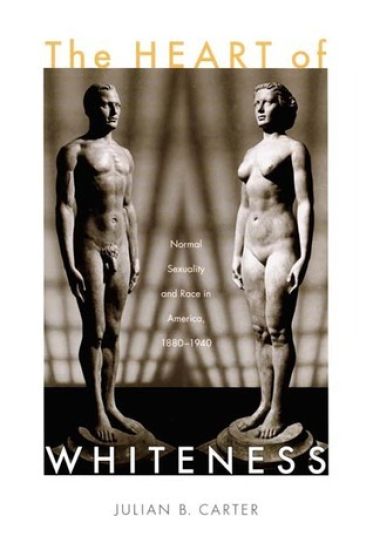
In this groundbreaking study, Julian Carter demonstrates that between 1880 and 1940, cultural discourses of whiteness and heterosexuality fused to form a new concept of the “normal” American. Gilded Age elites defined white civilization as the triumphant achievement of exceptional people hewing to a relational ethic of strict self-discipline for the common good. During the early twentieth century, that racial and relational ideal was reconceived in more inclusive terms as “normality,” something toward which everyone should strive. The appearance of inclusiveness helped make “normality” appear consistent with the self-image of a racially diverse republic; nonetheless, “normality” was gauged largely in terms of adherence to erotic and emotional conventions that gained cultural significance through their association with arguments for the legitimacy of white political and social dominance. At the same time, the affectionate, reproductive heterosexuality of “normal” married couples became increasingly central to legitimate membership in the nation.Carter builds her intricate argument from detailed readings of an array of popular texts, focusing on how sex education for children and marital advice for adults provided significant venues for the dissemination of the new ideal of normality. She concludes that because its overt concerns were love, marriage, and babies, normality discourse facilitated white evasiveness about racial inequality. The ostensible focus of “normality” on matters of sexuality provided a superficially race-neutral conceptual structure that whites could and did use to evade engagement with the unequal relations of power that continue to shape American life today.
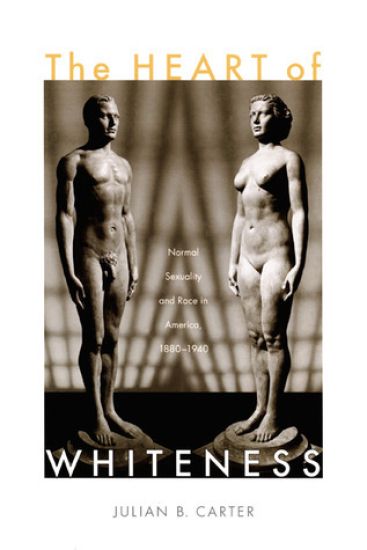
In this groundbreaking study, Julian Carter demonstrates that between 1880 and 1940, cultural discourses of whiteness and heterosexuality fused to form a new concept of the “normal” American. Gilded Age elites defined white civilization as the triumphant achievement of exceptional people hewing to a relational ethic of strict self-discipline for the common good. During the early twentieth century, that racial and relational ideal was reconceived in more inclusive terms as “normality,” something toward which everyone should strive. The appearance of inclusiveness helped make “normality” appear consistent with the self-image of a racially diverse republic; nonetheless, “normality” was gauged largely in terms of adherence to erotic and emotional conventions that gained cultural significance through their association with arguments for the legitimacy of white political and social dominance. At the same time, the affectionate, reproductive heterosexuality of “normal” married couples became increasingly central to legitimate membership in the nation.Carter builds her intricate argument from detailed readings of an array of popular texts, focusing on how sex education for children and marital advice for adults provided significant venues for the dissemination of the new ideal of normality. She concludes that because its overt concerns were love, marriage, and babies, normality discourse facilitated white evasiveness about racial inequality. The ostensible focus of “normality” on matters of sexuality provided a superficially race-neutral conceptual structure that whites could and did use to evade engagement with the unequal relations of power that continue to shape American life today.

Whose Shoes Are You Wearing?: 12 Steps to Uncovering the Woman You Really Want to Be
Julian B. Kiganda; Christine K. St Vil
Kkula Media
2014
nidottu

The Southern Subculture of Drinking and Driving
Julian B. Roebuck; Komanduri S. Murty
Routledge
2021
nidottu
First published in 1996. The Southern Subculture of Drinking and Driving is part of the Criminal Justice series. Volumes in the Current Issues in Criminal Justice series focus on scholarship, original thought and research, and readability. This one is no different. Julian B. Roebuck and Komanduri S. Murty have produced a volume that will be of vital interest to those who study and create policy on drunken driving ? one of the more enduring social problems of the past two decades. The volume has two major components that make it unique in the drunken driving literature. First, Roebuck and Murty focus on drunken drivers themselves and, through the use of a large dataset, add to our knowledge of that group of people by describing their characteristics. Second, and perhaps more important, Roebuck and Murty delve into the phenomenology of the drunken driver through a lengthy interview process.


Yoga Journal for Beginners an Introduction to the Types of Yoga
Julian B Scott
Speedy Publishing LLC
2014
pokkari
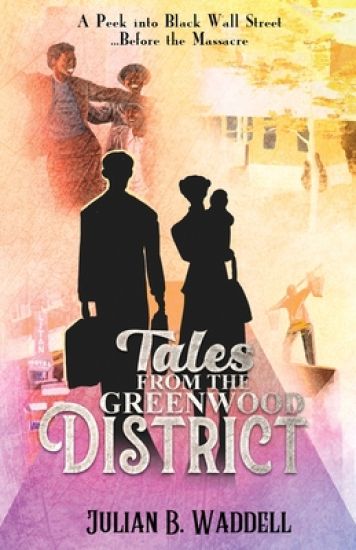
Tales from the Greenwood District is a series of short fictional stories that adds color and dimension to Black Wall Street before the Tulsa Massacre. Each tale takes place right after World War I, when blacks were called to war only to return to a society where racism ruled. The racist former President Woodrow Wilson, who empowered white supremacists, just ended his term. At the same time, waves of the devastating Spanish Flu pandemic killed millions of people around the world. With death, danger and devastation around every turn, this society still thrived. Each tale shows depth to who we are as a people, our culture and our shared happiness and pain.You'll read the tales of: A nurse who avoids grieving a sudden loss in the midst of battling the deadly Spanish Flu...A returning Army veteran who battles his inner demons while looking for purpose... yet his journey takes an unexpected turn...A grandmother who takes her grandson on a walking tour of the Greenwood District, which reveals the founders' stories and also a secret about himself...A white Tulsa resident wrestling with the mounting tensions of the angry mobs just one day before they embark on their historic killing spree...
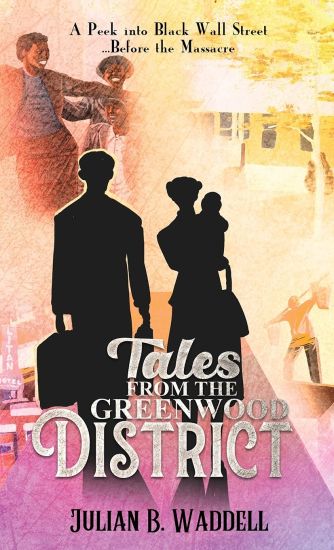
Tales from the Greenwood District is a series of short fictional stories that adds color and dimension to Black Wall Street before the Tulsa Massacre. Each tale takes place right after World War I, when blacks were called to war only to return to a society where racism ruled. The racist former President Woodrow Wilson, who empowered white supremacists, just ended his term. At the same time, waves of the devastating Spanish Flu pandemic killed millions of people around the world. With death, danger and devastation around every turn, this society still thrived. Each tale shows depth to who we are as a people, our culture and our shared happiness and pain.You'll read the tales of: A nurse who avoids grieving a sudden loss in the midst of battling the deadly Spanish Flu...A returning Army veteran who battles his inner demons while looking for purpose... yet his journey takes an unexpected turn...A grandmother who takes her grandson on a walking tour of the Greenwood District, which reveals the founders' stories and also a secret about himself...A white Tulsa resident wrestling with the mounting tensions of the angry mobs just one day before they embark on their historic killing spree...Author BioJulian B. Waddell is a Thought Leader in Cyber Security and a Seasoned Start-Up Strategist with a vast array of experience in both fields. He also is a gifted storyteller with a passion for learning little known history facts. What you may not know is he is a terrible singer and dancer but that doesn't stop him from singing embarrassingly loud and at random, while performing dance moves that look differently in his head than they do in real life.

Den ehemaligen und sowohl moralisch als auch monet r heruntergekommenen Erfolgsjournalisten Norbert Jaeger verschl gt eine Auftragsarbeit ins beschauliche Eifelst dtchen Nauenheim. Doch dort ist die l ndliche Idylle zutiefst gest rt. Eine junge Frau wird vermisst. Einen Tag sp ter geschieht ein brutaler Mord.Eine neue Freundschaft holt Jaeger langsam aus seiner Verpestung und weckt sein investigatives Talent. Er kommt einer ungeheuren Verschw rung auf die Spur, die schon seit vielen Jahren im Gange ist, und deren Ausma e noch viel abscheulicher und gr er sind, als es zun chst den Anschein hat.

Persönlichkeit
Julian B. Rotter; D.J. Hochreich
Springer-Verlag Berlin and Heidelberg GmbH Co. K
1979
nidottu
Mit diesem Buch unternehmen wir den Versuch, dem Studenten eine Einführung in die drei wichtigsten Aspekte der Persönlichkeitsforschung zu geben. Diese drei Aspekte sind: repräsentative Theorien, empirische Daten und Meß methoden. Zuerst stellen wir ausgewählte Theorien vor, welche die Gedankengänge vieler Psychologen beeinflußt haben. Wir beschreiben diese Theorien nicht nur, wir versuchen auch, dem Studenten Wege aufzuzeigen, mit denen diese Theorien bewertet und miteinander verglichen werden können, auch dann, wenn sie von ganz verschiede nen Standpunkten ausgehen. Mit anderen Worten, wir bieten dem Studenten das Werkzeug an, mit dem er nicht nur die in diesem Buch vorgestellten, sondern auch andere Theorien verstehen und einschätzen kann. Zweitens stellen wir einige Gebiete der empirischen For schung vor, um den Studenten mit der für die Persönlich keitsforschung typischen Art von Daten bekannt zu ma chen. Die Erhebung dieser Daten und die Aufstellung eines Zusammenhangs zwischen diesen Daten und theoretischen Hypothesen wollen wir den Studenten zeigen. Hierfür beschreiben wir bestimmte experimentelle Untersuchungen im Detail, so daß der Student erkennen kann, warum die Studie unternommen wurde, wie die Daten erhoben und wie verschiedene Interpretationen auf die Ergebnisse angewen det wurden. In einigen Fällen wird diese Art des Vorgehens veranschaulichen, wie Theorie und Forschung Hand in Hand gehen können.

In und um das Eifelst dtchen Schleiden verschwinden pl tzlich Menschen, spurlos und ohne den geringsten Hinweis auf ihr Schicksal. Kriminalrat Heitermann steht vor einem stetig gr er werdenden R tsel. Einem R tsel, dessen Ungeheuerlichkeit erst die beiden vierzehnj hrigen Freunde Maximilian und Frank auf die Spur zu kommen scheinen. In einer ihnen bis dahin unbekannten H hle sto en sie auf die sterblichen berreste eines Mannes, der vor ber einhundert Jahren in dieser H hle ein gewaltsames Ende fand. Au erdem finden sie sein leider nur fragmentarisch erhaltenes Tagebuch - in dem ebenfalls von verschwundenen Menschen berichtet wird. Die Ausf hrungen legen den Schluss nahe, dass diese Menschen an einen Ort gebracht wurden, der sich nicht auf der Erde befindet. Weil ihnen niemand glauben will, machen sich die Jungs auf eigene Faust auf die Suche nach weiteren Beweisen und werden bald selbst zu Gejagten ...

In und um das Eifelst dtchen Schleiden verschwinden pl tzlich Menschen, spurlos und ohne den geringsten Hinweis auf ihr Schicksal. Kriminalrat Heitermann steht vor einem stetig gr er werdenden R tsel. Einem R tsel, dessen Ungeheuerlichkeit erst die beiden vierzehnj hrigen Freunde Maximilian und Frank auf die Spur zu kommen scheinen. In einer ihnen bis dahin unbekannten H hle sto en sie auf die sterblichen berreste eines Mannes, der vor ber einhundert Jahren in dieser H hle ein gewaltsames Ende fand. Au erdem finden sie sein leider nur fragmentarisch erhaltenes Tagebuch - in dem ebenfalls von verschwundenen Menschen berichtet wird. Die Ausf hrungen legen den Schluss nahe, dass diese Menschen an einen Ort gebracht wurden, der sich nicht auf der Erde befindet. Weil ihnen niemand glauben will, machen sich die Jungs auf eigene Faust auf die Suche nach weiteren Beweisen und werden bald selbst zu Gejagten ...


Blackstone's Guide to the Coroners and Justice Act 2009
Jonathan Glasson; Julian B. Knowles
Oxford University Press
2010
nidottu
The Blackstone's Guide Series delivers concise and accessible books covering the latest legislative changes and amendments. Published soon after enactment, they offer expert commentary by leading names on the extent, scope, and effects of the legislation, plus a full copy of the Act itself. They offer a cost-effective solution to key information needs and are the perfect companion for any practitioner needing to get up to speed with the latest changes. The Coroners and Justice Act introduces significant changes to the inquest system, including creating a new national coroner service and establishing a new system of secondary certification of deaths that are not referred to a coroner. It also reforms and clarifies the law on homicide; updates the language of the offence of assisting suicide; and contains amendments to the Data Protection Act 1998 to strengthen the Information Commissioner's powers and improve the sharing of information. It will establish a new Sentencing Council for England and Wales, and introduce changes to sentencing for terrorist offences. It will also introduce changes in the arena of witness anonymity, including: granting Investigative Witness Anonymity Orders in gun and knife crime cases; granting anonymity to vulnerable or intimidated witnesses; and extending the use of live video links and screens around the witness box to enable vulnerable witnesses to give evidence. This new Blackstone's Guide combines the full text of the Act with an expert narrative. It seeks to explain the scope and impact of the Act, including the civil liberties implications, and to bring practitioners up-to-date with this complex piece of drafting. Presented in a straightforward layout, it enables ease of use as a reference source.

The Pink House
William a Paquette; Julian B Woelfel; Marcile B Woelfel
New Dominion Press
2018
sidottu
The history of The Pink House is unique; it is one of the few Victorian-era residences to remain in the possession of the same family for four generations. Victorian residences are 19th century fantasies created as monuments to the original owner's financial success and their personal interests. Each residence is an expression of achievement.