Kirjojen hintavertailu. Mukana 11 244 527 kirjaa ja 12 kauppaa.

Kirjahaku

Etsi kirjoja tekijän nimen, kirjan nimen tai ISBN:n perusteella.

1000 tulosta hakusanalla Julian Beecroft

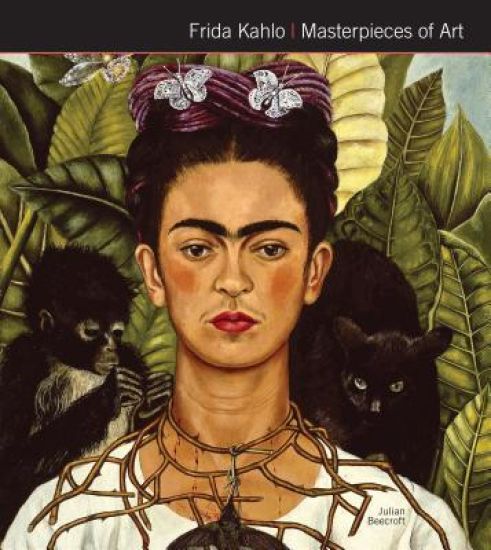
Frida Kahlo Masterpieces of Art

Frida Kahlo Masterpieces of Art

Julian Beecroft

Flame Tree Publishing
2017
sidottu
The painful, exquisite art of Mexico’s favourite artist was a product of immense physical pain, and an emotional tumultuous life. The new book features the range and power of her heavily autobiographical work, from the early, disturbing explorations of personal suffering to the more dulled, painkiller-drenched paintings of her later life.
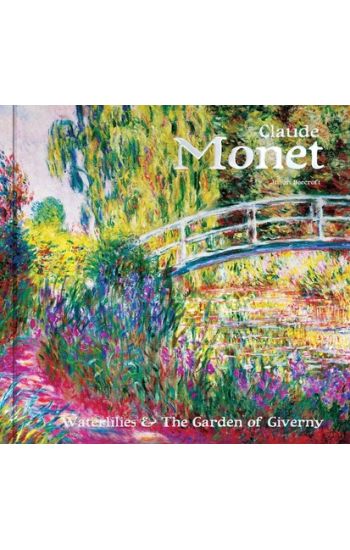
Claude Monet

Claude Monet

Julian Beecroft

Flame Tree Publishing
2018
sidottu
A gorgeous new edition with the cover printed on silver. Towards the end of his life and much inspired by Japanese water gardens, Monet spent a great deal of time in his beloved Giverny. Adorned with poppies, blue sage, dahlias and irises, the waters were disturbed only by bamboos and water lilies. His water garden was originally created to satisfy a need to be near water, and to provide a visual feast that could be enjoyed from his house. The pond was fed by the river Ru, and weeping willow and silver birch hung over its edges, caressing the fronds of the greenery and blossoms below. Its famous green wooden footbridge was built across the water and it became the central focus of many of his works. He said, ‘It took me some time to understand my water lilies. I planted them for pleasure.’ and so he began to work on what is probably the most famous series of paintings the world has ever seen.
Pierre-Auguste Renoir Masterpieces of Art

Pierre-Auguste Renoir Masterpieces of Art

Julian Beecroft

FLAME TREE PUBLISHING
2024
sidottu
Part of a new series of beautiful gift art books, Pierre-Auguste Renoir Masterpieces of Art features the popular works of this insightful artist, from his love of the female nude form to becoming one of the leaders of the Impressionist style. With a fresh and thoughtful introduction to the life and art of one of the most famous artists in the world, the book goes on to showcase his key works in all their glory.
Claude Monet

Claude Monet

Julian Beecroft

FLAME TREE PUBLISHING
2026
sidottu
A gorgeous new edition with the cover printed on silver. Towards the end of his life and much inspired by Japanese water gardens, Monet spent a great deal of time in his beloved Giverny. Adorned with poppies, blue sage, dahlias and irises, the waters were disturbed only by bamboos and water lilies. His water garden was originally created to satisfy a need to be near water, and to provide a visual feast that could be enjoyed from his house. The pond was fed by the river Ru, and weeping willow and silver birch hung over its edges, caressing the fronds of the greenery and blossoms below. Its famous green wooden footbridge was built across the water and it became the central focus of many of his works. He said, ‘It took me some time to understand my water lilies. I planted them for pleasure.’ and so he began to work on what is probably the most famous series of paintings the world has ever seen.
The Right of Passage

The Right of Passage

Julian Beecroft; Sheri Blaney

THE HISTORY PRESS LTD
2025
sidottu
How much could the victims of the Holocaust have known of what awaited them? How much should they have known? The Right of Passage reveals how different members of a single German-Jewish family tried to flee the Nazi regime. The discovery of a cache of photographs leads the authors to hundreds of letters, on which the book is based. Newly translated from German, these exchanges among leading thinkers of the period vividly record an intellectual culture in flight, though none could grasp the nature of the evil that was coming. Most members of the family found safety in England, Ireland or America, some only just in time; the logician and philosopher Kurt Grelling, exiled in Belgium, was arrested when the Nazis invaded. Deported to France and interned by the Vichy regime, despite the efforts of friends, Grelling’s attempts to find passage to America ultimately came to nothing. But his letters speak across the decades, urging us to question our unconscious attitudes to the millions of victims of the worst mass atrocity in history.
Monsieur Claude's Great French Adventure

Monsieur Claude's Great French Adventure

Julia Beacroft

Austin Macauley Publishers
2019
pokkari
Monsieur Claude, the 'Beanie Baby' crab, is upset and worried. His family lives in France and he would dearly love to visit them because his mum hasn't been well. His owner, Jamie, is going on holiday to Paris but only two of Jamie's 'Beanie Babies' can go with him. And Monsieur Claude isn't chosen to be one of them... However, the rest of his 'Beanie Baby' friends devise a cunning plan to smuggle Monsieur Claude into Jamie's backpack But disaster strikes at the airport when Monsieur Claude falls from the bag Will he be rescued? Will he ever see his owner again? The little crab has a thrilling series of adventures along the way, but will he ever be re-united with his mum?
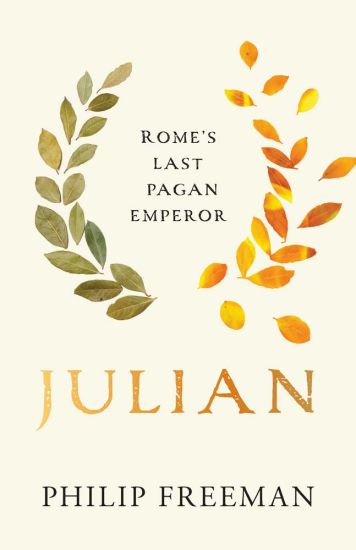
Julian

Julian

Philip Freeman

YALE UNIVERSITY PRESS
2023
sidottu
The tragic life of Julian, the last non-Christian emperor of Rome, by award-winning author Philip Freeman “When we think of ancient Rome, it’s impossible not to think of Christianity, one of its most notable exports—but what if it hadn’t been? This is the question provoked by classicist Philip Freeman in Julian, an appealing new entry in Yale’s Ancient Lives series, which tells the story of the old faith’s last imperial torchbearer.”—Anna Heyward, New York Times Book Review Flavius Claudius Julianus, or Julian the Apostate, ruled Rome as sole emperor for just a year and a half, from 361 to 363, but during that time he turned the world upside down. Although a nephew of Constantine the Great, the first Christian emperor of Rome, Julian fought to return Rome to the old gods who had led his ancestors to build their vast empire. As emperor, Julian (331–363) set about reforming the administration, conquering new territories, and reviving ancient religions. He was scorned in his time for repudiating Christianity and demonized as an apostate for willfully rejecting Christ. Through the centuries, Julian has been viewed by many as a tragic figure who sought to save Rome from its enemies and the corrupting influence of Christianity. Christian writers and historians have seen Julian much differently: as a traitor to God and violent oppressor of Christians. Had Julian not been killed by a random Persian spear, he might well have changed all of history.
Julian

Julian

Philip Freeman

YALE UNIVERSITY PRESS
2025
pokkari
The tragic life of Julian, the last non-Christian emperor of Rome, by award-winning author Philip Freeman “When we think of ancient Rome, it’s impossible not to think of Christianity, one of its most notable exports—but what if it hadn’t been? This is the question provoked by classicist Philip Freeman in Julian, an appealing new entry in Yale’s Ancient Lives series, which tells the story of the old faith’s last imperial torchbearer.”—Anna Heyward, New York Times Book Review Flavius Claudius Julianus, or Julian the Apostate, ruled Rome as sole emperor for just a year and a half, from 361 to 363, but during that time he turned the world upside down. Although a nephew of Constantine the Great, the first Christian emperor of Rome, Julian fought to return Rome to the old gods who had led his ancestors to build their vast empire. As emperor, Julian (331–363) set about reforming the administration, conquering new territories, and reviving ancient religions. He was scorned in his time for repudiating Christianity and demonized as an apostate for willfully rejecting Christ. Through the centuries, Julian has been viewed by many as a tragic figure who sought to save Rome from its enemies and the corrupting influence of Christianity. Christian writers and historians have seen Julian much differently: as a traitor to God and violent oppressor of Christians. Had Julian not been killed by a random Persian spear, he might well have changed all of history.
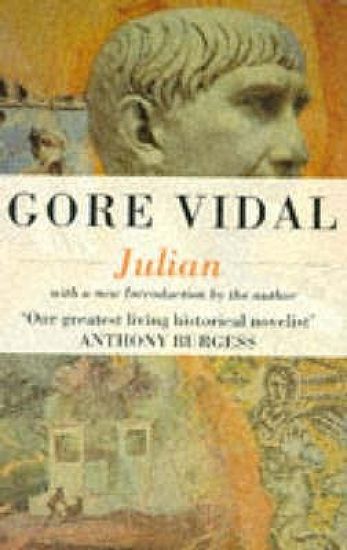
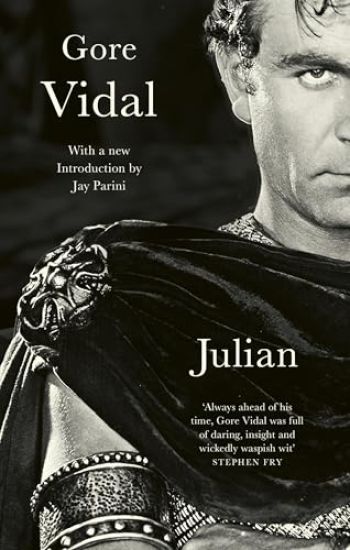
Julian

Julian

Gore Vidal

Little, Brown Book Group
1993
pokkari
Gore Vidal's fictional recreation of the Roman Empire teetering on the crux of Christianity and ruled by an emperor who was an inveterate dabbler in arcane hocus-pocus, a prig, a bigot, and a dazzling and brilliant leader.
Julian

Julian

Gore Vidal

Little, Brown Book Group
2025
nidottu
The remarkable bestseller about the fourth-century Roman emperor who famously tried to halt the spread of Christianity, Julian is widely regarded as one of Gore Vidal's finest historical novelsJulian the Apostate, nephew of Constantine the Great, was one of the brightest yet briefest lights in the history of the Roman Empire. A military genius on the level of Julius Caesar and Alexander the Great, a graceful and persuasive essayist, and a philosopher devoted to worshipping the gods of Hellenism, he became embroiled in a fierce intellectual war with Christianity that provoked his murder at the age of thirty-two, only four years into his brilliantly humane and compassionate reign. A marvelously imaginative and insightful novel of classical antiquity, Julian captures the religious and political ferment of a desperate age and restores with blazing wit and vigor the legacy of an impassioned ruler.'Gore Vidal, a writer of lustrous and fabulously readable prose, was always ahead of his time, so it is wonderful to see some of his finest works being republished for an audience who will be ready to (re)discover his daring, his insight and his wickedly waspish wit' STEPHEN FRY
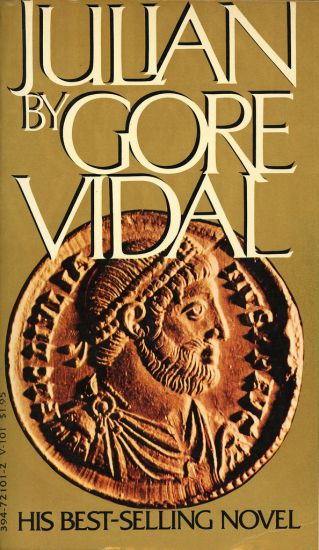
Julian

Julian

Gore Vidal

Random House Inc
2003
nidottu
An insightful historical novel recreates the brief but brilliant career of Julian, the Roman emperor and philosopher who dedicated himself to the restoration of Hellenism and tried to halt the spread of Christianity. Reprint.
Julian, Volume I

Julian, Volume I

Julian

Harvard University Press
1913
sidottu
The emperor who renounced Christianity.Julian (Flavius Claudius Iulianus) “the Apostate,” Roman Emperor, lived AD 331 or 332 to 363. Born and educated in Constantinople as a Christian, after a precarious childhood he devoted himself to literature and philosophy and became a pagan, studying in various Greek cities. In 355 his cousin Emperor Constantius called him from Athens to the court at Milan, entitled him “Caesar,” and made him governor of Gaul. Julian restored Gaul to prosperity and good government after the ravages of the Alamanni (he overthrew them at the battle of Strassburg in 357) and other Germans. Between 357 and 361 Julian’s own soldiers, refusing to serve in the East at Constantius’ orders, nearly involved Julian in war with Constantius—who, however, died in 361, making Julian sole Emperor of the Roman world. He began many reforms and proclaimed universal toleration in religion but pressed for the restoration of the older pagan worships. In 362–363 he prepared at Constantinople and then at Antioch for his expedition against Persia ruled by Shapur II. He died of a wound received in desperate battle. Julian’s surviving works (lost are his Commentaries on his western campaigns), all in Greek, are given in the Loeb Classical Library in three volumes. The eight Orations (1–5 in Volume I, 6–8 in Volume II) include two in praise of Constantius, one praising Constantius’ wife Eusebia, and two theosophical hymns (in prose) or declamations, of interest for studies in neo-Platonism, Mithraism, and the cult of the Magna Mater in the Roman world. Misopogon (“Beard-hater”), in Volume II, assails the morals of people in Antioch; the Letters (more than eighty), in Volume III, include edicts or rescripts, mostly about Christians, encyclical or pastoral letters to priests, and private letters. Lastly in Volume III are the fragments of the work Against the Galilaeans (the Christians), written mainly to show that evidence for the idea of Christianity is lacking in the Old Testament.
Julian, Volume II

Julian, Volume II

Julian

Harvard University Press
1913
sidottu
The emperor who renounced Christianity.Julian (Flavius Claudius Iulianus) “the Apostate,” Roman Emperor, lived AD 331 or 332 to 363. Born and educated in Constantinople as a Christian, after a precarious childhood he devoted himself to literature and philosophy and became a pagan, studying in various Greek cities. In 355 his cousin Emperor Constantius called him from Athens to the court at Milan, entitled him “Caesar,” and made him governor of Gaul. Julian restored Gaul to prosperity and good government after the ravages of the Alamanni (he overthrew them at the battle of Strassburg in 357) and other Germans. Between 357 and 361 Julian’s own soldiers, refusing to serve in the East at Constantius’ orders, nearly involved Julian in war with Constantius—who, however, died in 361, making Julian sole Emperor of the Roman world. He began many reforms and proclaimed universal toleration in religion but pressed for the restoration of the older pagan worships. In 362–363 he prepared at Constantinople and then at Antioch for his expedition against Persia ruled by Shapur II. He died of a wound received in desperate battle. Julian’s surviving works (lost are his Commentaries on his western campaigns), all in Greek, are given in the Loeb Classical Library in three volumes. The eight Orations (1–5 in Volume I, 6–8 in Volume II) include two in praise of Constantius, one praising Constantius’ wife Eusebia, and two theosophical hymns (in prose) or declamations, of interest for studies in neo-Platonism, Mithraism, and the cult of the Magna Mater in the Roman world. Misopogon (“Beard-hater”), in Volume II, assails the morals of people in Antioch; the Letters (more than eighty), in Volume III, include edicts or rescripts, mostly about Christians, encyclical or pastoral letters to priests, and private letters. Lastly in Volume III are the fragments of the work Against the Galilaeans (the Christians), written mainly to show that evidence for the idea of Christianity is lacking in the Old Testament.
Julian, Volume III

Julian, Volume III

Julian

Harvard University Press
1923
sidottu
The emperor who renounced Christianity.Julian (Flavius Claudius Iulianus) “the Apostate,” Roman Emperor, lived AD 331 or 332 to 363. Born and educated in Constantinople as a Christian, after a precarious childhood he devoted himself to literature and philosophy and became a pagan, studying in various Greek cities. In 355 his cousin Emperor Constantius called him from Athens to the court at Milan, entitled him “Caesar,” and made him governor of Gaul. Julian restored Gaul to prosperity and good government after the ravages of the Alamanni (he overthrew them at the battle of Strassburg in 357) and other Germans. Between 357 and 361 Julian’s own soldiers, refusing to serve in the East at Constantius’ orders, nearly involved Julian in war with Constantius—who, however, died in 361, making Julian sole Emperor of the Roman world. He began many reforms and proclaimed universal toleration in religion but pressed for the restoration of the older pagan worships. In 362–363 he prepared at Constantinople and then at Antioch for his expedition against Persia ruled by Shapur II. He died of a wound received in desperate battle. Julian’s surviving works (lost are his Commentaries on his western campaigns), all in Greek, are given in the Loeb Classical Library in three volumes. The eight Orations (1–5 in Volume I, 6–8 in Volume II) include two in praise of Constantius, one praising Constantius’ wife Eusebia, and two theosophical hymns (in prose) or declamations, of interest for studies in neo-Platonism, Mithraism, and the cult of the Magna Mater in the Roman world. Misopogon (“Beard-hater”), in Volume II, assails the morals of people in Antioch; the Letters (more than eighty), in Volume III, include edicts or rescripts, mostly about Christians, encyclical or pastoral letters to priests, and private letters. Lastly in Volume III are the fragments of the work Against the Galilaeans (the Christians), written mainly to show that evidence for the idea of Christianity is lacking in the Old Testament.