Kirjojen hintavertailu. Mukana 11 717 486 kirjaa ja 12 kauppaa.

Kirjahaku

Etsi kirjoja tekijän nimen, kirjan nimen tai ISBN:n perusteella.

1000 tulosta hakusanalla Julian E. Zelizer

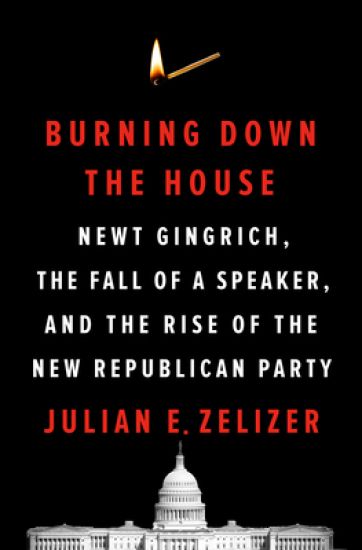
Burning Down the House: Newt Gingrich and the Rise of the New Republican Party
A New York Times Notable Book A New York Times Book Review Editors' Choice The story of how Newt Gingrich and his allies tainted American politics, launching an enduring era of brutal partisan warfare When Donald Trump was elected president in 2016, President Obama observed that Trump "is not an outlier; he is a culmination, a logical conclusion of the rhetoric and tactics of the Republican Party." In Burning Down the House, historian Julian Zelizer pinpoints the moment when our country was set on a path toward an era of bitterly partisan and ruthless politics, an era that was ignited by Newt Gingrich and his allies. In 1989, Gingrich brought down Democratic Speaker of the House Jim Wright and catapulted himself into the national spotlight. Perhaps more than any other politician, Gingrich introduced the rhetoric and tactics that have shaped Congress and the Republican Party for the last three decades. Elected to Congress in 1978, Gingrich quickly became one of the most powerful figures in America not through innovative ideas or charisma, but through a calculated campaign of attacks against political opponents, casting himself as a savior in a fight of good versus evil. Taking office in the post-Watergate era, he weaponized the good government reforms newly introduced to fight corruption, wielding the rules in ways that shocked the legislators who had created them. His crusade against Democrats culminated in the plot to destroy the political career of Speaker Wright. While some of Gingrich's fellow Republicans were disturbed by the viciousness of his attacks, party leaders enjoyed his successes so much that they did little collectively to stand in his way. Democrats, for their part, were alarmed, but did not want to sink to his level and took no effective actions to stop him. It didn't seem to matter that Gingrich's moral conservatism was hypocritical or that his methods were brazen, his accusations of corruption permanently tarnished his opponents. This brand of warfare worked, not as a strategy for governance but as a path to power, and what Gingrich planted, his fellow Republicans reaped. He led them to their first majority in Congress in decades, and his legacy extends far beyond his tenure in office. From the Contract with America to the rise of the Tea Party and the Trump presidential campaign, his fingerprints can be seen throughout some of the most divisive episodes in contemporary American politics. Burning Down the House presents the alarming narrative of how Gingrich and his allies created a new normal in Washington.
The Fierce Urgency of Now: Lyndon Johnson, Congress, and the Battle for the Great Society
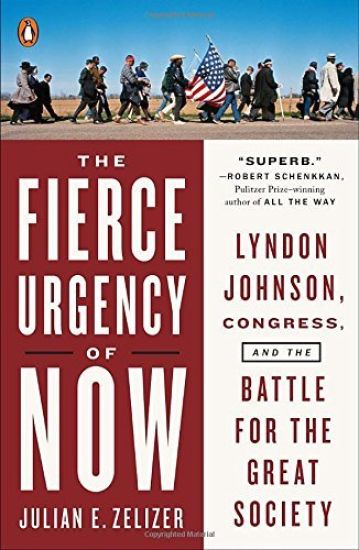
A majestic, big-picture account of the Great Society and the forces that shaped it Between November 1962, when he became president, and November 1966, when his party was routed in the midterm elections, Lyndon Johnson spearheaded the most transformative agenda in American politics since the New Deal. In just three years, he drove the passage of the Civil Rights and Voting Rights Acts, the War on Poverty, and Medicare and Medicaid, among a raft of other progressive initiatives. Dubbed the Great Society, it was an agenda whose ambition and achievement have never been matched, and it remains largely intact fifty years on. In The Fierce Urgency of Now, Julian E. Zelizer takes the full measure of the story in all its epic sweep. He provides unprecedented insight into the battles that raged inside Congress and the administration, and examines the often bitterly divided forces at play in the country--from religious groups and civil rights activists to labor unions and the media--during the tumultuous years when our political sights were set on the ideal of a Great Society.
Abraham Joshua Heschel

Abraham Joshua Heschel

Julian E. Zelizer

Yale University Press
2022
sidottu
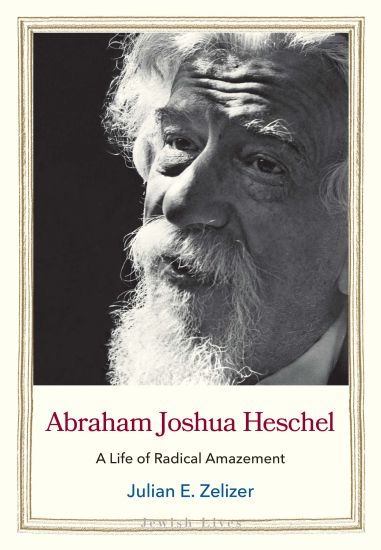
New in the acclaimed Jewish Lives series: A biography of the rabbi Abraham Joshua Heschel, who became a symbol of the marriage between religion and social justice “Zelizer’s book is absolutely riveting, both as a study of a truly important figure within Jewish thought and in providing insight into the politics of the 1960s.”—Sandy Levinson, Balkinization “When I marched in Selma, I felt my legs were praying.” So said Polish-born American rabbi Abraham Joshua Heschel (1907–1972) of his involvement in the 1965 Selma civil rights march alongside Martin Luther King Jr. Heschel, who spoke with a fiery moralistic fervor, dedicated his career to the struggle to improve the human condition through faith. In this new biography, author Julian Zelizer tracks Heschel’s early years and foundational influences—his childhood in Warsaw and early education in Hasidism, his studies in late 1920s and early 1930s Berlin, and the fortuitous opportunity, which brought him to the United States and saved him from the Holocaust, to teach at Hebrew Union College and the Jewish Theological Seminary. This deep and complex portrait places Heschel at the crucial intersection between religion and progressive politics in mid-twentieth-century America. To this day Heschel remains a symbol of the fight to make progressive Jewish values relevant in the secular world.
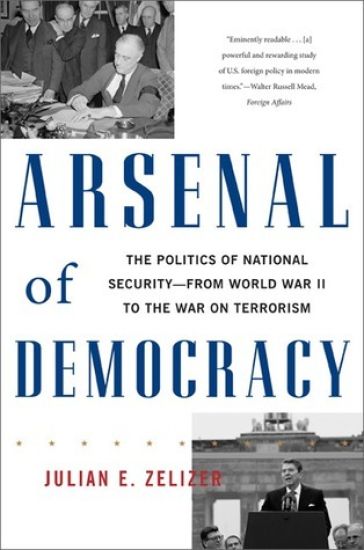
Arsenal of Democracy

Arsenal of Democracy

Julian E. Zelizer

Basic Books
2012
pokkari
In Arsenal of Democracy , historian and public intellectual Julian Zelizer shows how internal politics have influenced American foreign policy since the Cold War. Rejecting the notion that, prior to the presidency of George W. Bush, politics stopped at the water's edge," Zelizer exposes the partisan fighting that shaped the foreign policies of presidents from FDR to Kennedy to Reagan, revealing the extent to which the GOP and Democratic party have alternately sought to define themselves as the party of war and the party of peace as the political mood shifted. Republicans, he shows, have not always been hawks during World War II, it was the Democratic party that took the lead not only in entering war, but in ensuring that the national security apparatus that emerged would remain a fixture of the American political landscape even after the war was over. A definitive account of the complex interaction between domestic politics and foreign affairs over the last six decades, Arsenal of Democracy is essential reading for anyone interested in the politics of national security.
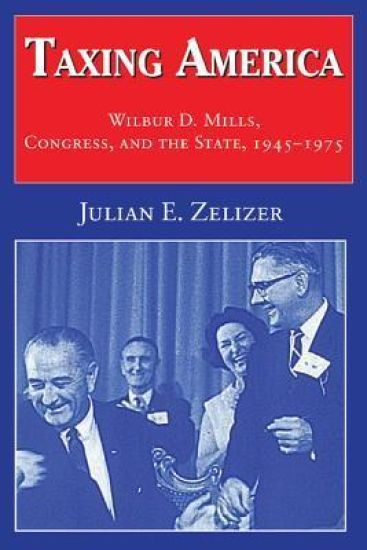
Taxing America

Taxing America

Julian E. Zelizer

Cambridge University Press
1999
sidottu
Taxing America offers a new interpretation of the American state between 1945 and 1975 by tracing the career of Wilbur D. Mills, chairman of the House Ways and Means Committee from 1958 to 1974. Blending methodological insights from history, political science, and sociology, Julian Zelizer provides one of the first comparative histories of income taxation, Social Security, and Medicare in this study of the crucial role Mills played in negotiating between the tax policy community and Congress. Taxing America lays out four innovative arguments about the expansion of the state during the postwar period; Congress played a crucial role in the institutionalization of the state after World War II, policy communities helped encourage policymaking, taxation was central to postwar liberalism and its domestic agenda, and a fragile alliance between influential fiscal conservatives and the state was instrumental in expanding support of the policies of the tax community.
On Capitol Hill

On Capitol Hill

Julian E. Zelizer

Cambridge University Press
2006
pokkari
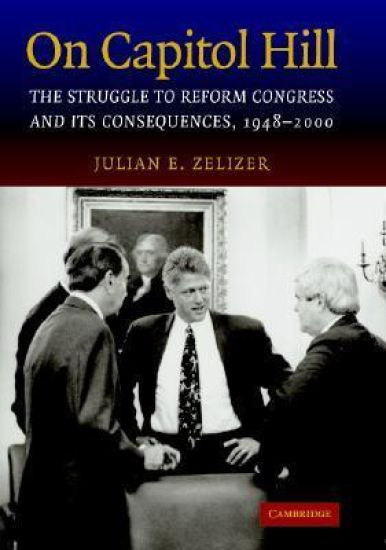
Thirty years after the 'Watergate Babies' promised to end corruption in Washington, Julian Zelizer offers a major history of the demise of the committee era Congress and the rise of the contemporary legislative branch. Based on research in over 100 archival collections, this 2004 book tackles one of the most enduring political challenges in America: barring a wholesale evolution, how can the institutions that compose representative democracy be improved so as best to fulfill the promises of the Constitution? While popular accounts suggest that major scandals or legislation can transform how government works, Zelizer shows that reform is messy, slow, multidimensional, and involves many institutions. This moment of reform in the 1970s revolved around a coalition that had worked for decades, the slow reconfiguration of the relationship between institutions, shifts in the national culture, and the ability of reformers to take advantage of scandal and elections.
Taxing America

Taxing America

Julian E. Zelizer

Cambridge University Press
2000
pokkari
Taxing America offers a new interpretation of the American state between 1945 and 1975 by tracing the career of Wilbur D. Mills, chairman of the House Ways and Means Committee from 1958 to 1974. Blending methodological insights from history, political science, and sociology, Julian Zelizer provides one of the first comparative histories of income taxation, Social Security, and Medicare in this study of the crucial role Mills played in negotiating between the tax policy community and Congress. Taxing America lays out four innovative arguments about the expansion of the state during the postwar period; Congress played a crucial role in the institutionalization of the state after World War II, policy communities helped encourage policymaking, taxation was central to postwar liberalism and its domestic agenda, and a fragile alliance between influential fiscal conservatives and the state was instrumental in expanding support of the policies of the tax community.
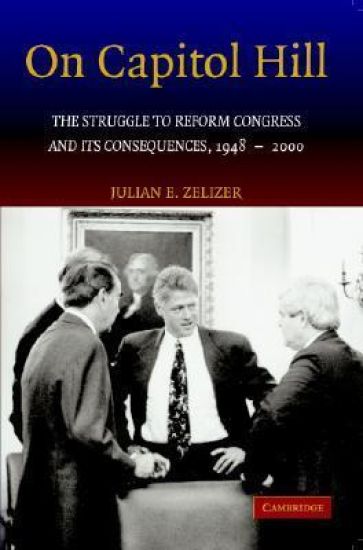
On Capitol Hill

On Capitol Hill

Julian E. Zelizer

Cambridge University Press
2004
sidottu
Thirty years after the ‘Watergate Babies’ promised to end corruption in Washington, Julian Zelizer offers the first major history of the demise of the committee era Congress and the rise of the contemporary legislative branch. Based on research in over 100 archival collections, this book tackles one of the most enduring political challenges in America: barring a wholesale evolution, how can the institutions that compose representative democracy be improved so as best to fulfill the promises of the Constitution? While popular accounts suggest that major scandals or legislation can transform how government works, Zelizer shows that reform is messy, slow, multidimensional, and involves many institutions. This moment of reform in the 1970s revolved around a coalition that had worked for decades, the slow reconfiguration of the relationship between institutions, shifts in the national culture, and the ability of reformers to take advantage of scandal and elections.
Governing America

Governing America

Julian E. Zelizer

Princeton University Press
2012
sidottu
In recent years, the study of American political history has experienced a remarkable renaissance. After decades during which the subject fell out of fashion and disappeared from public view, it has returned to prominence as the study of American history has shifted its focus back to politics broadly defined. In this book, one of the leaders of the resurgence in American political history, Julian Zelizer, assesses its revival and demonstrates how this work not only illuminates the past but also helps us better understand American politics today.
Governing America

Governing America

Julian E. Zelizer

Princeton University Press
2014
pokkari
In recent years, the study of American political history has experienced a remarkable renaissance. After decades during which the subject fell out of fashion and disappeared from public view, it has returned to prominence as the study of American history has shifted its focus back to politics broadly defined. In this book, one of the leaders of the resurgence in American political history, Julian Zelizer, assesses its revival and demonstrates how this work not only illuminates the past but also helps us better understand American politics today.
Jimmy Carter: 39th President,1977-1981

Jimmy Carter: 39th President,1977-1981

Julian E. Zelizer

Times Books
2010
nidottu
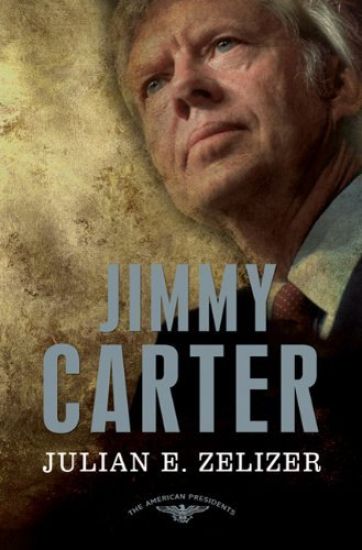
A peanut farmer from Georgia, Jimmy Carter rose to national power through mastering the strategy of the maverick politician. As the face of the 'New South', Carter's strongest support emanated from his ability to communicate directly to voters who were disaffected by corruption in politics. But running as an outsider was easier than governing as one, as Princeton historian Julian E. Zelizer shows in this examination of Carter's presidency. Once in power, Carter faced challenges sustaining a strong political coalition, as he focused on policies that often antagonized key Democrats, whose support he desperately needed. By 1980, Carter stood alone in the Oval Office as he confronted a battered economy, soaring oil prices, American hostages in Iran, and the Soviet invasion of Afghanistan. Carter's unpopularity enabled Ronald Reagan to achieve a landslide victory, ushering in a conservative revolution. But during Carter's post-presidential career, he has emerged as an important voice for international diplomacy and negotiation, remaking his image as a statesman for our time.
Burning Down the House: Newt Gingrich, the Fall of a Speaker, and the Rise of the New Republican Party
A New York Times Notable Book A New York Times Book Review Editors' Choice The story of how Newt Gingrich and his allies tainted American politics, launching an enduring era of brutal partisan warfare When Donald Trump was elected president in 2016, President Obama observed that Trump "is not an outlier; he is a culmination, a logical conclusion of the rhetoric and tactics of the Republican Party." In Burning Down the House, historian Julian Zelizer pinpoints the moment when our country was set on a path toward an era of bitterly partisan and ruthless politics, an era that was ignited by Newt Gingrich and his allies. In 1989, Gingrich brought down Democratic Speaker of the House Jim Wright and catapulted himself into the national spotlight. Perhaps more than any other politician, Gingrich introduced the rhetoric and tactics that have shaped Congress and the Republican Party for the last three decades. Elected to Congress in 1978, Gingrich quickly became one of the most powerful figures in America not through innovative ideas or charisma, but through a calculated campaign of attacks against political opponents, casting himself as a savior in a fight of good versus evil. Taking office in the post-Watergate era, he weaponized the good government reforms newly introduced to fight corruption, wielding the rules in ways that shocked the legislators who had created them. His crusade against Democrats culminated in the plot to destroy the political career of Speaker Wright. While some of Gingrich's fellow Republicans were disturbed by the viciousness of his attacks, party leaders enjoyed his successes so much that they did little collectively to stand in his way. Democrats, for their part, were alarmed, but did not want to sink to his level and took no effective actions to stop him. It didn't seem to matter that Gingrich's moral conservatism was hypocritical or that his methods were brazen, his accusations of corruption permanently tarnished his opponents. This brand of warfare worked, not as a strategy for governance but as a path to power, and what Gingrich planted, his fellow Republicans reaped. He led them to their first majority in Congress in decades, and his legacy extends far beyond his tenure in office. From the Contract with America to the rise of the Tea Party and the Trump presidential campaign, his fingerprints can be seen throughout some of the most divisive episodes in contemporary American politics. Burning Down the House presents the alarming narrative of how Gingrich and his allies created a new normal in Washington.
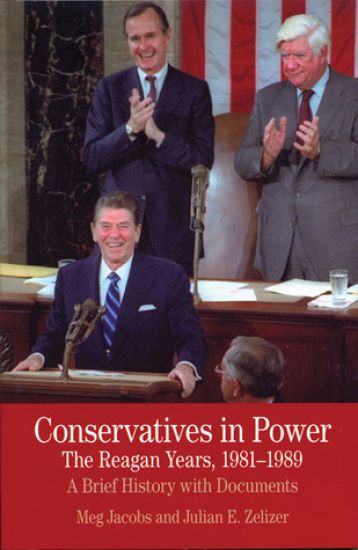
Conservatives in Power: The Reagan Years, 1981-1989

Conservatives in Power: The Reagan Years, 1981-1989

Jacobs Meg; Zelizer Julian E.

St Martin's Press
2010
nidottu
Ronald Reagan's election to the presidency in 1980 marked a victory for conservatism. However, as Meg Jacobs and Julian Zelizer point out in their introduction, once in power, conservatives discovered that implementing their agenda and reversing the liberalism entrenched in American government would not be as easy as they had hoped. In this collection, Jacobs and Zelizer explore the successes and limitations of the so-called Reagan Revolution and chronicle its legacy through subsequent presidencies up to Barack Obama's election in 2008. More than 60 thematically organized documents -- some recently released -- illuminate conservatives' efforts to shift American politics to the right. These materials explore Reagan's personal evolution as a conservative leader, as well as Reaganomics, tax cuts, anticommunism, the arms race, the culture wars, and scandals such as Iran Contra.
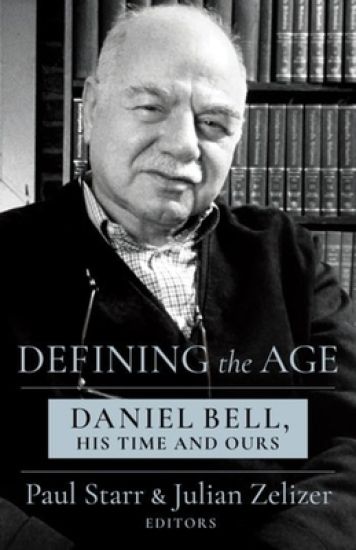
Defining the Age

Defining the Age

Paul Starr; Julian E. Zelizer

Columbia University Press
2022
sidottu
The sociologist Daniel Bell was an uncommonly acute observer of the structural forces transforming the United States and other advanced societies in the twentieth century. The titles of Bell’s major books—The End of Ideology (1960), The Coming of Post-Industrial Society (1973), and The Cultural Contradictions of Capitalism (1976)—became hotly debated frameworks for understanding the era when they were published. In Defining the Age, Paul Starr and Julian E. Zelizer bring together a group of distinguished contributors to consider how well Bell’s ideas captured their historical moment and continue to provide profound insights into today’s world. Wide-ranging essays demonstrate how Bell’s writing has informed thinking about subjects such as the history of socialism, the roots of the radical right, the emerging postindustrial society, and the role of the university. The book also examines Bell’s intellectual trajectory and distinctive political stance. Calling himself “a socialist in economics, a liberal in politics, and a conservative in culture,” he resisted being pigeon-holed, especially as a neoconservative.Defining the Age features essays from historians Jenny Andersson, David A. Bell, Michael Kazin, and Margaret O’Mara; sociologist Steven Brint; media scholar Fred Turner; and political theorists Jan-Werner Müller and Stefan Eich. While differing in their judgments, they agree on one premise: Bell’s ideas deserve the kind of nuanced and serious attention that they finally receive in this book.
Defining the Age

Defining the Age

Paul Starr; Julian E. Zelizer

Columbia University Press
2022
pokkari
The sociologist Daniel Bell was an uncommonly acute observer of the structural forces transforming the United States and other advanced societies in the twentieth century. The titles of Bell’s major books—The End of Ideology (1960), The Coming of Post-Industrial Society (1973), and The Cultural Contradictions of Capitalism (1976)—became hotly debated frameworks for understanding the era when they were published. In Defining the Age, Paul Starr and Julian E. Zelizer bring together a group of distinguished contributors to consider how well Bell’s ideas captured their historical moment and continue to provide profound insights into today’s world. Wide-ranging essays demonstrate how Bell’s writing has informed thinking about subjects such as the history of socialism, the roots of the radical right, the emerging postindustrial society, and the role of the university. The book also examines Bell’s intellectual trajectory and distinctive political stance. Calling himself “a socialist in economics, a liberal in politics, and a conservative in culture,” he resisted being pigeon-holed, especially as a neoconservative.Defining the Age features essays from historians Jenny Andersson, David A. Bell, Michael Kazin, and Margaret O’Mara; sociologist Steven Brint; media scholar Fred Turner; and political theorists Jan-Werner Müller and Stefan Eich. While differing in their judgments, they agree on one premise: Bell’s ideas deserve the kind of nuanced and serious attention that they finally receive in this book.
Myth America

Myth America

Kevin Kruse; Julian E. Zelizer

BASIC BOOKS
2023
sidottu
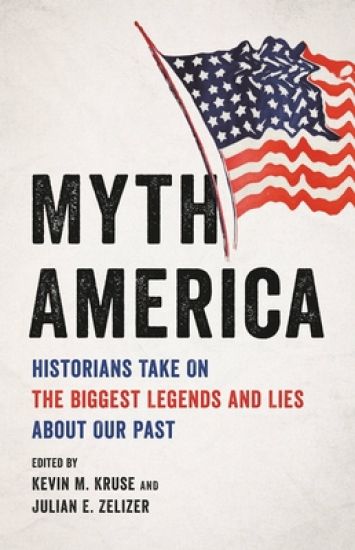
The United States is in the grip of a crisis of bad history. Distortions of the past promoted in the conservative media have led large numbers of Americans to believe in fictions over facts, making constructive dialogue impossible and imperilling our democracy. In Myth America, Kevin M. Kruse and Julian E. Zelizer have assembled an all-star team of fellow historians to push back against this misinformation. The contributors debunk narratives that portray the New Deal and Great Society as failures, immigrants as hostile invaders, and feminists as anti-family warriors-among numerous other partisan lies. Based on a firm foundation of historical scholarship, their findings revitalize our understanding of American history. Replacing myths with research and reality, Myth America is essential reading amid today's heated debates about our nation's past. With Essays ByAkhil Reed Amar Kathleen Belew Carol Anderson Kevin Kruse Erika Lee Daniel Immerwahr Elizabeth Hinton Naomi Oreskes Erik M. Conway Ari Kelman Geraldo Cadava David A. Bell Joshua Zeitz Sarah Churchwell Michael Kazin Karen L. Cox Eric Rauchway Glenda Gilmore Natalia Mehlman Petrzela Lawrence B. Glickman Julian E. Zelizer
Myth America

Myth America

Kevin Kruse; Julian E. Zelizer

BASIC BOOKS
2023
pokkari
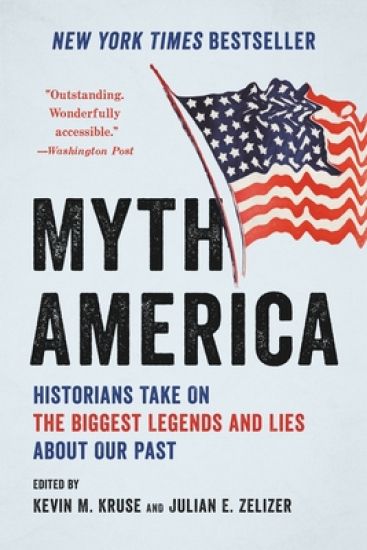
In this "incisive" (Vanity Fair) and "authoritative" (New York Times) instant New York Times bestseller, America's top historians set the record straight on the most pernicious myths about our nation's pastThe United States is in the grip of a crisis of bad history. Distortions of the past promoted in the conservative media have led large numbers of Americans to believe in fictions over facts, making constructive dialogue impossible and imperilling our democracy.In Myth America, Kevin M. Kruse and Julian E. Zelizer have assembled an all-star team of fellow historians to push back against this misinformation. The contributors debunk narratives that portray the New Deal and Great Society as failures, immigrants as hostile invaders, and feminists as anti-family warriors-among numerous other partisan lies. Based on a firm foundation of historical scholarship, their findings revitalize our understanding of American history.Replacing myths with research and reality, Myth America is essential reading amid today's heated debates about our nation's past. With Essays By: Akhil Reed Amar Kathleen Belew Carol Anderson Kevin M. Kruse Erika Lee Daniel Immerwahr Elizabeth Hinton Naomi Oreskes Erik M. Conway Ari Kelman Geraldo Cadava David A. Bell Joshua Zeitz Sarah Churchwell Michael Kazin Karen L. Cox Eric Rauchway Glenda Gilmore Natalia Mehlman Petrzela Lawrence B. Glickman ?Julian E. Zelizer
Fault Lines

Fault Lines

Kevin M. Kruse; Julian E. Zelizer

WW Norton Co
2019
sidottu
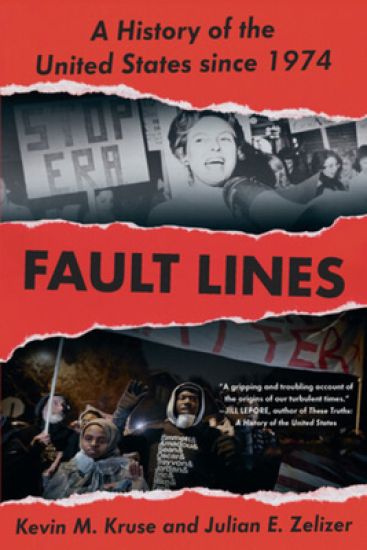
In the middle of the 1970s, America entered a new era of doubt and division. Major political, economic and social crises—Watergate, Vietnam, the rights revolutions of the 1960s–had cracked the existing social order. In the years that followed, the story of our own lifetimes would be written. Longstanding historical fault lines over income inequality, racial division and a revolution in gender roles and sexual norms would deepen and fuel a polarised political landscape. In Fault Lines, leading historians Kevin M. Kruse and Julian E. Zelizer reveal how the divisions of the present day began almost four decades ago, and how they were echoed and amplified by a fracturing media landscape that witnessed the rise of cable TV, the internet and social media. How did the United States become so divided? Fault Lines offers one of the few comprehensive, wide-angle history views towards an answer.
Fault Lines

Fault Lines

Kevin M. Kruse; Julian E. Zelizer

WW Norton Co
2020
nidottu
In the middle of the 1970s, America entered a new era of doubt and division. Major political, economic and social crises—Watergate, Vietnam, the rights revolutions of the 1960s–had cracked the existing social order. In the years that followed, the story of our own lifetimes would be written. Longstanding historical fault lines over income inequality, racial division and a revolution in gender roles and sexual norms would deepen and fuel a polarised political landscape. In Fault Lines, leading historians Kevin M. Kruse and Julian E. Zelizer reveal how the divisions of the present day began almost four decades ago, and how they were echoed and amplified by a fracturing media landscape that witnessed the rise of cable TV, the Internet and social media. How did the United States become so divided? Fault Lines offers one of the few comprehensive, wide-angle history views towards an answer.