

Kirjahaku
Etsi kirjoja tekijän nimen, kirjan nimen tai ISBN:n perusteella.
1000 tulosta hakusanalla Julian Straub


This title offers new research into cultural afterlife of Dante in nineteenth-century literature, culture and the visual arts. The figure of Dante's Beatrice can be seen as a cultural phenomenon or myth during the nineteenth century, inspiring a wide variety of representations in literature and the visual arts. This study looks at the cultural afterlife of Beatrice in the Victorian period in remarkably different contexts. Focusing on literary representations and selected examples from the visual arts, this book examines works by Dante Gabriel Rossetti and Christina Rossetti, George Eliot, Alfred Lord Tennyson and Walter Pater as well as by John Ruskin, Maria Rossetti and Arthur Henry Hallam. Julia Straub's analysis shows how the various representations of Beatrice in literature and in the visual arts reflect in meaningful ways some of the central social and aesthetic concerns of the Victorian period, most importantly its discourse on gender. This study offers fascinating insights into the Victorian reception of Dante by exploring the powerful appeal of his muse.
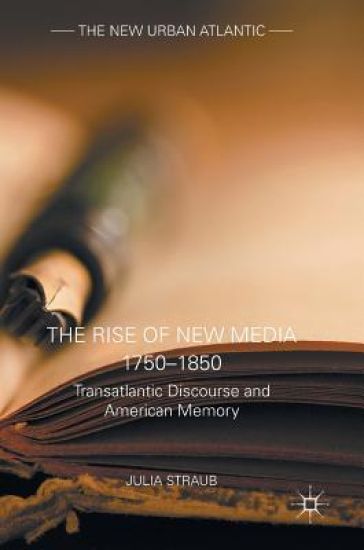
This monograph explores transatlantic literary culture by tracing the proliferation of ‘new media,’ such as the anthology, the literary history and the magazine, in the period between 1750 and 1850. The fast-paced media landscape out of which these publishing genres developed produced the need of a ‘memory of literature’ and a concomitant rhetoric of remembering strikingly similar to what today is called a cultural memory debate. Thus, rather than depicting the emergence of an American national literature, The Rise of New Media(1750–1850) combines impulses from media history, the history of print, the sociology of literature and canon theory to uncover nascent forms and genres of literary self-reflectivity and early stirrings of a canon debate in the Atlantic World.

This monograph explores transatlantic literary culture by tracing the proliferation of ‘new media,’ such as the anthology, the literary history and the magazine, in the period between 1750 and 1850. The fast-paced media landscape out of which these publishing genres developed produced the need of a ‘memory of literature’ and a concomitant rhetoric of remembering strikingly similar to what today is called a cultural memory debate. Thus, rather than depicting the emergence of an American national literature, The Rise of New Media(1750–1850) combines impulses from media history, the history of print, the sociology of literature and canon theory to uncover nascent forms and genres of literary self-reflectivity and early stirrings of a canon debate in the Atlantic World.

The figure of Dante's Beatrice can be seen as a cultural phenomenon or myth during the nineteenth century, inspiring a wide variety of representations in literature and the visual arts. This study looks at the cultural afterlife of Beatrice in the Victorian period in remarkably different contexts. Focusing on literary representations and selected examples from the visual arts, this book examines works by Dante Gabriel Rossetti and Christina Rossetti, George Eliot, Alfred Lord Tennyson and Walter Pater as well as by John Ruskin, Maria Rossetti and Arthur Henry Hallam. Julia Straub's analysis shows how the various representations of Beatrice in literature and in the visual arts reflect in meaningful ways some of the central social and aesthetic concerns of the Victorian period, most importantly its discourse on gender. This study offers fascinating insights into the Victorian reception of Dante by exploring the powerful appeal of his muse.


Gatsby's rise to riches. Is Gatsby's economic success a realization of the American Dream?
Julia Straub
GRIN Verlag
2019
nidottu


Representation of sugar in George Eliot's "Brother Jacob" and Matthew Lewis' "Journal of a West India Proprietor"
Julia Straub
GRIN Verlag
2019
nidottu

On the Question of Identity in the Novel "Wide Sargasso Sea" of Jean Rhys
Julia Straub
GRIN Verlag
2019
nidottu



The #1 New York Times bestselling author of Ghost Story--and the master of American horror--tells the terrifying story of a woman who, in her desperation to flee the past, encounters an inexplicable aura of evil. Julia's first purchase upon leaving her husband is a large, old-fashioned house in Kensington, where she plans to live by herself, well away from her soon-to-be-ex and the home where their young daughter died. She feels a peculiar affinity for the house right away, a feeling that deepens with each glimpse of a mysterious little girl--blond, like her daughter--in the neighborhood, and even in her dreams But the little girl and the big house have an inexplicable aura of evil. And Julia quickly discovers that escaping her past is not as simple as turning a key.

Julian Apostata. Das Bild der idealen Herrschaft in Julians Brief an den Philosophen Themistios
Dominik Staubermann
GRIN Verlag
2021
pokkari

Kaiser Julian und der Amnestieerlass. Auswirkungen auf die christliche Gemeinschaft des 4. Jahrhunderts
Dominik Staubermann
GRIN Verlag
2021
nidottu

Anzeigenwerbung in Zeitungen mit Beispielen der Zeitungsgruppe Straubinger Tagblatt/ Landshuter Zeitung
Julia Biermeier
Grin Verlag
2011
pokkari

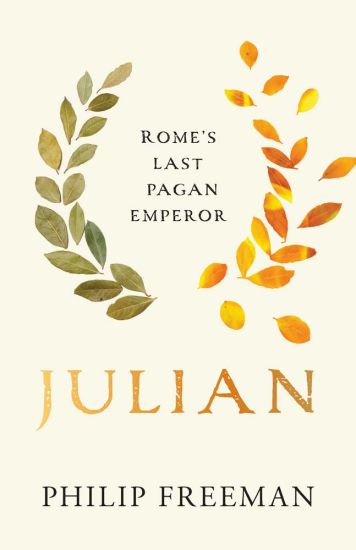
The tragic life of Julian, the last non-Christian emperor of Rome, by award-winning author Philip Freeman “When we think of ancient Rome, it’s impossible not to think of Christianity, one of its most notable exports—but what if it hadn’t been? This is the question provoked by classicist Philip Freeman in Julian, an appealing new entry in Yale’s Ancient Lives series, which tells the story of the old faith’s last imperial torchbearer.”—Anna Heyward, New York Times Book Review Flavius Claudius Julianus, or Julian the Apostate, ruled Rome as sole emperor for just a year and a half, from 361 to 363, but during that time he turned the world upside down. Although a nephew of Constantine the Great, the first Christian emperor of Rome, Julian fought to return Rome to the old gods who had led his ancestors to build their vast empire. As emperor, Julian (331–363) set about reforming the administration, conquering new territories, and reviving ancient religions. He was scorned in his time for repudiating Christianity and demonized as an apostate for willfully rejecting Christ. Through the centuries, Julian has been viewed by many as a tragic figure who sought to save Rome from its enemies and the corrupting influence of Christianity. Christian writers and historians have seen Julian much differently: as a traitor to God and violent oppressor of Christians. Had Julian not been killed by a random Persian spear, he might well have changed all of history.