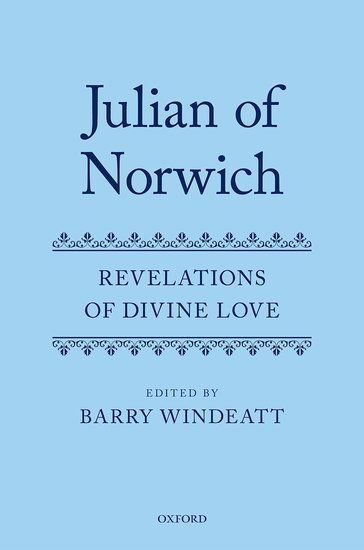
Julian of Norwich (1342-c.1416) is the earliest author writing in English who can be identified as a woman. She is also esteemed as one of the subtlest writers and profoundest thinkers of the period for her account of the revelations that she experienced in 1373. This edition presents both the shorter and longer versions of her book about her revelations, setting them in parallel for ease of comparison, with comprehensive explanatory and textual commentaries, and also with a glossary. Barry Windeatt provides a text that is likely to be closest to Julian's own language. A substantial introduction provides up-to-date information about Julian's circumstances, Julian's Norwich, her revelations, the relationship between her two texts, the theological background to her principal themes (including Christ as our mother), and a survey of the reception history of her work up to the present. A textual introduction and full apparatus guide the reader through the complex textual issues behind Julian's writing.
In May 1373, the English mystic Julian of Norwich was healed of a serious illness after experiencing a series of visions of the Blessed Virgin and of Christ's suffering. Her account, A Revelation of Love, is considered one of the most remarkable documents of medieval religious experience. In Julian of Norwich and the Mystical Body Politic of Christ, Frederick Bauerschmidt provides a close and historically sensitive reading of Julian's Revelation of Love that addresses the relationship between our understanding of God and our vision of human community. By locating Julian's images of Christ's body within the context of late medieval debates over the nature and extent of divine power, Bauerschmidt argues that Julian presents an alternative account of divine power in which the crucified body of Christ becomes the locus and shape of divine omnipotence. For Julian, divine power serves as the norm of all human exercise of power, rendering the possibility of the "mystical body politic of Christ"as the exemplary form of human community. In this reading, the theological is irreducibly political and the political is irreducibly theological. As such, Bauerschmidt shows Julian to be both a theologian of the first rank and one who "imagines the political."
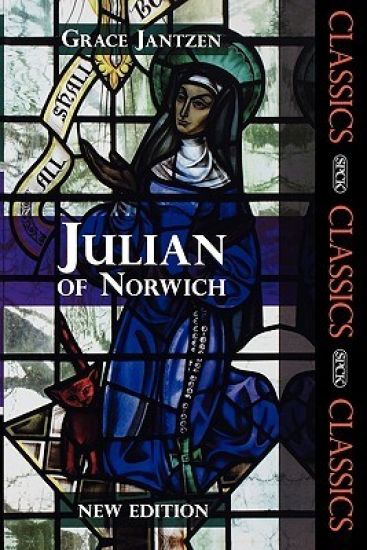
Julian of Norwich, an anchoress of the fourteenth century has captured the imagination of our time in a remarkable way. She shares with her readers the deepest and most intimate experiences of her life through her writings, which are sustained reflections on the visions which appeared to her during a severe illness. Yet of her life and her world we know virtually nothing, not even how she came to be an anchoress. This detailed study of Julian attempts not only to penetrate her theological ideas but also bring to life her world and her life as an anchoress. This is a book not only for those who have a scholarly interest in Julian, but for anyone drawn to Christian mysticism and the place of women within that tradition. In the new introduction to this edition, Grace Jantzen explores what it might mean to be an anchoress in postmodernity, and how reflections on Julian of Norwich and her desire for God can enable us to become the space of divine transformation.
Over six hundred years ago a woman known as Julian of Norwich wrote what is now regarded as one of the greatest works of literature in English. Based on a sequence of mystical visions she received in 1373, her book is called Revelations of Divine Love. Julian lived through an age of political and religious turmoil, as well as through the misery of the Black Death, and her writing engages with timeless questions about life, love and the meaning of suffering. But who was Julian of Norwich? And what can she teach us today? Medievalist and TV historian Janina Ramirez invites you to join her in exploring Julian's remarkable life and times, offering insights into how and why her writing has survived, and what we can learn from this fourteenth-century mystic whose work lay hidden in the shadows of her male contemporaries for far too long.
Over six hundred years ago a woman known as Julian of Norwich wrote what is now regarded as one of the greatest works of literature in English. Based on a sequence of mystical visions she received in 1373, her book is called Revelations of Divine Love. Julian lived through an age of political and religious turmoil, as well as through the misery of the Black Death, and her writing engages with timeless questions about life, love and the meaning of suffering. But who was Julian of Norwich? And what can she teach us today? Medievalist and TV historian Janina Ramirez invites you to join her in exploring Julian’s remarkable life and times, offering insights into how and why her writing has survived, and what we can learn from this fourteenth-century mystic whose work lay hidden in the shadows of her male contemporaries for far too long.
Written in a time of plague and persecution, Julian of Norwich's Revelation of Love grapples with the problem of evil and the challenge it presents to those who wish to believe in a loving God. Julian's sixteen revelations about sin and redemption are some of the first theological works written in English. While her reassuring wisdom has gained in popularity over time, her struggles to reconcile her inner questioning with the teachings she had received through the church and through her mystical visions will also ring true to many readers today. In this new version, Elisabeth Dutton preserves the beauty and ambiguity in the original language, while rendering this classic accessible to modern readers. Dutton's introduction provides essential background information on Julian of Norwich, explores her role as a woman in church, and sheds light on how her ideas relate to modern issues.
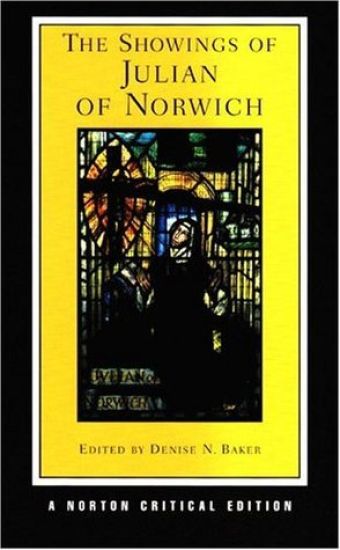
Carefully edited for the undergraduate reader, this Norton Critical Edition includes an informed introduction, focusing on Julian’s theology and preparing students to understand the complex, controversial themes of the text, particularly Julian’s solution to the problem of evil in Revelation XIII and XIV. Paragraph divisions have been organized to emphasize the thematic units of each chapter, and the sentences have been punctuated for clarity. The text included is a Middle English edition, based on the Paris manuscript (1580–1650) of the long text, with language akin to Chaucer’s and therefore more accessible than other Middle English editions. "Contexts" includes contemporary texts that help students better understand Julian’s originality, including selections from works by Margery Kempe, Augustine, Aelred of Rievaulx, and Walter Hilton. "Criticism" brings together interpretations that address the themes and style of the Showings by Sandra McEntire, Lynn Staley, B. A. Windeatt, and David Aers, among others. A Selected Bibliography is also included.
Julian of Norwich was a fourteenth-century woman who at the age of thirty had a series of vivid visions centred around the crucified Christ. Twenty years later, while living as an anchoress in a church, she is believed to have set out these visions in a text called the Showing of Love. Going against the current trend to place Julian in the category of mystic - a classification which defines her visions as deeply private, psychological events - this book sets Julian’s thinking in the context of a visionary project used to instruct the Christian community.Drawing on recent developments in philosophy that debate the objectivity and rationality of vision and perception, Kevin J. Magill gives full attention to the depth and richness of the visual language and modes of perception in the Showing of Love. In particular, the book focuses on the ways in which Julian presented her vision to the Christian society around her, demonstrating the educative potential of interaction between the ‘isolated’ anchoress and the wider community. Challenging Julian’s identification as a mystic and solitary female writer, this book argues that Julian engaged in a variety of educative methods – oral, visual, conversational, mnemonic, alliterative – that extend the usefulness of her text.
Julian of Norwich was a fourteenth-century woman who at the age of thirty had a series of vivid visions centred around the crucified Christ. Twenty years later, while living as an anchoress in a church, she is believed to have set out these visions in a text called the Showing of Love. Going against the current trend to place Julian in the category of mystic - a classification which defines her visions as deeply private, psychological events - this book sets Julian’s thinking in the context of a visionary project used to instruct the Christian community.Drawing on recent developments in philosophy that debate the objectivity and rationality of vision and perception, Kevin J. Magill gives full attention to the depth and richness of the visual language and modes of perception in the Showing of Love. In particular, the book focuses on the ways in which Julian presented her vision to the Christian society around her, demonstrating the educative potential of interaction between the ‘isolated’ anchoress and the wider community. Challenging Julian’s identification as a mystic and solitary female writer, this book argues that Julian engaged in a variety of educative methods – oral, visual, conversational, mnemonic, alliterative – that extend the usefulness of her text.
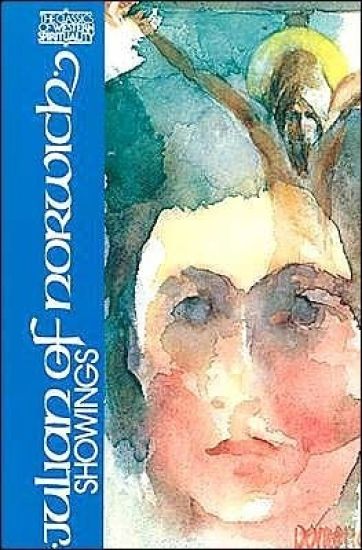
Here are witty and startling perceptions of the "feminine" nature of God by one of the greatest of all English mystics, Julian of Norwich. "... these translations thus supersede former ones... if the introductions, translations, and other apparatus of the rest of the series are of the same high quality, the series will be indispensable for most libraries." —Library Journal "As truly as God is our Father, so truly is God our Mother. What, do you wish to know your Lord's meaning in this thing? Know it well, love was his meaning... Who reveals it to you? Love. What did he reveal to you? Love. Why does he reveal it to you? For Love." —Julian of Norwich, 1342-c.1423 Julian, an anchoress who lived in solitude in Norwich, England in the late 14th century (1342-c.1423), received the 16 "showings" or revelations of God's love in a series of experienced visions. The first version was a short text. The second, longer version was apparently written some years after the first, when she had had time to pray and reflect about the teachings God had given her. In the light of their thirteen years of work on the critical edition of Showings, Colledge and Walsh give us this first modern English rendering from the place of Julian's teaching in Catholic Spirituality. The editors present Julian as a skilled theologian and master of rhetorical style. Jean Leclercz, the noted monk, writer, and medievalist, in his preface addresses himself to the question, "Why is this an important work today?" Showings reveals a Julian who experienced God directly and not self-consciously as "our mother." Her revelations of the feminine side of God represent a significant contribution to the tradition. Her graphic visions of the humanity of Christ are marked by vivid imagery and detail. But the special appeal of Julian lies in her theology of the all-embracing fullness of divine love. Julian is certainly a warm and approachable companion for the mystical journey. †
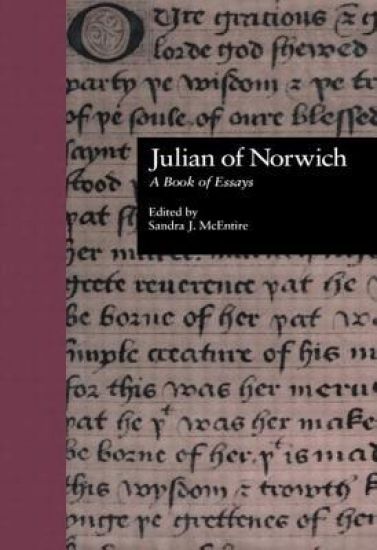
These essays-written specifically for this book-provide a rich evaluation of this late 14th and early 15th-century mystical writer's book of revelations and considers the construction of her narrative, its theological complexity, and its literary and intellectual context. This casebook features discussions by both established scholars and newer voices ranging from genre to eschatology and gynecology to diabology, reflecting both current and comparative theory. Providing translations of all Middle English quotations, the volume includes a selective bibliography that provides a guide for further reading.
With: Historical commentaryBiographical infoAppendix with further readingsFor nearly 2,000 years, Christian mystics, martyrs, and sages have documented their search for the divine. Their writings have bestowed boundless wisdom upon subsequent generations. But they have also burdened many spiritual seekers. The sheer volume of available material creates a seemingly insurmountable obstacle. Enter the Upper Room Spiritual Classics series, a collection of authoritative texts on Christian spirituality curated for the everyday reader. Designed to introduce 15 spiritual giants and the range of their works, these volumes are a first-rate resource for beginner and expert alike.Julian of Norwich, a late 14th-century nun and spiritual writer, wrote descriptions of her "showings" and other insights from a lifetime of prayer, and these writings have inspired countless Christians. Julian's writing offers what some believe to be one of the most moving discussions of God's love in all of Christian literature.
This book offers a series of reflections on the Christian life based on the Book of Shewings (or Revelations) of Julian of Norwich, who has her place in literature alongside Chaucer and Langland as well as being one of the great spiritual writers of the fourteenth century. Each chapter begins with a text from Julian, followed by a reflection on the text. The author, who lectures in Church History and in Christian Spirituality, reveals the timeless relevance of Julian’s message.
A noted scholar examines the work of the English mystic Julian of Norwich Julian of Norwich is the late fourteenth-century and early fifteenth-century English woman theologian. With her mystical writings, she has become one of the most popular and influential spiritual figures of our times. In Julian of Norwich: In God's Sight, the eminent scholar Philip Sheldrake offers a study of the theology that Julian expresses in her writings. The author examines what is known about Julian’s mystical experience or mystical consciousness, discusses what can be surmised about Julian’s likely identity and places her writings in historical, cultural and spiritual contexts. Julian of Norwich: In God's Sight is based on a faithful reading of Julian’s texts, especially the Long Text, as well as on her own declared theological-spiritual purpose. This compelling book: Presents a contextually-grounded and text-related study of the key elements of Julian’s theologyOffers a scholarly work by a well-known expert in the fieldUnlocks an ever-richer understanding of Julian’s writingsIncludes an examination of the key texts attributed to Julian Written for students of theology and those interested in learning more about this popular mystic, Julian of Norwich: In God's Sight offers ascholarly review of Julian’s most important writings.
A noted scholar examines the work of the English mystic Julian of Norwich Julian of Norwich is the late fourteenth-century and early fifteenth-century English woman theologian. With her mystical writings, she has become one of the most popular and influential spiritual figures of our times. In Julian of Norwich: In God's Sight, the eminent scholar Philip Sheldrake offers a study of the theology that Julian expresses in her writings. The author examines what is known about Julian’s mystical experience or mystical consciousness, discusses what can be surmised about Julian’s likely identity and places her writings in historical, cultural and spiritual contexts. Julian of Norwich: In God's Sight is based on a faithful reading of Julian’s texts, especially the Long Text, as well as on her own declared theological-spiritual purpose. This compelling book: Presents a contextually-grounded and text-related study of the key elements of Julian’s theologyOffers a scholarly work by a well-known expert in the fieldUnlocks an ever-richer understanding of Julian’s writingsIncludes an examination of the key texts attributed to Julian Written for students of theology and those interested in learning more about this popular mystic, Julian of Norwich: In God's Sight offers ascholarly review of Julian’s most important writings.
These essays-written specifically for this book-provide a rich evaluation of this late 14th and early 15th-century mystical writer's book of revelations and considers the construction of her narrative, its theological complexity, and its literary and intellectual context. This casebook features discussions by both established scholars and newer voices ranging from genre to eschatology and gynecology to diabology, reflecting both current and comparative theory. Providing translations of all Middle English quotations, the volume includes a selective bibliography that provides a guide for further reading.
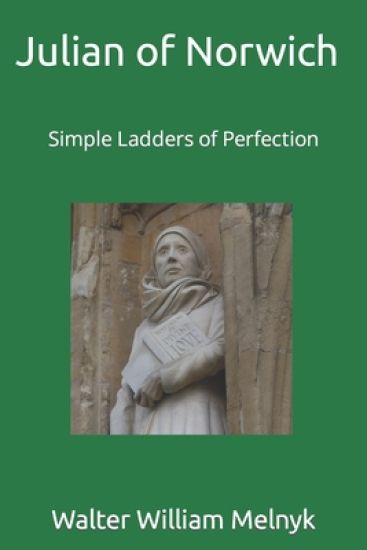
Julian's Ladders of PerfectionAmong contemporary lovers of Julian of Norwich there are many who have never read her entire book. There are many reasons for this. Chief among them is that she is not always easy to read. Even rendered in modern English, her fourteenth century prose can be daunting. Then, too, her style is more like the spoken, rather than written word. While this provides a refreshing familiarity for the reader (compared with the medieval Scholastic theologians who were among her contemporaries, ) we often must follow her through dependent clauses, subtexts, flashbacks, and changes in direction. A didactic passage may suddenly be interrupted by vision; a vivid "showing" may pause for theological reflection.No less a spiritual leader than Thomas Merton once described Julian as, with John Henry Newman, the greatest Anglican theologian. Her theology, based upon the Trinity and the Incarnation, is impeccable. But she is first a mystic, and said herself that her spiritual visions are near to impossible to express in words. For this reason, many dismiss her as a theologian; perhaps also because of her self-description as "unlettered." She is usually valued for her ability to lead the reader into the deep realms of unmediated experience of the Divine. Often it is said that she provides little or no practical spiritual direction; no instructions on how to pray or how to ascend the ladder of spiritual growth. Unlike her contemporary English Mystic, Walter Hilton (in his Ladder of Perfection, ) it is usually said that Julian has no such Ladder, no series of steps to take.Even the somewhat diligent reader of Julian, however, will know this is not so. There are no less than ten simple Ladders of Perfection in Julian's book, easy to spot once the reader is inclined to look for them. They are simple, and brief. Each is composed of three steps, perhaps from Julian's love for the spiritual imagery of the Holy Trinity. They do not build upon each other, but are ten ways of looking a common idea.This book is a simple presentation of the simple mystic visions, theological insight, and Ladders of Perfection that are Julian of Norwich. It begins with her "bodily" visions of the Passion of Christ, extracted in a separate and continuous narrative. It begins there, because all of Julian's spiritual theology emerges from her experience of this Passion. It is needful to read it first, because without her Passion narrative there is no Hazelnut, no Christ Our Mother, no Love Was His Meaning.There follows a brief discussion of the idea of Ladders of Perfection, followed by a presentation of Julian's Ten Simple Ladders. For each ladder there are three words for the three steps, a passage which puts them in context, and a colloquy or reflection, on that Ladder. These appear embedded in the many spiritual insights for which Julian is most famous. These are not gathered into discrete subject areas. Hilton might have done so, or Aquinas, but not Julian. They appear more or less in the order that she wrote them down.It is hoped this will provide the reader with an easy to use "companion" of Julian's work. The quotations from Julian's text are from "A Revelation of Divine Love," modern English translation by Walter William Melnyk, published in 2014.
"Julian is, without doubt, one of the most wonderful of all Christian voices. She gets greater and greater in my eyes as I grow older." -- Thomas MertonJulian of Norwich (1342-c1416) is considered by many to be one of the greatest English mystics. In 1373, she received a series of sixteen visions centred on the person and sufferings of Jesus, and on the Trinity. A short time later, she wrote an account of them and much later, after prayer and reflection, wrote eighty-six chapters called Showings of Divine Love.The times in which Julian lived were fraught with political, social, and economic upheavals in both Church and state. There are, indeed, many parallels to the present age. This helps to explain why Julian speaks so loudly to us today after six hundred years of silence.This gem of a book offers insightful and challenging thoughts on Julian's writings which will aid devotion and provide inspiration for prayer and meditation.
Teachings from this fourteenth-century mystic provide spiritual direction and call for you to open yourself, body and soul, to divine love.Many people are familiar with the phrase "All shall be well" but do not know much, if anything, about Julian of Norwich, the fourteenth-century English mystic who wrote those words. Thomas Merton declared her to be "without a doubt one of the most wonderful of all Christian voices," and former Archbishop of Canterbury Rowan Williams says that her writings "may well be the most important work of Christian reflection in the English language."This accessible introduction to Julian's Revelations of Divine Love, an extended reflection on a series of her mystical visions, includes an informative introduction that addresses the historical, cultural and sociological context of Julian's life and writings. Mary Earle's facing-page commentary focuses on Julian's profoundly hopeful vision of humanity and God, her creative imagery and her rigorous honesty about the spiritual life. Drawing directly from Julian's text, Earle addresses a variety of topics essential to understanding Julian's mysticism, including the infinite nature of God, the life of prayer, God's suffering with us, the eternal and undying life of the soul, the motherhood of Jesus and the motherhood of God, "all shall be well" and more.Drawing directly from Julian's text, the commentary addresses a variety of topics including the infinite nature of God, the life of prayer, God's suffering with us, the eternal and undying life of the soul, the motherhood of Jesus and the motherhood of God, "all shall be well" and more.