Kirjahaku
Etsi kirjoja tekijän nimen, kirjan nimen tai ISBN:n perusteella.
1000 tulosta hakusanalla Juliana Smith
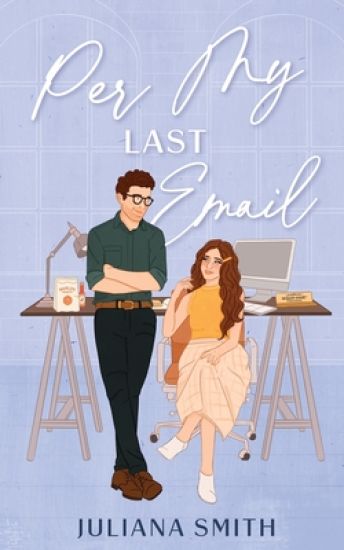
June Hart is an affectionate and chatty first-grade teacher who comes from a family of wealthy, money-driven doctors, except her grandmother. When June inherits her grandmother's 1920's farmhouse, she is compelled to remodel it, hoping to show her egotistical family she is capable of being more than an insubstantial teacher. In the process, she finds herself spending a considerable amount of time with her hot and ill-tempered contractor, Grant Dawes. Grant Dawes is a grouchy handyman who can seem to fix everything except his troubled past. His lack of family and friends leaves him to put all of his focus on restoring homes. That is until a polka dot, crocheting, vanilla coke-obsessed client pushes her way in to throw off his routines.When he falls for his sweet-natured client, June Hart, Grant is forced to confront his complicated history to have a future with her.Join June and Grant in this grumpy/sunshine, small-town romance and find yourself falling for this opposites-attract duo

Olive Moore has been avoiding her hometown for three years now. But a phone call with her mom has her agreeing to spend the holidays back home with her family, she lets it slip she will be bringing a boyfriend with her. The only problem with that is she has no boyfriend. That is until she meets a handsome-albeit annoying-stranger on the plane who makes her an offer she can't refuse.Finn Beckett has always had good luck, as demonstrated by the gorgeous blonde he's seated next to on a flight to Aspen. One drink too many leads to Olive spilling her problems in his lap, and he feels compelled to help. So he makes her an offer: he'll pretend to be her boyfriend to keep her family off her back and make this the best Christmas ever.Olive and Finn spend the next two weeks going on spirit-filled Christmas dates with her family. Their ruse is working perfectly, but Finn can't help but notice Olive is holding something back. Something that could ruin everything.Their relationship may have taken off smoothly, but with all this turbulence, will they ever make it to baggage claim?
Layla Wright fit in her role as admin at West Oak Publishing about as well as she would at a five star restaurant in her 'I love DILFS T-shirt'. When she applied to the job she thought she would be learning the ins and outs of the industry to eventually write and publish her own novel. But after years of staying in this same position, she's unsure of how to break out of her routine and chase her dreams.Luke Wells knows the words "friend zone" all too well. Staying in a dead-end position at a company he doesn't care for only has one bonus: Layla Wright. He may hate his job just as much as she does, but she's the one thing he's not willing to lose. When Luke finds out he's up for a promotion, he has to decide how far he's willing to go to stay close to Layla. With his own dreams of running a bar on the line, is Layla really worth sticking around for-especially when she's never indicated there will be anything more between them than friendship?A seaside work conference is just what they need to shake things up and break them out of this tight bubble they've been living in for so long. Will they finally be brave enough to go for what they want or will they return home with everything between them unchanged? Boundaries get crossed, lines get blurred, and donuts get eaten.
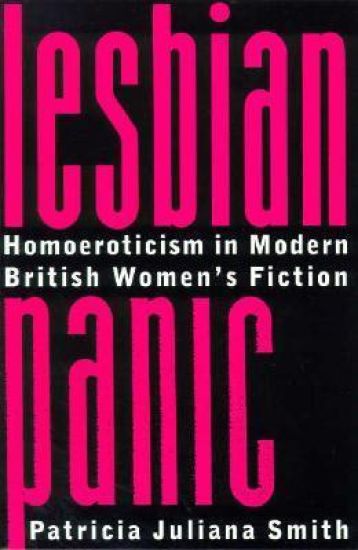
In many works by modern British women writers, two women form a strong bond only to have that relationship stymied, paralyzed or interrupted. A female character, fearing discovery of covert lesbian desires, lashes out at another woman, resulting in emotional or physical harm to herself or others. Patricia Smith defines this narrative as "lesbian panic". What happens when a character or an author is unwilling to confront or reveal her own lesbianism or lesbian desire? For Smith, lesbian panic is often a fear of losing one's identity and value within the heterosexual paradigm. Smith traces the history of "lesbian panic" through key works: Woolfe's "The Voyage Out" and "Mrs Dalloway"; Bowen's "The Little Girls" and "Eva Trout"; Brophy's "King of a Rainy Day"; Lessing's "The Golden Notebook"; and Spark's "The Prime of Miss Jean Brodie". Smith reveals how and why this panic is represented and she explores how postmodern lesbian writers have attempted to break away from this narrative.
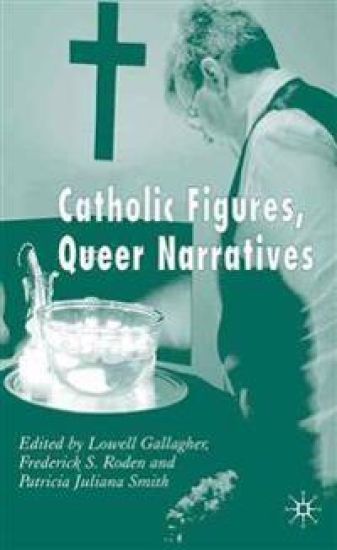
Catholic Figures, Queer Narratives
Frederick S. Roden; Patricia Juliana Smith
Palgrave Macmillan
2006
sidottu
This study examines the relationship between Catholicism and homosexuality and between historical homophobia and contemporary struggles between the Church and the homosexual? Moving from the Gothic to the late Twentieth-century, from Europe to America, it interrogates what is queer about Catholicism and what is modern about homosexuality.
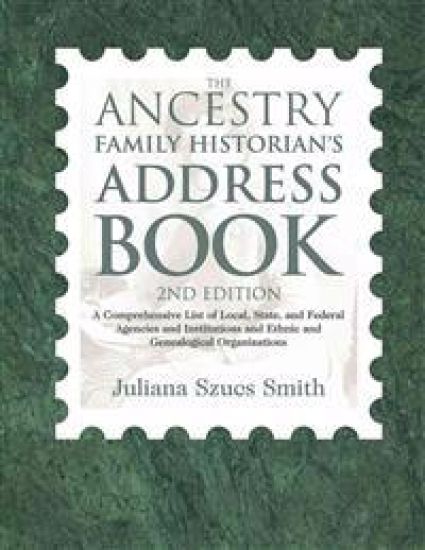
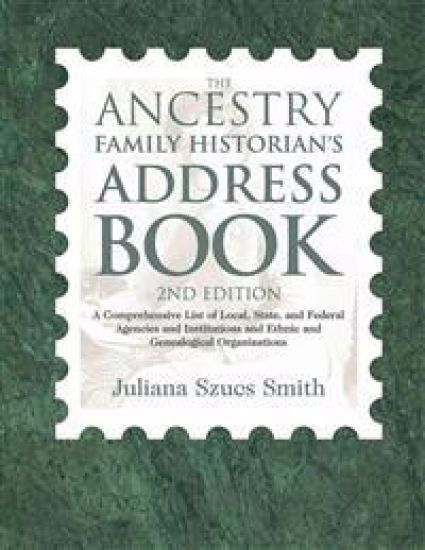
Know what resources are available! Sometimes the toughest part about overcoming a research barrier is knowing what resources are available, where to go or whom to ask for help. The Ancestry Family Historian's Address Book is your instant link to thousands of genealogy-related organizations and resources across the US! Published in 1997, The Address Book is organized by state and includes such organizations as: National Genealogy Societies, State Genealogy and Historical Societies' Archives, Libraries, Museums, Ethnic and Ecclesiastical Resources & Web Sites, Military and Federal Government Agencies, National Archives, Family History Centers, and more! This research tool will become your first point of reference for many future research contacts! Give it a special place on your reference shelf!
Know what resources are available Sometimes the toughest part about overcoming a research barrier is knowing what resources are available, where to go or whom to ask for help. The Ancestry Family Historian's Address Book is your instant link to thousands of genealogy-related organizations and resources across the US Published in 1997, The Address Book is organized by state and includes such organizations as: National Genealogy Societies, State Genealogy and Historical Societies' Archives, Libraries, Museums, Ethnic and Ecclesiastical Resources & Web Sites, Military and Federal Government Agencies, National Archives, Family History Centers, and more This research tool will become your first point of reference for many future research contacts Give it a special place on your reference shelf "
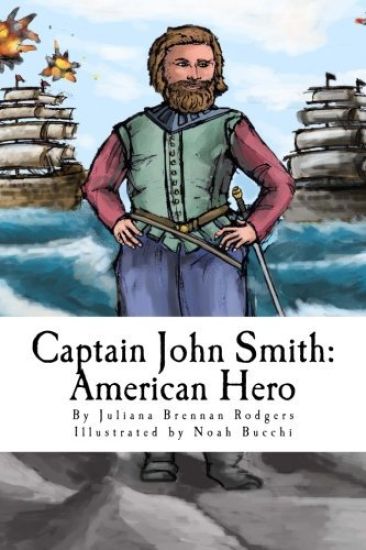
Captain John Smith: American Hero
Juliana Brennan Rodgers
Createspace Independent Publishing Platform
2017
nidottu
Farmland Conservation
Lynn V. Dicks; Joscelyne E. Ashpole; Juliana Dänhardt; Katy James; Annelie M. Jönsson; Nicola Randall; David A. Showler; Rebecca K. Smith; Susan Turpie; David R. Williams; William J. Sutherland
Pelagic Publishing
2014
nidottu
This synopsis covers evidence for the effects of conservation interventions for native farmland wildlife. It is restricted to evidence captured on the website www.conservationevidence.com. It includes papers published in the journal Conservation Evidence, evidence summarized on our database and systematic reviews collated by the Collaboration for Environmental Evidence. It is the thrid volume in the series Synopses of Conservation Evidence. Evidence was collected from all European countries west of Russia, but not those south of France, Switzerland, Austria, Hungary and Romania. A list of interventions to conserve wildlife on farmland was developed collaboratively by a team of thirteen experts. A number of interventions that are not currently agri-environment options were added during this process, such as ‘Provide nest boxes for bees (solitary or bumblebees)’ and ‘Implement food labelling schemes relating to biodiversity-friendly farming’. Interventions relating to the creation or management of habitats not considered commercial farmland (such as lowland heath, salt marsh and farm woodland) were removed. The list of interventions was organized into categories based on the International Union for the Conservation of Nature (IUCN) classifications of direct threats and conservation actions. Interventions that fall under the threat category ‘Agriculture’ are grouped by farming system, with separate sections for interventions that apply to arable or livestock farms, or across all farming types.
Farmland Conservation
Lynn V. Dicks; Joscelyne E. Ashpole; Juliana Dänhardt; Katy James; Annelie M. Jönsson; Nicola Randall; David A. Showler; Rebecca K. Smith; Susan Turpie; David R. Williams; William J. Sutherland
Pelagic Publishing
2014
sidottu
This synopsis covers evidence for the effects of conservation interventions for native farmland wildlife. It is restricted to evidence captured on the website www.conservationevidence.com. It includes papers published in the journal Conservation Evidence, evidence summarized on our database and systematic reviews collated by the Collaboration for Environmental Evidence. It is the thrid volume in the series Synopses of Conservation Evidence. Evidence was collected from all European countries west of Russia, but not those south of France, Switzerland, Austria, Hungary and Romania. A list of interventions to conserve wildlife on farmland was developed collaboratively by a team of thirteen experts. A number of interventions that are not currently agri-environment options were added during this process, such as ‘Provide nest boxes for bees (solitary or bumblebees)’ and ‘Implement food labelling schemes relating to biodiversity-friendly farming’. Interventions relating to the creation or management of habitats not considered commercial farmland (such as lowland heath, salt marsh and farm woodland) were removed. The list of interventions was organized into categories based on the International Union for the Conservation of Nature (IUCN) classifications of direct threats and conservation actions. Interventions that fall under the threat category ‘Agriculture’ are grouped by farming system, with separate sections for interventions that apply to arable or livestock farms, or across all farming types.
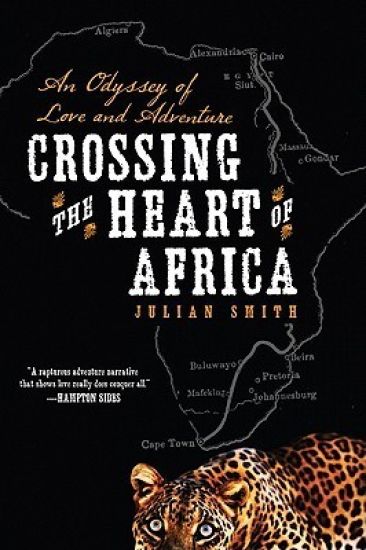
"The amazing true story of Julian Smith, who retraced the journey of legendary British explorer Ewart The Leopard Grogan, the first man to cross the length of Africa, in hopes of also winning the heart of the woman he loved. In 1898, the dashing young British explorer Ewart the Leopard Grogan was in love. In order to prove his mettle to his beloved - and her aristocratic stepfather - he set out on a quest to become the first person to walk across Africa, a feat hitherto thought by many explorers to be impossible". ("New York Times", 1900). In 2007, thirty-five-year-old American journalist Julian Smith faced a similar problem with his girlfriend of six years ...and decided to address it in the same way Grogan had more than a hundred years before: he was going to retrace the Leopard's 4,500-mile journey for love and glory through the lakes, volcanoes, savannas, and crowded modern cities of Africa. Smith interweaves both adventures into a seamless narrative in "Crossing the Heart of Africa": the story of two explorers, a century apart, who both traversed the length of Africa to prove themselves ...and came back changed men.
Public and Private Operation of Railways in Brazil
Julian Smith Duncan
Columbia University Press
2020
sidottu
Even the Stones Cry Out: The Three Hypotheses Relating the Bible, Science and the Nature of Reality
Juliann Smith
Createspace Independent Publishing Platform
2013
nidottu
What do Israel, the Jews and End Time prophecies have to do with quantum physics, cosmology and biology? In the Age of Technology, everything takes on a astonishing new informational look. That includes the universe and all life in it. When looked at through this oddly modern perspective, life, the laws of physics and even "End Time Prophecies" dovetail neatly together to show a created world in which a larger scenario is playing out, one foretold from antiquity by the Bible. This book will take you through the surprising details, which effectively reframe the discussion about evolution, information, the nature of reality and whether or not our world is created.
For Mother's Sake is the true-life account of a boy growing up on the Texas/Mexico border during the 1940s, of his discovery of sex, drink, rock 'n' roll and love in the 50s, and of California in the 1960s and a remarkable journey through a decade of radical social and political change. Along with Frank Zappa, he was a founder member of the Mothers of Invention, one of the most influential 'rock' bands in the history of 20th century music. Jimmy recalls these times with a clarity that is remarkable, considering the backdrop. Jimmy's desires are laid bare as he discovers what free love, drugs and "freakiness" are all about. Cast back into obscurity by Frank Zappa, Jimmy goes on to recall time spent in the wilderness, brief returns to stardom and, on moving to Europe, a return to center stage with the Grandmothers. But not for long as the unexpected happens Left stranded and alone in Europe, Jimmy forms new musical partnerships and stays on the road, a troubadour to the end. By this time, Jimmy has finally acquired mythical "ol' timer" status, particularly in Europe, where he was much loved and where he had, along the way, finally met the love of his life. He considered himself a "fortunate guy". Jimmy left an incomplete manuscript when he died. From 1995, the existing text has been supplemented with reminiscences and statements drawn from Jimmy's own website bio and from the many interviews he gave during this time. But this is his book and these are his words. Indeed, the book ends with extracts from his last written interview, given in Aug. of 2008, less than 3 months before he died. It is a poignant ending to a remarkable story.