"Oumuamua", Juliane Ruis femte diktsamling, er en stor og mangslungen bok med et komplekst persongalleri og et billedspråk med dype røtter, skrevet i en vibrerende og levende form. Jeget i disse diktene inngår i en rekke samtaler og henvender seg til en bestemor, til en gud, til poeten Ellen Einan og til Evterpe, en av de ni musene i gresk mytologi. Gjennom et både lengselsfullt og usentimentalt språk undersøker "Oumuamua" ordenes og poesiens forhold til hverdagen, sorgen, drømmen, livet og døden. Juliane Rui gjør med dette et litterært sprang og et ambisiøst løft, i en omfangsrik, erkjennelsessøkende og inspirert samling dikt.
To mennesker er plassert i et ørkenlandskap i Juliane Ruis sjuende diktsamling. Himmelgudinnen Nut spenner opp himmelen over dem. Den nakne kvinnekroppen holder himmelen og jorden sammen. Relasjonen mellom jeg-et og du-et er uklart og spent. Med intimitet, ydmykhet og desperasjon undersøkes relasjonen. Hvem er den andre? Her finnes en sarkofag, dyreknokler, begjær. Her finnes himmelgudinne og solgudinne. Det henvendte mot det bortvendte. Det vanskapte og frihetsfølelse, og vilje til undergang. Dråpen på ørkentungen er et gåtefullt og egenartet verk.
Denne diktboka handlar om barndom, om søsken og familie, om korleis ein hugsar hendingar og episodar frå fortida, og korleis ein kan formidle dette. Korleis kan ein strukturere eit bilde av ein felles barndom?
Juliane Rui viste alt med debutboka i 2011 at ho er ein forfattar som ser det uvanlege. I utgivinga i år, den tredje diktsamlinga hennar, møter vi eit blikk som tek inn verda på nytt. Dei tilsynelatande enkle dikta observerer dei små og nære tinga, men samanhengane mellom dei utvidar biletet til å gjelde eksistensen til både menneske og dyr. Det blir mana fram ei erkjenning av ein skjebnefellesskap på kloden.
Variasjonar over nærleik. Juliane Rui skildrar dei skjøre kontaktpunkta mellom menneska, naturen og dei andre artane på jorda. Mennesket oppstår som ein del av ein samanheng, kopla til familien og til verda utanfor. Perspektiva endrar seg etter kvart som ein blir påverka av tid, minne og relasjonar. I poesien til Rui får vi sjå verda frå nye vinklar og nærme oss andre perspektiv og språk: det til barnet, dyret og naturen.
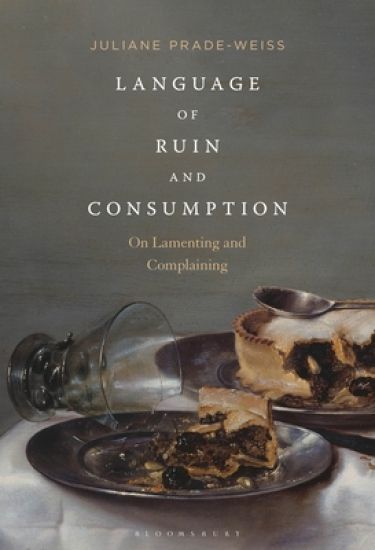
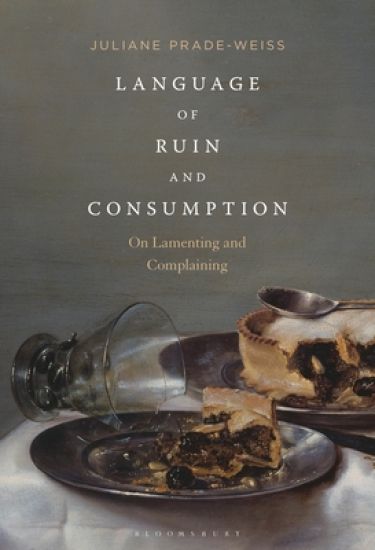
Laments and complaints are among the most ancient poetical forms and ubiquitous in everyday speech. Understanding plaintive language, however, is often prevented by the resentment and fear it evokes. Lamenting and complaining seems pointless, irreconcilable, and destructive. Language of Ruin and Consumption examines Freud’s approaches to lamenting and complaining, the heart of psychoanalytic therapy and theory, and takes them as guidelines for reading key works of the modern canon. The re-negotiation of older--ritual, dramatic, and juridical--forms in Rilke, Wittgenstein, Scholem, Benjamin, and Kafka puts plaintive language in the center of modern individuality and expounds a fundamental dimension of language neglected in theory: reciprocity is at issue in plaintive language. Language of Ruin and Consumption advocates that a fruitful reception of psychoanalysis in criticism combines the discussion of psychoanalytical concepts with an adaptation of the hermeneutical principle ignored in most philosophical approaches to language, or relegated to mere rhetoric: speech is not only by someone and on something, but also addressed to someone.
Laments and complaints are among the most ancient poetical forms and ubiquitous in everyday speech. Understanding plaintive language, however, is often prevented by the resentment and fear it evokes. Lamenting and complaining seems pointless, irreconcilable, and destructive. Language of Ruin and Consumption examines Freud’s approaches to lamenting and complaining, the heart of psychoanalytic therapy and theory, and takes them as guidelines for reading key works of the modern canon. The re-negotiation of older--ritual, dramatic, and juridical--forms in Rilke, Wittgenstein, Scholem, Benjamin, and Kafka puts plaintive language in the center of modern individuality and expounds a fundamental dimension of language neglected in theory: reciprocity is at issue in plaintive language. Language of Ruin and Consumption advocates that a fruitful reception of psychoanalysis in criticism combines the discussion of psychoanalytical concepts with an adaptation of the hermeneutical principle ignored in most philosophical approaches to language, or relegated to mere rhetoric: speech is not only by someone and on something, but also addressed to someone.
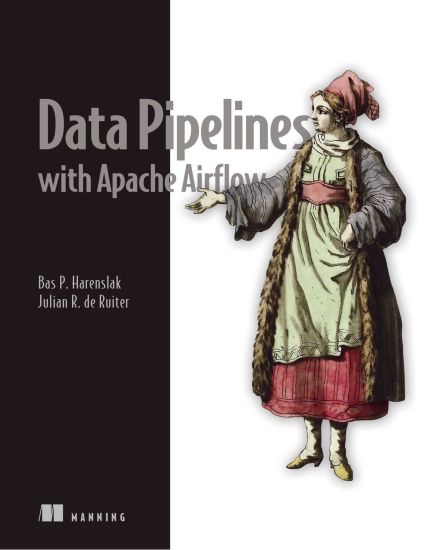
Pipelines can be challenging to manage, especially when your data has to flow through a collection of application components, servers, and cloud services. Airflow lets you schedule, restart, and backfill pipelines, and its easy-to-use UI and workflows with Python scripting has users praising its incredible flexibility. Data Pipelines with Apache Airflow takes you through best practices for creating pipelines for multiple tasks, including data lakes, cloud deployments, and data science. Data Pipelines with Apache Airflow teaches you the ins-and-outs of the Directed Acyclic Graphs (DAGs) that power Airflow, and how to write your own DAGs to meet the needs of your projects. With complete coverage of both foundational and lesser-known features, when you’re done you’ll be set to start using Airflow for seamless data pipeline development and management. Key Features Framework foundation and best practices Airflow's execution and dependency system Testing Airflow DAGs Running Airflow in production For data-savvy developers, DevOps and data engineers, and system administrators with intermediate Python skills. About the technology Data pipelines are used to extract, transform and load data to and from multiple sources, routing it wherever it’s needed -- whether that’s visualisation tools, business intelligence dashboards, or machine learning models. Airflow streamlines the whole process, giving you one tool for programmatically developing and monitoring batch data pipelines, and integrating all the pieces you use in your data stack. Bas Harenslak and Julian de Ruiter are data engineers with extensive experience using Airflow to develop pipelines for major companies including Heineken, Unilever, and Booking.com. Bas is a committer, and both Bas and Julian are active contributors to Apache Airflow.
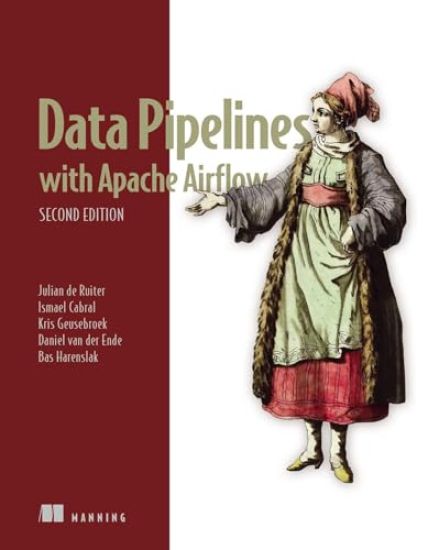
Simplify, streamline, and scale your data operations with data pipelines built on Apache Airflow. Apache Airflow provides a batteries-included platform for designing, implementing, and monitoring data pipelines. Building pipelines on Airflow eliminates the need for patchwork stacks and homegrown processes, adding security and consistency to the process. Now in its second edition, Data Pipelines with Apache Airflow teaches you to harness this powerful platform to simplify and automate your data pipelines, reduce operational overhead, and seamlessly integrate all the technologies in your stack. In Data Pipelines with Apache Airflow, Second Edition you'll learn how to: - Master the core concepts of Airflow architecture and workflow design - Schedule data pipelines using the Dataset API and time tables, including complex irregular schedules - Develop custom Airflow components for your specific needs - Implement comprehensive testing strategies for your pipelines - Apply industry best practices for building and maintaining Airflow workflows - Deploy and operate Airflow in production environments - Orchestrate workflows in container-native environments - Build and deploy Machine Learning and Generative AI models using Airflow Data Pipelines with Apache Airflow has empowered thousands of data engineers to build more successful data platforms. This new second edition has been fully revised to cover the latest features of Apache Airflow, including the Taskflow API, deferrable operators, and Large Language Model integration. Filled with real-world scenarios and examples, you'll be carefully guided from Airflow novice to expert. About the book Data Pipelines with Apache Airflow, Second Edition teaches you how to build and maintain effective data pipelines. You'll master every aspect of directed acyclic graphs (DAGs)--the power behind Airflow--and learn to customize them for your pipeline's specific needs. Part reference and part tutorial, each technique is illustrated with engaging hands-on examples, from training machine learning models for generative AI to optimizing delivery routes. You'll explore common Airflow usage patterns, including aggregating multiple data sources and connecting to data lakes, while discovering exciting new features such as dynamic scheduling, the Taskflow API, and Kubernetes deployments. About the reader For DevOps, data engineers, machine learning engineers, and sysadmins with intermediate Python skills. About the author Julian de Ruiter is a Data + AI engineering lead at Xebia Data, with a background in computer and life sciences and a PhD in computational cancer biology. As consultant at Xebia Data, he enjoys helping clients design and build AI solutions and platforms, as well as the teams that drive them. From this work, he has extensive experience in deploying and applying Apache Airflow in production in diverse environments. Ismael Cabral is a Machine Learning Engineer and Airflow trainer with experience spanning across Europe, US, Mexico, and South America, where he has worked with market-leading companies. He has vast experience implementing data pipelines and deploying machine learning models in production. Kris Geusebroek is a data-engineering consultant with extensive hands-on experience with Apache Airflow at several clients and is the maintainer of Whirl (the open source local testing with Airflow repository), where he is actively adding new examples based on new functionality and new technologies that integrate with Airflow. Daniel van der Ende is a Data Engineer who first started using Apache Airflow back in 2016. Since then, he has worked in many different Airflow environments, both on-premises and in the cloud. He has actively contributed to the Airflow project itself, as well as related projects such as Astronomer-Cosmos. Bas Harenslak is a Staff Architect at Astronomer, where he helps customers develop mission-critical data pipelines at large scale using Apache Airflow and the Astro platform. With a background in software engineering and computer science, he enjoys working on software and data as if they are challenging puzzles. He favours working on open source software, is a committer on the Apache Airflow project, and co-author of the first edition of Data Pipelines with Apache Airflow. Get a free eBook (PDF or ePub) from Manning as well as access to the online liveBook format (and its AI assistant that will answer your questions in any language) when you purchase the print book.
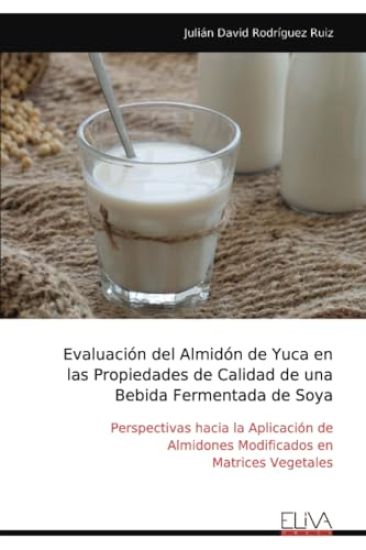
La bebida de soya a pesar de tener una buena calidad nutricional, tiene el inconveniente de presentar factores antinutricionales. De todos los factores antinutricionales, los inhibidores de tripsina tienen el inconveniente de ser prote nas termorresistentes, por lo que se requieren tratamientos t rmicos m s intensivos que la pasteurizaci n HTST o la UHT para reducir sus niveles. Sin embargo, los tratamientos t rmicos reducen la solubilidad proteica, que incide directamente en caracter sticas f sicas y reol gicas como aumento de la sin resis, baja viscosidad y reducci n de la textura. Para mejorar estas propiedades se emple almid n de yuca modificado. Por otro lado, como pas secundario del procesamiento la bebida de soya fue fermentada para mejorar la biodisponibilidad de factores nutricionales y la reducci n de niveles antinutricionales. Bajo un dise o factorial 23, donde los factores son tipo de almid n de yuca modificado (adipato de dialmid n acetilado (ADA), anhidro octenil succ nico (OSA) y un almid n entrecruzado-sustituido (mixto)) y concentraci n (0.8%, 1.0% y 1.2%), se compar frente a un control comercial de soya y dos controles l cteos. Las propiedades de calidad de los tratamientos se evaluaron semanalmente por 21 d as. Se evalu el pH, la acidez titulable, s lidos solubles, sin resis y viscosidad, color, tama o de part cula y su microestructura. Igualmente se cuantifico las c lulas viables de microorganismos (UFC/ml) y se realiz un an lisis sensorial. En t rminos generales, no hubo diferencias significativas para la sin resis en los tres tipos de almid n, el tratamiento con almid n OSA y mixto mostr alta viscosidad y fue estable a lo largo del tiempo de almacenamiento. El conteo de c lulas viables de microorganismos probi ticos (B. animalis subsp. Lactis y L. acidophilus) fue superior a 6 Log UFC/ml por lo que se considera un producto con propiedad probi ticas. El an lisis sensorial mostr preferencia del producto para el tratamiento OSA por parte de los consumidores, sin embargo, el tratamiento con almid n mixto tuvo una aceptaci n general similar al almid n OSA.
This is the Exercises Book (with audio CD)that accompanies the student book (also with audio CD) ISBN9788498482584. This C2 level is the top level of the Common European Framework of Reference for Languages (CEF): master in proficient use of the Spanish language.
This is the real-life story of 12-year-old refugee Juliane. At 3 years old, Juliane was separated from her mother due to the violence in her country of Zimbabwe. Told in Juliane's own words, the story tells of her fear and isolation growing up in an orphanage, how she was reunited with her mother, and how the two of them fled to another country to establish a new life together.