Kirjahaku
Etsi kirjoja tekijän nimen, kirjan nimen tai ISBN:n perusteella.
1000 tulosta hakusanalla Juliann Brown
The traditional and ubiquitous digital computer has changed the world by processing series of binary ones and zeroes...very fast. Like the sideshow juggler spinning plates on billiard cues, the classical computer moves fast enough to keep the plates from falling off. As computers become faster and faster, more and more plates are being added to more and more cues. Imagine, then, a computer in which speed is increased not because it runs faster, but because it has a limitless army of different jugglers, one for each billiard cue. Imagine the quantum computer. Julian Brown's record of the quest for the Holy Grail of computing -- a computer that could, in theory, take seconds to perform calculations that would take today's fastest supercomputers longer than the age of the universe -- is an extraordinary tale, populated by a remarkable cast of characters, including David Deutsch of Oxford University, who first announced the possibility of computation in the Alice-in-Wonderland world of quantum mechanics; Ed Fredkin, who developed a new kind of logic gate as a true step toward universal computation; and the legendary Richard Feynman, who reasoned from the inability to model quantum mechanics on a classical computer the logical inevitability of quantum computing. For, in the fuzzily indeterminate world of the quantum, new computing power is born. "Minds, Machines, and the Multiverse" details the remarkable uses for quantum computing in code breaking, for quantum computers will be able to crack many of the leading methods of protecting secret information, while offering new unbreakable codes. Quantum computers will also be able to model nuclear and subatomic reactions; offer insights into nanotechnology, teleportation, and time travel; and perhaps change the way chemists and biotechnologists design drugs and study the molecules of life. Farthest along the trail blazed by these pioneers is the ability to visualize the multiple realities of the quantum world not as a mathematical abstraction, but as a real map to a world of multiple universes...a "multiverse" where every possible event -- from a particular chess move to a comet striking the Earth -- not only can happen, but "does." Incorporating lively explanations of ion trap gates, nuclear magnetic resonance computers, quantum dots, quantum algorithms, Fourier transforms, and puzzles of quantum physics, and illustrated with dozens of vivid diagrams, "Minds, Machines, and the Multiverse" is a mind-stretching look at the still-unbuilt but fascinating machines that, in the words of physicist Stanley Williams, "will reshape the face of science" and offer a new window into the secrets of an infinite number of potential universes.
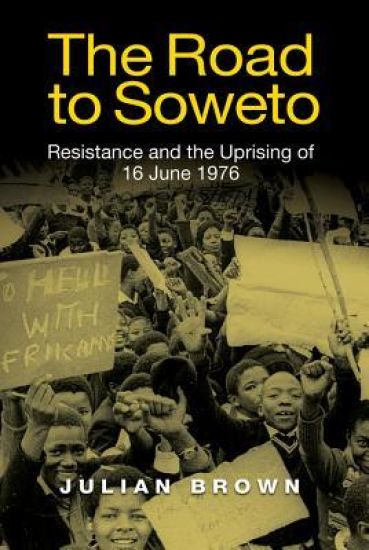
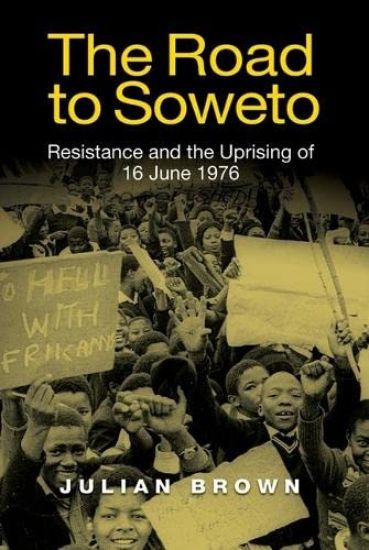
A new history of the 1976 Soweto Uprising and the events leading to it in the preceding decade, that will transform our understanding of the historical evolution of the struggle against apartheid. This revisionary account of the Soweto Uprising of June 1976 and the decade preceding it transforms our understanding of what led to this crucial flashpoint of South Africa's history. Brown argues that far from there being "quiescence" following the Sharpeville Massacre and the suppression of African opposition movements, during which they went underground, this period was marked by experiments in resistance and attempts to develop new forms of politics that prepared the ground for the Uprising. Students at South Africa's segregated universities began to re-organise themselves as a political force; new ideas about race reinvigorated political thought; debates around confrontation shaped the development of new forms of protest. The protest then began to move off university campuses and onto the streets: through the independent actions of workers in Durban, and attempts by students to link their struggles with a broader agenda. These actions made protest public once again, and helped establish the patterns of popular action and state response that would come to shape the events in Soweto on 16 June 1976. Julian Brown is a Lecturer in the Department of Political Studies at the University of the Witwatersrand, Johannesburg. Southern Africa (South Africa, Namibia, Lesotho, Swaziland & Botswana): Jacana 'throws new light on the background to the Soweto Uprising, providing insight into white and black student politics, worker protest and broader dissent' - William Beinart, University of Oxford 'an extremely important contribution to the historiography on protest in South Africa. It links black and white student protests (too often studied in isolation from one another) to workers' movements by looking at the changing forms of protest during the 1960s and 1970s, and the apartheid government's changing responses.' - Anne Heffernan, University of the Witwatersrand 'By showing how the Soweto Uprising served as a precursor for later historical and political events, the author convincingly shows the continuity from one from one protest and decade to the next.' - Dawne Curry, University of Nebraska-Lincoln
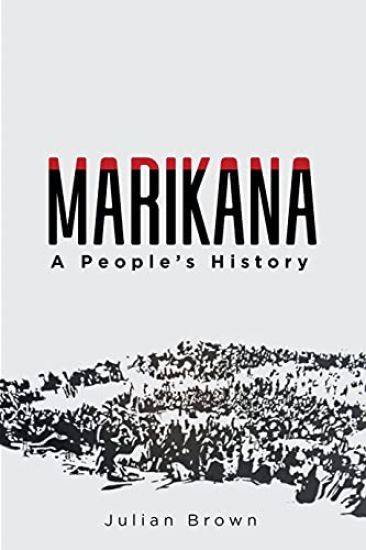
In-depth account of the Marikana massacre, based on the voices of the miners and their families themselves, from the build up to the strike to attempts to hold the state to account and its lasting significance. In August 2012 the South African police - at the encouragement of mining capital, and with the support of the political state - intervened to end a week-long strike at the Lonmin platinum mine in Marikana, in South Africa's NorthWest Province. On the afternoon of Thursday, 16 August, the police shot and killed 34 men. Hundreds more were injured, some shot as they fled. None posed a threat to any police officer. Recognised by many as an event of international significance in stories of global politics and labour relations, the perspectives of the miners has however been almost missing from published accounts. This book, for the first time, brings into focus the mens' lives - and deaths - telling the stories of those who embarked on the strike, those who were killed, and of the family members who have survived to fight for the memories of their loved ones. It places the strike in the context of South Africa's long history of racial and economic exclusion, explaining how the miners came to be in Marikana, how their lives were ordinarily lived, and the substance of their complaints. It shows how the strike developed from an initial gathering into a mass movement of more than 3,000 workers. It discusses the violence of the strike and explores the political context of the state's response, and the eagerness of the police to collaborate in suppressing the strike. Recounting the events of the massacre in unprecedented detail, the book sets out how each miner died and everything we know about the police operation. Finally, Brown traces the aftermath: the attempts of the families of the deceased to identify and bury their dead, and then the state's attempts to spin a narrative that placed all blame on the miners; the subsequent Commission of Inquiry - and its failure to resolve any real issues; and the solidarity politics that have emerged since. Southern Africa (South Africa, Namibia, Lesotho, Swaziland and Botswana): Jacana.
A new history of the 1976 Soweto Uprising and the events leading to it in the preceding decade, that will transform our understanding of the historical evolution of the struggle against apartheid. This revisionary account of the Soweto Uprising of June 1976 and the decade preceding it transforms our understanding of what led to this crucial flashpoint of South Africa's history. Brown argues that far from there being "quiescence" following the Sharpeville Massacre and the suppression of African opposition movements, during which they went underground, this period was marked by experiments in resistance and attempts to develop new forms of politics that prepared the ground for the Uprising. Students at South Africa's segregated universities began to re-organise themselves as a political force; new ideas about race reinvigorated political thought; debates around confrontation shaped the development of new forms of protest. The protest then began to move off university campuses and onto the streets: through the independent actions of workers in Durban, and attempts by students to link their struggles with a broader agenda. These actions made protest public once again, and helped establish the patterns of popular action and state response that would come to shape the events in Soweto on 16 June 1976. Julian Brown is a Lecturer in the Department of Political Studies at the University of the Witwatersrand, Johannesburg. Southern Africa (South Africa, Namibia, Lesotho, Swaziland & Botswana): Jacana 'throws new light on the background to the Soweto Uprising, providing insight into white and black student politics, worker protest and broader dissent' - William Beinart, University of Oxford 'an extremely important contribution to the historiography on protest in South Africa. It links black and white student protests (too often studied in isolation from one another) to workers' movements by looking at the changing forms of protest during the 1960s and 1970s, and the apartheid government's changing responses.' - Anne Heffernan, University of the Witwatersrand 'By showing how the Soweto Uprising served as a precursor for later historical and political events, the author convincingly shows the continuity from one from one protest and decade to the next.' - Dawne Curry, University of Nebraska-Lincoln
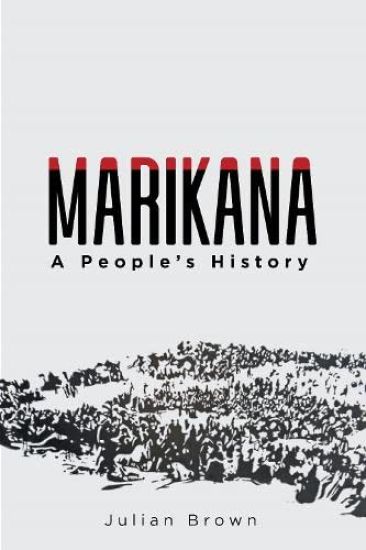
In-depth account of the Marikana massacre, based on the voices of the miners and their families themselves, from the build up to the strike to attempts to hold the state to account and its lasting significance. In August 2012 the South African police - at the encouragement of mining capital, and with the support of the political state - intervened to end a week-long strike at the Lonmin platinum mine in Marikana, in South Africa's NorthWest Province. On the afternoon of Thursday, 16 August, the police shot and killed 34 men. Hundreds more were injured, some shot as they fled. None posed a threat to any police officer. Recognised by many as an event of international significance in stories of global politics and labour relations, the perspectives of the miners has however been almost missing from published accounts. This book, for the first time, brings into focus the mens' lives - and deaths - telling the stories of those who embarked on the strike, those who were killed, and of the family members who have survived to fight for the memories of their loved ones. It places the strike in the context of South Africa's long history of racial and economic exclusion, explaining how the miners came to be in Marikana, how their lives were ordinarily lived, and the substance of their complaints. It shows how the strike developed from an initial gathering into a mass movement of more than 3,000 workers. It discusses the violence of the strike and explores the political context of the state's response, and the eagerness of the police to collaborate in suppressing the strike. Recounting the events of the massacre in unprecedented detail, the book sets out how each miner died and everything we know about the police operation. Finally, Brown traces the aftermath: the attempts of the families of the deceased to identify and bury their dead, and then the state's attempts to spin a narrative that placed all blame on the miners; the subsequent Commission of Inquiry - and its failure to resolve any real issues; and the solidarity politics that have emerged since. Southern Africa (South Africa, Namibia, Lesotho, Swaziland and Botswana): Jacana.

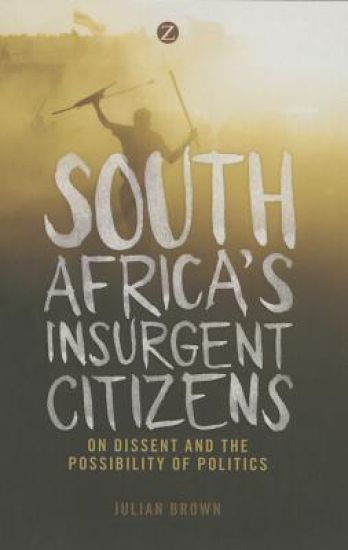
Twenty years on from South Africa's first democratic election, the post-apartheid political order is more fractured, and more fractious, than ever before. Police violence seems the order of the day – whether in response to a protest in Ficksburg or a public meeting outside a mine in Marikana. For many, this has signalled the end of the South African dream. Politics, they declare, is the preserve of the corrupt, the self-interested, the incompetent and the violent. They are wrong. Julian Brown argues that a new kind of politics can be seen on the streets and in the courtrooms of the country. This politics is made by a new kind of citizen – one that is neither respectful nor passive, but instead insurgent. The collapse of the dream of a consensus politics is not a cause for despair. South Africa's political order is fractured, and in its cracks new forms of activity, new leaders and new movements are emerging.
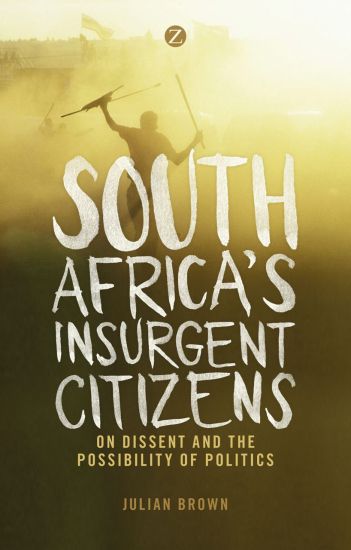
Twenty years on from South Africa's first democratic election, the post-apartheid political order is more fractured, and more fractious, than ever before. Police violence seems the order of the day – whether in response to a protest in Ficksburg or a public meeting outside a mine in Marikana. For many, this has signalled the end of the South African dream. Politics, they declare, is the preserve of the corrupt, the self-interested, the incompetent and the violent. They are wrong. Julian Brown argues that a new kind of politics can be seen on the streets and in the courtrooms of the country. This politics is made by a new kind of citizen – one that is neither respectful nor passive, but instead insurgent. The collapse of the dream of a consensus politics is not a cause for despair. South Africa's political order is fractured, and in its cracks new forms of activity, new leaders and new movements are emerging.

Vehicle Maintenance and Repair Level 1
Patrick Hamilton; John Rooke; Julian Brown
Cengage Learning EMEA
2012
nidottu
This new edition of the highly successful Vehicle Maintenance and Repair Level 1 workbook provides complete coverage of the QCF National Occupational Standards at Level 1 as set by the IMI and is in-line with VRQ and NVQ qualifications. Learners will be inspired by the full-colour diagrams and images illustrating key techniques and the Tip Boxes, weblinks, activities and questions will ensure learners have full understanding of all the essential information. This easy to use, easy to follow workbook ensures learners have all the theoretical and practice knowledge in preparation for further study or the world of work.

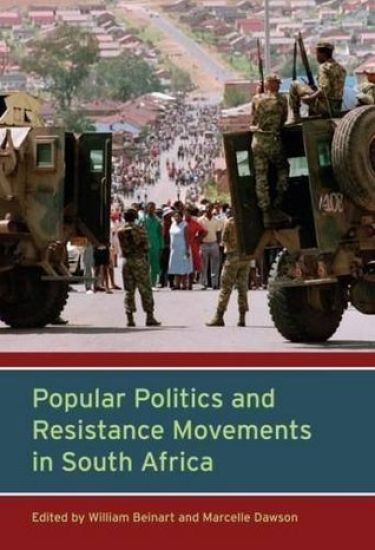
Popular Politics and Resistance Movements in South Africa
Beinart William; Brown Julian; Carson Tracy; Dawson Marcelle C.; Gibbs Tim; Hodes Rebecca; Horwitz Simonne; Genevieve Klein; Mbali Mandisa; Kelly Rosenthal; Chizuko Sato; Mfaniseni Fana Sihlongonyane; Simpson Thula
Wits University Press
2015
nidottu
This volume explores some of the key features of popular politics and resistance before and after 1994. It explores continuities and changes in the forms of struggle and ideologies involved, as well as the significance of post-apartheid grassroots politics. Is this a new form of politics or does it stand as a direct descendent of the insurrectionary impulses of the late apartheid era? The scale of popular protest in the 2000s does not rival that of the 1970s and 1980s, but posing questions about continuity and change before and after 1994, as some of these papers do, in itself raises key issues concerning the nature of power and poverty in the country. Contributors suggest that expressions of popular politics are deeply set within South African political culture and still have the capacity to influence political outcomes. Some chapters address pre-1994 conflicts and movements, some post-1994 and some straddle the two periods. The introduction by William Beinart links the papers together, places them in context of recent literature on popular politics and `history from below’ and summarises their main findings, supporting the argument that popular politics outside of the party system remains significant in South Africa and have helped to influence national politics. The roots of this collection lie in post-graduate student research conducted at the University of Oxford in the early twenty-first century.

Mary's meadow and other tales of fields and flowers. By: Juliana Horatia Ewing, Illustrated By: Gordon Browne: (children's book ) Illustrated
Gordon Browne; Juliana Horatia Ewing
Createspace Independent Publishing Platform
2018
nidottu
Gordon Frederick Browne (15 April 1858 - 27 May 1932) was an English artist and children's book illustrator in the late 19th century and early 20th century. He was born in Banstead, the younger son of notable book illustrator Hablot Knight Browne (who as "Phiz" illustrated books by Charles Dickens). He studied art at the Heatherley School of Fine Art and South Kensington Schools and started to receive professional commissions while still at college. From the 1880s, Browne was one of Britain's most prolific illustrators, his work appearing in newspapers, magazines and many books by children's authors including Frederic William Farrar, G.A. Henty, Juliana Horatia Ewing, Andrew Lang, Talbot Baines Reed, L. T. Meade, Catherine Christian and E. Nesbit. Browne worked in watercolour and pen and ink. He was a member of the Royal Institute of Painters in Water Colours (RI) and the Royal Society of British Artists (RBA). Browne was an early member of the Society of Graphic Art and showed three works at their first exhibition in 1921. He died in Richmond, London in 1932............... Juliana Horatia Ewing (n e Gatty) (3 August 1841 - 13 May 1885) was an English writer of children's stories. She displayed sympathetic insight into children's lives, admiration for things military, and strong religious faith. Youth and marriage: Known as Julie, she was the second of ten children of the Reverend Alfred Gatty, vicar of Ecclesfield in Yorkshire, and Margaret Gatty, who was herself a children's author. The children were educated mainly by her mother, but Julie was often the driving force behind their various activities: drama, botany etc. Later she was responsible for setting up a village library in Ecclesfield and helped out in the parish with her three sisters. Early stories of hers appeared in Charlotte Yonge's magazine Monthly Packet. On 1 June 1867, she married Major Alexander Ewing (1830-1895) of the army pay department. He was also a keen churchgoer, who shared his wife's interest in literature. Within a week of their marriage, the Ewings left England for Fredericton, New Brunswick, Canada, where he had received a new posting. They remained there for two years, before returning to England in 1869 and spending eight years in the army town of Aldershot. Although her husband was sent overseas again, to Malta in 1879 and Sri Lanka in 1881, Ewing's poor health would not allow her to accompany him. The Ewings moved to Trull, Somerset, on his return in 1883, and in 1885, to Bath, in the hopes that the change of air would do her good. However, her health continued to deteriorate, and after two operations, she died there on 13 May 1885.She was given a military funeral at Trull three days later. Her sister Horatia Katharine Frances Gatty (1846-1945) published a memorial of Julie's life and works which includes a publication history of her stories. A later selection includes some of Julie's letters and drawings about Canada. A biography by Gillian Avery appeared in 1961......................
Old-fashioned fairy tales. By: Juliana Horatia Ewing, Dedicated By: Undine Marcia Gatty, illustrated By: A. W. BAYES AND GORDON BROWNE: (children's b
Undine Marcia Gatty; A. W. Bayes; Gordon Browne
Createspace Independent Publishing Platform
2018
nidottu
Undine Marcia GATTY (1849-1930). Gordon Frederick Browne (15 April 1858 - 27 May 1932) was an English artist and children's book illustrator in the late 19th century and early 20th century..................... Alfred Walter Bayes (1831-1909).Unlike most of his artist-contemporaries, who were predominantly middle-class southerners, Bayes was a northerner from artisan stock. His father William Bayes (1799-1851) was a shoe-maker who moved from Wakefield to the village of Lumbutts, Yorkshire, near Todmorden, in pursuit of trade. His mother was from a slightly higher station in life; Hannah Uttley (1788-1856) is described as a local farmer's daughter, although little else is known of her. Alfred was born in 1831, one of four sons and one of only two survivors. His childhood was an austere one. However, this formative period was far from stagnant; on the contrary, Bayes was born into a family sustained by the notion of 'improvement'. His father William was a self-made man and a Methodist, and Bayes was influenced by his parents' focus on the correspondence between education, practical achievement and spiritual development. Bayes's schooling was only elementary, and he supported his learning by reading Charles Knight's series of improving texts for the working-classes, notably The Penny Magazine and The Penny Encyclopaedia................ Juliana Horatia Ewing (n e Gatty) (3 August 1841 - 13 May 1885) was an English writer of children's stories. She displayed sympathetic insight into children's lives, admiration for things military, and strong religious faith. Youth and marriage: Known as Julie, she was the second of ten children of the Reverend Alfred Gatty, vicar of Ecclesfield in Yorkshire, and Margaret Gatty, who was herself a children's author. The children were educated mainly by her mother, but Julie was often the driving force behind their various activities: drama, botany etc. Later she was responsible for setting up a village library in Ecclesfield and helped out in the parish with her three sisters. Early stories of hers appeared in Charlotte Yonge's magazine Monthly Packet. On 1 June 1867, she married Major Alexander Ewing (1830-1895) of the army pay department. He was also a keen churchgoer, who shared his wife's interest in literature. Within a week of their marriage, the Ewings left England for Fredericton, New Brunswick, Canada, where he had received a new posting. They remained there for two years, before returning to England in 1869 and spending eight years in the army town of Aldershot. Although her husband was sent overseas again, to Malta in 1879 and Sri Lanka in 1881, Ewing's poor health would not allow her to accompany him. The Ewings moved to Trull, Somerset, on his return in 1883, and in 1885, to Bath, in the hopes that the change of air would do her good. However, her health continued to deteriorate, and after two operations, she died there on 13 May 1885.She was given a military funeral at Trull three days later. Her sister Horatia Katharine Frances Gatty (1846-1945) published a memorial of Julie's life and works which includes a publication history of her stories. A later selection includes some of Julie's letters and drawings about Canada. A biography by Gillian Avery appeared in 1961......................

This is the story of an ordinary man. But it is not an ordinary story. It is a journey which, if the reader allows, will take him or her along an unusual but very important path. Along the way of this path are some nuggets of understanding and, at the journey's end, some revelations which some may find uncomfortable. And yet which, for some, might ignite their own answers. Such were the days of John Brown. Let them not be forgotten.
Many readers have noted that Robert Browning's poetry enchants and entertains by the sheer force of its typical vivacity and exuberance, and yet one scholar, Barbara Melchiori, has detected a discrepancy between the overt message of his sentences and the implications of single teltale words. This book extends the enquiry into levels of significance that elude not only casual readers but also venerable scholars of literature.
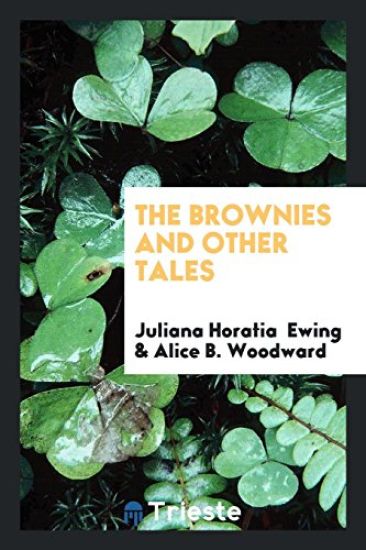
Rediscover the enchanting world of Juliana Horatia Ewing's "The Brownies and Other Tales," a collection of short stories brimming with fantasy and heartwarming lessons about animal welfare. This timeless volume, perfect for children and adults alike, delves into themes of kindness and responsibility through captivating narratives. Ewing's skillful storytelling weaves magic and morality together, offering readers a glimpse into a world where even the smallest creatures deserve our compassion. Explore tales featuring helpful brownies and other fantastical beings, all while subtly imparting valuable lessons about the importance of treating animals with respect and care. A classic of children's literature, "The Brownies and Other Tales" continues to resonate with its gentle charm and enduring message. Experience the wonder of these imaginative stories, meticulously prepared for a new print edition, and share the joy of reading with loved ones.This work has been selected by scholars as being culturally important, and is part of the knowledge base of civilization as we know it.This work is in the public domain in the United States of America, and possibly other nations. Within the United States, you may freely copy and distribute this work, as no entity (individual or corporate) has a copyright on the body of the work.Scholars believe, and we concur, that this work is important enough to be preserved, reproduced, and made generally available to the public. We appreciate your support of the preservation process, and thank you for being an important part of keeping this knowledge alive and relevant.
Rediscover the enchanting world of Juliana Horatia Ewing's "The Brownies and Other Tales," a collection of short stories brimming with fantasy and heartwarming lessons about animal welfare. This timeless volume, perfect for children and adults alike, delves into themes of kindness and responsibility through captivating narratives. Ewing's skillful storytelling weaves magic and morality together, offering readers a glimpse into a world where even the smallest creatures deserve our compassion. Explore tales featuring helpful brownies and other fantastical beings, all while subtly imparting valuable lessons about the importance of treating animals with respect and care. A classic of children's literature, "The Brownies and Other Tales" continues to resonate with its gentle charm and enduring message. Experience the wonder of these imaginative stories, meticulously prepared for a new print edition, and share the joy of reading with loved ones.This work has been selected by scholars as being culturally important, and is part of the knowledge base of civilization as we know it.This work is in the public domain in the United States of America, and possibly other nations. Within the United States, you may freely copy and distribute this work, as no entity (individual or corporate) has a copyright on the body of the work.Scholars believe, and we concur, that this work is important enough to be preserved, reproduced, and made generally available to the public. We appreciate your support of the preservation process, and thank you for being an important part of keeping this knowledge alive and relevant.