Kirjojen hintavertailu. Mukana 11 244 527 kirjaa ja 12 kauppaa.

Kirjahaku

Etsi kirjoja tekijän nimen, kirjan nimen tai ISBN:n perusteella.

1000 tulosta hakusanalla Julie Buckner Armstrong

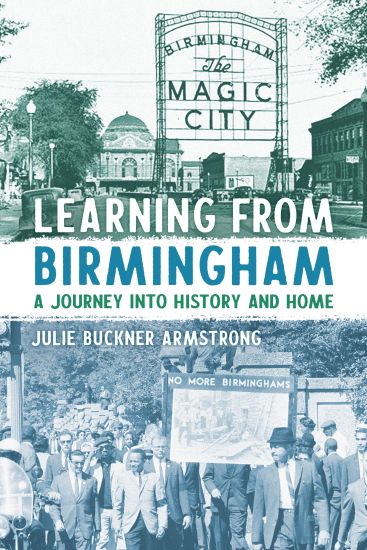
Learning from Birmingham

Learning from Birmingham

Julie Buckner Armstrong

THE UNIVERSITY OF ALABAMA PRESS
2023
nidottu
A steel town daughter’s search for truth and beauty in Birmingham, Alabama “As Birmingham goes, so goes the nation,” Fred Shuttlesworth observed when he invited Martin Luther King Jr. to the city for the transformative protests of 1963. From the height of the Civil Rights Movement through its long aftermath, images of police dogs, fire hoses and four girls murdered when Ku Klux Klan members bombed the Sixteenth Street Baptist Church have served as an uncomfortable racial mirror for the nation. Like many white people who came of age in the Civil Rights Movement’s wake, Julie Buckner Armstrong knew little about this history. Only after moving away and discovering writers like Toni Morrison and Alice Walker did she realize how her hometown and family were part of a larger, ongoing story of struggle and injustice. When Armstrong returned to Birmingham decades later to care for her aging mother, Shuttlesworth’s admonition rang in her mind. By then an accomplished scholar and civil rights educator, Armstrong found herself pondering the lessons Birmingham holds for a twenty-first century America. Those lessons extended far beyond what a 2014 Teaching Tolerance report describes as the common distillation of the Civil Rights Movement into “two names and four words: Martin Luther King Jr, Rosa Parks, and ‘I have a dream.’” Seeking to better understand a more complex local history, its connection to broader stories of oppression and resistance, and her own place in relation to it, Armstrong embarked on a journey to unravel the standard Birmingham narrative to see what she would find. Beginning at the center, with her family’s 1947 arrival to a housing project near the color line, within earshot of what would become known as Dynamite Hill, Armstrong works her way over time and across the map. Weaving in stories of her white working-class family, classmates, and others not traditionally associated with Birmingham’s civil rights history, including members of the city’s LGBTQ community, she forges connections between the familiar and lesser-known. The result is a nuanced portrait of Birmingham--as seen in public housing, at old plantations, in segregated neighborhoods, across contested boundary lines, over mountains, along increasingly polluted waterways, beneath airport runways, on highways cutting through town, and under the gaze of the iconic statue of Vulcan. In her search for truth and beauty in Birmingham, Armstrong draws on the powers of place and storytelling to dig into the cracks, complicating easy narratives of civil rights progress. Among the discoveries she finds in America’s racial mirror is a nation that has failed to recognize itself in the horrific images from Birmingham’s past and to acknowledge the continuing inequalities that make up the Civil Right’s Movement’s unfinished business. Learning from Birmingham reminds us that stories of civil rights, structural oppression, privilege, abuse, race and gender bias, and inequity are difficult and complicated, but their telling, especially from multiple stakeholder perspectives, is absolutely necessary.
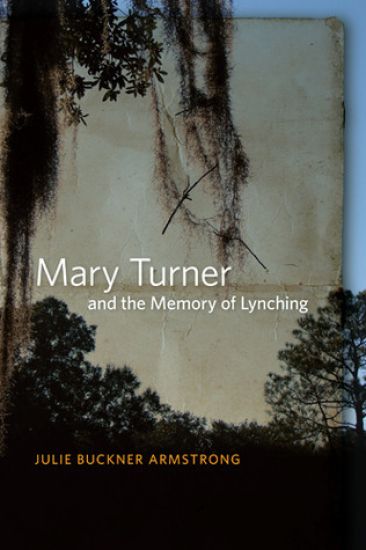
Mary Turner and the Memory of Lynching

Mary Turner and the Memory of Lynching

Julie Buckner Armstrong

University of Georgia Press
2011
sidottu
Mary Turner and the Memory of Lynching traces the reaction of activists, artists, writers, and local residents to the brutal lynching of a pregnant woman near Valdosta, Georgia. In 1918, the murder of a white farmer led to a week of mob violence that claimed the lives of at least eleven African Americans, including Hayes Turner. When his wife Mary vowed to press charges against the killers, she too fell victim to the mob.Mary’s lynching was particularly brutal and involved the grisly death of her eight-month-old fetus. It led to both an entrenched local silence and a widespread national response in newspaper and magazine accounts, visual art, film, literature, and public memorials. Turner’s story became a centerpiece of the Anti-Lynching Crusaders campaign for the 1922 Dyer Bill, which sought to make lynching a federal crime. Julie Buckner Armstrong explores the complex and contradictory ways this horrific event was remembered in works such as Walter White’s report in the NAACP’s newspaper the Crisis, the “Kabnis” section of Jean Toomer’s Cane, Angelina Weld Grimké’s short story “Goldie,” and Meta Fuller’s sculpture Mary Turner: A Silent Protest against Mob Violence.Like those of Emmett Till and Leo Frank, Turner’s story continues to resonate on multiple levels. Armstrong’s work provides insight into the different roles black women played in the history of lynching: as victims, as loved ones left behind, and as those who fought back. The crime continues to defy conventional forms of representation, illustrating what can, and cannot, be said about lynching and revealing the difficulty and necessity of confronting this nation’s legacy of racial violence.
Mary Turner and the Memory of Lynching

Mary Turner and the Memory of Lynching

Julie Buckner Armstrong

University of Georgia Press
2011
pokkari
Mary Turner and the Memory of Lynching traces the reaction of activists, artists, writers, and local residents to the brutal lynching of a pregnant woman near Valdosta, Georgia. In 1918, the murder of a white farmer led to a week of mob violence that claimed the lives of at least eleven African Americans, including Hayes Turner. When his wife Mary vowed to press charges against the killers, she too fell victim to the mob.Mary’s lynching was particularly brutal and involved the grisly death of her eight-month-old fetus. It led to both an entrenched local silence and a widespread national response in newspaper and magazine accounts, visual art, film, literature, and public memorials. Turner’s story became a centerpiece of the Anti-Lynching Crusaders campaign for the 1922 Dyer Bill, which sought to make lynching a federal crime. Julie Buckner Armstrong explores the complex and contradictory ways this horrific event was remembered in works such as Walter White’s report in the NAACP’s newspaper the Crisis, the “Kabnis” section of Jean Toomer’s Cane, Angelina Weld Grimké’s short story “Goldie,” and Meta Fuller’s sculpture Mary Turner: A Silent Protest against Mob Violence.Like those of Emmett Till and Leo Frank, Turner’s story continues to resonate on multiple levels. Armstrong’s work provides insight into the different roles black women played in the history of lynching: as victims, as loved ones left behind, and as those who fought back. The crime continues to defy conventional forms of representation, illustrating what can, and cannot, be said about lynching and revealing the difficulty and necessity of confronting this nation’s legacy of racial violence.
The Literary Lorgnette

The Literary Lorgnette

Buckler Julie A.

Stanford University Press
2000
sidottu
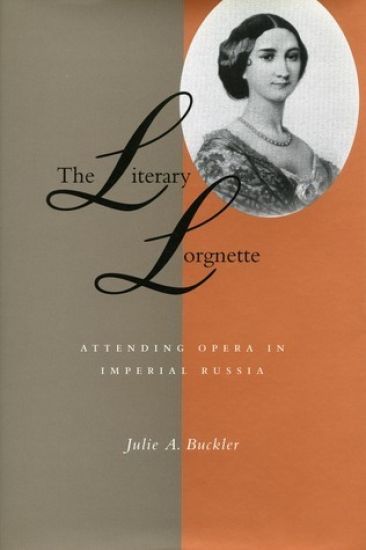
The "Golden Age" of opera-going in Russia, from the 1840s through the 1880s, coincided with the flourishing of Russian prose realism. During this period, opera and literature exerted a reciprocal influence on one another, each adopting and providing a new context for the other's artistic conventions. Opera permeated the culture of the drawing room so often depicted in literature, and literature simultaneously discovered the opera theater. The relationship between these two artistic genres inspired the use of performative models and conventions in Russian literary art, and led to the interpolation of specific operatic subtexts into literature and life. To many, these genres were antithetical, since opera historically aimed for the high stylistic register, and prose fiction experimented with the low. But the author shows that the attempt to translate opera into prosaic contemporary lives was characteristic of nineteenth-century Russia, since literature provided an alternative cultural theater in Russia to which the opera theater was analogous and parallel. As contested and self-regarding social space, the opera theater offered its visitors a rare public forum. The reception of opera as an art form in Russia resembles the impact of the early cinema on Russian audiences in the early twentieth century, since opera and film both brought about an aesthetic reconfiguring of social space. This book treats opera-going in imperial Russia from multiple perspectives, and discusses such canonical works as Tolstoy's Anna Karenina and Goncharov's Oblomov, major operatic works including Tchaikovsky's Eugene Onegin and Verdi's La Traviata, the impact of Western opera in Russia and the Russian-style prima donna. The book engages with poems, sketches, feuilletons, stories, and rarely-discussed Russian novels, as well as non-fictional reminiscences, reviews, and visual images. Throughout, the book is enriched with examples and anecdotes about performers, spectators, and critics, and reception histories of specific operatic works.
Mapping St. Petersburg

Mapping St. Petersburg

Julie A. Buckler

Princeton University Press
2007
pokkari
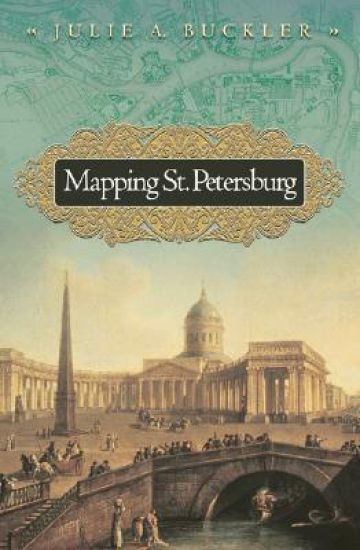
Pushkin's palaces or Dostoevsky's slums? Many a modern-day visitor to St. Petersburg has one or, more likely, both of these images in mind when setting foot in this stage set-like setting for some of the world's most treasured literary masterpieces. What they overlook is the vast uncharted territory in between. In Mapping St. Petersburg, Julie Buckler traces the evolution of Russia's onetime capital from a "conceptual hierarchy" to a living cultural system--a topography expressed not only by the city's physical structures but also by the literary texts that have helped create it. By favoring noncanonical works and "underdescribed spaces," Buckler seeks to revise the literary monumentalization of St. Petersburg--with Pushkin and Dostoevsky representing two traditional albeit opposing perspectives--to offer an off-center view of a richer, less familiar urban landscape. She views this grand city, the product of Peter the Great's ambitious vision, not only as a geographical entity but also as a network of genres that carries historical and cultural meaning. We discover the busy, messy "middle ground" of this hybrid city through an intricate web of descriptions in literary works; nonfiction writings such as sketches, feuilletons, memoirs, letters, essays, criticism; and urban legends, lore, songs, and social practices--all of which add character and depth to this refurbished imperial city.
Mental Health Care for People of Diverse Backgrounds

Mental Health Care for People of Diverse Backgrounds

Julia D. Buckner; Yezzennya Castro; Norman Ellis

Radcliffe Publishing Ltd
2006
nidottu
Mental health care needs vary in different groups of people, but many healthcare professionals have a poor understanding of exactly how. From ethnicity to sexuality, family to religion, "Mental Health Care for People of Diverse Backgrounds" is a unique examination of how cultures can, and should, influence psychological services. It presents both theoretical and practical information regarding assessment, diagnosis and treatment. Concentrating on empirically based treatments, the book fuses clinical experience and research to give a wide-ranging overview. It also features many illuminating case studies. It is an invaluable reference for all mental healthcare professionals including psychologists, psychiatrists, doctors, social workers, nurses and counsellors, as well as students and academics with an interest in mental healthcare. "The information contained in these chapters is intended for individuals with many levels of clinical training and is therefore appropriate for trainees in psychology and psychiatry, as well as experienced mental health providers. The chapters in this book contain information relevant to assessment, diagnosis, and treatment of individuals from diverse populations." - Julia D Buckner, Yezzennya Castro, Jill M Holm-Denoma and Thomas E Joiner Jr.
Métodos de cultivo da batata

Métodos de cultivo da batata

Julia Buchner

Edicoes Nosso Conhecimento
2025
nidottu
Milhares de anos de cultivo est o por tr s da batata cultivada Solanum tuberosum L., que hoje uma das plantas aliment cias mais importantes do mundo. Na primeira parte do livro, s o descritas as particularidades gen ticas da batata e dos seus parentes selvagens. Em seguida, s o esclarecidos os requisitos exigidos ao cultivo atual da batata para consumo, transforma o e comercializa o, bem como os m todos utilizados para reduzir e precisar o tempo de desenvolvimento de novas variedades.
Julie

Julie

Jean Craighead George

Harpercollins
2019
nidottu
The acclaimed sequel to the beloved Newbery Medal-winning Julie of the Wolves, this classic middle grade novel is an excellent choice for tween readers.Julie's decision to return home to her people is not an easy one. But after many months in the wilderness, living in harmony with the wolves that saved her life, she knows the time has come.But Julie is not prepared for all the changes that she finds. Her father has forsaken many of the old Inuit traditions. He has given up his sled dogs for a snowmobile, and now looks after the musk oxen that serve as the village's income. He will do anything to protect them--even shoot any wolves that might threaten the herd.Julie knows that, like her father, she must find a way to reconcile the old ways with the new. But how can she do that without putting her beloved wolves in danger?Don't miss any of the books in Jean Craighead George's groundbreaking series: Julie of the Wolves, Julie, and Julie's Wolf Pack.
Julie

Julie

Polly Stenham

Faber Faber
2018
pokkari
Wild and newly single, Julie throws a late night party. In the kitchen, Jean and Kristina clean up as the celebration heaves above them. Crossing the threshold, Julie initiates a power game with Jean. It descends into a savage fight for survival.Polly Stenham reimagines August Strindberg's Miss Julie in contemporary London.Julie premiered at the National Theatre, London, in May 2018.