Kirjahaku
Etsi kirjoja tekijän nimen, kirjan nimen tai ISBN:n perusteella.
1000 tulosta hakusanalla Julie E. Cooper
Secularism is usually thought to contain the project of self-deification, in which humans attack God's authority in order to take his place. Julie E. Cooper overturns this conception through an incisive analysis of the early modern justifications for secular politics. While she agrees that secularism is a means of empowerment, she argues that we have misunderstood the sources of secular empowerment and the kinds of strength to which it aspires. Contemporary understandings of secularism, Cooper contends, have been shaped by a limited understanding of it as a shift from vulnerability to power. But the works of the foundational thinkers of secularism tell a different story. Analyzing the writings of Hobbes, Spinoza, and Rousseau at the moment of secularity's inception, she shows that all three understood that acknowledging one's limitations was a condition of successful self-rule. And while all three invited humans to collectively build and sustain a political world, their invitations did not amount to self-deification. Cooper establishes that secular politics as originally conceived does not require a choice between power and vulnerability. Rather, it challenges us - today as then - to reconcile them both as essential components of our humanity.
Mobile and Havana
John S. Sledge; Alicia E. García-Santana; Chip Cooper; Julio Ángel Larramendi Joa
Polymita Editions
2024
sidottu
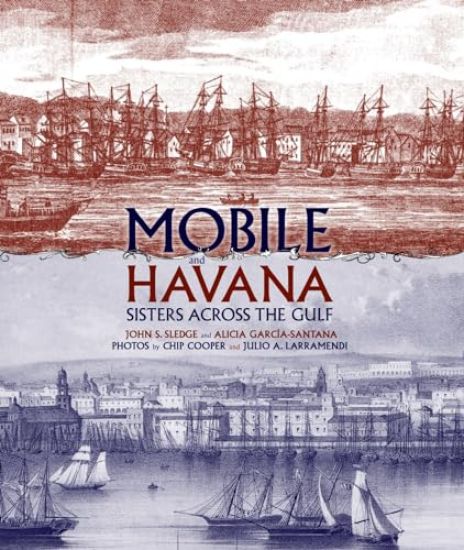
A sumptuously illustrated and vivid account of the deep ties that bridge the histories and cultures of two colorful and storied port cities Mobile and Havana: Sisters across the Gulf presents a beautifully written and illustrated survey of the many historic linkages between these exotic port cities. Through an effortless blending of word and image, John S. Sledge, Alicia Garc a-Santana, Chip Cooper, and Julio A. Larramendi, historians and photographers from each side of the basin, share a colorful, complex, and sometimes difficult story never before fully told. Over twenty years ago, Mobile's visionary municipal archivist Jay Higginbotham remarked, "Mobile, Alabama, and Havana, Cuba, have only three things in common. The past, the present, and the future." This book demonstrates just how much that is the case.
Instant Insights: Conservation Tillage in Agriculture
Maike Krauss; Paul Mäder; Joséphine Peigné; Julia Cooper; Theodor Friedrich; Michele Pisante; Angelica Galieni; Gottlieb Basch; Fabio Stagnari; Wade E. Thomason; Bee Khim Chim; Mark S. Reiter; Vijesh Krishna; Alwin Keil; Sreejith Aravindakshan; Mukesh Meena
Burleigh Dodds Science Publishing Limited
2021
pokkari
This collection features five peer-reviewed literature reviews on conservation tillage in agriculture.The first chapter reviews types of tillage and soil disturbance and how different soil management techniques affect the cropping cycle. The chapter also discusses how soil disturbance can be minimised during key farming operations.The second chapter describes the principles of Conservation Agriculture (CA), looking primarily at soil management. It also examines the key concepts of no-tillage agriculture, as well as the environmental and economic benefits these techniques offer.The third chapter discusses the role of conservation tillage in organic farming, reviewing over 20 years of practical, on-farm research. It outlines the main benefits associated with conservation tillage, whilst also considering the challenges that arise with its implementation and how these can be addressed.The fourth chapter explores the emergence of conservation tillage (CT) as an innovation to address stagnant wheat yields in the Indo-Gangetic Plains of South Asia. The chapter explores the benefits of CT for soil health and crop yields, and highlights current obstacles facing region-wide adoption of CT.The final chapter reviews the advantages of zero-till maize cultivation, including reduced soil erosion and nutrient losses. It also summarises best management practices to optimise zero-till maize systems.
Our current legal system is to a great extent the product of an earlier period of social and economic transformation. From the late nineteenth century through the mid-twentieth century, as accountability for industrial-age harms became a pervasive source of conflict, the U.S. legal system underwent profound, tectonic shifts. Today, ownership of information-age resources and accountability for information-age harms have become pervasive sources of conflict, and different kinds of change are emerging. In Between Truth and Power, Julie E. Cohen explores the relationships between legal institutions and political and economic transformation. Systematically examining struggles over the conditions of information flow and the design of information architectures and business models, she argues that as law is enlisted to help produce the profound economic and sociotechnical shifts that have accompanied the emergence of the informational economy, it is too is transforming in fundamental ways. Drawing on elements from legal theory, science and technology studies, information studies, communication studies and organization studies to develop a complex theory of institutional change, Cohen develops an account of the gradual emergence of legal institutions adapted to the information age and of the power relationships that such institutions reflect and reproduce. A tour de force of ambitious interdisciplinary scholarship, Between Truth and Power will transform our thinking about the possible futures of law and legal institutions in the networked information era.
Between Truth and Power: The Legal Constructions of Informational Capitalism
Julie E. Cohen
Oxford University Press
2022
nidottu
A work of ambitious interdisciplinary scholarship that explores the ways that law and technology interact. Our current legal system is to a great extent the product of an earlier period of social and economic transformation. From the late nineteenth century through the mid-twentieth century, as accountability for industrial-age harms became a pervasive source of conflict, the US legal system underwent profound, tectonic shifts. Today, struggles over ownership of information-age resources and accountability for information-age harms are producing new systemic changes. In Between Truth and Power, Julie E. Cohen explores the relationships between legal institutions and political and economic transformation. Systematically examining struggles over the conditions of information flow and the design of information architectures and business models, she argues that as law is enlisted to help produce the profound economic and sociotechnical shifts that have accompanied the emergence of the informational economy, it is too is transforming in fundamental ways. Drawing on elements from legal theory, science and technology studies, information studies, communication studies and organization studies to develop a complex theory of institutional change, Cohen develops an account of the gradual emergence of legal institutions adapted to the information age and of the power relationships that such institutions reflect and reproduce. A tour de force of ambitious interdisciplinary scholarship, Between Truth and Power will transform our thinking about the possible futures of law and legal institutions in the networked information era.
A comparative analysis of body politics, selfhood, and the pursuit of consumer-based agencyThin body, white skin, and big eyes. Such beauty ideals are ubiquitous across Shanghai, where salons and weight-loss clinics offering an array of products and treatment options beckon city dwellers with promises of a "better life." Set against the backdrop of China's post-reform era, Modified Bodies, Material Selves compares the radically different attitudes of middle-class Chinese and Western women living in Shanghai toward the pursuit of beauty. Through comparative ethnography, anthropologist Julie E. Starr parses how experiences of bodies and embodied identities, and the politics ascribed to them, are culturally produced for both groups of women. With a focus on the ways in which late capitalism interacts with different bodies, Starr joins an ongoing conversation about the impact of recent economic reforms on social life in China. Bringing together theories of embodiment, the politics of appearance, and the bodily nature of selfhood in the twenty-first century, Modified Bodies, Material Selves contributes fresh insights to current debates in anthropology, women's and gender studies, and East Asian studies.
The legal and technical rules governing flows of information are out of balance, argues Julie E. Cohen in this original analysis of information law and policy. Flows of cultural and technical information are overly restricted, while flows of personal information often are not restricted at all. The author investigates the institutional forces shaping the emerging information society and the contradictions between those forces and the ways that people use information and information technologies in their everyday lives. She then proposes legal principles to ensure that people have ample room for cultural and material participation as well as greater control over the boundary conditions that govern flows of information to, from, and about them.
As the monetary cost of fraud escalates globally, and the ensuing confidence in financial markets deteriorates, the international demand for quality in financial statements intensifies. But what constitutes quality in financial statements? This book examines financial statement fraud, a topical and increasingly challenging area for financial accounting, business, and the law. Evidence shows that accounting anomalies in an organization’s financial statements diminish the quality and serviceability of financial information. However, an anomaly does not necessarily signal fraud. Financial statement fraud is intended to mislead shareholders and other stakeholders. In this book, elements that underpin diversity of accounting anomalies likely found in fraudulent financial accounting statements are revealed. Multiple research methods are used in the analysis of selected international fraud cases, each illustrating examples of financial statement fraud, including: revenue recognition, overstatement and/or misappropriation of assets, understatement of expenses and liabilities, disclosure fraud, bribery and corruption. Additionally, the phoenix phenomenon with regard to fraud in financial accounting is investigated. Drawing on documented observations of commercial and legal cases globally this study highlights the necessity for continued development of financial audit practices and other audit services.
This book examines the notion of solvency at law and in accounting; and reveals inconsistent ways of determining solvency therein. Solvency is a critical commercial financial attribute. Quantifying solvency has been of concern to many across time, particularly with regard to business continuity. This study demonstrates that conventional financial statements are deficient in establishing the financial state of an entity, and equally lacking in quantifying its state of solvency. The book contributes to the literature by drawing on real-world observations of how the meshing of commercial and legal foundations creates the environment in which accounting must serve. The aim of this work is to provide insights into what changes to existing financial reporting systems might assist business in mitigating unexpected business failures and the criticism of accounting in the aftermath. Drawing mainly on major Australian cases, links highlight associations between the language of accounting and the data in financial statements; and situations that may be generalised - that have international significance. Hence, this work is relevant to the interests of a wide range of readers. It is also important from a public policy perspective as regulators grapple with a commercial environment heavily influenced by sometimes perceived scandalous corporate activity. Solvency is a topical and ongoing issue for business and financial accounting.
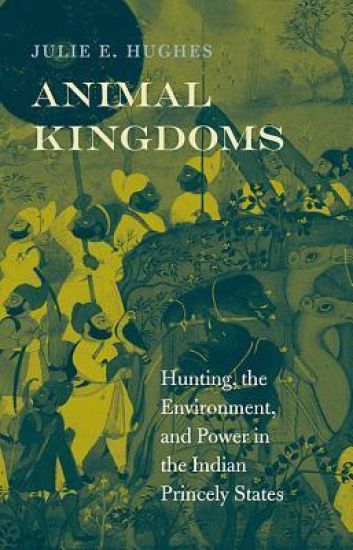
One summer evening in 1918, a leopard wandered into the gardens of an Indian palace. Roused by the alarms of servants, the prince’s eldest son and his entourage rode elephant-back to find and shoot the intruder. An exciting but insignificant vignette of life under the British Raj, we may think. Yet to the participants, the hunt was laden with symbolism. Carefully choreographed according to royal protocols, recorded by scribes and commemorated by court artists, it was a potent display of regal dominion over men and beasts alike. Animal Kingdoms uncovers the far-reaching cultural, political, and environmental importance of hunting in colonial India.Julie E. Hughes explores how Indian princes relied on their prowess as hunters to advance personal status and solidify power. Believing that men and animals developed similar characteristics by inhabiting a shared environment, they sought out quarry—fierce tigers, agile boar—with traits they hoped to cultivate in themselves. Largely debarred from military activities under the British, they also used the hunt to establish meaningful links with the historic battlefields and legendary deeds of their ancestors.Hunting was not only a means of displaying masculinity and heroism, however. Indian rulers strove to present a picture of privileged ease, perched in luxuriously outfitted shooting boxes and accompanied by lavish retinues. Their interest in being sumptuously sovereign was crucial to elevating the prestige of prized game. Animal Kingdoms will inform historians of the subcontinent with new perspectives and captivate readers with descriptions of its magnificent landscapes and wildlife.
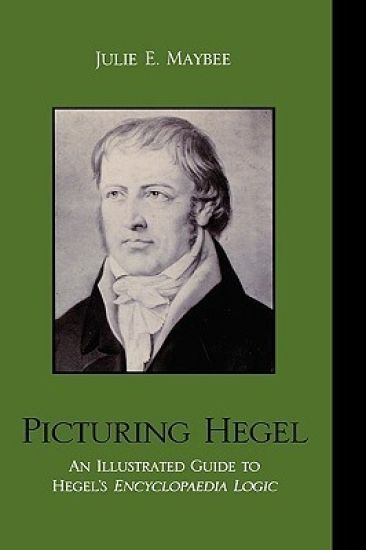
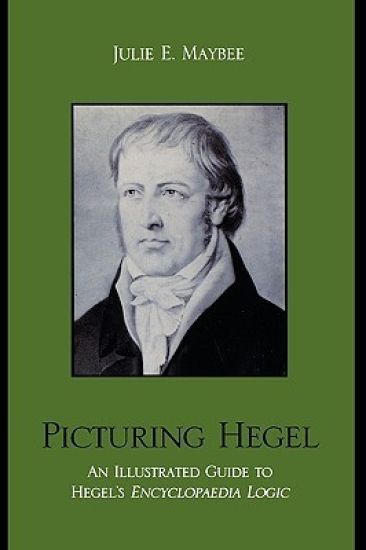
In her innovative take on G.W. F. Hegel's The Encyclopaedia Logic, Julie E. Maybee uses pictures and diagrams to cut through the philosopher's dense, difficult writing. Picturing Hegel: An Illustrated Guide to Hegel's Encyclopaedia Logic utilizes diagrams in order to rehabilitate Hegel's logic for serious consideration by showing how each stage develops step-by-step from earlier stages according to definite, logical patterns. This interpretation makes Hegel's work accessible and understandable for new and experienced readers alike. Because Hegel uses the same logic in all of his works, Maybee's analysis and defense of the logic will capture the attention of those readers interested in Hegel's ethics, politics, history, philosophy of religion, and phenomenology. Through the included diagrams, Maybee is able to define central Hegelian concepts such as "being-in-itself," and "being-in-and-for-itself" with a new level of precision. Maybee argues that Hegel's logic does not include the one logistical pattern most often attributed to him; namely, the pattern "thesis-antithesis-synthesis." Rather, Hegel's model of logic was more scientific than formalistic in nature, as the philosopher himself pointed out. Hegel considered himself an encyclopedic culmination of Western philosophy in some ways, and indeed his work summarizes many of the presuppositions of Western philosophy. By picturing Hegel's logic, we can gain a greater understanding of ourselves.
In her innovative take on G.W. F. Hegel's The Encyclopaedia Logic, Julie E. Maybee uses pictures and diagrams to cut through the philosopher's dense, difficult writing. Picturing Hegel: An Illustrated Guide to Hegel's Encyclopaedia Logic utilizes diagrams in order to rehabilitate Hegel's logic for serious consideration by showing how each stage develops step-by-step from earlier stages according to definite, logical patterns. This interpretation makes Hegel's work accessible and understandable for new and experienced readers alike. Because Hegel uses the same logic in all of his works, Maybee's analysis and defense of the logic will capture the attention of those readers interested in Hegel's ethics, politics, history, philosophy of religion, and phenomenology. Through the included diagrams, Maybee is able to define central Hegelian concepts such as 'being-in-itself,' and 'being-in-and-for-itself' with a new level of precision. Maybee argues that Hegel's logic does not include the one logistical pattern most often attributed to him; namely, the pattern 'thesis-antithesis-synthesis.' Rather, Hegel's model of logic was more scientific than formalistic in nature, as the philosopher himself pointed out. Hegel considered himself an encyclopedic culmination of Western philosophy in some ways, and indeed his work summarizes many of the presuppositions of Western philosophy. By picturing Hegel's logic, we can gain a greater understanding of ourselves.
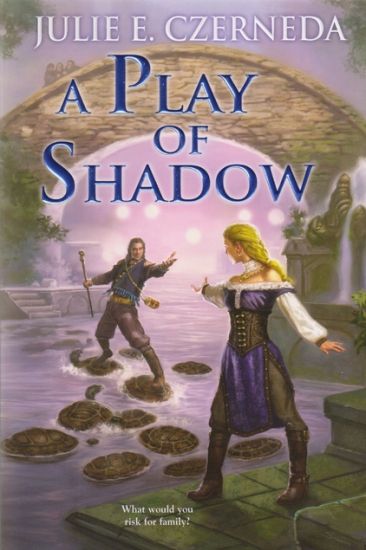
Winner of the 2015 Prix Aurora Award for Best English Novel What would you risk for family? In the second installment of Night's Edge, Bannan Larmensu, the truthseer who won Jenn Nalynn's heart, learns his brother-in-law was sent as a peace envoy to Channen, capitol of the mysterious domain of Mellynne, and has disappeared. When Bannan's young nephews arrive in Marrowdell, he fears the worst, that his sister, the fiery Lila, has gone in search of her husband, leaving her sons in his care. The law forbids Bannan from leaving Marrowdell and travelling to Mellynne to help his sister. In this world. As a turn-born, Jenn Nalynn has the power to cross into the magical realm of the Verge, and take Bannan with her. Once there, they could find a way into Mellynne. If they survive. The Verge is wild and deadly, alive with strange magic. Dragons roar and kruar wait in ambush, and the powerful turn-born who care for their world do not care for Jenn Nalynn. She's willing to try. Wisp and Scourge -- and the house toads -- offer their help. But what none of them know is that magic is rife in Channen, magic that flows from the Verge itself. And not even a turn-born will be safe there.
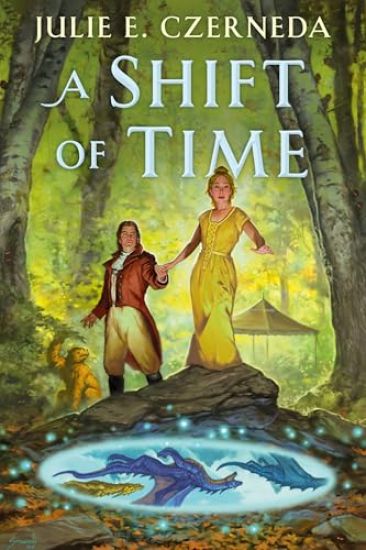
The 4th book in the Aurora Award-winning Night's Edge series returns readers to a rich and atmospheric fantasy worldPerfect for readers of Charles de Lint, Naomi Novik, and Katherine Arden, A Shift of Time is a charming, heartwarming, hopeful fableSummer has arrived in Marrowdell, but its wild magic is out of sorts. Bannan, returning from his sister's home in Vorkoun, steps through Jenn's special crossing to find the village has disappeared. Something is deeply wrong within the edge--and with the Verge. Soon the youngling dragon Imp returns from that magical realm with a dire message: turn-born are missing. Deep in the mines of Ansnor, turn-born are being trapped and killed. The rest are in hiding, as each crossing destabilizes the Verge, releasing chaos even the sei cannot control. Time is shifting. Bannan, caught between realms, must accept the help of an ancient power, feared by dragons and greater than sei, but at what cost? Jenn, meanwhile, rushes to Ansnor to find Bannan and fix what's breaking in the Verge, but she's in danger, too. For in the edge, those who hunt magic and those with gifts grow bold, and as the only turn-born filled with pearl and the magic of the sei, Jenn Nalynn is the greatest prize of all.
Caught in a web of her own making Esen-alit-Quar had violated the First Rule of her species when she revealed her existence to a human named Paul Ragem. And though both Paul and Esen had survived, others of Esen's Web had not been so fortunate. Es could hardly believe that fifty years had passed since the terrifying events which had nearly cost her her life and which had forced Paul to give up everything a human treasured―family, friends, even his own identity―to protect the secret of her continued survival. In that time they had built a new life together out on the Fringe. They had a successful export company, friends and associates. Esen, now known as Esolesy Ki and wearing the form of a Lishcyn―a species rare enough in the Commonwealth and never seen in the Fringe―was perfectly content to remain on the world of Minas XII, leaving it to Paul to travel the starways on company business. Meanwhile she used their vast information resources to search for any signs that others of her kind had found their galaxy. What neither Es nor Paul could foresee was that a simple "vacation" trip would plunge the two of them into the heart of a diplomatic nightmare―and threaten to expose both Es and Paul to the hunters who had never been convinced of their destruction.
In Tananen people worship a single deity: Deathless Goddess. In this small, forbidden realm people are haunted by words of no language known to humans. The words are Her Gift, and they summon magic. Mage scribes learn to write Her words as intentions: spells. If an intention is flawed, what the mage creates is a gossamer: a magical creature wild, free and costly. Each successful intention ages a mage until they dare no more. But her magic demands to be used; the Deathless Goddess will take her fee, and mages will die. To end this terrible toll, the greatest mage vows to find and destroy Her.
The first book in the Web Shifter's Library series returns to the adventures of Esen, a shapeshifting alien and member of an ancient yet endangered race, who must navigate the perils of a hostile universe. Esen's back And the dear little blob is in trouble, again. Things began so well. She and her Human friend Paul Ragem are ready to celebrate the first anniversary of their greatest accomplishment, the All Species' Library of Linguistics and Culture, by welcoming his family back. He hopes. Having mourned his supposed death years ago, understandably, feelings are bent. Instead, they've unexpected guests, starting with an old acquaintance. Paul's father has gone missing under dire circumstances. Before he can convince Esen to help him search, a friend shows up to use the Library. A crisis on Dokeci Na is about to explode into violence. To stop it, Evan Gooseberry needs answers. Unfortunately, the artifact he brought in trade holds its own distracting secret. A touch of very familiar blue. Web-flesh. The race is on. Paul, to find his father. Esen, to search for a mysterious legacy while helping Evan avert an extinction. What none of them realize is the price of success will be the most terrible choice of all.