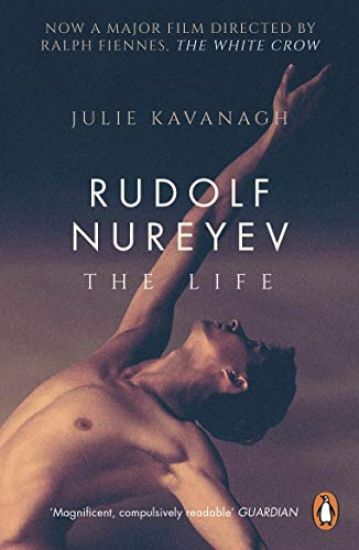
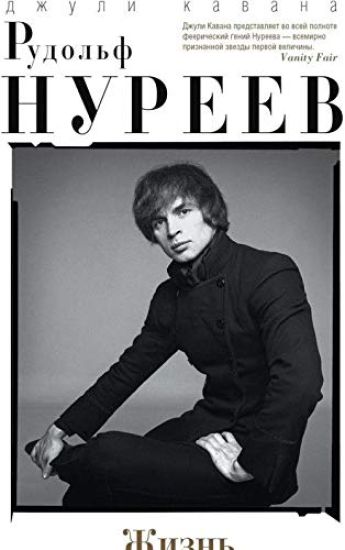
NOW A MAJOR FILM BY RALPH FIENNES, THE WHITE CROW'A gripping account of an extraordinary life' Daily Telegraph Born on a train in Stalin's Russia, Rudolf Nureyev was ballet's first pop icon. No other dancer of our time has generated the same excitement - both on and off stage.Nureyev's achievements and conquests became legendary: he rose out of Tatar peasant poverty to become the Kirov's thrilling maverick star; slept with his beloved mentor's wife; defected to the West in 1961; sparked Rudimania across the globe; established the most rhapsodic partnership in dance history with the middle-aged Margot Fonteyn; reinvented male technique; gatecrashed modern dance; moulded new stars; and staged Russia's unknown ballet masterpieces in the West. He and his life were simply astonishing.'Magnificent, a triumph. Captures every facet of this extraordinary man' Mail on Sunday'The definitive study of a man who, in his combination of aesthetic grace and psychological grime, can truly be called a sacred monster' Observer'Undoubtedly the definitive biography' Sunday Telegraph
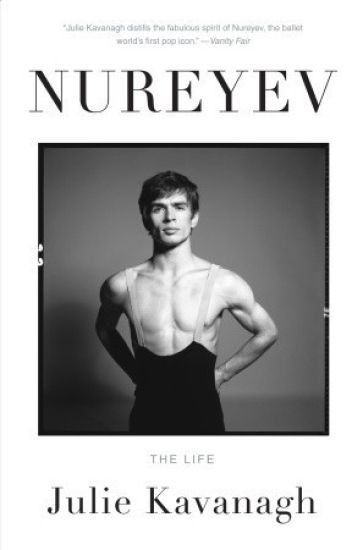
Rudolf Nureyev, one of the most iconic dancers of the twentieth century, had it all: beauty, genius, charm, passion, and sex appeal. No other dancer of our time has generated the same excitement, for both men and women, on or off the stage. In this superb biography, Julie Kavanagh deftly brings us through the professional and personal milestones of Nureyev's life and career: his education at the Kirov school in Leningrad; his controversial defection from the USSR in 1961; his long-time affair with the Danish dancer Erik Bruhn; his legendary partnership with Margot Fonteyn at the Royal Ballet in London. We see his fiery collaborations with almost all the major living choreographers including Ashton, Balanchine, Robbins, Graham, and Taylor. And we see Nureyev as he reinvigorated the Paris Ballet Opera in the early 1980s before his death from AIDS complications in 1993. Nureyev: The Life is the most intimate, revealing, and dramatic picture we have ever had of this dazzling, complex figure.
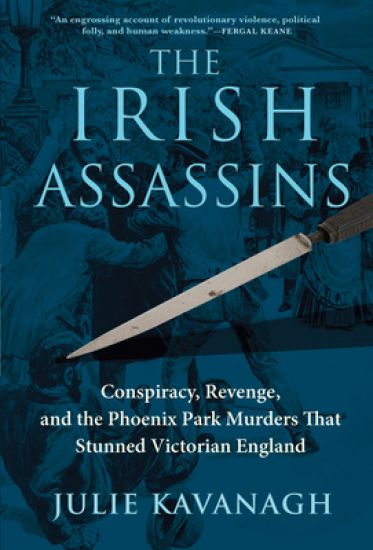
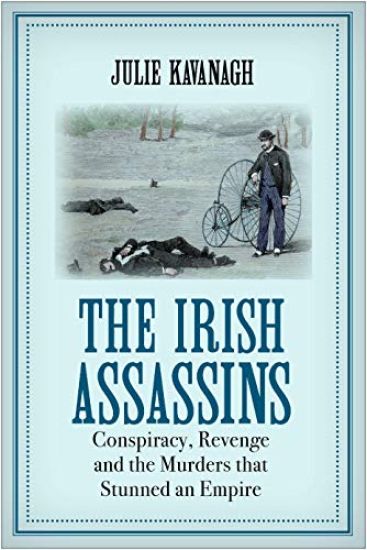
A brilliant work of historical true crime charting a pivotal event in the l9th century, the Phoenix Park murders in Dublin, that gripped the world and forever altered the course of Irish history, from renowned journalist, former New Yorker London editor, and Costa Biography Award finalist Julie Kavanagh. One sunlit evening, May 6 l882, Lord Frederick Cavendish and Thomas Burke, Chief Secretary and Undersecretary for Ireland, were ambushed and stabbed to death while strolling through Phoenix Park in Dublin. The murders were funded by American supporters of Irish independence and carried out by the Invincibles, a militant faction of republicans armed with specially-made surgeon's blades. They ended what should have been a turning point in Anglo Irish relations. A new spirit of goodwill had been burgeoning between British Prime Minister William Gladstone and Ireland's leader Charles Stewart Parnell, with both men forging in secret a pact to achieve peace and independence in Ireland--with the newly appointed Cavendish, Gladstone's prot g , to play an instrumental role in helping to do so. The impact of the Phoenix Park murders was so cataclysmic that it destroyed the pact, almost brought down the government, and set in motion repercussions that would last long into the 20th century. In a story that spans Donegal, Dublin, London, Paris, New York, Cannes and Cape Town, Julie Kavanagh thrillingly traces the crucial events that came before and after the murders. From the adulterous affair that caused Parnell's downfall; to Queen Victoria's prurient obsession with the assassinations; and the investigation spearheaded by Superintendent John Mallon, also known as the "Irish Sherlock Holmes," culminating in the eventual betrayal and clandestine escape of leading Invincible James Carey and his murder on the high seas, The Irish Assassins brings us intimately into this fascinating story that shaped Irish politics and engulfed an Empire. This is an unputdownable book from one of our most "compulsively readable" (Guardian) writers.
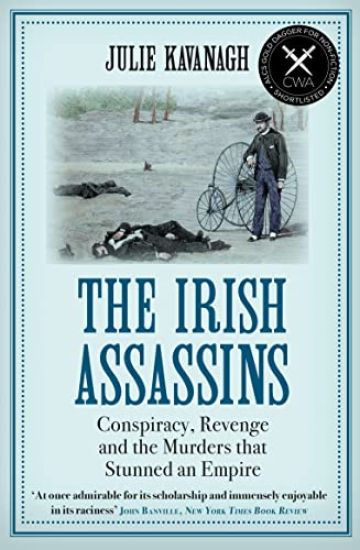
Shortlisted for the ALCS Gold Dagger Award for NonfictionA brilliant work of historical true crime charting a pivotal event in the l9th century, the Phoenix Park murders in Dublin, that gripped the world and forever altered the course of Irish history, from renowned journalist, former New Yorker London editor, and Costa Biography Award finalist Julie Kavanagh.Ireland, 1879-1882. After 700 years of British rule, the post-Famine generation of Irish tenant farmers began to push back against the reigning feudal system of landownership. The charismatic political leader, Charles Stewart Parnell, headed up the Land League, a revolutionary movement that promised to restore land and power to the people through a series of protests, strikes, and boycotts. After what became known as the Irish Land War had escalated into nationwide anarchy, Parnell and two associates were incarcerated without trial in Kilmainham Gaol. In April 1882, Parnell secretly forged the Kilmainham Treaty, a pact in which he pledged to work diplomatically with British Prime Minister William Gladstone for peace and the eventual independence of Ireland from England. It was a moment of real hope and a potential turning point in history, one that Gladstone himself described as "golden." Yet it would be shattered one sunlit evening, on May 6, l882, as Gladstone's emissary, Lord Frederick Cavendish, who had arrived that day in Dublin, and Thomas Burke, the undersecretary for Ireland, were ambushed and stabbed to death while strolling through Phoenix Park in Dublin. The murders were funded by American supporters of Irish independence and carried out by the Invincibles, a militant faction of republicans armed with specially made surgeon's blades. The impact of the assassinations was so cataclysmic that it destroyed the peace pact, almost brought down the government, and set in motion repercussions that would last long into the twentieth century. In a story that spans Donegal, Dublin, London, Paris, New York, Cannes, and Cape Town, Julie Kavanagh traces the crucial events that came before and after the murders. From Parnell's passionate affair with an Irish MP's wife, Katharine "Kitty" O'Shea, which eventually caused his downfall, to Queen Victoria's prurient obsession with the assassinations; from the investigation spearheaded by Superintendent John Mallon, the "Irish Sherlock Holmes," who tirelessly tracked down each member of the Invincibles, to the eventual betrayal and clandestine escape of leading Invincible James Carey and his murder on the high seas; The Irish Assassins brings us intimately into this fascinating story that shaped Irish politics and engulfed an empire. This is an unputdownable book from one of our most "compulsively readable" (Guardian) writers.
ONE OF THE TIMES' BEST HISTORY BOOKS OF 2021'The tale of the Phoenix Park murders is not unfamiliar, but Kavanagh recounts it with a great sense of drama... Kavanagh's account reminds me of the very best of true crime.' The Times (Book of the Week)On a sunlit evening in l882, Lord Frederick Cavendish and Thomas Burke, Chief Secretary and Undersecretary for Ireland, were ambushed and stabbed to death while strolling through Phoenix Park in Dublin. The murders were carried out by the Invincibles, a militant faction of republicans armed with specially-made surgeon's blades. They ended what should have been a turning point in Anglo-Irish relations. A new spirit of goodwill had been burgeoning between Prime Minister William Gladstone and Ireland's leader Charles Stewart Parnell, with both men forging in secret a pact to achieve peace and independence in Ireland - with the newly appointed Cavendish, Gladstone's protégé, to play an instrumental role. The impact of the Phoenix Park murders was so cataclysmic that it destroyed the pact, almost brought down the government and set in motion repercussions that would last long into the twentieth century. In a story that spans Donegal, Dublin, London, Paris, New York, Cannes and Cape Town, Julie Kavanagh thrillingly traces the crucial events that came before and after the murders. From the adulterous affair that caused Parnell's downfall to Queen Victoria's prurient obsession with the assassinations and the investigation spearheaded by the 'Irish Sherlock Holmes', culminating in a murder on the high seas, The Irish Assassins brings us intimately into this fascinating story that shaped Irish politics and engulfed an empire. This is an unputdownable book from one of our most 'compulsively readable' (Guardian) writers.
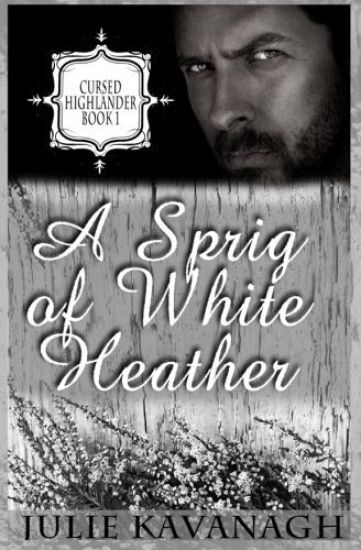
Cameron Mackenzie loses his true love in a brutal attack, and blaming it on his mistress, she curses him and his friends to eternal life unless he can find his true love once again. After five hundred years of loneliness and guilt, Cameron meets Caitlyn, a woman who has recently divorced her cheating husband. Emotions spark between them, but for the wrong reasons and Cameron suspects she is the evil witch who cursed him. Caitlyn still reeling from the after-shocks of her broken marriage is attracted to the dark, broody Scot but he frightens her although she can't explain why. Something is happening in the remote Scottish hotel Caitlyn has come to experience and she begins to fear for her life. What is going on and what dark magic haunts her dreams? Can she escape with her life or is the brooding Cameron her destiny?
Balerina v proshlom, a v dalnejshem zhurnalist i baletnyj kritik, Dzhuli Kavana napisala velikolepnuju, ischerpyvajuschuju biografiju Rudolfa Nureeva na osnove ogromnogo faktograficheskogo, arkhivnogo i epistoljarnogo materiala. Ona pravdivo i odnovremenno s ogromnym chuvstvom takta otobrazila dushu genija na fone slozhnejshikh povorotov ego zhizni i borby za svoe unikalnoe mesto v iskusstve.Perevodchik: Igorevskij L. A.Redaktor: Glebovskaja L. I.
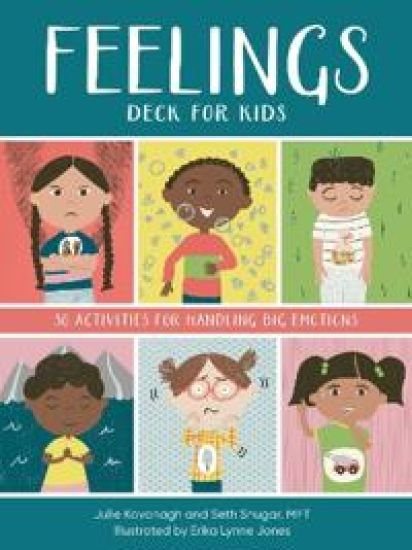
A playful card deck that teaches kids ages 5-9 to name and feel emotions in their bodies, with 30 activities to regulate emotions and teach body awareness. Lots of kids might say they feel "good" or "bad" but miss all the other emotions in between. For children to best recognize feelings in themselves and others, they first need to have words for those feelings. Featuring a range of 30 different emotions, from angry and sad to grateful and proud, as well as a meditation or mindful activity for each, kids can use these interactive cards to develop their emotional intelligence and gain self-acceptance. They'll find ways to better understand feelings, build self-compassion, and share their emotional experiences--all in a fun, interactive way. The cards are illustrated with evocative ways that emotions can show up in the body to help kids start to recognize how they embody feelings--for example: "When I am worried, my mind feels tangled up like spaghetti noodles"; "When I feel scared, my belly feels cold like a popsicle"; "When I am excited, my chest feels fizzy like the bubbles in a soda." The deck includes both meditation cards, guiding kids in simple mindfulness practices focused on the card's emotion; and activity cards, featuring hands-on activities to regulate emotions like making a calming glitter jar, planting a seed of hope, blowing bubbles of frustration and watching them float away, and creating a "Gratitude Gumball" machine. The cards and a helpful introductory booklet are housed together in a colorful box.
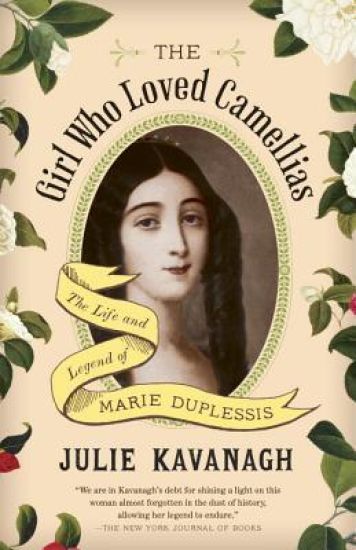
This riveting biography brilliantly explores the short, intense, and passionate life of the country girl from Normandy, who at thirteen fled her brute of a father to go to Paris. Almost overnight she became one of the most admired courtesans of the 1840s--the inspiration for Alexandre Dumas "fils"' "The Lady of the Camellias" and Verdi's "La Traviata." With her aristocratic ways, elegant clothes and signature camellias, Marie was always a subject of fascination at the opera and the boulevard cafes. Her death at twenty-three from tuberculosis created such an outpouring of sympathy in the press that Charles Dickens, who was in Paris at the time, was amazed. "Everything is erased in the face of an incident which is far more important," he wrote, "the romantic death of one of the glories of the demi-monde, the beautiful, the famous Marie Duplessis."
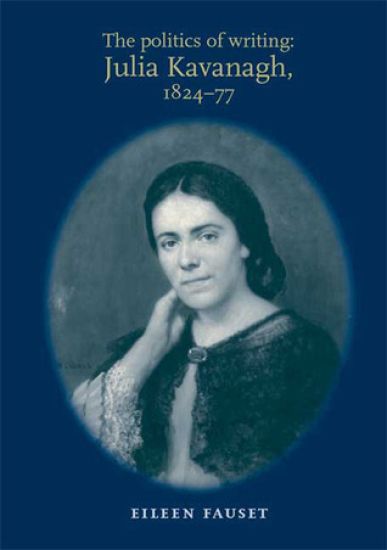
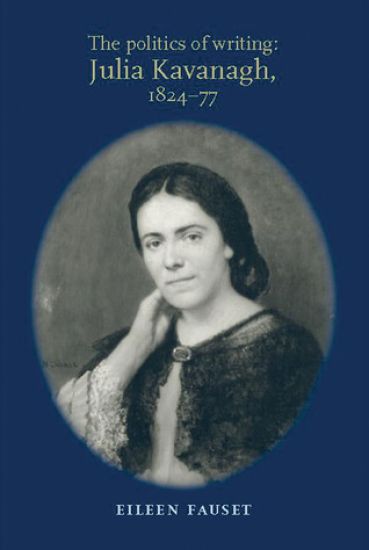
Julia Kavanagh was a popular and internationally published writer of the mid-nineteenth century whose collective body of work included fiction, biography, critical studies of French and English women writers, and travel writing. In this critically engaged study Eileen Fauset sees Kavanagh as a significant but neglected writer and returns her to her proper place in the history of women's writing.With few known primary sources to go on the author manages, through her skilful selection of letters, official documents and historical commentary, to piece together some of the jigsaw of Kavanagh's life. Throughout this study, the biographical element informs and directs discussion of Kavanagh's writing itself. What emerges is a succinct and telling portrait of a woman who, through a desire to write, acquired both economic independence and a means through which she could voice her sexual politics. Eileen Fauset challenges the historical attitudes to 'popular romance', a genre read mainly by women and generally discounted as simple entertainment. She argues that in Kavanagh's novels romance is often the pivot around which issues of cultural and sexual difference are examined, a perspective that, invariably, also informed Kavanagh's non-fiction.This study addresses the current enthusiasm for the reclamation of neglected women writers and also brings to light interesting material that might otherwise have remained unknown to the specialist. It will appeal to academics, students and enthusiasts of Victorian literature and women's writing.
Julia Kavanagh was a popular and internationally published writer of the mid-nineteenth century whose collective body of work included fiction, biography, critical studies of French and English women writers, and travel writing. In this critically engaged study Eileen Fauset sees Kavanagh as a significant but neglected writer and returns her to her proper place in the history of women's writing.With few known primary sources to go on, the author manages, through her skilful selection of letters, official documents and historical commentary, to piece together some of the jigsaw of Kavanagh's life. Throughout this study, the biographical element informs and directs discussion of Kavanagh's writing itself. What emerges is a succinct and telling portrait of a woman who, through a desire to write, acquired both economic independence and a means through which she could voice her sexual politics. Eileen Fauset challenges the historical attitudes to 'popular romance', a genre read mainly by women and generally discounted as simple entertainment. She argues that in Kavanagh's novels romance is often the pivot around which issues of cultural and sexual difference are examined, a perspective that, invariably, also informed Kavanagh's non-fiction.It will appeal to academics, students and enthusiasts of Victorian literature and women's writing.