Kirjahaku
Etsi kirjoja tekijän nimen, kirjan nimen tai ISBN:n perusteella.
1000 tulosta hakusanalla Julius H. Barnes

A History of Philosophy in Epitome, by Dr. Albert Schwegler. Tr. From the original German, by Julius H. Seelye.
Albert Schwegler
University of Michigan Library
2006
pokkari

A History of Philosophy in Epitome, by Dr. Albert Schwegler. Translated From the original German, by Julius H. Seelye.
Albert Schwegler
University of Michigan Library
2006
pokkari

Religious Melancholy and Protestant Experience in America
Julius H. Rubin
Oxford University Press Inc
1994
sidottu
This original examination of the spiritual narratives of conversion in the history of American Protestant evangelical religion reveals an interesting paradox. Fervent believers who devoted themselves completely to the challenges of making a Christian life, who longed to know God's rapturous love, all too often languished in despair, feeling forsaken by God. Ironically, those most devoted to fostering the soul's maturation neglected the well-being of the psyche. Drawing upon many sources, including unpublished diaries and case studies of patients treated in nineteenth-century asylums, Julius Rubin's fascinating study thoroughly explores religious melancholy--as a distinctive stance toward life, a grieving over the loss of God's love, and an obsession and psychopathology associated with the spiritual itinerary of conversion. The varieties of this spiritual sickness include sinners who would fast unto death ("evangelical anorexia nervosa"), religious suicides, and those obsessed with unpardonable sin. From colonial Puritans like Michael Wigglesworth to contemporary evangelicals like Billy Graham, among those who directed the course of evangelical religion and of their followers, Rubin shows that religious melancholy has shaped the experience of self and identity for those who sought rebirth as children of God.






Thirty years after its global triumph, neo-liberalism is an abject failure. While its advocates have succeeded in convincing citizens that no other way is possible, that no left turn can be made without an economic collapse, they have not fulfilled their promises of a better world and the result has been more inequality, insecurity, and speculation. Many have sought solace in collective goals – nationalism, narrow religion, and gender politics – while notions of universal solidarity, idealism, and humanism have all but disappeared. In Capitalism and the Alternatives Julius H. Grey seeks to rehabilitate economic equality as a fundamental social goal built on universal values such as individualism, liberty, and even romanticism. To achieve this, he argues, it is necessary to move away from national, ethnic, religious, and even gender loyalties. The importance in each society of common culture and widely accepted moral values, Grey suggests, cannot be overstated. With its rampant political correctness, the modern left seems to have lost sight of morality and individual freedom. While most commentators stake out a partisan position in their criticism, Grey's notion of individual romanticism as the basis of a socially progressive society and his stress on free will, culture, classical education, and the right to dissent demand an overhaul of both the right and the left. A fundamental rethinking of the social, political, and economic foundations of modern industrial society, Capitalism and the Alternatives proposes freedom from identity, instead of communitarianism and tradition, as a condition for liberty and justice.
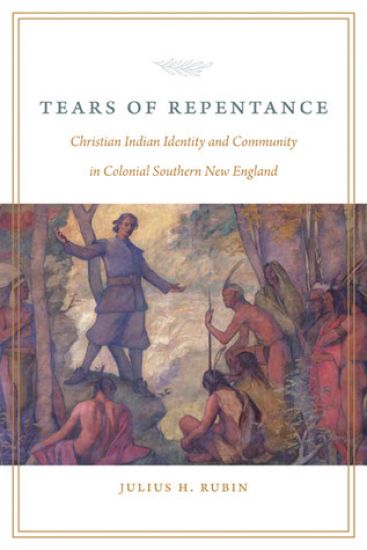
Tears of Repentance revisits and reexamines the familiar stories of intercultural encounters between Protestant missionaries and Native peoples in southern New England from the seventeenth to the early nineteenth centuries. Focusing on Protestant missionaries' accounts of their ideals, purposes, and goals among the Native communities they served and of the religion as lived, experienced, and practiced among Christianized Indians, Julius H. Rubin offers a new way of understanding the motives and motivations of those who lived in New England's early Christianized Indian village communities. Rubin explores how Christian Indians recast Protestant theology into an Indianized quest for salvation from their worldly troubles and toward the promise of an otherworldly paradise. The Great Awakening of the eighteenth century reveals how evangelical pietism transformed religious identities and communities and gave rise to the sublime hope that New Born Indians were children of God who might effectively contest colonialism. With this dream unfulfilled, the exodus from New England to Brothertown envisioned a separatist Christian Indian commonwealth on the borderlands of America after the Revolution. Tears of Repentance is an important contribution to American colonial and Native American history, offering new ways of examining how Native groups and individuals recast Protestant theology to restore their Native communities and cultures.


The Way, The Truth And The Life: Lectures To Educated Hindus (1873)
Julius H. Seelye
KESSINGER PUBLISHING, LLC
2008
sidottu

The Life And Letters Of James Gates Percival (1866)
Julius H. Ward
KESSINGER PUBLISHING, LLC
2008
sidottu


African American religions constitute a diverse group of beliefs and practices that emerged from the African diaspora brought about by the Atlantic slave trade. Traditional religions that had informed the worldviews of Africans were transported to the shores of the Americas and transformed to make sense of new contexts and conditions. This book explores the survival of traditional religions and how African American religions have influenced and been shaped by American religious history. The text provides an overview of the central people, issues, and events in an account that considers Protestant denominations, Catholicism, Islam, Pentecostal churches, Voodoo, Conjure, Rastafarianism, and new religious movements such as Black Judaism, the Nation of Islam, and the United Nuwaubian Nation of Moors. The book addresses contemporary controversies, including President Barack Obama's former pastor Jeremiah Wright, and it will be valuable to all students of African American religions, African American studies, sociology of religion, American religious history, the Black Church, and black theology.
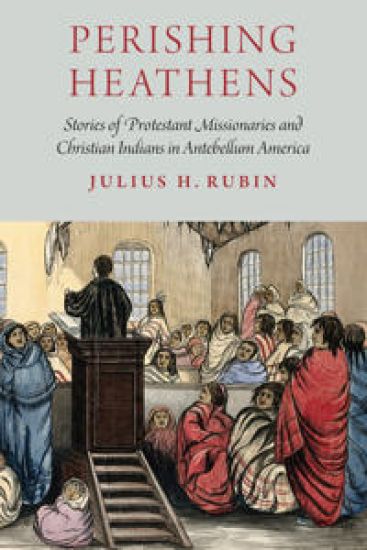
In Perishing Heathens Julius H. Rubin tells the stories of missionary men and women who between 1800 and 1830 responded to the call to save Native peoples through missions, especially the Osages in the Arkansas Territory, Cherokees in Tennessee and Georgia, and Ojibwe peoples in the Michigan Territory. Rubin also recounts the lives of Native converts, many of whom were from mixed-blood métis families and were attracted to the benefits of education, literacy, and conversion. During the Second Great Awakening, Protestant denominations embraced a complex set of values, ideas, and institutions known as “the missionary spirit.” These missionaries fervently believed they would build the kingdom of God in America by converting Native Americans in the Trans-Appalachian and Trans-Mississippi West. Perishing Heathens explores the theology and institutions that characterized the missionary spirit and the early missions such as the Union Mission to the Osages, and the Brainerd Mission to the Cherokees, and the Moravian Springplace Mission to the Cherokees. Through a magnificent array of primary sources, Perishing Heathens reconstructs the millennial ideals of fervent true believers as they confronted a host of impediments to success: endemic malaria and infectious illness, Native resistance to the gospel message, and intertribal warfare in the context of the removal of eastern tribes to the Indian frontier.

The emerging Jewish national consciousness in Europe toward the end of the 19th century claims many spiritual fathers, some of which have been seriously underestimated so far. Zionist intellectuals such as Moses Hess, Leon Pinsker and Isaac Rülf were already committed to the self-liberation of the Jewish people long before Theodor Herzl. Their experiences and observations brought them to believe that the emancipation and integration of Jews were not realistically possible in Europe. Instead, they began to think in national and territorial terms. The author explores the question as to what extent religious messianism influenced the ideas of these men and how this reflects in today's collective Israeli consciousness. In a comprehensive epilogue, Julius H. Schoeps critically correlates ideas of messianic salvation, Zionist pioneer ideals, the settler's movement before and after 1967, and the unsolved conflict between Israelis and Palestinians which has been lasting for over 100 years.