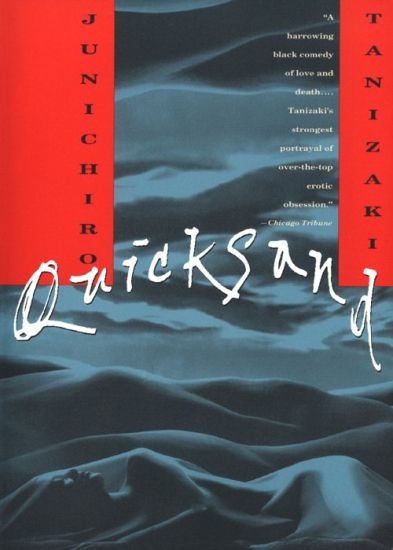
The marriage of Kaname and Misako is disintegrating: whilst seeking passion and fulfilment in the arms of others, they contemplate the humiliation of divorce.
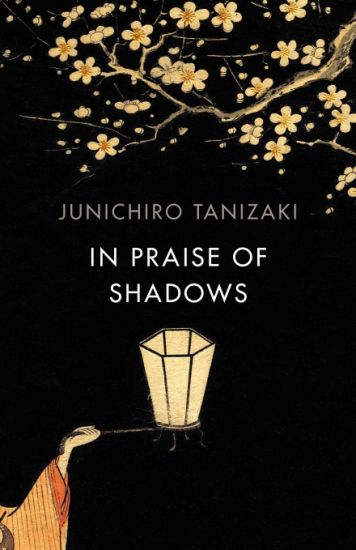
An intimate reflection on Japanese art and architecture from one of the country's greatest novelists.This is an enchanting essay on aesthetics by one of the greatest Japanese novelists. Tanizaki's eye ranges over architecture, jade, food, toilets, and combines an acute sense of the use of space in buildings, as well as perfect descriptions of lacquerware under candlelight and women in the darkness of the house of pleasure. The result is a classic description of the collision between the shadows of traditional Japanese interiors and the dazzling light of the modern age.'Elegant...a delight to read' Independent on Sunday
While recovering from a stroke, seventy-seven-year-old Utsugi turns to his diary to wryly record his struggle with his ageing body and his growing desire for his beautiful daughter-in-law Satsuko, a chic, Westernised dancer with a shady past.
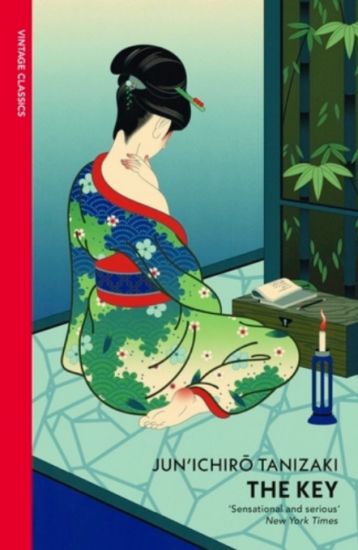
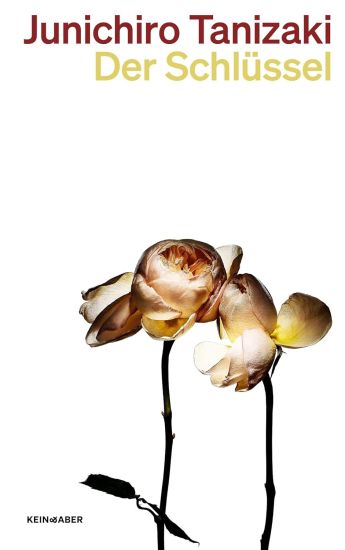
This is the diary of a middle-aged man who is deeply in love with his younger wife, Ikuko. In spite of that love, the pair have grown physically apart, each unsure of the other's desires...until the day Ikuko discovers her husband's diary with its desperate hints of jealousy and voyeurism. Ikuko realises she has found the key to his very soul.
A seductive psychological thriller about obsession, jealousy and deceit, and a Japanese classic Sonoko Kakiuchi is a cultured Osaka lady in an uninspiring marriage. They begin a passionate affair and Sonoko soon finds herself infatuated by Mitsuko, and ensnared in a web of sex, humiliation and deceit.
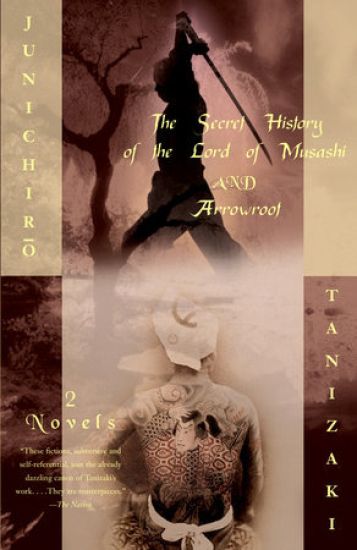
A pair of sophisticated novels by one of Japan's most important novelists of the twentieth century tells the stories of an ancient Japanese warrior obsessed with severed heads, and of two friends who journey into a mountain region cloaked in legends. Reprint. 12,500 first printing.
Junichiro Tanizaki's Naomi is both a hilarious story of one man's obsession and a brilliant reckoning of a nation's cultural confusion. When twenty-eight-year-old Joji first lays eyes upon the teenage waitress Naomi, he is instantly smitten by her exotic, almost Western appearance. Determined to transform her into the perfect wife and to whisk her away from the seamy underbelly of post-World War I Tokyo, Joji adopts and ultimately marries Naomi, paying for English and music lessons that promise to mold her into his ideal companion. But as she grows older, Joji discovers that Naomi is far from the na ve girl of his fantasies. And, in Tanizaki's masterpiece of lurid obsession, passion quickly descends into comically helpless masochism.
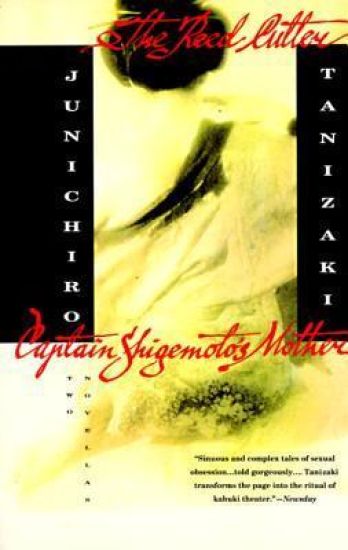
In "The Reed Cutter", the narrator meets a strange man who tells him a story of obsession; and a tenth-century Kyoto minister demands and receives his rival's wife during a drunken party in "Captain Shigemoto's Mother"
A young, well-born Osaka widow, Sonoko Kakiuchi, describes her husband's humiliation and the influence of a beautiful and totally corrupt art student on their lives, in a novel set in the 1920s
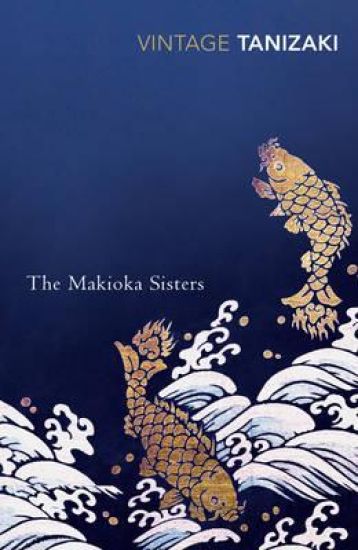
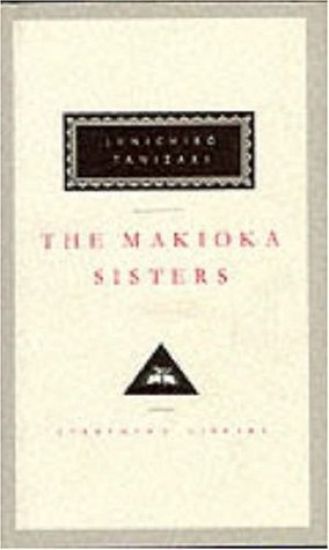
Tanizaki's masterpiece is the story of four sisters, and the declining fortunes of a traditional Japanese family. It is a loving and nostalgic recreation of the sumptuous, intricate upper-class life of Osaka immediately before World War Two. With surgical precision, Tanizaki lays bare the sinews of pride, and brings a vanished era to vibrant life.
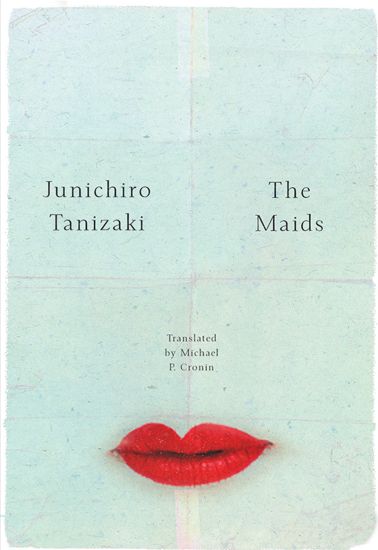
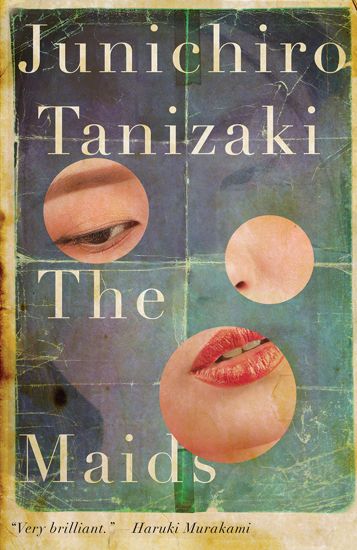
The Maids is a jewel: an astonishing complement to The Makioka Sisters, set in the same house, in the same turbulent decades, but among the servants as much as the masters. The Maids concerns all the young women who work--before, during, and after WWII--in the pampered, elegant household of the famous author Chikura Raikichi, his wife Sanko, and her younger sister. Though quite well-to-do, Raikichi has a small house: the family and the maids (usually a few, sharing a little room next to the kitchen) are on top of one another. This proximity helps to explain Raikichi's extremely close observation of the maids and their daily lives, although his interest carries with it more than a dash of the erotic, calling to mind Tanizaki's raciest books such as Diary of a Mad Old Man and The Key.In the sensualist, semi-innocent, sexist patrician Raikichi, Tanizaki offers a richly ironic self-portrait, but he presents as well a moving, nuanced chronicle of change and loss: centuries-old values and manners are vanishing, and here--in the evanescent beauty of the small gestures and intricacies of private life--we find a whole world to be mourned. And yet, there is such vivacity and such beauty of writing that Tanizaki creates an intensely compelling epic in a kitchen full of lively girls.Ethereally suggestive, sensational yet serious, witty but psychologically complex, The Maids is in many ways The Makioka Sisters revisited in a lighter, more comic mode.
The Maids, Tanizaki's final novel, sparkles like a jewel. Over the years—before, during, and after WWII—many women work in the pampered, elegant household of the famous author Chikura Raikichi, his wife, and her younger sister. Though the family's quite well-to-do, the house is small; the proximity of the maids helps perhaps to explain Raikichi's extremely close, and somewhat eroticized, observation of all their little ways. In the sensualist patrician Raikichi, Tanizaki offers a richly ironic self-portrait, but he presents as well an exquisitely nuanced chronicle of change and loss: centuries' old values and manners are vanishing, and here—in the evanescent beauty of all the small gestures and intricacies of private life—we find a whole world passing away.
One morning, Takahashi, a writer who has just stayed up all night working, is interrupted by a phone call from his old friend Sonomura: barely able to contain his excitement, Sonomura claims that he has cracked a secret cryptographic code based on Edgar Allan Poe’s The Gold-Bug and now knows exactly when and where a murder will take place—and they must hurry if they want to witness the murder, because it’s later that very night! Sonomura has a history of lunacy and playing the amateur detective, so Takahashi is of course reluctant to believe him. Nevertheless, they stake out the secret location, and through tiny peepholes in the knotted wood, become voyeurs at the scene of a shocking crime… Atmospheric, erotic, and tense, Devils in Daylight is an early work by the master storyteller who “created a lifelong series of ingenious variations on a dominant theme: the power of love to energize and destroy” (Chicago Tribune).
An essay on aesthetics by the Japanese novelist, this book explores architecture, jade, food, and even toilets, combining an acute sense of the use of space in buildings. The book also includes descriptions of laquerware under candlelight and women in the darkness of the house of pleasure.
These two modern classics by the great Japanese novelist Junichiro Tanizaki, both utilize the diary form to explore the authority that love and sex have over all. In The Key," a middle-aged professor plies his wife of thirty years with any number of stimulants, from brandy to a handsome young lover, in order to reach new heights of pleasure. Their alternating diaries record their separate adventures, but whether for themselvess or each other becomes the question. Diary of a Mad Old Man records, with alternating humor and sadness, seventy-seven-year-old Utsugi's discovery that even his stroke-ravaged body still contains a raging libido, especially in the unwitting presence of his chic, mysterious daughter-in-law.
VINTAGE JAPANESE CLASSICS - five masterpieces of Japanese fiction in gorgeous new gift editions.Tanizaki's masterpiece is the story of four sisters, and the declining fortunes of a traditional Japanese family. With surgical precision, Tanizaki lays bare the sinews of pride, and brings a vanished era to vibrant life.
Reading it, you will be led by Junichiro Tanizaki's light touch into a mysterious and tranquil world of darkness and shadows, where gold flashes in the gloom and a deep stillness reigns.
Hailed as the greatest Japanese novel of the Twentieth century, THE MAKIOKA SISTERS is a subtle tale of domestic oppression worthy of Balzac or Chekhov, In this saga of the once prosperous but now declining Makioka family struggling to marry off one of their daughters, Tanizaki presents the picture of a family and a society striving to preserve their self-respect as they come to terms with disturbing new ways in a classic confrontation of innovasion and tradition. A wonderful portrait of Japanese life in the first half of the twentieth century.