Kirjojen hintavertailu. Mukana 11 627 363 kirjaa ja 12 kauppaa.

Kirjahaku

Etsi kirjoja tekijän nimen, kirjan nimen tai ISBN:n perusteella.

1000 tulosta hakusanalla Jurgen Schaarwachter

Robert Simpson -- Composer

Robert Simpson -- Composer

Jurgen Schaarwachter

Georg Olms Verlag AG
2013
nidottu
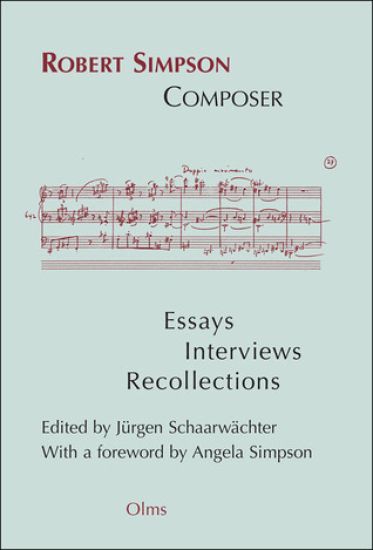
Robert Simpson (1921-1997) was a composer whose thinking was sometimes alarmingly uncompromising. In times when avant-garde' forms were considered to be of central importance to the progress of music, he continued his beliefs of a continuous tradition unwaveringly. He was undoubtedly one of the core figures in the creation of both symphonies and string quartets during the second half of the 20th century, his uvre still offers ample opportunity for musicians, audience and scholars alike to uncover hitherto hardly known treasures. The present book offers contributions by some of the most eminent Simpsonians, including Ed Green, Hans Keller, Malcolm MacDonald, John McCabe, Simon Phillippo, John Pickard, Lionel Pike, Martin Ratcliffe, Jurgen Schaarwachter and Harold Truscott. In their various approaches they cover most areas of Robert Simpson's compositional activities, with special focus on some of the Symphonies and String Quartets. Jurgen Schaarwachter obtained his doctorate at the University of Koeln in 1995 with his award-winning thesis "Die britische Sinfonie 1914-1945". He was Honorary Research Fellow of the University of Birmingham and researched in 1997-8 British symphonism from its beginnings to 1914 as research scholar of the German Research Foundation. Since 1999 he has been research fellow at the Max Reger Institute, Karlsruhe. He has published extensively both on Reger and related topics, on music from the 18th to the 20th century with special emphasis on British music. He is European Contact for the Havergal Brian Society since 1999, German representative of the British Music Society since 2001 and Chairman of the Robert Simpson Society since 2007.
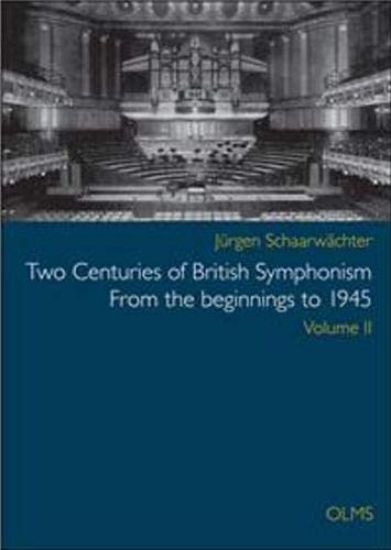
Two Centuries of British Symphonism From the beginnings to 1945
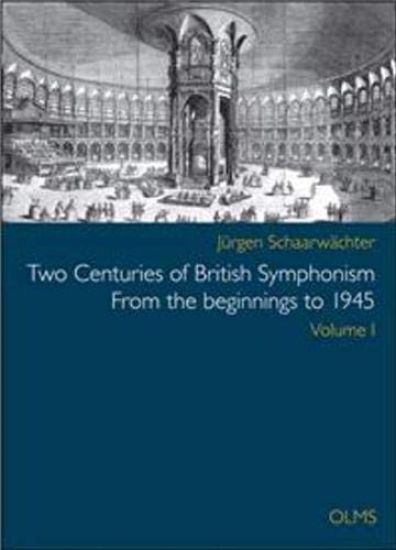
Text in English and German. Only in relatively recent times has any real attention been given to British symphonies. So a comprehensive survey, showing what exists and how the situation in the United Kingdom developed, from the beginnings in the 18th century until well into the 20th century, is long overdue.The preliminary survey presented here shows how a British symphonic identity gradually took shape over more than a century, through influences from abroad and, at home, enterprising attempts to find new ways of expression. By the end of the 19th century, British symphonists had produced an impressive body of work, yet only with the appearance of Elgar's two symphonies in the following decade did this flourishing school find a champion of international reknown.In this publication, light is shone on those works that have remained unpublished or unperformed. The result is a multi-faceted panorama of British symphonism, offering many insights into the composer's thinking and their socio-cultural contexts. A comprehensive catalogue of all known works and an extensive bibliography invite readers to delve further into the subject.
Two Centuries of British Symphonism From the beginnings to 1945
Text in English and German. Only in relatively recent times has any real attention been given to British symphonies. So a comprehensive survey, showing what exists and how the situation in the United Kingdom developed, from the beginnings in the 18th century until well into the 20th century, is long overdue.The preliminary survey presented here shows how a British symphonic identity gradually took shape over more than a century, through influences from abroad and, at home, enterprising attempts to find new ways of expression. By the end of the 19th century, British symphonists had produced an impressive body of work, yet only with the appearance of Elgar's two symphonies in the following decade did this flourishing school find a champion of international reknown.In this publication, light is shone on those works that have remained unpublished or unperformed. The result is a multi-faceted panorama of British symphonism, offering many insights into the composer's thinking and their socio-cultural contexts. A comprehensive catalogue of all known works and an extensive bibliography invite readers to delve further into the subject.
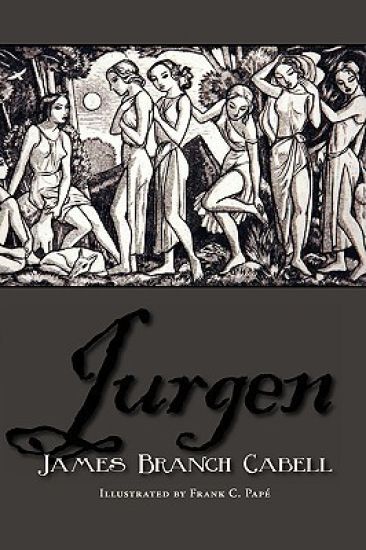
Jurgen

Jurgen

James Branch Cabell

Mint Editions
2021
pokkari
Jurgen, A Comedy of Justice (1919) is a comic fantasy novel by James Branch Cabell. Set in a world where history and fantasy collide, where a lowly pawnbroker can encounter monsters, gods, and devils, Jurgen, A Comedy of Justice is one of Cabell’s best-known works of fiction. For several years after its initial publication, the novel was the subject of an obscenity trial pursued by the New York Society for the Suppression of Vice. In 1923, after winning his case, Cabell made sure to immortalize the event with a revised edition featuring a “lost” chapter where Jurgen is persecuted for his writing by grotesque Philistines. Jurgen, A Comedy of Justice is one work in a series of novels, essays, and poems known as the Biography of the Life of Manuel. “For now had come to Jurgen and the Centaur a gold-haired woman, clothed all in white, and walking alone. She was tall, and lovely and tender to regard: and hers was not the red and white comeliness of many ladies that were famed for beauty, but rather it had the even glow of ivory […] to Jurgen this woman's countenance was in all things perfect. Perhaps this was because he never saw her as she was.” Unsatisfied with life as a lowly pawnbroker, Jurgen follows his heart in pursuit of ideal love. A proponent of medieval chivalry, he encounters gods, goddesses, kings, and queens as he passes from one otherworldly realm to the next. On his wondrous journey, he meets some of the most celebrated women in history and literature, including Guinevere, Anaitis, and Helen of Troy. Jurgen, a wily poet and legendary lover with a head full of dreams and desires, is an allegorical figure for modern humanity, a flawed hero whose kaleidoscopic world is not entirely different from our own. Cabell’s work has long been described as escapist, his novels and stories derided as fantastic and obsessive recreations of a world lost long ago. To read Jurgen, A Comedy of Justice, however, is to understand that the issues therein—the struggle for power, the unspoken distance between men and women—were vastly important not only at the time of its publication, but in our own, divisive world. With a beautifully designed cover and professionally typeset manuscript, this edition of James Branch Cabell’s Jurgen, A Comedy of Justice is a classic of fantasy and romance reimagined for modern readers.
Jurgen

Jurgen

James Branch Cabell

Createspace Independent Publishing Platform
2017
nidottu
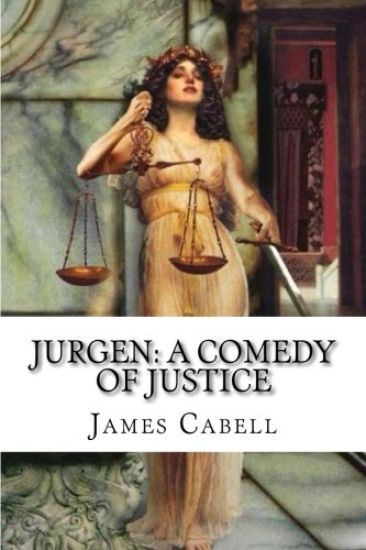
TO BURTON RASCOE Before each tarradiddle, Uncowed by sciolists, Robuster persons twiddle Tremendously big fists. "Our gods are good," they tell us; "Nor will our gods defer Remission of rude fellows' Ability to err." So this, your JURGEN, travels Content to compromise Ordainments none unravels Explicitly ... and sighs. "Others, with better moderation, do either entertain the vulgar history of Jurgen as a fabulous addition unto the true and authentic story of St. Iurgenius of Poictesme, or else we conceive the literal acception to be a misconstruction of the symbolical expression: apprehending a veritable history, in an emblem or piece of Christian poesy. And this emblematical construction hath been received by men not forward to extenuate the acts of saints.
Jurgen

Jurgen

James Branch Cabell

Createspace Independent Publishing Platform
1919
pokkari
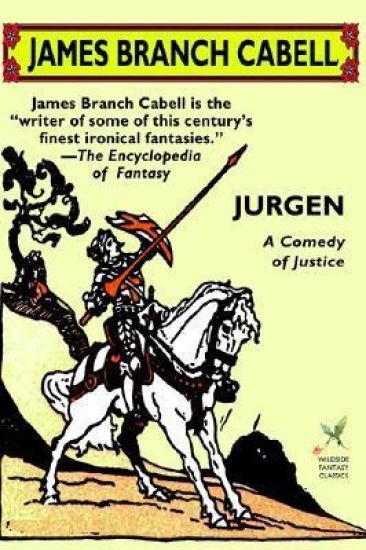
James Branch Cabell was a prolific American author of fantasy novels. Cabell's books are known for their satirical wit. Cabell's most famous work is Jurgen: A Comedy of Justice which became the subject of an infamous court case shortly after it was published in 1919. The book centers around the magical adventures of a middle-aged pawnbroker.
Jurgen

Jurgen

James Branch Cabell

Createspace Independent Publishing Platform
2017
nidottu
Jurgen, A Comedy of Justice is a fantasy novel by American writer James Branch Cabell, which gained fame (or notoriety) shortly after its publication in 1919. It is a humorous romp through a medieval cosmos, including a send-up of Arthurian legend, and excursions to Heaven and Hell as in The Divine Comedy. Cabell's work is recognized as a landmark in the creation of the comic fantasy novel, influencing Terry Pratchett and many others.
Jürgen

Jürgen

Heinz Strunk

Rowohlt Verlag GmbH
2017
sidottu
Heinz Strunk erzählt von Männern und Frauen und von dem, was zwischen ihnen nicht passiert. Komisch. Unerbittlich. Jürgen Dose lebt in Harburg. Er hat es auch sonst nicht immer leicht gehabt im Leben; sein Job im Parkhaus verlangt ihm viel ab, und damit fängt es erst an. Trotzdem ist für Jürgen das Glas immer halbvoll, er glaubt daran, dass wer wagt, gewinnt und er es im Leben eigentlich ganz gut getroffen hat. Um es mal deutlich zu sagen: Jürgen ist ein ganz armer Willi, nur weiß er das nicht. Das liegt unter anderem daran, dass er, abgesehen von seiner bettlägrigen Mutter und Schwester Petra vom Pflegedienst, regelmäßigen Kontakt nur zu seinem alten Freund Bernd Würmer pflegt, der im Rollstuhl sitzt und sich ununterbrochen mit ihm zankt. Beide müssen so einiges im Leben entbehren, am schmerzlichsten die Liebe einer Frau. Und da das ja kein Zustand ist, beschließen sie, was zu tun. Verheerende Erfahrungen beim Speed-Dating und mit der Lektüre von Fachwerken zum Thema Frauenaufreißen entmutigen die beiden Kavaliere nicht. Da muss man eben den Einsatz erhöhen! Eine Reise nach Polen mit der Firma "Eurolove" kostet allerdings ganz schön. Aber heiratswütig sind die da! Schönheitskönige wollen die auch nicht. So sitzen Jürgen und Bernie bald im Bus nach Breslau, zusammen mit anderen Liebessuchern. Ob das wohl gut geht?
Jürgen Habermas

Jürgen Habermas

Peter J. Verovšek

Columbia University Press
2026
sidottu
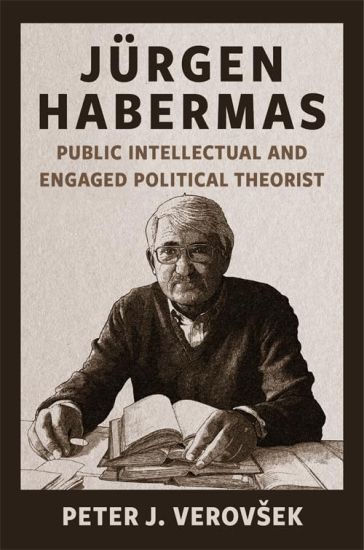
Ju¨rgen Habermas is Germany’s most important postwar philosopher, the leading figure of the Frankfurt School in this period. He is best known for the concept of the public sphere, which forms the basis of his communicative understanding of democratic politics. Habermas has not only theorized the public sphere—he has also taken part in it through frequent commentary on current social, political, and cultural issues. Yet since Habermas’s extensive public-facing writings have been overlooked, his philosophy has often been criticized as apolitical. This book transforms our understanding of Habermas by focusing on his work as a public intellectual, showing how he has shaped debates far beyond the ivory tower. Peter J. Verovšek argues that while Habermas maintains a strict separation between his academic and his public-facing writings, he has also ensured that these two aspects of his work are part of a consistent whole. The book highlights the development of Habermas’s views over time and the changing nature of his public interventions. His early political writings focused on questions tied to the particular situation of postwar West Germany, but since 1989 he has increasingly turned his attention to the future of Europe and global politics more broadly. Verovšek sheds light on the interrelationship between Habermas’s participation in the public sphere and his theoretical work, demonstrating that his political engagement is crucial to understanding his philosophy. In a moment when public debate is under threat, this book offers timely new insight into Habermas’s lifelong project of defending the public sphere—both in theory and in practice.
Jürgen Habermas

Jürgen Habermas

Peter J. Verovšek

Columbia University Press
2026
pokkari
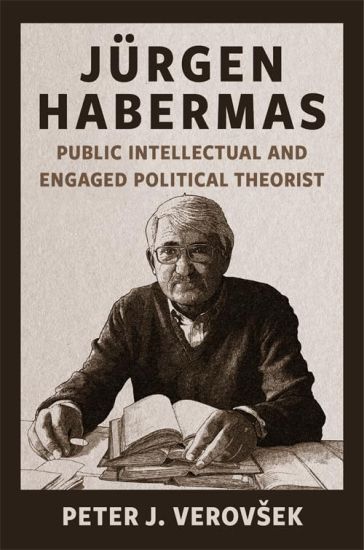
Ju¨rgen Habermas is Germany’s most important postwar philosopher, the leading figure of the Frankfurt School in this period. He is best known for the concept of the public sphere, which forms the basis of his communicative understanding of democratic politics. Habermas has not only theorized the public sphere—he has also taken part in it through frequent commentary on current social, political, and cultural issues. Yet since Habermas’s extensive public-facing writings have been overlooked, his philosophy has often been criticized as apolitical. This book transforms our understanding of Habermas by focusing on his work as a public intellectual, showing how he has shaped debates far beyond the ivory tower. Peter J. Verovšek argues that while Habermas maintains a strict separation between his academic and his public-facing writings, he has also ensured that these two aspects of his work are part of a consistent whole. The book highlights the development of Habermas’s views over time and the changing nature of his public interventions. His early political writings focused on questions tied to the particular situation of postwar West Germany, but since 1989 he has increasingly turned his attention to the future of Europe and global politics more broadly. Verovšek sheds light on the interrelationship between Habermas’s participation in the public sphere and his theoretical work, demonstrating that his political engagement is crucial to understanding his philosophy. In a moment when public debate is under threat, this book offers timely new insight into Habermas’s lifelong project of defending the public sphere—both in theory and in practice.