Eine Geschichte politischer Verketzerungssucht in Deutschland ist ein unver nderter, hochwertiger Nachdruck der Originalausgabe aus dem Jahr 1796. Hansebooks ist Herausgeber von Literatur zu unterschiedlichen Themengebieten wie Forschung und Wissenschaft, Reisen und Expeditionen, Kochen und Ern hrung, Medizin und weiteren Genres. Der Schwerpunkt des Verlages liegt auf dem Erhalt historischer Literatur. Viele Werke historischer Schriftsteller und Wissenschaftler sind heute nur noch als Antiquit ten erh ltlich. Hansebooks verlegt diese B cher neu und tr gt damit zum Erhalt selten gewordener Literatur und historischem Wissen auch f r die Zukunft bei.
Allelopathy is a fascinating and perplexing topic that concerns the chemical interactions of plants. It has profound implications in agriculture and forestry where species are grown artificially in mixture, with no evolutionary history of co-existence. The topic of allelopathy is widely credited as commencing in 1937, when the term ‘allelopathy’ was coined by Molisch. However, the concept of allelopathy has been recorded since Greek and Roman times, became extremely controversial in the first half of the 19th century, and remains so today. This book concerns a virtually unknown treatise by Justus Ludewig von Uslar, published in 1844, which emerges as the first book entirely devoted to the concept of allelopathy. The book provides the historical background to allelopathic knowledge, from antiquity to c. 1840. It also provides for the first time a biography of Justus Ludewig von Uslar, who is best known as the first Consul-General for Hannover in Mexico, and Director of the Mexican Company, a British venture mining company. In many ways von Uslar epitomises the tradition of the gentleman scientist of the 19th century. The book then offers a full translation into English of von Uslar's rare treatise, which foreshadows many ideas current in allelopathic research.
Allelopathy is a fascinating and perplexing topic that concerns the chemical interactions of plants. It has profound implications in agriculture and forestry where species are grown artificially in mixture, with no evolutionary history of co-existence. The topic of allelopathy is widely credited as commencing in 1937, when the term ‘allelopathy’ was coined by Molisch. However, the concept of allelopathy has been recorded since Greek and Roman times, became extremely controversial in the first half of the 19th century, and remains so today. This book concerns a virtually unknown treatise by Justus Ludewig von Uslar, published in 1844, which emerges as the first book entirely devoted to the concept of allelopathy. The book provides the historical background to allelopathic knowledge, from antiquity to c. 1840. It also provides for the first time a biography of Justus Ludewig von Uslar, who is best known as the first Consul-General for Hannover in Mexico, and Director of the Mexican Company, a British venture mining company. In many ways von Uslar epitomises the tradition of the gentleman scientist of the 19th century. The book then offers a full translation into English of von Uslar's rare treatise, which foreshadows many ideas current in allelopathic research.
Justus I'm not conceited. Really, I'm not. It just so happens I have a body a Greek God would be jealous of, and a face that could make an angel weep. Other than that, I'm just your everyday normal guy who happens to take his clothes off for money. Sure, I've had to dispose of a few guys for In Safe Hands, the organization I work with that helps track predators and child molesters, but other than that, completely normal.Women flock to me, screaming and paying for the right to touch me, so why is this woman so stubborn? Sadie Belmont's curvy body and sharp tongue have haunted me since I met her a year ago. There's something about her that gets stuck in my head like a bad song, and I'm determined to find out why I want her so badly, and why she can't stomach the thought. SadieI can't believe I'm doing this. Of all the men in the world, I'm taking Justus Alexander to my childhood home in Oklahoma to meet my mother. A stripper who has a revolving door of women jumping in and out of his bed.When I lied to my mother and told her I had a steady boyfriend, I didn't expect it to come to this. She doesn't have long to live, and her only wish is to know I have a man before she goes. I can't disappoint her, and male escorts cost way more than I can afford so when Justus volunteered, I took him up on his offer.I know what he wants. After annoying me with constant pick up lines for a year, he sees an opportunity to get me in bed. It's not going to happen. I just need to get through this week with my sanity intact. This is book three in a series of standalone novels.
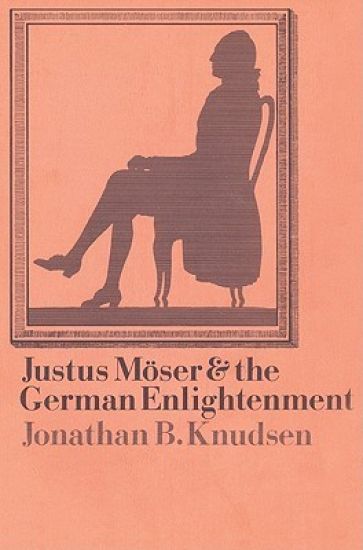
Justus Möser was a pivotal figure in the age of the German Enlightenment. Administrator, journalist, historian, man of letters, Möser is renowned as one of Germany’s finest prose stylists and as one of its most articulate political writers. Known through his political writings for his commitment to conservative reform, he is often called the Edmund Burke of Germany and the father of German conservatism. He is also celebrated for his pioneering Osnabrück History, the first modern social and economic history and a forerunner to Ranke, Marx, and the German historical revolution of the nineteenth century. This work is the first extensive biography of Möser to place him within his society and the world of the German Enlightenment. Using Möser’s published and unpublished writings, his letters, essays, and histories, the author has written a total history of Möser’s world through Möser’s eyes.