Kirjojen hintavertailu. Mukana 11 342 296 kirjaa ja 12 kauppaa.

Kirjahaku

Etsi kirjoja tekijän nimen, kirjan nimen tai ISBN:n perusteella.

1000 tulosta hakusanalla Justus Nieland

Feeling Modern

Feeling Modern

Justus Nieland

University of Illinois Press
2008
nidottu
This rigorous and original study combines theories of the public sphere, cinema, and visual culture with a growing body of critical work on affect. While modernist feeling is often described either as a reservoir of romantic inwardness or as an inhuman hostility to sentiment, Justus Nieland challenges these notions by approaching emotion through a poetics of modernist publicity. He argues that modernists championed feelings as primarily public products of modernity rather than as the private property of the self. Nieland's fresh account of the moderns' revolutionary designs on feeling also offers a new understanding of modernist publicness that includes self-presentation in popular theatrical spaces and public feelings enabled by performance, film, and other public amusements. Positing Charlie Chaplin as the embodiment of the modern "eccentric," Nieland explores the wildness of feeling in the work of many other key modernists, including Wyndham Lewis, Sergei Eisenstein, Marsden Hartley, E. E. Cummings, Joseph Cornell, Nathanael West, and Djuna Barnes. Ranging widely across modernist literature, avant-garde film, popular performance, and the visual arts of the modernist period, this study demonstrates that eccentric feeling is the emotional climate of modern alienation. Nieland finds, at the eccentric heart of modernism, a critique of the role of emotional propriety in collective life and an ethos of public comportment. Feeling Modern recovers the affective and poetic dimensions of public life that make it ever worth living.
David Lynch

David Lynch

Justus Nieland

University of Illinois Press
2012
nidottu
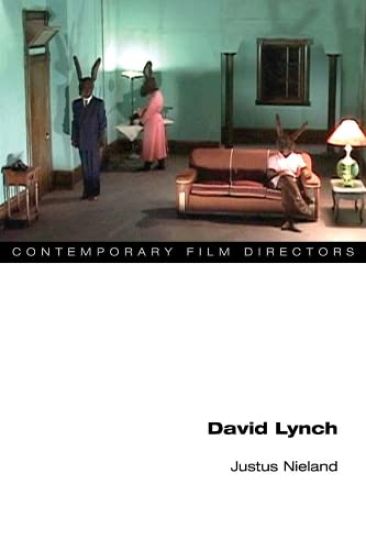
A key figure in the ongoing legacy of modern cinema, David Lynch designs environments for spectators, transporting them to inner worlds built by mood, texture, and uneasy artifice. We enter these famously cinematic interiors to be wrapped in plastic, the fundamental substance of Lynch’s work. This volume revels in the weird dynamism of Lynch’s plastic worlds. Exploring the range of modern design idioms that inform Lynch’s films and signature mise-en-scÈne, Justus Nieland argues that plastic is at once a key architectural and interior design dynamic in Lynch’s films, an uncertain way of feeling essential to Lynch’s art, and the prime matter of Lynch’s strange picture of the human organism. Nieland’s study offers striking new readings of Lynch’s major works (Eraserhead, Blue Velvet, Wild at Heart, Mulholland Dr., Inland Empire) and his early experimental films, placing Lynch’s experimentalism within the aesthetic traditions of modernism and the avant-garde; the genres of melodrama, film noir, and art cinema; architecture and design history; and contemporary debates about cinematic ontology in the wake of the digital. This inventive study argues that Lynch’s plastic concept of life -supplemented by technology, media, and sensuous networks of an electric world--is more alive today than ever.
Happiness by Design

Happiness by Design

Justus Nieland

University of Minnesota Press
2020
pokkari
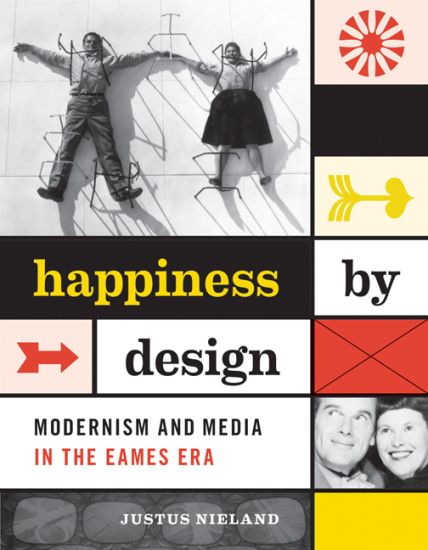
A cultural history of modern lifestyle viewed through film and multimedia experiments of midcentury designers Charles and Ray Eames For the designers Charles and Ray Eames, happiness was both a technical and ideological problem central to the future of liberal democracy. Being happy demanded new things but also a vanguard life in media that the Eameses modeled as they brought film into their design practice. Midcentury modernism is often considered institutionalized, but Happiness by Design casts Eames-era designers as innovative media artists, technophilic humanists, change managers, and neglected film theorists.Happiness by Design offers a fresh cultural history of midcentury modernism through the film and multimedia experiments of Charles and Ray Eames and their peers-Will Burtin, LÁszlÓ Moholy-Nagy, and GyÖrgy Kepes, among others-at a moment when designers enjoyed a new cultural prestige. Justus Nieland traces how, as representatives of the American Century’s exuberant material culture, Cold War designers engaged in creative activities that spanned disciplines and blended art and technoscience while reckoning with the environmental reach of media at the dawn of the information age.Eames-era modernism, Nieland shows, fueled novel techniques of culture administration, spawning new partnerships between cultural and educational institutions, corporations, and the state. From the studio, showroom floor, or classroom to the stages of world fairs and international conferences, the midcentury multimedia experiments of Charles and Ray Eames and their circle became key to a liberal democratic lifestyle-and also anticipated the look and feel of our networked present.
Film Noir

Film Noir

Jennifer Fay; Justus Nieland

Routledge
2009
sidottu
The term "film noir" still conjures images of a uniquely American malaise: hard-boiled detectives, fatal women, and the shadowy hells of urban life. But from its beginnings, film noir has been an international phenomenon, and its stylistic icons have migrated across the complex geo-political terrain of world cinema. This book traces film noir’s emergent connection to European cinema, its movement within a cosmopolitan culture of literary and cinematic translation, and its postwar consolidation in the US, Europe, Asia, the Middle East, and Latin America. The authors examine how film noir crosses national boundaries, speaks to diverse international audiences, and dramatizes local crimes and the crises of local spaces in the face of global phenomena like world-wide depression, war, political occupation, economic and cultural modernization, decolonization, and migration. This fresh study of film noir and global culture also discusses film noir’s heterogeneous style and revises important scholarly debates about this perpetually alluring genre.
Film Noir

Film Noir

Jennifer Fay; Justus Nieland

Routledge
2009
nidottu
The term "film noir" still conjures images of a uniquely American malaise: hard-boiled detectives, fatal women, and the shadowy hells of urban life. But from its beginnings, film noir has been an international phenomenon, and its stylistic icons have migrated across the complex geo-political terrain of world cinema. This book traces film noir’s emergent connection to European cinema, its movement within a cosmopolitan culture of literary and cinematic translation, and its postwar consolidation in the US, Europe, Asia, the Middle East, and Latin America. The authors examine how film noir crosses national boundaries, speaks to diverse international audiences, and dramatizes local crimes and the crises of local spaces in the face of global phenomena like world-wide depression, war, political occupation, economic and cultural modernization, decolonization, and migration. This fresh study of film noir and global culture also discusses film noir’s heterogeneous style and revises important scholarly debates about this perpetually alluring genre.
David Lynch

David Lynch

Nieland Justus

University of Illinois Press
2012
sidottu
A key figure in the ongoing legacy of modern cinema, David Lynch designs environments for spectators, transporting them to inner worlds built by mood, texture, and uneasy artifice. We enter these famously cinematic interiors to be wrapped in plastic, the fundamental substance of LynchAEs work. This volume revels in the weird dynamism of LynchAEs plastic worlds. Exploring the range of modern design idioms that inform LynchAEs films and signature mise-en-sc\u00e8ne, Justus Nieland argues that plastic is at once a key architectural and interior design dynamic in LynchAEs films, an uncertain way of feeling essential to LynchAEs art, and the prime matter of LynchAEs strange picture of the human organism. NielandAEs study offers striking new readings of LynchAEs major works (Eraserhead, Blue Velvet, Wild at Heart, Mulholland Dr., Inland Empire) and his early experimental films, placing LynchAEs experimentalism within the aesthetic traditions of modernism and the avant-garde; the genres of melodrama, film noir, and art cinema; architecture and design history; and contemporary debates about cinematic ontology in the wake of the digital. This inventive study argues that LynchAEs plastic concept of life--supplemented by technology, media, and sensuous networks of an electric world--is more alive today than ever.
Happiness by Design

Happiness by Design

Nieland Justus

University of Minnesota Press
2020
sidottu
A cultural history of modern lifestyle viewed through film and multimedia experiments of midcentury designers Charles and Ray Eames For the designers Charles and Ray Eames, happiness was both a technical and ideological problem central to the future of liberal democracy. Being happy demanded new things but also a vanguard life in media that the Eameses modeled as they brought film into their design practice. Midcentury modernism is often considered institutionalized, but Happiness by Design casts Eames-era designers as innovative media artists, technophilic humanists, change managers, and neglected film theorists.Happiness by Design offers a fresh cultural history of midcentury modernism through the film and multimedia experiments of Charles and Ray Eames and their peers—Will Burtin, László Moholy-Nagy, and György Kepes, among others—at a moment when designers enjoyed a new cultural prestige. Justus Nieland traces how, as representatives of the American Century’s exuberant material culture, Cold War designers engaged in creative activities that spanned disciplines and blended art and technoscience while reckoning with the environmental reach of media at the dawn of the information age.Eames-era modernism, Nieland shows, fueled novel techniques of culture administration, spawning new partnerships between cultural and educational institutions, corporations, and the state. From the studio, showroom floor, or classroom to the stages of world fairs and international conferences, the midcentury multimedia experiments of Charles and Ray Eames and their circle became key to a liberal democratic lifestyle—and also anticipated the look and feel of our networked present.
Justus

Justus

S M Shade

Createspace Independent Publishing Platform
2017
pokkari
Justus I'm not conceited. Really, I'm not. It just so happens I have a body a Greek God would be jealous of, and a face that could make an angel weep. Other than that, I'm just your everyday normal guy who happens to take his clothes off for money. Sure, I've had to dispose of a few guys for In Safe Hands, the organization I work with that helps track predators and child molesters, but other than that, completely normal.Women flock to me, screaming and paying for the right to touch me, so why is this woman so stubborn? Sadie Belmont's curvy body and sharp tongue have haunted me since I met her a year ago. There's something about her that gets stuck in my head like a bad song, and I'm determined to find out why I want her so badly, and why she can't stomach the thought. SadieI can't believe I'm doing this. Of all the men in the world, I'm taking Justus Alexander to my childhood home in Oklahoma to meet my mother. A stripper who has a revolving door of women jumping in and out of his bed.When I lied to my mother and told her I had a steady boyfriend, I didn't expect it to come to this. She doesn't have long to live, and her only wish is to know I have a man before she goes. I can't disappoint her, and male escorts cost way more than I can afford so when Justus volunteered, I took him up on his offer.I know what he wants. After annoying me with constant pick up lines for a year, he sees an opportunity to get me in bed. It's not going to happen. I just need to get through this week with my sanity intact. This is book three in a series of standalone novels.
Justus Möser and the German Enlightenment

Justus Möser and the German Enlightenment

Knudsen Jonathan B.

Cambridge University Press
2002
pokkari
Justus Möser was a pivotal figure in the age of the German Enlightenment. Administrator, journalist, historian, man of letters, Möser is renowned as one of Germany’s finest prose stylists and as one of its most articulate political writers. Known through his political writings for his commitment to conservative reform, he is often called the Edmund Burke of Germany and the father of German conservatism. He is also celebrated for his pioneering Osnabrück History, the first modern social and economic history and a forerunner to Ranke, Marx, and the German historical revolution of the nineteenth century. This work is the first extensive biography of Möser to place him within his society and the world of the German Enlightenment. Using Möser’s published and unpublished writings, his letters, essays, and histories, the author has written a total history of Möser’s world through Möser’s eyes.
Justus von Liebig

Justus von Liebig

William H. Brock

Cambridge University Press
2002
pokkari
One of the founding fathers of organic chemistry and also a great teacher, the German scientist Justus von Liebig transformed scientific education, medical practice, and agriculture in Great Britain. William H. Brock’s fresh interpretation of Liebig’s stormy career shows how he moved chemistry into the sociopolitical marketplace, demonstrating its significance for society in food production, nutrition, and public health. Through his controversial ideas on artificial fertilizers and recycling, his theory of disease, and his stimulating suggestions concerning food and nutrition, he warned the world of the dangers of failing to recycle sewage or to replace soil nutrients. Liebig also played the role of an elder statesman of European science by commenting, via popular lectures and expansions of his readable Chemical Letters, on such issues as scientific methodology and materialism.
Justus von Liebig

Justus von Liebig

William H. Brock

Cambridge University Press
1997
sidottu
One of the founding fathers of organic chemistry and also a great teacher, the German scientist Justus von Liebig transformed scientific education, medical practice, and agriculture in Great Britain. William H. Brock's fresh interpretation of Liebig's stormy career shows how he moved chemistry into the sociopolitical marketplace, demonstrating its significance for society in food production, nutrition, and public health. Through his controversial ideas on artificial fertilizers and recycling, his theory of disease, and his stimulating suggestions concerning food and nutrition, he warned the world of the dangers of failing to recycle sewage or to replace soil nutrients. Liebig also played the role of an elder statesman of European science by commenting, via popular lectures and expansions of his readable Chemical Letters, on such issues as scientific methodology and materialism.
Justus Behind Lies

Justus Behind Lies

Kimberly Fields

Unbounded Creations
2019
nidottu
James has served 15 years behind bars and is now free. He is ready to turn his life around and establish a fresh start. But He finds it difficult to move forward living with a record. Soon enough James is back to his old habits, with old acquaintances living the street life. He then meets Kianne. She was different and pushed all the right buttons in him. Now James feels that he has a real opportunity to right his past and live a crime-free life.But when he discovers that the FEDS are building a case on drug trafficking in Minnesota, it threatens to drag him and his family back to his dangerous past. James takes his family and moves away from the madness, to continue living their lives. James soon discovers that distance only makes it easier for those who have turned against him, and in a world with no rules, he's at their mercy.
Justus Van Effen, Le Misanthrope
The Oxford University Studies in the Enlightenment series, previously known as SVEC (Studies on Voltaire and the Eighteenth Century), has published over 500 peer-reviewed scholarly volumes since 1955 as part of the Voltaire Foundation at the University of Oxford. International in focus, Oxford University Studies in the Enlightenment volumes cover wide-ranging aspects of the eighteenth century and the Enlightenment, from gender studies to political theory, and from economics to visual arts and music, and are published in English or French.
Justus S. Stearns

Justus S. Stearns

Michael W. Nagle

Wayne State University Press
2015
sidottu
Near the turn of the twentieth century, “Pine King” Justus S. Stearns was Michigan’s largest producer of manufactured lumber and the owner of a prosperous coal mining operation headquartered in Stearns, Kentucky, a town he founded. Over the course of his career, Stearns would own at least thirty manufacturing businesses—making everything from finished lumber to kitchen utensils, game boards, and motors—as well as hotels, a railroad, and a power company. He was also an active member of the Republican Party who served one term as Michigan’s secretary of state and a philanthropist who gave a great deal of his wealth to causes in both Michigan and Kentucky. In Justus S. Stearns: Michigan Pine King and Kentucky Coal Baron, 1845–1933, author Michael W. Nagle details Stearn’s astounding range of accomplishments and explores the influence of both paternalism and Social Darwinism in his business practices.Nagle begins by addressing key events in the first few decades of Stearns’s life and his initial foray into the lumber industry. Subsequent chapters explore Stearns’s political career, his timber operations in Wisconsin, and his coal, lumber, and railroad operations in Kentucky and Tennessee. Nagle also details the ancillary businesses that Stearns founded or purchased in the early twentieth century, even as his Stearns Salt & Lumber Company served as the anchor of his Michigan holdings, while Stearns Coal & Lumber did the same for his operations in Kentucky. The final chapter offers an overview and analysis of Stearns’s lifetime of accomplishments, including his impact on the town of Ludington, Michigan, where he maintained a residence for over fifty years.Nagle makes extensive use of primary source material from several historical archives as well as contemporary newspaper accounts, court documents, company records, and other primary sources. American history scholars, as well as general readers interested in Michigan’s lumbering era and Kentucky’s mining history, will enjoy this biography of an exceptionally influential businessman.
Justus S. Stearns

Justus S. Stearns

Michael W. Nagle

Wayne State University Press
2021
nidottu
Near the turn of the twentieth century, ""Pine King"" Justus S. Stearns was Michigan's largest producer of manufactured lumber and the owner of a prosperous coal mining operation headquartered in Stearns, Kentucky, a town he founded. Over the course of his career, Stearns would own at least thirty manufacturing businesses-making everything from finished lumber to kitchen utensils, game boards, and motors-as well as hotels, a railroad, and a power company. He was also an active member of the Republican Party who served one term as Michigan's secretary of state and a philanthropist who gave a great deal of his wealth to causes in both Michigan and Kentucky. In Justus S. Stearns: Michigan Pine King and Kentucky Coal Baron, 1845-1933, author Michael W. Nagle details Stearns's astounding range of accomplishments and explores the influence of both paternalism and Social Darwinism in his business practices.Nagle begins by addressing key events in the first few decades of Stearns's life and his initial foray into the lumber industry. Subsequent chapters explore Stearns's political career, his timber operations in Wisconsin, and his coal, lumber, and railroad operations in Kentucky and Tennessee. Nagle also details the ancillary businesses that Stearns founded or purchased in the early twentieth century, even as his Stearns Salt & Lumber Company served as the anchor of his Michigan holdings, while Stearns Coal & Lumber did the same for his operations in Kentucky. The final chapter offers an overview and analysis of Stearns's lifetime of accomplishments, including his impact on the town of Ludington, Michigan, where he maintained a residence for over fifty years.Nagle makes extensive use of primary source material from several historical archives as well as contemporary newspaper accounts, court documents, company records, and other primary sources. American history scholars, as well as general readers interested in Michigan's lumbering era and Kentucky's mining history, will enjoy this biography of an exceptionally influential businessman.