
Kirjahaku
Etsi kirjoja tekijän nimen, kirjan nimen tai ISBN:n perusteella.
1000 tulosta hakusanalla K J Millard

K.J. the Whistling Turtle
Armando D'Andrea; Alex Sefakakis
Newman Springs Publishing, Inc.
2020
sidottu

K J C KIT JOB COACH per l'inserimento lavorativo di persone con autismo
Di Santo; Magoni
Blurb
2024
pokkari


Nya testamentet : K J S King James bibeln på svenska
BoD
2018
sidottu
En översättning till svenska av den välkända King James bibeln. En bibel som tydligt tillkännager evangeliet om Guds fria gratis nåd och barmhärtighet i Herren Jesus Kristus. En bibel som tydligt tillkännager Kristi fullbordade ställföreträdande frälsningsverk - då Han lade ner sitt liv för sina får och så räddade dem alla! www.NyaTestamentet.nu
![De Opkomst Van Het Nederlandsch Gezag in Oost-Indie, Verzameling Van Onuitg. Stukken Uit Het Oud-Koloniaal Archief, Uitg. En Bewerkt Door J.K.J. De Jonge (En M.L. Van Deventer). [With] Suppl. Op Het 13E Deel. 2 Deelen [And] Alphabetisch Register, Bewerkt](/covers/9781023788700.jpg)
De Opkomst Van Het Nederlandsch Gezag in Oost-Indie, Verzameling Van Onuitg. Stukken Uit Het Oud-Koloniaal Archief, Uitg. En Bewerkt Door J.K.J. De Jonge (En M.L. Van Deventer). [With] Suppl. Op Het 13E Deel. 2 Deelen [And] Alphabetisch Register, Bewerkt
East Indies; J W G Van Haarst
Hutson Street Press
2025
sidottu
![De Opkomst Van Het Nederlandsch Gezag in Oost-Indie, Verzameling Van Onuitg. Stukken Uit Het Oud-Koloniaal Archief, Uitg. En Bewerkt Door J.K.J. De Jonge (En M.L. Van Deventer). [With] Suppl. Op Het 13E Deel. 2 Deelen [And] Alphabetisch Register, Bewerkt](/covers/9781023794268.jpg)
De Opkomst Van Het Nederlandsch Gezag in Oost-Indie, Verzameling Van Onuitg. Stukken Uit Het Oud-Koloniaal Archief, Uitg. En Bewerkt Door J.K.J. De Jonge (En M.L. Van Deventer). [With] Suppl. Op Het 13E Deel. 2 Deelen [And] Alphabetisch Register, Bewerkt
East Indies; J W G Van Haarst
Hutson Street Press
2025
pokkari
Three courses. Seven guests. One evening they'll never forget.Seven strangers meet at Serendipity's for an anonymously hosted dinner party. As the evening reaches its close, small black envelopes are placed in front of the diners... revealing the age at which each will die.Spooked, but not wholly shaken, the group disperses into the rainy night with the hope of forgetting the ghoulish stunt.But two weeks later, one dinner guest dies at the age foretold. Was it a tragic accident? Or something more sinister?As the years go by, the other guests begin to die in line with the predictions given on that first night. And it's up to the remaining few to figure who, if anyone, was behind that dinner party before their numbers catch up with them too.Told from the perspectives of the seven guests, Number's Up balances mystery and mortality perfectly, begging the question: how would you live your life if you know your number was up?

Structural Chemistry of Glasses provides detailed coverage of the subject for students and professionals involved in the physical chemistry aspects of glass research. Starting with the historical background and importance of glasses, it follows on with methods of preparation, structural and bonding theories, and criteria for glass formation including new approaches such as the constraint model. Glass transition is considered, as well as the wide range of theoretical approaches that are used to understand this phenomenon. The author provides a detailed discussion of Boson peaks, FSDP, Polymorphism, fragility, structural techniques, and theoretical modelling methods such as Monte Carlo and Molecular Dynamics simulation. The book covers ion and electron transport in glasses, mixed-alkali effect, fast ion conduction, power law and scaling behaviour, electron localization, charged defects, photo-structural effects, elastic properties, pressure-induced transitions, switching behaviour, colour, and optical properties of glasses. Special features of a variety of oxide, chalcogenide, halide, oxy-nitride and metallic gasses are discussed. With over 140 sections, this book captures most of the important and topical aspects of glass science, and will be useful for both newcomers to the subject and the experienced practitioner.
Homicide has a history. In early modern England, that history saw two especially notable developments: one, the emergence in the sixteenth century of a formal distinction between murder and manslaughter, made meaningful through a lighter punishment than death for the latter, and two, a significant reduction in the rates of homicides individuals perpetrated on each other. Making Murder Public explores connections between these two changes. It demonstrates the value in distinguishing between murder and manslaughter, or at least in seeing how that distinction came to matter in a period which also witnessed dramatic drops in the occurrence of homicidal violence. Focused on the 'politics of murder', Making Murder Public examines how homicide became more effectively criminalized between 1480 and 1680, with chapters devoted to coroners' inquests, appeals and private compensation, duels and private vengeance, and print and public punishment. The English had begun moving away from treating homicide as an offence subject to private settlements or vengeance long before other Europeans, at least from the twelfth century. What happened in the early modern period was, in some ways, a continuation of processes long underway, but intensified and refocused by developments from 1480 to 1680. Making Murder Public argues that homicide became fully 'public' in these years, with killings seen to violate a 'king's peace' that people increasingly conflated with or subordinated to the 'public peace' or 'public justice.'
Homicide has a history. In early modern England, that history saw two especially notable developments: one, the emergence in the sixteenth century of a formal distinction between murder and manslaughter, made meaningful through a lighter punishment than death for the latter, and two, a significant reduction in the rates of homicides individuals perpetrated on each other. Making Murder Public explores connections between these two changes. It demonstrates the value in distinguishing between murder and manslaughter, or at least in seeing how that distinction came to matter in a period which also witnessed dramatic drops in the occurrence of homicidal violence. Focused on the 'politics of murder', Making Murder Public examines how homicide became more effectively criminalized between 1480 and 1680, with chapters devoted to coroners' inquests, appeals and private compensation, duels and private vengeance, and print and public punishment. The English had begun moving away from treating homicide as an offence subject to private settlements or vengeance long before other Europeans, at least from the twelfth century. What happened in the early modern period was, in some ways, a continuation of processes long underway, but intensified and refocused by developments from 1480 to 1680. Making Murder Public argues that homicide became fully 'public' in these years, with killings seen to violate a 'king's peace' that people increasingly conflated with or subordinated to the 'public peace' or 'public justice.'
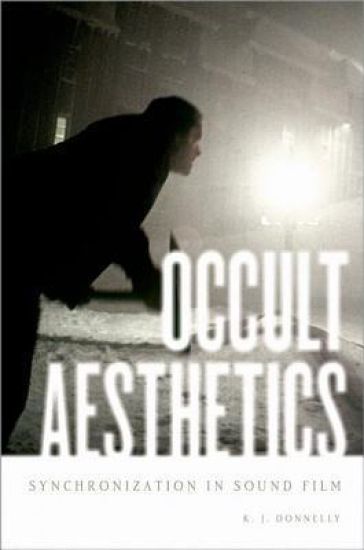
In this groundbreaking book, acclaimed film music author Kevin Donnelly offers the first sustained theorization of synchronization in sound film. Donnelly addresses the manner in which the lock of the audio and the visual exerts a perceptible synergy, an aesthetic he dubs occult: a secret and esoteric effect that can dissipate in the face of an awareness of its existence. Drawing upon theories of sound from Sergei Eisenstein to Pierre Schaeffer to Michel Chion, the book investigates points of synchronization as something like repose, providing moments of comfort in a potentially threatening environment that can be fraught with sound and image stimuli. Correspondingly, lack of synchrony between sound and images is characterized as potentially disturbing for the viewer, a discomfort that signals moments of danger. From this perspective, the interplay between the two becomes the central dynamic of audio-visual culture more generally, which, as Donnelly argues, provides a starting point for a new understanding of audio/visual interactions. This fresh approach to the topic is discussed in theoretical and historical terms as well as elaborated through analysis of and reference to a broad selection of films and their soundtracks including, among others, Singin' in the Rain, Saw, Shanghai Express, and Assault on Precinct 13.
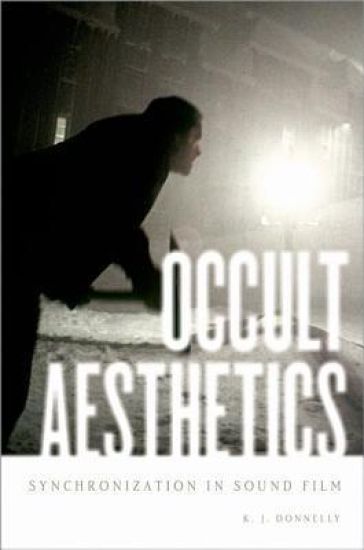
In this groundbreaking book, acclaimed film music author Kevin Donnelly offers the first sustained theorization of synchronization in sound film. Donnelly addresses the manner in which the lock of the audio and the visual exerts a perceptible synergy, an aesthetic he dubs occult: a secret and esoteric effect that can dissipate in the face of an awareness of its existence. Drawing upon theories of sound from Sergei Eisenstein to Pierre Schaeffer to Michel Chion, the book investigates points of synchronization as something like repose, providing moments of comfort in a potentially threatening environment that can be fraught with sound and image stimuli. Correspondingly, lack of synchrony between sound and images is characterized as potentially disturbing for the viewer, a discomfort that signals moments of danger. From this perspective, the interplay between the two becomes the central dynamic of audio-visual culture more generally, which, as Donnelly argues, provides a starting point for a new understanding of audio/visual interactions. This fresh approach to the topic is discussed in theoretical and historical terms as well as elaborated through analysis of and reference to a broad selection of films and their soundtracks including, among others, Singin' in the Rain, Saw, Shanghai Express, and Assault on Precinct 13.

A collection of poems and thoughts on life, love, heartbreak, renewal and the sphere we call Earth.
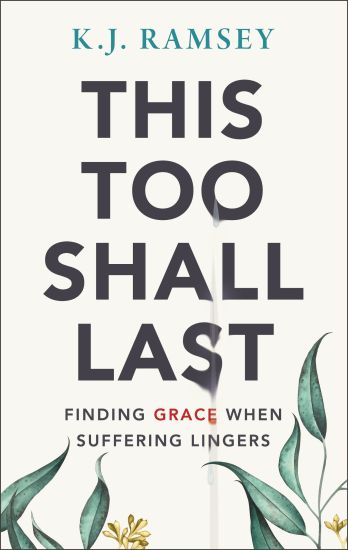
This book is not a before-and-after story.Our culture treats suffering like a problem to fix, a blight to hide, or the sad start of a transformation story. We silently, secretly wither under the pressure of living as though suffering is a predicament we can avoid or annihilate by working hard enough or having enough faith. When your prayers for healing haven't been answered, the fog of depression isn't lifting, your marriage is ending in divorce, or grief won't go away, it's easy to feel you've failed God and, worse, he's failed you. If God loves us, why does he allow us to hurt?Over a decade ago chronic illness plunged therapist and writer K.J. Ramsey straight into this paradox. Before her illness, faith made sense. But when pain came and never left, K.J. had to find a way across the widening canyon that seemed to separate God's goodness from her excruciating circumstances.She wanted to conquer suffering. Instead, she encountered the God who chose it. She wanted to make pain past-tense. Instead, God invited her into a bigger story.This Too Shall Last offers an antidote to our cultural idolatry of effort and ease. Through personal story and insights from neuroscience and theology, Ramsey invites us to let our tears become lenses of the wonder that before God ever rescues us, he stands in solidarity with us. We are all mid-story in circumstances we did not choose, wondering when our hard things will end and where grace will come if they don’t. We don't need to make suffering a before-and-after story. Together we can encounter the grace that enters the middle of our stories, where living with suffering that lingers means receiving God's presence that lasts.

Walking through Psalm 23 phrase by phrase, therapist and author K.J. Ramsey explores the landscape of our fear, trauma, and faith. When she stepped through her own wilderness of spiritual abuse and religious trauma, K.J. discovered that courage is not the absence of anxiety but the practice of trusting we will be held and loved no matter what.How can we cultivate courage when fear overshadows our lives? How do we hear the Voice of Love when hate and harm shout loud? This book offers an honest path to finding that there is still a Good Shepherd who is always following you. Braiding contemplative storytelling, theological reflection, and practical neuroscience, Ramsey reveals a route into connection and joy that begins right where you are.The Lord is My Courage is for the deconstructing and the dreamers, the afraid and the amazed, for those whose fear has not been fully shepherded but who can't seem to stop listening for their Good Shepherd's Voice.

The Book of Common Courage is a collection of prayers, poems, and blessings to help you find a flicker of strength in the small and hard moments of life. Beloved author and therapist K. J. Ramsey invites you to journey word-by-word through Psalm 23 to experience how the Good Shepherd is with you and for you, especially in the valleys of life. When you struggle to find the words to hold your pain or trauma, be encouraged to cultivate the compassion and courage to believe that your story will, in fact, end in joy.Through K. J.'s lyrical and emotive writing, you are invited to:Surrender your anxiety and your tears to a faithful GodValidate your emotions and embrace them as the gift they areSlow down and remember that good will come againReplenish your soul with the life of Christ and the promises of GodRefresh your faith with a peace that lastsExperience newfound confidence in prayerRemember that even when pain is not past-tense, God is still present Courage is a common hope that we can cultivate together. These prayers and poems can be read in group settings--among friends, families, and worshipping communities--and are also ideal for personal reflection.Inside, you will find:Colorful still life and nature photographyPrayers, poems, and blessingsA ribbon marker This is a gorgeous gift to give for Easter, Christmas, birthdays, during a time of loss, during a life transition, or when looking for a new church community.

This study, exploring a broad range of evocative Irish travel writing from 1850 to 1914, much of it highly entertaining and heavily laced with irony and humour, draws out interplays between tourism, travel literature and commodifications of culture. It focuses on the importance of informal tourist economies, illicit dimensions of tourism, national landscapes, ‘legend’ and invented tradition in modern tourism.