

Kirjahaku
Etsi kirjoja tekijän nimen, kirjan nimen tai ISBN:n perusteella.
1000 tulosta hakusanalla K S Raman

This book on principles of geology can provide readers, both professionals and students, with a basic understanding of how landscapes form and evolve, as well as the factors that contribute to their appearance. Additionally, this book can offer insight into the conceptual approaches used in the exploration of hydrocarbon deposits in diverse geological environments around the world.


The Insurance Imperative : Concepts & Systems
K. Minraj; T S Ramanathan
Lap Lambert Academic Publishing
2020
nidottu

A Study Guide for A. K. Ramanujan's "Waterfalls in a Bank"
Cengage Learning Gale
Gale, Study Guides
2017
pokkari
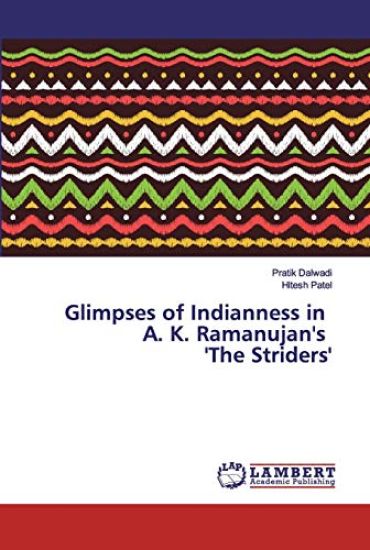
Glimpses of Indianness in A. K. Ramanujan's 'The Striders'
Pratik Dalwadi; Hitesh Patel
LAP Lambert Academic Publishing
2019
pokkari
Ramanujan presents Indian philosophical thoughts in his poetry. At the same time he is aware of his 'dharma' (duty - in its all senses) as an Indian or as a Hindu Brahmin. He presents in his poems the struggle undertaken by Indian community - spiritual as well as physical mental etc. He also presents the hopes and aspiration of Indian mind. In the Introduction part this refers that A. K. Ramanujan's poem. Awareness of 'Dharma' in The Striders defines 'dharma' and Bharat (India) and traces the roots of Ramanujan's The Striders poems into 'dharma'. Human Struggle of Indians in The Striders highlights the struggle of Indian people generally physical and particularly spiritual. Hopes and Aspirations of Indians in The Striders throw light on the optimistic mind set of Indian community and depict hopes and aspirations of all Indians. Finally, in conclusion summarizes all these specialities in short.

Vislumbres da indianidade em A. K. Ramanujan's 'The Striders' de A. K. Ramanujan
Pratik Dalwadi; Hitesh Patel
International Book Market Service Ltd
2022
pokkari
Ramanujan apresenta pensamentos filos ficos indianos na sua poesia. Ao mesmo tempo, est consciente do seu 'dharma' (dever - em todos os sentidos) como indiano ou como um br mane hindu. Ele apresenta nos seus poemas a luta empreendida pela comunidade indiana - tanto espiritual como f sica, mental, etc. Apresenta tamb m as esperan as e aspira es da mente indiana. Na parte introdut ria isto refere-se ao poema de A. K. Ramanujan. Awareness of 'Dharma' em The Striders define 'dharma' e Bharat ( ndia) e tra a as ra zes dos poemas The Striders de A. K. Ramanujan em 'dharma'. A Luta Humana dos Indianos em The Striders destaca a luta do povo indiano em geral f sica e particularmente espiritual. As esperan as e aspira es dos ndios em The Striders lan am luz sobre o conjunto de mentes optimistas da comunidade indiana e retratam as esperan as e aspira es de todos os ndios. Finalmente, em conclus o, resume todas estas especialidades em poucas palavras.
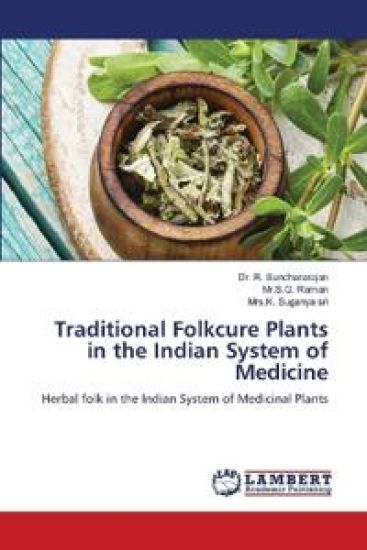
Traditional Folkcure Plants in the Indian System of Medicine
R Sundhararajan; Mr S G Raman; Mrs K Suganya Sri
Lap Lambert Academic Publishing
2024
pokkari
The Indian system of medicine, particularly Ayurveda, has a rich tradition of utilizing medicinal plants for healing and wellness. Traditional folk cures often draw from local flora, integrating plants into daily practices for both preventive and therapeutic purposes. Here are some key plants commonly used in folk medicine across India: Tulsi (Holy Basil): Revered as a sacred plant, Tulsi is known for its anti-inflammatory and antioxidant properties. It is often used in teas and decoctions to relieve respiratory ailments, reduce stress, and enhance immunity. Neem (Azadirachta indica): Known for its purifying properties, Neem is used to treat skin conditions, infections, and as a natural insect repellent. Its leaves, bark, and oil are commonly applied in various formulations to support detoxification and enhance overall health. Amla (Phyllanthus emblica): Amla is rich in vitamin C and antioxidants. It is traditionally used to boost immunity, improve digestion, and enhance skin health. Amla juice or powder is often consumed for its rejuvenating properties. Turmeric (Curcuma longa): Widely known for its anti-inflammatory and antimicrobial effects.
Traditionelle volkstümliche Heilpflanzen im indischen System der Medizin
Dr R Sundhararajan; Mr S G Raman; Mrs K Suganya Sri
Verlag Unser Wissen
2025
pokkari
Das indische Medizinsystem, insbesondere Ayurveda, hat eine reiche Tradition in der Verwendung von Heilpflanzen f r Heilung und Wohlbefinden. Traditionelle volkst mliche Heilmethoden st tzen sich oft auf die lokale Flora und integrieren Pflanzen in die t gliche Praxis, sowohl zu pr ventiven als auch zu therapeutischen Zwecken. Hier sind einige wichtige Pflanzen, die in der indischen Volksmedizin h ufig verwendet werden: Tulsi (Heiliges Basilikum): Tulsi wird als heilige Pflanze verehrt und ist f r seine entz ndungshemmenden und antioxidativen Eigenschaften bekannt. Sie wird h ufig in Tees und Abkochungen verwendet, um Atemwegsbeschwerden zu lindern, Stress abzubauen und die Immunit t zu st rken. Neem (Azadirachta indica): Neem ist f r seine reinigenden Eigenschaften bekannt und wird zur Behandlung von Hautkrankheiten, Infektionen und als nat rliches Insektenschutzmittel verwendet. Seine Bl tter, Rinde und sein l werden in verschiedenen Rezepturen zur Unterst tzung der Entgiftung und zur Verbesserung der allgemeinen Gesundheit eingesetzt. Amla (Phyllanthus emblica): Amla ist reich an Vitamin C und Antioxidantien. Amla-Saft oder -Pulver wird h ufig wegen seiner verj ngenden Eigenschaften konsumiert. Kurkuma (Curcuma longa): Weithin bekannt f r seine entz ndungshemmende und antimikrobielle Wirkung.
Les plantes médicinales traditionnelles dans le système de médecine indien
Dr R Sundhararajan; Mr S G Raman; Mrs K Suganya Sri
Editions Notre Savoir
2025
pokkari
Le syst me de m decine indien, en particulier l'Ayurveda, a une riche tradition d'utilisation des plantes m dicinales pour la gu rison et le bien- tre. Les traitements traditionnels s'appuient souvent sur la flore locale et int grent les plantes dans les pratiques quotidiennes des fins pr ventives et th rapeutiques. Voici quelques plantes cl s couramment utilis es dans la m decine populaire en Inde: Tulsi (basilic sacr ): V n r e comme une plante sacr e, la tulsi est connue pour ses propri t s anti-inflammatoires et antioxydantes. Il est souvent utilis dans les th s et les d coctions pour soulager les affections respiratoires, r duire le stress et renforcer l'immunit . Neem (Azadirachta indica): Connu pour ses propri t s purifiantes, le neem est utilis pour traiter les affections cutan es, les infections et comme r pulsif naturel contre les insectes. Ses feuilles, son corce et son huile sont couramment utilis es dans diverses formules pour favoriser la d sintoxication et am liorer la sant g n rale. Amla (Phyllanthus emblica): L'amla est riche en vitamine C et en antioxydants. Il est traditionnellement utilis pour renforcer l'immunit , am liorer la digestion et la sant de la peau. Le jus ou la poudre d'amla est souvent consomm pour ses propri t s rajeunissantes. Curcuma (Curcuma longa): Largement connu pour ses effets anti-inflammatoires et antimicrobiens, le curcuma est un aliment de base dans la cuisine.
Piante folcloristiche tradizionali nel sistema di medicina indiano
Dr R Sundhararajan; Mr S G Raman; Mrs K Suganya Sri
Edizioni Sapienza
2025
pokkari
Il sistema di medicina indiano, in particolare l'Ayurveda, ha una ricca tradizione di utilizzo delle piante medicinali per la guarigione e il benessere. Le cure popolari tradizionali spesso attingono alla flora locale, integrando le piante nelle pratiche quotidiane a scopo preventivo e terapeutico. Ecco alcune piante chiave comunemente utilizzate nella medicina popolare in India: Tulsi (basilico santo): Venerata come pianta sacra, il tulsi noto per le sue propriet antinfiammatorie e antiossidanti. Viene spesso utilizzato in t e decotti per alleviare le affezioni respiratorie, ridurre lo stress e rafforzare l'immunit . Neem (Azadirachta indica): Conosciuto per le sue propriet depurative, il Neem usato per trattare le condizioni della pelle, le infezioni e come repellente naturale per gli insetti. Le sue foglie, la corteccia e l'olio sono comunemente utilizzati in varie formulazioni per favorire la disintossicazione e migliorare la salute generale. Amla (Phyllanthus emblica): L'amla ricca di vitamina C e antiossidanti. tradizionalmente utilizzata per rafforzare l'immunit , migliorare la digestione e la salute della pelle. Il succo o la polvere di amla vengono spesso consumati per le loro propriet ringiovanenti. Curcuma (Curcuma longa): Ampiamente nota per i suoi effetti antinfiammatori e antimicrobici, la curcuma un alimento fondamentale sia in cucina che in cucina.
Plantas tradicionais de Folkcure no sistema de medicina indiano
Dr R Sundhararajan; Mr S G Raman; Mrs K Suganya Sri
Edicoes Nosso Conhecimento
2025
pokkari
O sistema de medicina indiano, particularmente a Ayurveda, tem uma rica tradi o de utiliza o de plantas medicinais para a cura e o bem-estar. As curas populares tradicionais recorrem frequentemente flora local, integrando as plantas nas pr ticas quotidianas para fins preventivos e terap uticos. Eis algumas das principais plantas habitualmente utilizadas na medicina popular em toda a ndia: Tulsi (manjeric o sagrado): Reverenciado como uma planta sagrada, o Tulsi conhecido pelas suas propriedades anti-inflamat rias e antioxidantes. frequentemente utilizada em ch s e decoc es para aliviar doen as respirat rias, reduzir o stress e aumentar a imunidade. Neem (Azadirachta indica): Conhecido pelas suas propriedades purificadoras, o Neem utilizado para tratar doen as de pele, infec es e como repelente natural de insectos. As suas folhas, casca e leo s o normalmente aplicados em v rias formula es para apoiar a desintoxica o e melhorar a sa de geral. Amla (Phyllanthus emblica): A Amla rica em vitamina C e antioxidantes. tradicionalmente utilizado para aumentar a imunidade, melhorar a digest o e melhorar a sa de da pele. O sumo ou p de Amla frequentemente consumido pelas suas propriedades rejuvenescedoras. Curcuma (Curcuma longa): Amplamente conhecido pelos seus efeitos anti-inflamat rios e antimicrobianos, o a afr o-da-terra um alimento b sico tanto na culin ria

Technology Transfer and Small & Medium Enterprises in Developing Countries/Nam S&T Centre
K & Jacobs Keith & Bandyo Ramanathan
Daya Publishing House
2011
sidottu
Zirconium doped tantalum oxide high-k dielectric films for MOS devices
S V Jagadeesh Chandra; Mallem Kumar; Ch V V Ramana
LAP Lambert Academic Publishing
2018
pokkari
High permittivity dielectrics and suitable substrates are studies intensively in the view of their use in VLSI design. A novel mixed high-k gate dielectric material, i.e., zirconium-doped tantalum oxide (Zr-doped TaOx) and Hafnium-doped tantalum oxide (Hf-doped TaOx) has been thoroughly studied for future MOSFET applications. Deposition of new high-k gate dielectric by mixing of Ta2O5 with ZrO2 and HfO2 using co-sputtering technique, to reach the requirements of thermodynamic stability, high range of amorphous-to-crystalline transition temperature, a large electrical band gap, and a large energy band barrier with Si for ULSI era. Extensive studies on the fabrication process and device characteristics have been accomplished. Hence this book is useful for the readers to know some significant issue on mixed high-k gate dielectric materials for high frequency devices.

Film dielettrici high-k di ossido di tantalio drogato con zirconio per dispositivi MOS
S. V. Jagadeesh Chandra; Mallem Kumar; V. V. Ramana
Edizioni Sapienza
2022
nidottu
Películas dieléctricas de alto k de óxido de circonio dopado para dispositivos MOS
S. V. Jagadeesh Chandra; Mallem Kumar; V. V. Ramana
Ediciones Nuestro Conocimiento
2022
nidottu
Mit Zirkonium dotierte Tantaloxid-High-k-Dielektrikumsschichten für MOS-Bauelemente
S. V. Jagadeesh Chandra; Mallem Kumar; V. V. Ramana
Verlag Unser Wissen
2022
nidottu

Films diélectriques à haute valeur k en oxyde de tantale dopé au zirconium pour dispositifs MOS
S. V. Jagadeesh Chandra; Mallem Kumar; V. V. Ramana
Editions Notre Savoir
2022
nidottu