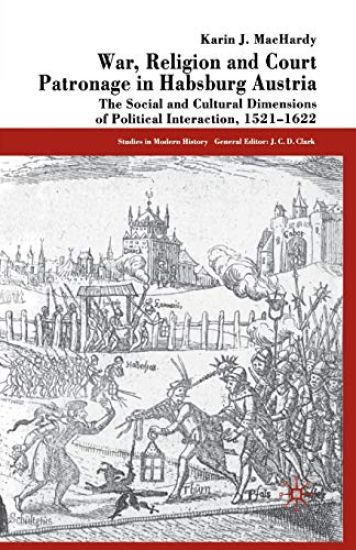
This case study of the causes of the Thirty Years' War suggests an alternative framework to that of Absolutism, and views statebuilding as an interactive bargaining process that can engender challenges to political authority. It shows how selective court patronage changed the cultural habits of nobles in education, manners, and tastes, but failed to transform religious identities, which were intimately tied to noble interests. Instead, the confessionalization of patronage deepened divisions within the elite, providing multiple incentives for the formation of an anti-Habsburg alliance among Protestants in 1620.
This case study of the causes of the Thirty Years' War suggests an alternative framework to that of Absolutism, and views statebuilding as an interactive bargaining process that can engender challenges to political authority. It shows how selective court patronage changed the cultural habits of nobles in education, manners, and tastes, but failed to transform religious identities, which were intimately tied to noble interests. Instead, the confessionalization of patronage deepened divisions within the elite, providing multiple incentives for the formation of an anti-Habsburg alliance among Protestants in 1620.
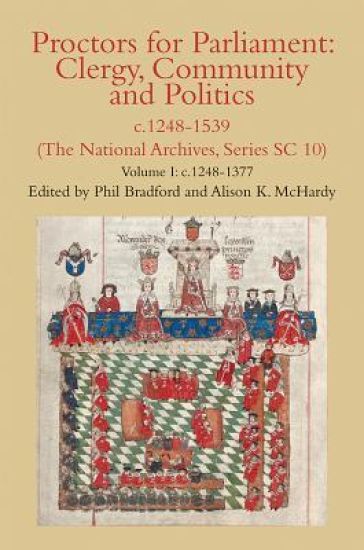
Edition of a major, previously unpublished, source for the history of England's medieval parliament. In the middle ages clergy of all ranks, from archbishops to parochial clergy, sent proctors to parliament, whether as representatives of constituency groups - diocesan clergy and cathedral chapters - or substitutes for those expected to attend in person. The National Archives series SC 10 contains 2,520 surviving letters of appointments by these parliamentarians, both groups and, more especially, individuals, cathedral deans, archdeacons, and many bishops;especially valuable are the letters sent by bishops whose registers have not survived, as in the case of Chichester and of the Welsh dioceses. Most numerous of all are the letters of parliamentary abbots. This volume presents the first printed edition of the documents, opening up a level of political activity and interaction which has hitherto been unexplored. The introduction describes the history of proctorial practice and the fortunes of this source, with an analysis of its contents, while the appendices contain ancillary and misfiled documents, and brief biographies of many of the proctors. This first of a two-volume set covers the period from the beginning of the series under Henry III until the end of Edward III's reign. A second volume, covering the years from the accession of Richard II until the end of the series under Henry VIII, with also include analysis of the proctors and the indexto both volumes. Phil Bradford gained his PhD in medieval history from the University of York and is currently Vicar of St Michael's, Worcester; Alison K. McHardy was formerly Reader in Medieval English History at theUniversity of Nottingham. She has published extensively on the relations between crown and church in late-medieval England, and on the politics of Richard II's reign.
What are Kafka's stories about? Are they dreams? Allegories? Symbols? Things that happen every day? But where and when?In this remarkable book, Roberto Calasso sets out not to dispel the mystery but to let it be illuminated by its own light. With his unique vision, imagination, and intellectual acumen, Calasso attempts to enter the flow, the tortuous movement, the physiology of the stories to discover what they are meant to signify and to delve into the most basic question: Who is K.?
This beautifully designed monogram initial letter notebook is great for writing down your thoughts, to-do lists, ideas, poems, plans, and goals. Lined notebooks can be used for various purposes such as a journal, planner, diary, and organizer. A compact 6"x 9" notebook which is spacious enough for your writing needs yet portable. Features: 102 lined pages Glossy monogram design cover Joyful Creations offer a wide range of journals and notebooks that are suitable for back to school, home or office. Our journals make excellent gifts for birthdays, celebrations, Mother's Day, Father's Day, Valentine's Day, anniversaries, weddings, Secret Santa, bridal showers, Christmas and much more.
College rule (also known as medium ruled paper) is the most common lined paper in use in the United States. It is generally used in middle school through to college and is also popular with adults. This is a good choice for teen or adult notebooks and composition books (known as exercise books outside the US).
The author of The Marriage of Cadmus and Harmony presents an original interpretation of the work of Franz Kafka in a series of essays that looks at the meaning of Kafka's stories and what they reveal about the enigmatic author himself. Reprint.
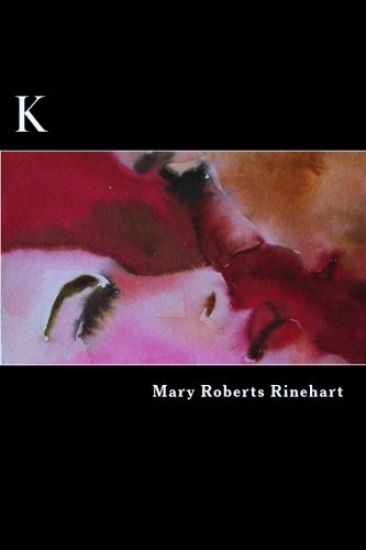
About the Book- Mary Roberts Rinehart (August 12, 1876 - September 22, 1958) was an American writer, often called the American Agatha Christie, although her first mystery novel was published 14 years before Christie's.She is considered the source of the phrase "The butler did it", although she did not actually use the phrase. She is considered to have invented the "Had-I-But-Known" school of mystery writing. She also created a costumed supercriminal called "the Bat", who was cited by Bob Kane as one of the inspirations for his "Batman." -Wikipedia
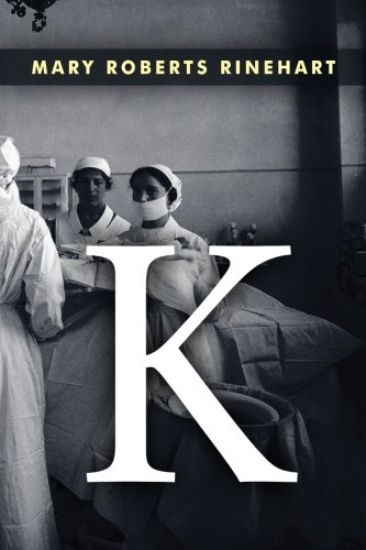
K. is a crime novel by the American writer Mary Roberts Rinehart (1876-1958) set in post-Victorian era Allegheny, Pennsylvania, which has been a part of the city of Pittsburgh since 1907. The novel tells the story of Sidney, who takes in a boarder with the initial K. and whose presence leads to mystery. Ms Rinehart is considered the American Agatha Christie. Rinehart invented the phrase "the butler did it", and wrote hundreds of short stories, plays, travelogues and special interest articles. K is a romance set in the industrial Victorian era. When Sidney takes in a border with the initial "K", her life becomes entwined with the mystery surrounding "K". Lies and intrigue surround Sidney.