This creative approach to learning C++ programming introduces readers to Karel the Robot and then shows them how to design programs that instruct Karel to perform complex tasks. Karel's world is essentially a practice field on which readers learn valuable lessons about creating and debugging program. The programs instruct the robot to move and manipulate its environment using object orientation.
Karel Husa is a Czechoslovakian-American composer and educator who has made important contributions to modern musical literature. Especially well known for his compositions for wind band, Husa is also in constant demand as a guest conductor and lecturer throughout the musical world. This volume provides a complete guide to his compositions and to recordings of his work, together with a full bibliography. Following a brief biography is a list of Husa's compositions, arranged by genre. Each entry includes the date of composition, duration of the work, and the performance medium, as well as details relating to the commission, premiere, and publication. The discography of commercially produced recordings of Husa's music is arranged alphabetically and supplies information on label and label number, date of issue, contents, and performers. The bibliography is comprehensive, listing writings by and about Husa and annotating each work cited. Systematic cross-referencing is used throughout the book. A convenient resource for musicians and musicologists, this bio-bibliography is an appropriate choice for music and academic libraries.
Uses a creative approach to teach the basic skills and concepts of programming quickly. This edition offers excellent insights into problem solving and program design processes. It will also improve comprehension of such computer science considerations as loop invariants and recursion. Includes 60 color line drawings.
Czech-born refugee Karel Reisz (1926-2002) is widely regarded as one of the seminal figures in post-war British cinema. Along with Lindsay Anderson and Tony Richardson, Reisz was a founder member of the independent Free Cinema ‘movement’ which attacked the parochial middle-class values of home-grown studio product with a vigorous commitment to everyday working-class subject matter and a poetically charged film style. This was immediately recognisable in the aesthetic of the international success of Reisz’s first feature, Saturday Night and Sunday Morning (1960). As the import of Free Cinema rapidly dissipated during the ‘Swinging London’ era, Reisz confronted the changing cultural mores of the 1960s and 1970s with a series of ambivalent films that critique the anarchic free spirit of the times, including Morgan (1966), Isadora (1968), The Gambler (1974) and Dog Soldiers (1978).Drawing on Reisz’s early film criticism for Sequence and Sight and Sound, as well as interdisciplinary methodologies, this first career-length study explores Reisz’s personal brand of character-based realism, offering the spectator a privileged insight into an artist’s developing response to subjective and historical dislocation. The book should thus prove invaluable to film scholars, cultural historians and the Reisz aficionado.
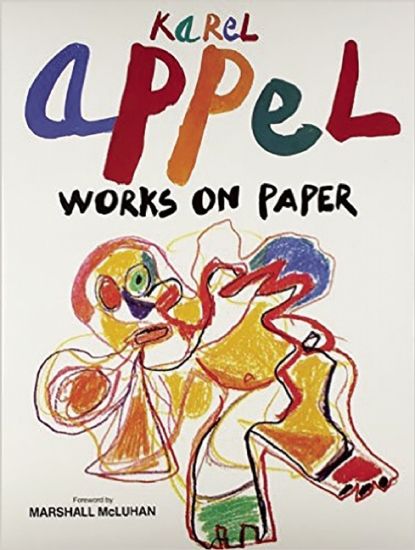
A celebration of the graphic works of Karel Appel, this is the most complete collection assembled on his collages, gouaches, drawings, and waterworks. Jean-Clarence Lambert interweaves narrative and poetry in a witty text that captures Appel's exuberant spirit. Marshall McLuhan's foreword pays tribute to the vibrant medium of Appel's message... "that we can nourish our creativity by unlocking the child at play with us"
Karel J Robot is an introduction to computer programming for novices. It uses the Java programming language to introduce the principles of object-oriented programming. It is the latest version in the Karel The Robot series, originally developed by Richard Pattis. It is a true successor to the original, emphasizing problem solving in a simple but "Turing Complete" and interesting virtual world.Karel J Robot stresses problem solving rather than language syntax. It has been shown to be an effective learning environment for novice programmers. A student able to do the exercises in this book, or one of its companions, is truly on his or her way to a deep understanding of programming.Learn to write sophisticated Java code in a few weeks. It is not a comprehensive treatment of Java, but emphasizes problem solving using objects, writing classes, and developing skill in algorithmic and polymorphic thinking. It goes beyond thinking of computing as just "if" and "while".The advantages pointed out by reviewers of Karel J Robot follow: Karel J Robot is an excellent introduction to modern computer science, without letting students get overwhelmed by the details of a programming language (even though it is real Java). KJR provides a framework for understanding Object-Oriented Programming from the very beginning. Students are encouraged to develop problem-solving skills by producing projects that solve very complex problems with a relatively small set of tools.Don Slater, Carnegie-Mellon UniversityI have been successfully introducing students in grades 9 through 12 to programming using Karel for the past twenty years and Karel J Robot is the most effective version yet. Students love it They find principles of OOP (class design, constructors, methods, inheritance, polymorphism) come naturally to them, even before they learn about control structures. They discover recursive solutions without ever being taught recursion. Best of all, Karel is gender neutral --- both girls and boys are so involved and excited that I have to push them out the door and on to their next class when the period ends.Kathy Larson, Kingston High School, Kingston New YorkKarel J Robot: A Gentle Introduction to the Art of Object-Oriented Programming in Java takes you on a well-sequenced and thoughtful journey through the essential concepts in a first semester computer science course. Experience computer science at the level that it is most inspiring - the conceptual level. The visual environment will help you teach and your students learn because everyone will have immediate visual feedback, enabling them to see what they are doing. You will leave the Karel world with a deep understanding of polymorphism, inheritance, abstraction, modularization, and step-wise refinement, to name just a few topics. If you are an AP Computer Science teacher, you have just found the perfect guide to help ensure you do not lose sight of the forest (i.e., computer science) through the trees (i.e., the details of the language).Dave Wittry, Troy High SchoolKarel J Robot provides an uncluttered setting for laying the foundation for all of the key OO concepts. The perfect "starter" for understanding objects, OO design and OO programming.Michael Goldweber, Xavier University
Karel R Tuesday is an introduction to computer programming for novices. It uses the Ruby programming language to introduce the principles of dynamic object-oriented programming. It is the latest version in the Karel The Robot series, originally developed by Richard Pattis. It is a true successor to the original, emphasizing problem solving in a simple but "Turing Complete" and interesting virtual world.Karel R Tuesday stresses problem solving rather than language syntax. It has been shown to be an effective learning environment for novice programmers. A student able to do the exercises in this book, or one of its companions, is truly on his or her way to a deep understanding of programming.Learn to write sophisticated Ruby code in a few weeks. It is not a comprehensive treatment of Ruby, but emphasizes problem solving using objects, writing classes, and developing skill in algorithmic and polymorphic thinking. It goes beyond thinking of computing as just "if" and "while".The advantages pointed out by reviewers of the earlier Karel J Robot apply to this version as well: Karel J Robot is an excellent introduction to modern computer science, without letting students get overwhelmed by the details of a programming language (even though it is real Java). KJR provides a framework for understanding Object-Oriented Programming from the very beginning. Students are encouraged to develop problem-solving skills by producing projects that solve very complex problems with a relatively small set of tools.Don Slater, Carnegie-Mellon UniversityI have been successfully introducing students in grades 9 through 12 to programming using Karel for the past twenty years and Karel J Robot is the most effective version yet. Students love it They find principles of OOP (class design, constructors, methods, inheritance, polymorphism) come naturally to them, even before they learn about control structures. They discover recursive solutions without ever being taught recursion. Best of all, Karel is gender neutral --- both girls and boys are so involved and excited that I have to push them out the door and on to their next class when the period ends.Kathy Larson, Kingston High School, Kingston New YorkKarel J Robot: A Gentle Introduction to the Art of Object-Oriented Programming in Java takes you on a well-sequenced and thoughtful journey through the essential concepts in a first semester computer science course. Experience computer science at the level that it is most inspiring - the conceptual level. The visual environment will help you teach and your students learn because everyone will have immediate visual feedback, enabling them to see what they are doing. You will leave the Karel world with a deep understanding of polymorphism, inheritance, abstraction, modularization, and step-wise refinement, to name just a few topics. If you are an AP Computer Science teacher, you have just found the perfect guide to help ensure you do not lose sight of the forest (i.e., computer science) through the trees (i.e., the details of the language).Dave Wittry, Troy High SchoolKarel J Robot provides an uncluttered setting for laying the foundation for all of the key OO concepts. The perfect "starter" for understanding objects, OO design and OO programming.Michael Goldweber, Xavier University
This inspiring journey of a mother and son through war and beyond will challenge your beliefs about life's true purpose, finally revealing the one, simple secret that contains every answer. Karel's father is a Catholic and his teen mother, Nadia, is a Jew. WWII separates them and Nadia is caught in the agony of the Holocaust. On life-altering paths, their faith and humanity are tested and each forges different beliefs and relationships out of their struggles to survive. They face life's most troubling questions. Can violence really save, and true peace be born of war? Or, must good always conquer evil first on the battlefield of the heart and mind? And, where is God in all of this? As victims and then as pro-active participants, they are transformed by an unseen hand and guided toward a common goal where new life can begin. Fall into the depths of despair and then be joyously uplifted by sharing their odyssey, as love meets the challenges of separation and oppression.
What happens to us after we die? Some prefer to avoid asking the question, some think they have a reassuring answer, some are still pondering the possibilities. Some distinguished scientists think that nothing happens: we simply disappear. Marian Werner never thought that she would write a book about the afterlife but married a man who helped her to confront the question and answer it to her own satisfaction. Karel Werner escaped from communist Czechoslovakia in 1968. As an expert in Indian philosophy and religion he had been on the threshold of a brilliant career at Olomouc University when the putsch of 1948 blocked it. He came to London on an invitation from the Buddhist Society UK to lecture at their summer ·school in 1968, and he and Marian met at the school the following year and married in 1970. Throughout the fifty years they were together, Karel and Marian promised each other that whoever departed this life first would try to connect with the one left behind. Karel died on 26 November 2019. Almost immediately some unexpected things started happening. Friends of the couple have been witnesses to some, including a letter that disappeared and reappeared, and noises emitted by their smart meter. Readers will form their own opinions.