Kirjojen hintavertailu. Mukana 12 373 577 kirjaa ja 12 kauppaa.

Kirjahaku

Etsi kirjoja tekijän nimen, kirjan nimen tai ISBN:n perusteella.

1000 tulosta hakusanalla Karen Armstrong

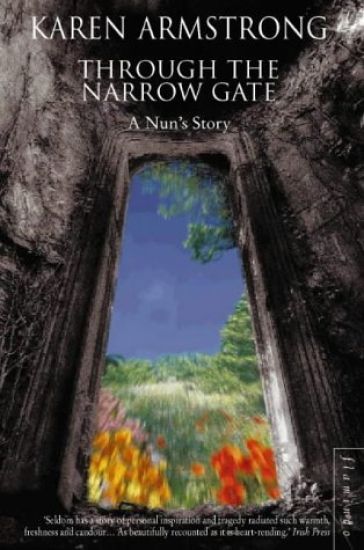
Through the Narrow Gate

Through the Narrow Gate

Karen Armstrong

Harpercollins Publishers
1997
pokkari
An account of Karen Armstrong's experiences as a Roman Catholic nun. Armstrong describes her childhood, her progress at school and her admission into the order of St Ignatius in 1962 and - via Oxford University and an English literature degree - out of it again seven years later.
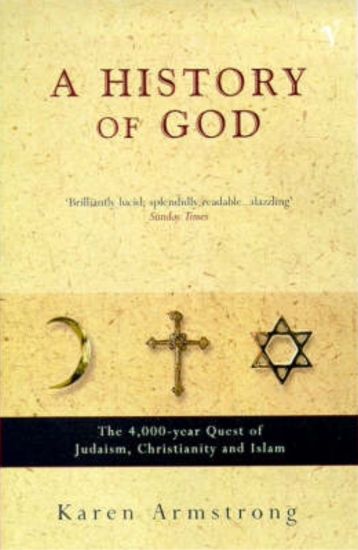
History of God

History of God

Karen Armstrong

Vintage
1999
pokkari
The idea of a single devine being - God, Yahweh, Allah - has existed for over 4,000 years. A controversial, extraordinary story of worship and war, A History of God confronts the most fundamental fact - or fiction - of our lives.
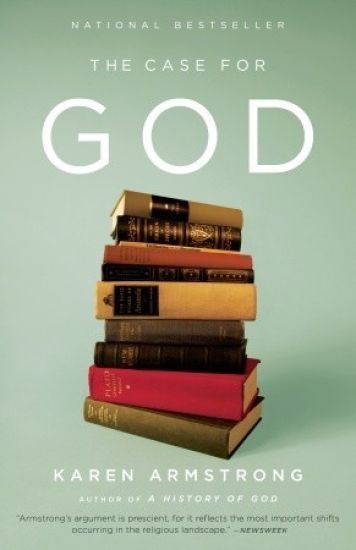
Case for God

Case for God

Karen Armstrong

Vintage
2010
pokkari
Tracing the history of faith from the Palaeolithic Age to the present, the author shows that meaning of words such as 'belief', 'faith', and 'mystery' has been entirely altered, so that atheists and theists alike now think and speak about God - and, indeed, reason itself - in a way that our ancestors would have found astonishing.
In the Beginning

In the Beginning

Karen Armstrong

Vintage
2011
pokkari
The foundation stone of Jewish and Christian scriptures, the power of the Book of Genesis lies in its stories - Creation, the Fall, Cain and Abel, Noah, Abraham, Jacob and Joseph. Karen Armstrong traces the themes and meanings of these stories, examining what they can still tell us about the human quest for meaning.
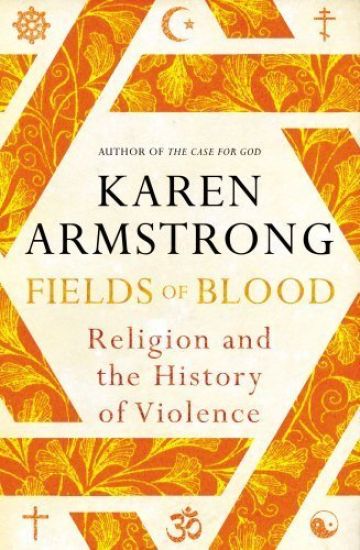
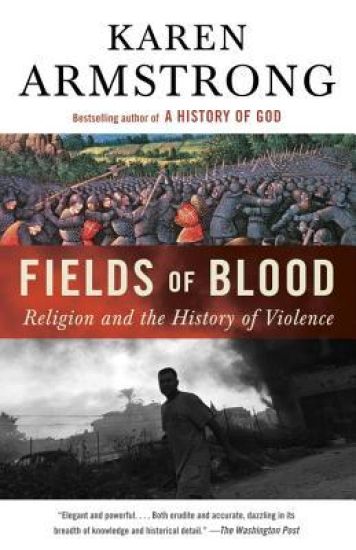
Fields of Blood

Fields of Blood

Karen Armstrong

Random House UK
2015
pokkari
Is humanity on the brink of destroying itself? This book intends to disprove the link between religion and bloodshed. It deals with ancient religious ideas and movements that have promoted peace and reconciliation across millennia of civilization.
Buddha

Buddha

Karen Armstrong

PENGUIN BOOKS
2004
nidottu
With such bestsellers as A History of God and Islam, Karen Armstrong has consistently delivered "penetrating, readable, and prescient" (The New York Times) works that have lucidly engaged a wide range of religions and religious issues. In Buddha she turns to a figure whose thought is still reverberating throughout the world 2,500 years after his death.Many know the Buddha only from seeing countless serene, iconic images. But what of the man himself and the world he lived in? What did he actually do in his roughly eighty years on earth that spawned one of the greatest religions in world history? Armstrong tackles these questions and more by examining the life and times of the Buddha in this engrossing philosophical biography. Against the tumultuous cultural background of his world, she blends history, philosophy, mythology, and biography to create a compelling and illuminating portrait of a man whose awakening continues to inspire millions.
The Case for God

The Case for God

Karen Armstrong

ANCHOR BOOKS
2010
nidottu
NATIONAL BESTSELLER - From the New York Times bestselling author of The History of God--a nuanced exploration of the role of religion in our lives, drawing on insights of the past to build a faith for our dangerously polarized age. "A stimulating, hopeful work. --NPR's All Things ConsideredMoving from the Paleolithic age to the present, Karen Armstrong details the great lengths to which humankind has gone in order to experience a sacred reality that it called by many names, such as God, Brahman, Nirvana, Allah, or Dao. Focusing especially on Christianity but including Judaism, Islam, Buddhism, Hinduism, and Chinese spiritualities, Armstrong examines the diminished impulse toward religion in our own time, when a significant number of people either want nothing to do with God or question the efficacy of faith. Why has God become unbelievable? Why is it that atheists and theists alike now think and speak about God in a way that veers so profoundly from the thinking of our ancestors? Answering these questions with the same depth of knowledge and profound insight that have marked all her acclaimed books, Armstrong makes clear how the changing face of the world has necessarily changed the importance of religion at both the societal and the individual level. Yet she cautions us that religion was never supposed to provide answers that lie within the competence of human reason; that, she says, is the role of logos. The task of religion is "to help us live creatively, peacefully, and even joyously with realities for which there are no easy explanations." She emphasizes, too, that religion will not work automatically. It is, she says, a practical discipline: its insights are derived not from abstract speculation but from "dedicated intellectual endeavor" and a "compassionate lifestyle that enables us to break out of the prism of selfhood."
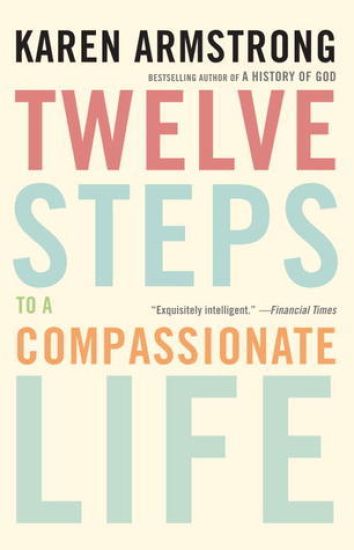
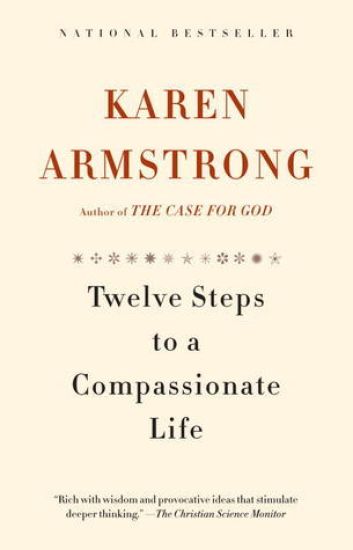
Twelve Steps to a Compassionate Life

Twelve Steps to a Compassionate Life

Karen Armstrong

Vintage Books Canada
2011
nidottu
One of the most original thinkers on the role of religion in the modern world--author of such acclaimed books as A History of God, Islam and Buddha--now gives us an impassioned and practical book that can help us make the world a more compassionate place. In Twelve Steps to a Compassionate Life, Armstrong suggests concrete ways of enhancing our compassion and putting it into action in our everyday lives. Throughout, Armstrong makes clear that a compassionate life is not a matter of only heart or mind but a deliberate and often life-altering commingling of the two. In November 2009 Armstrong and TED launched The Charter for Compassion (www.charterforcompassion.org), which calls upon all men and women to "restore compassion to the centre of morality and religion . . . to cultivate an informed empathy with the suffering of all human beings--even those regarded as enemies." To date, it's been signed by over 48,000 people, including such figures as The Dalai Lama and Queen Noor, Dave Eggers and Meg Ryan. Out of the ideals of that Charter has come this humane, accessible, indispensable short book for our times.
Twelve Steps to a Compassionate Life

Twelve Steps to a Compassionate Life

Karen Armstrong

ANCHOR BOOKS
2011
nidottu
One of the most original thinkers on the role of religion in the modern world--and the bestselling author of such acclaimed books as A History of God, Islam, and Buddha--now gives us an exquisitely intelligent" book (Financial Times) that can help us make the world a more compassionate place.Karen Armstrong believes that while compassion is intrinsic in all human beings, each of us needs to work diligently to cultivate and expand our capacity for compassion. Here, in this straightforward, thoughtful, and thought-provoking book, she sets out a program that can lead us toward a more compassionate life. The twelve steps Armstrong suggests begin with "Learn About Compassion" and close with "Love Your Enemies." In between, she takes up "compassion for yourself," mindfulness, suffering, sympathetic joy, the limits of our knowledge of others, and "concern for everybody." She suggests concrete ways of enhancing our compassion and putting it into action in our everyday lives, and provides, as well, a reading list to encourage us to "hear one another's narratives." Throughout, Armstrong makes clear that a compassionate life is not a matter of only heart or mind but a deliberate and often life-altering commingling of the two.
Fields of Blood: Religion and the History of Violence

Fields of Blood: Religion and the History of Violence

Karen Armstrong

Knopf Doubleday Publishing Group
2015
nidottu
From the renowned bestselling author of A History of God--a sweeping exploration of religion and the history of human violence. - "Elegant and powerful.... Both erudite and accurate, dazzling in its breadth of knowledge and historical detail." --The Washington PostIn these times of rising geopolitical chaos, the need for mutual understanding between cultures has never been more urgent. Religious differences are seen as fuel for violence and warfare. In these pages, one of our greatest writers on religion, Karen Armstrong, amasses a sweeping history of humankind to explore the perceived connection between war and the world's great creeds--and to issue a passionate defense of the peaceful nature of faith. With unprecedented scope, Armstrong looks at the whole history of each tradition--not only Christianity and Islam, but also Buddhism, Hinduism, Confucianism, Daoism, and Judaism. Religions, in their earliest days, endowed every aspect of life with meaning, and warfare became bound up with observances of the sacred. Modernity has ushered in an epoch of spectacular violence, although, as Armstrong shows, little of it can be ascribed directly to religion. Nevertheless, she shows us how and in what measure religions came to absorb modern belligerence--and what hope there might be for peace among believers of different faiths in our time.
Through the Narrow Gate, Revised: A Memoir of Spiritual Discovery
"Through the Narrow Gate" is Karen Armstrong's intimate memoir of life inside a Catholic convent. With refreshing honesty and clarity, the book takes readers on a revelatory adventure that begins with Armstrong's decision in the course of her spiritual training offers a fascinating view into a shrouded religious life, and a vivid, moving account of the spiritual coming age of one of our most loved and respected interpreters of religious.
A History of God: The 4,000-Year Quest of Judaism, Christianity and Islam
NEW YORK TIMES BESTSELLER - In this "brilliantly lucid, splendidly readable book" (The Sunday Times), one of Britain's foremost commentators on religion explores how people have perceived and experienced God throughout history, from the time of Abraham to the present."An admirable and impressive work of synthesis that will give insight and satisfaction to thousands of lay readers."--The Washington Post Book WorldWhy does God exist? How have the three dominant monotheistic religions--Judaism, Christianity, and Islam--shaped and altered the conception of God? How have these religions influenced each other? In A History of God, celebrated religious commentator Karen Armstrong presents a stunningly intelligent journey that spans centuries to understand humanity's ever-changing relationship to monotheistic religion. The epic story begins with the Jews' gradual transformation of pagan idol worship in Babylon into true monotheism--a concept previously unknown in the world. Christianity and Islam both rose on the foundation of this revolutionary idea, but these religions refashioned "the One God" to suit the social and political needs of their followers. From classical philosophy and medieval mysticism to the Reformation, Karen Armstrong performs the near miracle of distilling the intellectual history of monotheism into one superbly engrossing volume.
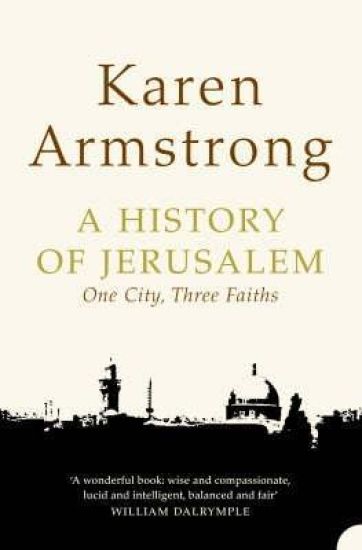
Jerusalem: One City, Three Faiths

Jerusalem: One City, Three Faiths

Karen Armstrong

Ballantine Books
1997
nidottu
"SPLENDID . . . Eminently sane and patient . . . Essential reading for Jews, Christians, and Muslims alike." --The Washington Post Venerated for millennia by three faiths, torn by irreconcilable conflict, conquered, rebuilt, and mourned for again and again, Jerusalem is a sacred city whose very sacredness has engendered terrible tragedy. In this fascinating volume, Karen Armstrong, author of the highly praised A History of God, traces the history of how Jews, Christians, and Muslims have all laid claim to Jerusalem as their holy place, and how three radically different concepts of holiness have shaped and scarred the city for thousands of years. Armstrong unfolds a complex story of spiritual upheaval and political transformation--from King David's capital to an administrative outpost of the Roman Empire, from the cosmopolitan city sanctified by Christ to the spiritual center conquered and glorified by Muslims, from the gleaming prize of European Crusaders to the bullet-ridden symbol of the present-day Arab-Israeli conflict. Written with grace and clarity, the product of years of meticulous research, Jerusalem combines the pageant of history with the profundity of searching spiritual analysis. Like Karen Armstrong's A History of God, Jerusalem is a book for the ages. "THE BEST SERIOUS, ACCESSIBLE HISTORY OF THE MOST SPIRITUALLY IMPORTANT CITY IN THE WORLD." --The Baltimore Sun "A WORK OF IMPRESSIVE SWEEP AND GRANDEUR." --Los Angeles Times Book Review
The Battle for God: A History of Fundamentalism

The Battle for God: A History of Fundamentalism

Karen Armstrong

Ballantine Books
2001
nidottu
In the late twentieth century, fundamentalism has emerged as one of the most powerful forces at work in the world, contesting the dominance of modern secular values and threatening peace and harmony around the globe. Yet it remains incomprehensible to a large number of people. In The Battle for God, Karen Armstrong brilliantly and sympathetically shows us how and why fundamentalist groups came into existence and what they yearn to accomplish. We see the West in the sixteenth century beginning to create an entirely new kind of civilization, which brought in its wake change in every aspect of life -- often painful and violent, even if liberating. Armstrong argues that one of the things that changed most was religion. People could no longer think about or experience the divine in the same way; they had to develop new forms of faith to fit their new circumstances. Armstrong characterizes fundamentalism as one of these new ways of being religious that have emerged in every major faith tradition. Focusing on Protestant fundamentalism in the United States, Jewish fundamentalism in Israel, and Muslim fundamentalism in Egypt and Iran, she examines the ways in which these movements, while not monolithic, have each sprung from a dread of modernity -- often in response to assault (sometimes unwitting, sometimes intentional) by the mainstream society. Armstrong sees fundamentalist groups as complex, innovative, and modern -- rather than as throwbacks to the past -- but contends that they have failed in religious terms. Maintaining that fundamentalism often exists in symbiotic relationship with an aggressive modernity, each impelling the other on to greater excess, she suggests compassion as a way to defuse what is now an intensifying conflict. BONUS: This edition contains an excerpt from Karen Armstrong's Twelve Steps to a Compassionate Life.
In the Beginning: A New Interpretation of Genesis
"Karen Armstrong is a genius."--A. N. Wilson As the foundation stone of the Jewish and Christian scriptures, The Book of Genesis unfolds some of the most arresting stories of world literature--the Creation; Adam and Eve; Cain and Abel; the sacrifice of Isaac. Yet the meaning of Genesis remains enigmatic. In this fascinating volume, Karen Armstrong, author of the highly acclaimed bestseller A History of God, brilliantly illuminates the mysteries and profundities of this mystifying work. "A lyrical chronicle of one woman's wrestling with Genesis that can serve as a guide to others . . . As notable for its scholarship as it is for its honesty and vulnerability."--Publishers Weekly "Armstrong can simplify complex ideas, but she is never simplistic."--The New York Times Book Review
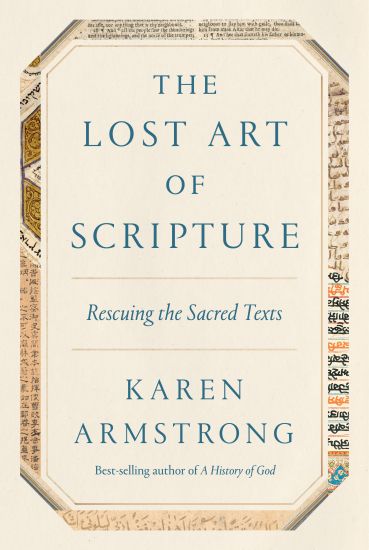
The Lost Art of Scripture: Rescuing the Sacred Texts
A NEW YORK TIMES NOTABLE BOOK In this timely and important book, one of the world's leading commentators on religious affairs examines the lost art of Scripture as a medium to lift humanity and change our perception of reality while evading logical explanation. Today the Quran is used by some to justify war and acts of terrorism, the Torah to deny Palestinians the right to live in the Land of Israel, and the Bible to condemn homosexuality and contraception. The significance of Scripture--the holy texts at the centre of all religious traditions--may not be immediately obvious in our secular world but its misunderstanding is perhaps the root cause of most of today's controversies over religion. In this timely and important book, one of the world's leading commentators on religious affairs examines the meaning of Scripture. Today holy texts are not only used selectively to underwrite sometimes arbitrary and subjective views: they are seen to prescribe ethical norms and codes of behaviour that are divinely ordained--they are believed to contain eternal truths. But as Karen Armstrong shows in this fascinating trawl through millennia of religious history, this peculiar reading of Scripture is a relatively recent, modern phenomenon--and in many ways, a reaction to a hostile secular world. For most of their history, the world's religious traditions have regarded these texts as tools for the individual to connect with the divine, to transcend their physical existence, and to experience a higher level of consciousness that helped them to engage with the world in more meaningful and compassionate ways. Scripture was not a truth that had to be believed. Armstrong argues that only if the world's religious faiths rediscover such an open and spiritual engagement with their holy texts can they curtail the arrogance, intolerance and violence that flows from a narrow reading of Scripture as truth.