Kirjojen hintavertailu. Mukana 11 244 527 kirjaa ja 12 kauppaa.

Kirjahaku

Etsi kirjoja tekijän nimen, kirjan nimen tai ISBN:n perusteella.

1000 tulosta hakusanalla Karen Engle

Chronic Conditions

Chronic Conditions

Karen Engle

MCGILL-QUEEN'S UNIVERSITY PRESS
2023
sidottu
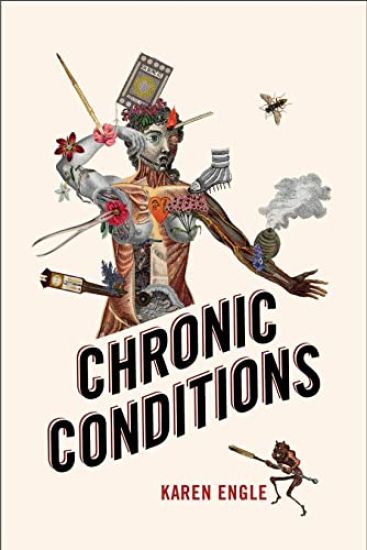
Imagine a house whose wiring is spliced and patchy with knob and tube, coiled like a serpent ready to strike and spark at any moment. Even if you have a fire trap behind your walls, the lights will turn on. In her memoir of a life lived in physical pain, Karen Engle asks whether and how language can capture what it’s like to be in a body that appears to work from the outside, when its internal systems operate through an ad hoc assemblage of garbled messaging, reroutings, and shaky foundations. A series of narrative reflections capture the myriad ways in which the chronic conditions its suffering subject. Contrary to claims that pain obliterates language – long a trope of writing about illness – Engle contends that the person with chronic pain is not hampered by a scarcity of language, but rather its excess: enervation by the unending waves of utterance. From a history of the word chronic and its shifting significance to meditations on multiple diagnoses and interactions with medical personnel, Chronic Conditions is a doctor’s case file through the looking glass of a creative writer, scholar, and patient. Engle explores, through medical research, literature, and art, how it feels to become attuned to the rhythms of perpetual and mysterious physical pain. At stake here is the search for a kind of writing that does not instrumentalize pain for allegorical or transcendental purposes. Chronic pain is not a sign of weakness, nor is it an opportunity for personal growth, Engle argues. Instead, it is entirely ordinary and deeply affecting.
Chronic Conditions

Chronic Conditions

Karen Engle

MCGILL-QUEEN'S UNIVERSITY PRESS
2023
nidottu
Imagine a house whose wiring is spliced and patchy with knob and tube, coiled like a serpent ready to strike and spark at any moment. Even if you have a fire trap behind your walls, the lights will turn on. In her memoir of a life lived in physical pain, Karen Engle asks whether and how language can capture what it’s like to be in a body that appears to work from the outside, when its internal systems operate through an ad hoc assemblage of garbled messaging, reroutings, and shaky foundations. A series of narrative reflections capture the myriad ways in which the chronic conditions its suffering subject. Contrary to claims that pain obliterates language – long a trope of writing about illness – Engle contends that the person with chronic pain is not hampered by a scarcity of language, but rather its excess: enervation by the unending waves of utterance. From a history of the word chronic and its shifting significance to meditations on multiple diagnoses and interactions with medical personnel, Chronic Conditions is a doctor’s case file through the looking glass of a creative writer, scholar, and patient. Engle explores, through medical research, literature, and art, how it feels to become attuned to the rhythms of perpetual and mysterious physical pain. At stake here is the search for a kind of writing that does not instrumentalize pain for allegorical or transcendental purposes. Chronic pain is not a sign of weakness, nor is it an opportunity for personal growth, Engle argues. Instead, it is entirely ordinary and deeply affecting.
Seeing Ghosts

Seeing Ghosts

Karen Engle

McGill-Queen's University Press
2009
sidottu
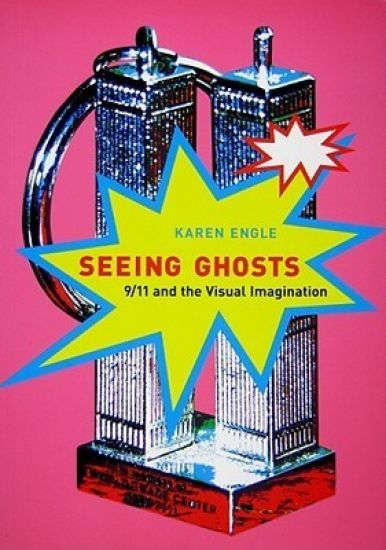
On September 11 more people clicked "on documentary news photographs than on pornography for the first (and only) time in the history of the Internet," reports writer David Levi Strauss. The archive of images associated with the tragic events of 9/11 merits careful analysis. Artist Damien Hirst has suggested that the attacks were designed to be viewed - "The thing about 9/11 is that it's kind of an artwork in its own right. It was wicked, but it was devised in this way for this kind of impact. It was devised visually." Starting from the tremendous fascination with images of 9/11, Karen Engle asks what, in the context of a national trauma, makes an image appropriate or scandalous, exploring how diverse visual media have been mobilized in political projects of identification and personal narratives of empathy. Focusing on themes of memory, mourning, and history, Engle examines sculptural, photographic, and new media responses to the 9/11 attacks in both contemporary and historical contexts, considers the public's reaction to these visual productions, and suggests that earlier presentations of America at war play a pivotal role in the representations of 9/11 in both official and popular media. Seeing Ghosts is a groundbreaking theoretical study of how we remember, how we mourn, and how images of a particular event influence our imagination of the future.
Seeing Ghosts

Seeing Ghosts

Karen Engle

McGill-Queen's University Press
2009
nidottu
On September 11 more people clicked "on documentary news photographs than on pornography for the first (and only) time in the history of the Internet," reports writer David Levi Strauss. The archive of images associated with the tragic events of 9/11 merits careful analysis. Artist Damien Hirst has suggested that the attacks were designed to be viewed - "The thing about 9/11 is that it's kind of an artwork in its own right. It was wicked, but it was devised in this way for this kind of impact. It was devised visually." Starting from the tremendous fascination with images of 9/11, Karen Engle asks what, in the context of a national trauma, makes an image appropriate or scandalous, exploring how diverse visual media have been mobilized in political projects of identification and personal narratives of empathy. Focusing on themes of memory, mourning, and history, Engle examines sculptural, photographic, and new media responses to the 9/11 attacks in both contemporary and historical contexts, considers the public's reaction to these visual productions, and suggests that earlier presentations of America at war play a pivotal role in the representations of 9/11 in both official and popular media. Seeing Ghosts is a groundbreaking theoretical study of how we remember, how we mourn, and how images of a particular event influence our imagination of the future.
The Elusive Promise of Indigenous Development

The Elusive Promise of Indigenous Development

Karen Engle

Duke University Press
2010
sidottu
Around the world, indigenous peoples use international law to make claims for heritage, territory, and economic development. Karen Engle traces the history of these claims, considering the prevalence of particular legal frameworks and their costs and benefits for indigenous groups. Her vivid account highlights the dilemmas that accompany each legal strategy, as well as the persistent elusiveness of economic development for indigenous peoples. Focusing primarily on the Americas, Engle describes how cultural rights emerged over self-determination as the dominant framework for indigenous advocacy in the late twentieth century, bringing unfortunate, if unintended, consequences. Conceiving indigenous rights as cultural rights, Engle argues, has largely displaced or deferred many of the economic and political issues that initially motivated much indigenous advocacy. She contends that by asserting static, essentialized notions of indigenous culture, indigenous rights advocates have often made concessions that threaten to exclude many claimants, force others into norms of cultural cohesion, and limit indigenous economic, political, and territorial autonomy.Engle explores one use of the right to culture outside the context of indigenous rights, through a discussion of a 1993 Colombian law granting collective land title to certain Afro-descendant communities. Following the aspirations for and disappointments in this law, Engle cautions advocates for marginalized communities against learning the wrong lessons from the recent struggles of indigenous peoples at the international level.
The Elusive Promise of Indigenous Development

The Elusive Promise of Indigenous Development

Karen Engle

Duke University Press
2010
pokkari
Around the world, indigenous peoples use international law to make claims for heritage, territory, and economic development. Karen Engle traces the history of these claims, considering the prevalence of particular legal frameworks and their costs and benefits for indigenous groups. Her vivid account highlights the dilemmas that accompany each legal strategy, as well as the persistent elusiveness of economic development for indigenous peoples. Focusing primarily on the Americas, Engle describes how cultural rights emerged over self-determination as the dominant framework for indigenous advocacy in the late twentieth century, bringing unfortunate, if unintended, consequences. Conceiving indigenous rights as cultural rights, Engle argues, has largely displaced or deferred many of the economic and political issues that initially motivated much indigenous advocacy. She contends that by asserting static, essentialized notions of indigenous culture, indigenous rights advocates have often made concessions that threaten to exclude many claimants, force others into norms of cultural cohesion, and limit indigenous economic, political, and territorial autonomy.Engle explores one use of the right to culture outside the context of indigenous rights, through a discussion of a 1993 Colombian law granting collective land title to certain Afro-descendant communities. Following the aspirations for and disappointments in this law, Engle cautions advocates for marginalized communities against learning the wrong lessons from the recent struggles of indigenous peoples at the international level.
Toward an Abolitionist Human Rights Court

Toward an Abolitionist Human Rights Court

Karen Engle

Cambridge University Press
2025
pokkari
Contemporary international human rights law increasingly obligates states to heighten their criminalization of certain human rights violations, including gendered, racialized, and homophobic violence. This Element uses prison and police abolitionist thought to challenge this trend. It focuses on the European Court of Human Rights (ECtHR), arguing that the Court's reliance on punishment and policing threatens to undo earlier European approaches to criminal law and human rights that resonate with abolitionist thought. It also contends that the criminalization approach provides the Court with an alibi for not recognizing or attending to the deeply structural racialized, colonial, sexual, gendered, and homophobic violence in Europe, particularly but not only against Roma communities and Black and Muslim migrants. Encouraging human rights advocates and judges to take seriously prison and police abolition in Europe and elsewhere, the Element calls for the ECtHR to pave the way for an abolitionist-oriented turn among human rights courts.
Toward an Abolitionist Human Rights Court

Toward an Abolitionist Human Rights Court

Karen Engle

Cambridge University Press
2025
sidottu
Contemporary international human rights law increasingly obligates states to heighten their criminalization of certain human rights violations, including gendered, racialized, and homophobic violence. This Element uses prison and police abolitionist thought to challenge this trend. It focuses on the European Court of Human Rights (ECtHR), arguing that the Court's reliance on punishment and policing threatens to undo earlier European approaches to criminal law and human rights that resonate with abolitionist thought. It also contends that the criminalization approach provides the Court with an alibi for not recognizing or attending to the deeply structural racialized, colonial, sexual, gendered, and homophobic violence in Europe, particularly but not only against Roma communities and Black and Muslim migrants. Encouraging human rights advocates and judges to take seriously prison and police abolition in Europe and elsewhere, the Element calls for the ECtHR to pave the way for an abolitionist-oriented turn among human rights courts.
The Grip of Sexual Violence in Conflict

The Grip of Sexual Violence in Conflict

Karen Engle

Stanford University Press
2020
sidottu
Contemporary feminist advocacy in human rights, international criminal law, and peace and security is gripped by the issue of sexual violence in conflict. But it hasn't always been this way. Analyzing feminist international legal and political work over the past three decades, Karen Engle argues that it was not inevitable that sexual violence in conflict would become such a prominent issue. Engle reveals that as feminists from around the world began to pay an enormous amount of attention to sexual violence in conflict, they often did so at the cost of attention to other issues, including the anti-militarism of the women's peace movement; critiques of economic maldistribution, imperialism, and cultural essentialism by feminists from the global South; and the sex-positive positions of many feminists involved in debates about sex work and pornography. The Grip of Sexual Violence in Conflict offers a detailed examination of how these feminist commitments were not merely deprioritized, but undermined, by efforts to address the issue of sexual violence in conflict. Engle's analysis reinvigorates vital debates about feminist goals and priorities, and spurs readers to question much of today's common sense about the causes, effects, and proper responses to sexual violence in conflict.
The Grip of Sexual Violence in Conflict

The Grip of Sexual Violence in Conflict

Karen Engle

Stanford University Press
2020
pokkari
Contemporary feminist advocacy in human rights, international criminal law, and peace and security is gripped by the issue of sexual violence in conflict. But it hasn't always been this way. Analyzing feminist international legal and political work over the past three decades, Karen Engle argues that it was not inevitable that sexual violence in conflict would become such a prominent issue. Engle reveals that as feminists from around the world began to pay an enormous amount of attention to sexual violence in conflict, they often did so at the cost of attention to other issues, including the anti-militarism of the women's peace movement; critiques of economic maldistribution, imperialism, and cultural essentialism by feminists from the global South; and the sex-positive positions of many feminists involved in debates about sex work and pornography. The Grip of Sexual Violence in Conflict offers a detailed examination of how these feminist commitments were not merely deprioritized, but undermined, by efforts to address the issue of sexual violence in conflict. Engle's analysis reinvigorates vital debates about feminist goals and priorities, and spurs readers to question much of today's common sense about the causes, effects, and proper responses to sexual violence in conflict.
The Dragon, the Eagle, and the Private Sector

The Dragon, the Eagle, and the Private Sector

Karen Eggleston; John D. Donahue; Richard J. Zeckhauser

Cambridge University Press
2021
sidottu
The governments of China and the United States - despite profound differences in history, culture, economic structure, and political ideology - both engage the private sector in the pursuit of public value. This book employs the term collaborative governance to describe relationships where neither the public nor private party is fully in control, arguing that such shared discretion is needed to deliver value to citizens. This concept is exemplified across a wide range of policy arenas, such as constructing high speed rail, hosting the Olympics, building human capital, and managing the healthcare system. This book will help decision-makers apply the principles of collaborative governance to effectively serve the public, and will enable China and the United States to learn from each other's experiences. It will empower public decision-makers to more wisely engage the private sector. The book's overarching conclusion is that transparency is the key to the legitimate growth of collaborative governance.
The Dragon, the Eagle, and the Private Sector

The Dragon, the Eagle, and the Private Sector

Karen Eggleston; John D. Donahue; Richard J. Zeckhauser

Cambridge University Press
2021
pokkari
The governments of China and the United States - despite profound differences in history, culture, economic structure, and political ideology - both engage the private sector in the pursuit of public value. This book employs the term collaborative governance to describe relationships where neither the public nor private party is fully in control, arguing that such shared discretion is needed to deliver value to citizens. This concept is exemplified across a wide range of policy arenas, such as constructing high speed rail, hosting the Olympics, building human capital, and managing the healthcare system. This book will help decision-makers apply the principles of collaborative governance to effectively serve the public, and will enable China and the United States to learn from each other's experiences. It will empower public decision-makers to more wisely engage the private sector. The book's overarching conclusion is that transparency is the key to the legitimate growth of collaborative governance.
Welfare, Choice and Solidarity in Transition

Welfare, Choice and Solidarity in Transition

János Kornai; Karen Eggleston

Cambridge University Press
2010
pokkari
Reform of the welfare sector is an important yet difficult challenge for all countries in transition from socialist central planning to market-oriented democracies. Here a scholar of the economics of socialism and post-socialist transition and a health economist take on this challenge. This 2001 book offers health sector reform recommendations for ten countries of Eastern Europe, drawn consistently from a set of explicit guiding principles. After discussing sector-specific characteristics, lessons of international experience, and the main set of initial conditions, the authors advocate reforms based on organized public financing for basic care, private financing for supplementary care, pluralistic delivery of services, and managed competition. Policymakers need to achieve a balance, both assuring social solidarity through universal access to basic health services and expanding individual choice and responsibility through voluntary supplemental insurance. The authors also consider the problems that undermine effectiveness of market-based competition in the health sector.
Welfare, Choice and Solidarity in Transition

Welfare, Choice and Solidarity in Transition

János Kornai; Karen Eggleston

Cambridge University Press
2001
sidottu
Reform of the welfare sector is an important yet difficult challenge for all countries in transition from socialist central planning to market-oriented democracies. Here a scholar of the economics of socialism and post-socialist transition and a health economist take on this challenge. This 2001 book offers health sector reform recommendations for ten countries of Eastern Europe, drawn consistently from a set of explicit guiding principles. After discussing sector-specific characteristics, lessons of international experience, and the main set of initial conditions, the authors advocate reforms based on organized public financing for basic care, private financing for supplementary care, pluralistic delivery of services, and managed competition. Policymakers need to achieve a balance, both assuring social solidarity through universal access to basic health services and expanding individual choice and responsibility through voluntary supplemental insurance. The authors also consider the problems that undermine effectiveness of market-based competition in the health sector.
Who Shall Live? Health, Economics And Social Choice (3rd Edition)

Who Shall Live? Health, Economics And Social Choice (3rd Edition)

Victor R Fuchs; Karen N Eggleston

WORLD SCIENTIFIC PUBLISHING CO PTE LTD
2023
sidottu
'Vic Fuchs' Who Shall Live? is the most important book ever on health economics. It has inspired us all these many years, and it is terrific to see a new edition, post-Obamacare and post-pandemic.'Sir Angus S DeatonRecipient of the Nobel Prize in Economics 2015'In considering the great health challenges of our time Victor Fuchs' work remains more important than ever. In the third edition, Fuchs' seminal text has been expanded to reflect recent policy and politics. It remains essential reading to better understand the complex interaction between social determinants, health and health care costs.'Victor J Dzau, MDPresident, National Academy of MedicineSince the first edition of Who Shall Live? (1974), over 100,000 students, teachers, physicians, and general readers from more than a dozen fields have found this book to be a reader-friendly, authoritative introduction to economic concepts applied to health and medical care.Health care is by far the largest industry in the United States. It is three times larger than education and five times as large as national defense. In 2001, Americans spent over $12,500 per person for hospitals, physicians, drugs and other health care services and goods. Other high-income democracies spend one third less, enjoy three more years of life expectancy, and have more equal access to medical care.In this book, each of the chapters of the original edition is followed by supplementary readings on such subjects as: 'Social Determinants of Health: Caveats and Nuances', 'The Structure of Medical Education — It's Time for a Change', and 'How to Save $1 Trillion Out of Health Care'.The ten years following publication of the 2nd expanded edition in 2011 were arguably more turbulent for US health and health care than any other ten-year period since World War II. They span the implementation of the Affordable Care Act, the deepening opioid epidemic, and the physical, psychological, and socio-economic traumas of the COVID-19 pandemic.An important new contribution to this book is to describe and analyze the changes in five sections: 'The Affordable Care Act and the Uninsured', 'Health Care Expenditures', 'Health Outcomes', 'The COVID-19 Pandemic', and 'Health and Politics'. This part includes 24 tables and figures.This book will be welcomed by students, professionals, and life-long learners to gain increased understanding of the relation between health, economics, and social choice.
Who Shall Live? Health, Economics And Social Choice (3rd Edition)

Who Shall Live? Health, Economics And Social Choice (3rd Edition)

Victor R Fuchs; Karen N Eggleston

WORLD SCIENTIFIC PUBLISHING CO PTE LTD
2023
nidottu
'Vic Fuchs' Who Shall Live? is the most important book ever on health economics. It has inspired us all these many years, and it is terrific to see a new edition, post-Obamacare and post-pandemic.'Sir Angus S DeatonRecipient of the Nobel Prize in Economics 2015'In considering the great health challenges of our time Victor Fuchs' work remains more important than ever. In the third edition, Fuchs' seminal text has been expanded to reflect recent policy and politics. It remains essential reading to better understand the complex interaction between social determinants, health and health care costs.'Victor J Dzau, MDPresident, National Academy of MedicineSince the first edition of Who Shall Live? (1974), over 100,000 students, teachers, physicians, and general readers from more than a dozen fields have found this book to be a reader-friendly, authoritative introduction to economic concepts applied to health and medical care.Health care is by far the largest industry in the United States. It is three times larger than education and five times as large as national defense. In 2001, Americans spent over $12,500 per person for hospitals, physicians, drugs and other health care services and goods. Other high-income democracies spend one third less, enjoy three more years of life expectancy, and have more equal access to medical care.In this book, each of the chapters of the original edition is followed by supplementary readings on such subjects as: 'Social Determinants of Health: Caveats and Nuances', 'The Structure of Medical Education — It's Time for a Change', and 'How to Save $1 Trillion Out of Health Care'.The ten years following publication of the 2nd expanded edition in 2011 were arguably more turbulent for US health and health care than any other ten-year period since World War II. They span the implementation of the Affordable Care Act, the deepening opioid epidemic, and the physical, psychological, and socio-economic traumas of the COVID-19 pandemic.An important new contribution to this book is to describe and analyze the changes in five sections: 'The Affordable Care Act and the Uninsured', 'Health Care Expenditures', 'Health Outcomes', 'The COVID-19 Pandemic', and 'Health and Politics'. This part includes 24 tables and figures.This book will be welcomed by students, professionals, and life-long learners to gain increased understanding of the relation between health, economics, and social choice.