Kirjojen hintavertailu. Mukana 11 342 296 kirjaa ja 12 kauppaa.

Kirjahaku

Etsi kirjoja tekijän nimen, kirjan nimen tai ISBN:n perusteella.

1000 tulosta hakusanalla Karl Kraus

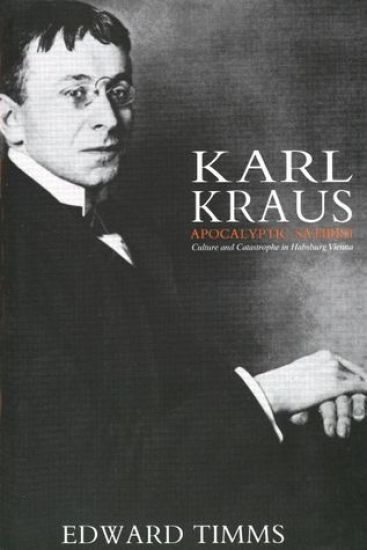
Karl Kraus

Karl Kraus

Edward Timms

Yale University Press
1989
pokkari
A fascinating study of the life and work of Karl Kraus, the Austrian satirist whose critiques of the mass media, the military-industrial complex, and technology running out of control have earned him a following fifty years after his death. Drawing on unfamiliar sources, Edward Timms analyzes Kraus's involvement in fundamental ideological issues of his time, such as psychoanalysis, social morality, design and architecture, the role of the artist, Zionism, anti-semitism, and war, and shows that Kraus' political position—caught between traditional Habsburg loyalties and new democratic commitments—was far more complex than has previously been suspected. "Dr. Timms' book is a major landmark in Kraus' studies, and an important contribution to our understanding of the culture of the early 20th century. It abounds in discoveries and insights."—W.E. Yeats, Times Literary Supplement "Timm's lucid prose, his masterly organization of the voluminous material he treats, his excellent translations of the documents he cites and his broad, readable portrayal of Viennese fin-de-siecle culture make this study accessible to the average reader and a pleasure for the literary professional. . . . An example of German studies at its best."—James Knowlton, European Studies Journal "Timms successfully weaves a colorful, and thoroughly researched and documented, account of essential cultural currents in Habsburg Vienna around his central figure. Copious illustrations and photographs enhance a most enjoyable text, making this an ideal introduction to Kraus and his work."—Choice
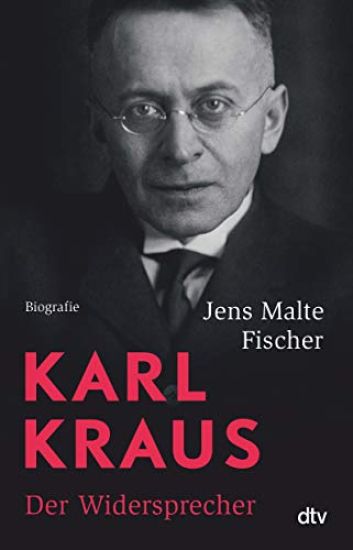
Karl Kraus

Karl Kraus

Helmut Arntzen

Peter Lang AG
2011
sidottu
Karl Kraus ist der bedeutendste Satiriker deutscher Sprache im 20. Jahrhundert. Seine Satire ist fast ausschliesslich sprachkritisch. Er begreift vor allem die sprachliche Problematik des Journalismus: Nicht die Sprache als Mittel "guter Schreibe", sondern die Sprache, die immer schon Gedanklichkeit in sich tragt, soll in den Texten erscheinen. In 18 Aufsatzen widmet sich der Autor der Biographie, den Schriften, der Satire und Polemik, den Beitragen zur Presse sowie der Rezeption Karl Kraus'.
Karl Kraus

Karl Kraus

Wilma Abeles Iggers

Springer
1967
nidottu
At no time did Vienna playa greater role in the intellectual and artistic life of the German speaking peoples and of Europe than in the first three decades of the present century. It was the home of Mahler and SchOnberg, of Hofmannsthal and Schnitzler, of Mach and Wittgen- stein, of Freud and of Austro-Marxism. Less known outside the Ger- man-speaking world was Karl Kraus, whose whole work was insepa- rably connected with the Vienna of his time and who, perhaps for this reason, may seem today more "provincial" than the others whom we have just named. Kraus was an apocalyptic moralist: The titles of some of his more important works unmistakably reveal it: "The last days of mankind"; "The day of judgment" (WeUgerieht); "The end of the world by black magic" (U ntergang der Welt dureh die sehwarzeM agie). Like Kierkegaard, he was a witness against his time. But the symbolic object of the time against which Kraus bore witness was of an infinitely minor quality than Kierkegaard's. He did not attack the church of his country or the Christianity of his days; his main target was the Viennese press, a target of quickly passing importance, of which little remains today. Kraus was a master of satirical invective and of the German lan- guage, which he regarded as his most precious inheritance (Ahnenerbe). He felt a deep sense of responsibility for the proper use of the language.
Karl Kraus: Apocalyptic Satirist, Volume 2

Karl Kraus: Apocalyptic Satirist, Volume 2

Edward Timms

Yale University Press
2013
pokkari
In this second volume of Karl Kraus: Apocalyptic Satirist, Edward Timms takes up Kraus’s story in November 1918, when the satirist responded to the creation of the new republics with a defiant hope, invoking international law against the dual threat of reactionary politics and irresponsible media. While contemporaries like Walter Benjamin regarded Kraus as heroically isolated, this book places him within a dynamic field of cultural production. Timms highlights the court cases Kraus pursued with his lawyer Oskar Samek and the theatrical projects that earned him Brecht’s friendship.In the final section of the book, the author refutes the legend that Kraus responded with stunned silence to Hitler’s seizure of power. His career culminated in Third Walpurgis Night, an analysis of Nazi ideology that has proved enduringly influential. Timms concludes that Kraus’s lifelong critique of the media, combining Orwell’s political radicalism with Joyce’s linguistic playfulness, incisively anticipates the propaganda techniques of our own age.
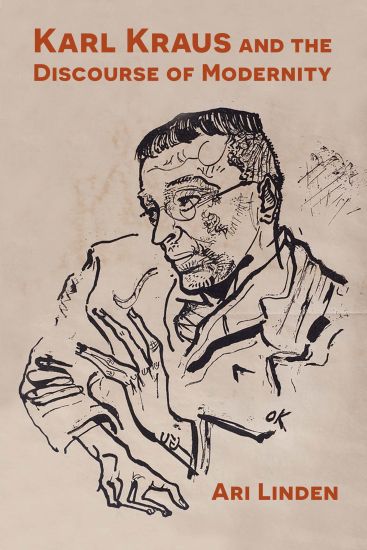
Karl Kraus and the Discourse of Modernity

Karl Kraus and the Discourse of Modernity

Ari Linden

Northwestern University Press
2020
nidottu
Ari Linden's Karl Kraus and the Discourse of Modernity reconsiders the literary works of the Viennese satirist, journalist, and playwright Karl Kraus (1874-1936). Linden reads Kraus's work both on its own terms and alongside philosophy and critical theory, yielding a portrait of Kraus as an irrepressible figure in the modernist tradition. In doing so, Linden draws a more robust image of German modernism itself. Combining close readings with intellectual history, Linden shows how Kraus's two major literary achievements (The Last Days of Mankind and The Third Walpurgis Night) and a lesser-known play (Cloudcuckooland) address the political catastrophes of the first third of Europe's twentieth century-from World War I to the rise of fascism. Kraus's central insight, Linden argues, is that the medial representations of such events have produced less an informed audience than one increasingly unmoved by mass violence. In the second part of the book, Linden explores this insight as he sees it inflected in SØren Kierkegaard, Walter Benjamin, and Theodor Adorno. This hidden dialogue, Linden argues, offers us a richer understanding of the often neglected relationship between satire and critical theory writ large.
Karl Kraus and the Discourse of Modernity

Karl Kraus and the Discourse of Modernity

Ari Linden

Northwestern University Press
2020
sidottu
Ari Linden's Karl Kraus and the Discourse of Modernity reconsiders the literary works of the Viennese satirist, journalist, and playwright Karl Kraus (1874-1936). Linden reads Kraus's work both on its own terms and alongside philosophy and critical theory, yielding a portrait of Kraus as an irrepressible figure in the modernist tradition. In doing so, Linden draws a more robust image of German modernism itself. Combining close readings with intellectual history, Linden shows how Kraus's two major literary achievements (The Last Days of Mankind and The Third Walpurgis Night) and a lesser-known play (Cloudcuckooland) address the political catastrophes of the first third of Europe's twentieth century-from World War I to the rise of fascism. Kraus's central insight, Linden argues, is that the medial representations of such events have produced less an informed audience than one increasingly unmoved by mass violence. In the second part of the book, Linden explores this insight as he sees it inflected in SØren Kierkegaard, Walter Benjamin, and Theodor Adorno. This hidden dialogue, Linden argues, offers us a richer understanding of the often neglected relationship between satire and critical theory writ large.
Karl Kraus 1933
The book provides new perspectives on the historical context surrounding Kraus's writings during the Third Reich as well as an analysis of the Third Walpurgnis Night. The contributions place Kraus’s work in dialogue with a broader spectrum of critical voices, including Adorno and Arendt. Revisiting Kraus from these new perspectives contributes to a better understanding of this major intellectual of the first half of the 20th century.
Karl Kraus und seine späte "Sprachlehre"

Karl Kraus und seine späte "Sprachlehre"

Isabel Langkabel

Bohlau Verlag
2024
isokokoinen pokkari
Die Publikation widmet sich sprachkritischen Texten, die von Karl Kraus in den 1930er Jahren fur seine "Fackel"-Rubrik "Zur Sprachlehre" verfasst, aber nie veroffentlicht wurden. Die bislang unausgewerteten Dokumente sind vor allem deshalb von Bedeutung, weil sie im Kontext eines 1934 in der "Fackel" erwahnten Plans zur Bekampfung des Nationalsozialismus stehen und fur Kraus' Sprachverstandnis zentral sind. Die selbst der Forschung bislang unbekannten Texte liegen nun erstmals ediert vor. Eine kontextualisierende Erlauterung fuhrt in die Nachlassgeschichte und Sprachthematik ein. Der anschliessenden Edition folgen umfangreiche interpretatorische Kommentare, die Kraus' Kritik am zeitgenossischen Sprachgebrauch reflektieren.
Karl Kraus-Handbuch

Karl Kraus-Handbuch

Springer-Verlag Berlin and Heidelberg GmbH Co. KG
2022
sidottu
Der Wiener Publizist Karl Kraus (1874–1936) war eine zentrale Figur der europäischen Moderne. Sein monumentales Werk umfasst nicht nur Essays, Aphorismen, Gedichte und Dramen, erschienen großteils auf den tausenden Seiten seiner Zeitschrift Die Fackel, sondern auch hunderte Vorlesungen, Radiosendungen, Plakatkampagnen und Rechtsfälle. Er prägte seine Zeit ebenso, wie sie ihn prägte, etwa in dem Antikriegsdrama Die letzten Tage der Menschheit und der Dritten Walpurgisnacht, seiner frühen Analyse des Nationalsozialismus. Die Kraus’sche Medienkritik, sein präzises Sprachdenken und aufklärerischer Witz haben das kritische Denken weltweit beeinflusst und zeigen bis heute, was es heißt, ein öffentlicher Akteur zu sein.?