

Kirjahaku
Etsi kirjoja tekijän nimen, kirjan nimen tai ISBN:n perusteella.
1000 tulosta hakusanalla Karl Stahlin


Die Walsinghams Bis Zur Mitte Des 16. Jahrhunderts ...
Karl Sthlin; Karl Stahlin
Nabu Press
2010
pokkari

Personlichkeiten Und Reformbewegungen Im Zeitalter Der Ersten Romanows
St Hlin Karl 1865-; Stahlin Karl 1865-
Nabu Press
2011
pokkari

Come Inside My Head: Karl Marx, Fidel Castro, Mao Zedong, Joseph Stalin and more...
Dead Writers Club; Pointer Institute; Ian Tinny
Createspace Independent Publishing Platform
2018
nidottu
Supermodel and Superwriter Lin Xun invites you to "Come Inside My Head." She exposes Karl Marx, Joseph Stalin, Mao Zedong, Adolf Hitler, Fidel Castro, and more. They prove that a mind is a terrible thing. Her horrible discoveries include: (1) Congress and the Flag Code confirm that the military salute was the origin of the Nazi salute. (2) The USA's Pledge of Allegiance inspired Nazi rituals. (3) Public schools spread Nazi behavior. (4) Swastikas represented crossed "S" letter shapes for "socialist" under Hitler. They are eye-popping revelations that are undisputed by the New York Times - The Washington Post - Los Angeles Times - San Francisco Chronicle - Tampa Bay Times - Chicago Tribune - Newsday - The New York Times Book Review - Tampa Tribune - Library Journal - Publishers Weekly - Saint Petersburg Times - History Journal - Scholar's Weekly - Vogue - O: The Oprah Magazine Because she speaks truth to power with her ground-breaking revelations, Lin Xun has been subjected to harassment (including risque images of her posted on the internet). She doesn't care In this book, Lin spanks history's bottom, leaving red hand prints. Hop in Lin's pink Cadillac and take a ride to the land inside of your mind. Nazi salutes and Nazi behavior originated from the USA's Pledge of Allegiance to the flag, created by Francis Bellamy, an American socialist. The Nazi salute was performed by public officials in the USA from 1892 through 1942. What happened to old photographs and films of the American Nazi salute performed by federal, state, county, and local officials inside the USA? Those photos and films are rare because people don't want to know the truth about the government's past. Public officials in the USA who preceded the German socialist (Hitler) and the Italian socialist (Mussolini) were sources for the stiff-armed salute (and robotic chanting) in those countries and other foreign countries. The "ancient Roman salute" myth originated from the city of Rome in the state of New York (not Italy), Francis Bellamy's hometown. Later, Mussolini presented a strange gift to the city of Rome, NY: a statue of two human male infants suckling on a female wolf. That statue remains on display in Rome, NY. Boy Scouts and Girl Scouts helped spread the Nazi salute and the swastika to Germany and elsewhere. Swastikas were used to represent crossed "S"-letters under Adolf Hitler's National Socialist German Workers Party. The author Lin Xun searches for old photos and film footage of the early Pledge of Allegiance showing the origin of the USA's notorious stiff-armed salute. Many of those artifacts have been found among Dr. Rex Curry's historical archival work. Curry's discoveries are changing the history books. Please send any images or inquiries to the email address of the publisher mentioned in the book. Each book is personally handled, wrapped, and mailed by Lin Xun IN THE NUDE Or by the publisher, depending on who's available. A tape might exist of Lin Xun doing something in an elevator, though exactly where that somewhere is and what that something might be, no one in media can say. That's because no one in media seems to have seen the tape -or is even confident it exists. "There is rumor of a Pulitzer Prize for exposing the Pledge of Allegiance as the origin of Nazi salutes and Nazi behavior; and the swastika as alphabetical 'S' letter shaped symbolism for 'socialist.' Hooray " - R. Yates Bloodsworth, Stop The Pledge (STP) Foundation. "The symbol presently known as Lin Xun wrote a game-changer with this book." - Francis Hannah Cruz

This unique account records the of life of a young Austrian training and serving as a pilot in the Luftwaffe during World War II, flying transport and courier aircraft on the Eastern Front. Karl Sinnhuber writes compellingly of his many encounters with danger, including being chased by Russian fighter aircraft near Stalingrad, and a literally chilling escape, wounded, from East Prussia, as the Red Army advanced on Konigsberg in January 1945, his journey home to Salzburg, capture by the US Army and eventual return to civilian life in which he developed a distinguished academic career. The book details everyday life while training, including the compulsory stint in the Labour Corps during which he followed front line troops invading Poland in September 1939, encountering Jewish villagers just days before the German Army probably took them away. The author's photos of these people are among many previously unpublished images within this historically important eye-witness account.

Stalin’s Niños examines how the Soviet Union raised and educated nearly three thousand child refugees of the Spanish Civil War. An analysis of the archival record and numerous letters, oral histories, and memoirs uncovers a little-known story that describes the Soviet transformation of children into future builders of communism and reveals the educational techniques shared with other modern states. Classroom education taught patriotism for the two homelands and the importance of emulating Spanish and Soviet heroes, scientists, soldiers, and artists. Extra-curricular clubs and activities reinforced classroom experiences and helped discipline the mind, body, and behaviours. Adult mentors, like the heroes studied in the classroom, provided models to emulate and became the tangible expression of the ideal Spaniard and Soviet. The Basque and Spanish children thus were transformed into hybrid Hispano-Soviets fully engaged with their native language, culture, and traditions while also imbued with Russian language and culture and Soviet ideals of hard work, comradery, internationalism, and sacrifice for ideals and others. Throughout their fourteen-year existence and even during the horrific relocation to the Soviet interior during the Second World War, the twenty-two Soviet boarding schools designed specifically for the Spanish refugee children – and better provisioned than those for Soviet children – transformed displaced niños into Red Army heroes, award-winning Soviet athletes and artists, successful educators and workers, and in some cases valuable resources helping to rebuild Cuba after the revolution. Stalin’s Niños also sheds new light on the education of non-Russian Soviet and international students and the process of constructing a supranational Soviet identity.

Stalin’s Niños examines how the Soviet Union raised and educated nearly three thousand child refugees of the Spanish Civil War. An analysis of the archival record and numerous letters, oral histories, and memoirs uncovers a little-known story that describes the Soviet transformation of children into future builders of communism and reveals the educational techniques shared with other modern states. Classroom education taught patriotism for the two homelands and the importance of emulating Spanish and Soviet heroes, scientists, soldiers, and artists. Extra-curricular clubs and activities reinforced classroom experiences and helped discipline the mind, body, and behaviours. Adult mentors, like the heroes studied in the classroom, provided models to emulate and became the tangible expression of the ideal Spaniard and Soviet. The Basque and Spanish children thus were transformed into hybrid Hispano-Soviets fully engaged with their native language, culture, and traditions while also imbued with Russian language and culture and Soviet ideals of hard work, comradery, internationalism, and sacrifice for ideals and others. Throughout their fourteen-year existence and even during the horrific relocation to the Soviet interior during the Second World War, the twenty-two Soviet boarding schools designed specifically for the Spanish refugee children – and better provisioned than those for Soviet children – transformed displaced niños into Red Army heroes, award-winning Soviet athletes and artists, successful educators and workers, and in some cases valuable resources helping to rebuild Cuba after the revolution. Stalin’s Niños also sheds new light on the education of non-Russian Soviet and international students and the process of constructing a supranational Soviet identity.

Zeitstandversuche an austenitischen Stählen und Legierungen
Karl Bungardt
Vs Verlag Fur Sozialwissenschaften
1958
nidottu

Kurze Darlegung der Meinungsverschiedenheiten in der Partei
Josef Wissarionowitsch Stalin; Karl Kautsky
Fortschrittsverlag
2024
pokkari
Kurze Darlegung der Meinungsverschiedenheiten in der ParteiIn seinem 1905 erstmals im Proletari erschienenen Artikel verteidigt J.W. Stalin die Thesen, die W.I. Lenin in Womit beginnen? und Was tun? im Zusammenhang mit den dr ngenden Fragen der russischen sozialdemokratischen Bewegung entwickelt hat.Diese ausgezeichnete Exposition verallgemeinert nicht nur Lenins Ideen, sondern entwickelt sie in einigen Punkten auch weiter.Im Anhang finden sich der f r die Entwicklung des leninistischen Denkens bedeutende Artikel Die Revision des Programms der Sozialdemokratie in sterreich von Karl Kautsky (1901) sowie Lenins Womit beginnen? aus demselben Jahr.
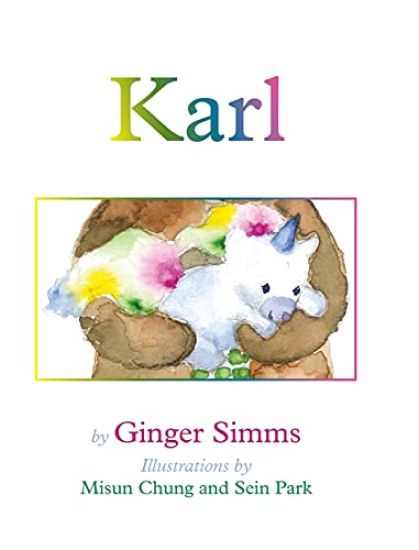
"This book is so cute, and I love the amazing illustrations. This is the best book I've ever read " -Gemma Gilmartin (age 8)All proceeds from the sale of this book support the Ginger Simms Leadership Fund at Outward Bound. The fund provides scholarships to encourage, train and empower highly-motivated young women.details & donations: www.ncobs.org/ginger-simms

K ln 2017 Der 16j hrige Sch ler Karl sieht sein Vaterland in Gefahr. Das korrupte Merkel-Regime ffnet mit seiner Fl chtlingspolitik dem gro en Austausch T r und Tor, w hrend echte Deutsche wie er selbst und seine alkoholkranke Mutter mit Sozialleistungen abgespeist werden. Angestachelt durch seine Kameraden beschlie t er, sich endlich zu wehren. K ln 1933 Die 16j hrige J din Esther macht sich gro e Sorgen. Die Nationalsozialisten haben die Wahlen gewonnen. Seit Tagen marschieren sie in den Stra en auf und ab, singen ihre hasserf llten Lieder und greifen J dinnen und Juden auf offener Stra e an. Gestern erst wurden die Scheiben von Vaters Gesch ft mit wei er Farbe beschmiert. Und heute brachten ihre Br der einen bewusstlos geschlagenen und bel zugerichteten jungen Mann nach Hause. Wo sollte das alles noch enden?


"Karl stirbt, das wei er mit jeder Faser seines Körpers und doch ist alles gut - schon erstaunlich, hatte er sich doch zeitlebens vor genau diesem Augenblick gefürchtet ..."Begleiten Sie Karl auf seiner Reise, die im Leben beginnt, über den Tod hinausgeht und die ihn in eine Welt voller Mysterien und Geheimnisse führt.Die Kurzgeschichten "Der Tod des Karl" und "Karl" sind Auszüge aus den Büchern von Martin Heyden und stellen eine bildhafte und sehr lebendige Beschreibung dessen dar, was auf uns alle eines fernen Tages zukommt.Tauchen Sie ein und erfahren Sie, wie es ist, dem Tode nahe zu sein und wie es sein wird in den Welten, die da kommen.Im Sinne von Montaigne: Es gibt nichts zu fürchten, au er vielleicht die Furcht selbst.(Kurzgeschichte, 34 Seiten: "Das B chlein ist tr stlich geschrieben, ohne zu besch nigen. Die Kurzgeschichte zeigt die Dinge, so wie sie sind und eignet sich sehr gut als Einstieg in das komplexe Thema "Leben nach dem Tod" - f r einen selbst oder aber auch als Geschenk f r jemanden, der in seinem Leben nach Antworten sucht." - Martin Heyden)
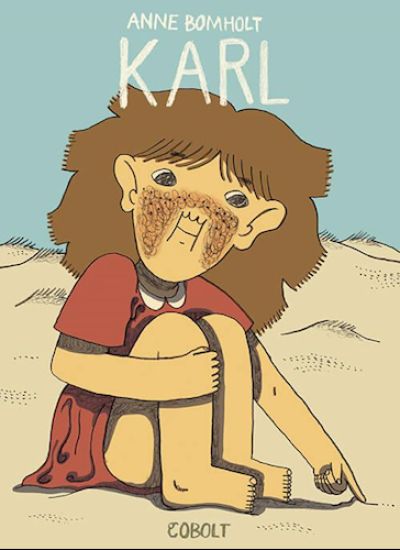
Selvom Helena er på ferie med sin familie, føler hun sig alene. En dag møder hun et spøgelse, der også er alene. Ingen andre kan se det, og spøgelset kan kun huske én ting. Sit navn, Karl. Kan Helena hjælpe Karl med at finde ud af, hvem han er? Kan Karl hjælpe Helena? Karl er en tegneserie om, hvordan man godt kan føle sig alene, selvom man er sammen med andre. Den er skrevet og tegnet af Anne Bomholt (f. 1996). Anne læser på Graphic Storytelling på TAW i Viborg og Karl er hendes debut.

This volume traces Barth's work from his rejection of theological liberalism and his rediscovery of the Bible, to his magnum opus, the Church Dogmatics.

World of Karl Pilkington
Karl Pilkington; Stephen Merchant; Ricky Gervais
Harpercollins Publishers
2008
pokkari
A collection of the best moments from the â??Ricky Gervais Showâ?? with further musings from Karl Pilkington, star of Sky 1â??s â??An Idiot Abroadâ??.

KARL MARX AMP RELIGION
RowmanLittlefield
2035
sidottu