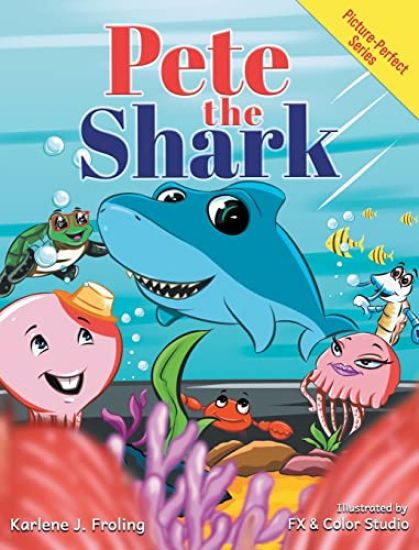
From the creator of I Love Being Me, Uniquely Me comes an empowering story about showing up as yourself."Hey, Pete " says Taffy the Turtle. "Time to show off those pearly whites " Ever since he was a pup, Pete the Shark has heard so many exciting stories about the open aquarium waters. He learned that the children come to play and take lots of pictures with the animals. He can't wait to have his picture taken Join Pete as he navigates his way through the aquarium waters trying to find solutions for a problem that never should have been.A kid's book that is perfect for young readers ages 3, 4, 5, 6, 7, and 8 years old.Gift this children's book to a child, library, or teacher for World Earth Day or Ocean Day. Make it a picture-perfect day
From the creator of Pete the Shark comes an empowering story about speaking up when you see a wrong.What you see and say can make a difference. If you see something wrong...do something. Say something...you can save a life In this inspiring new book with colorful illustrations, Taffy the Turtle and her ocean friends learn an important lesson about the difference it makes when we see a wrong and do something about it. If it is wrong...use your voice: Say Something Picture Day is this week and Taffy cannot wait to have her picture taken. But when Taffy tells on her classmate for breaking a class rule, it results in her classmate not talking to her and an awkward school picture. Now, she wonders if it's good to "say something when she sees something". She decides not to tell on anyone again. Will that decision expose the community to danger when Taffy spots real trouble?Perfect for kids 3, 4, 5, 6, 7, and 8 years old.
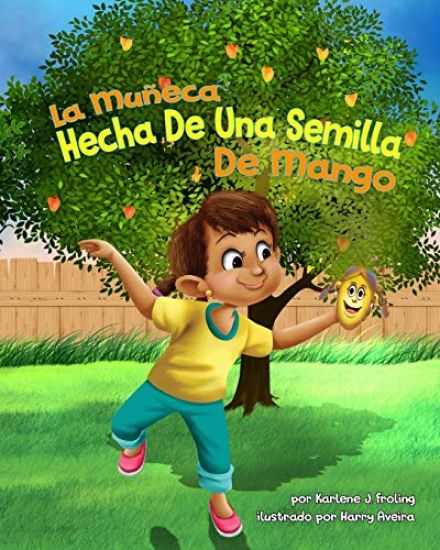
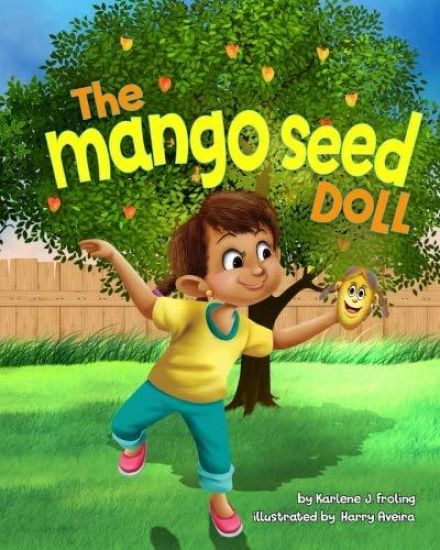
The Mango Seed Doll is a Spanish-language children's book that can be enjoyed by fluent Spanish speakers as well as those learning the language. The story highlights the importance of embracing our own unique qualities and being ourselves. It encourages self-acceptance, self-confidence, inclusion and in a compassionate way addresses subtle bullying in a way that creates a discussion.Te presento a Salon la mu eca semilla de mango. Qui n le pondr a el nombre de Salon a una mu eca? Bueno, Salon no es una mu eca com n y corriente, y su creadora, KayLynne, tampoco es una ni a com n.KayLynne es una ni a muy creativa que con su imaginaci n cre una mu eca hecha de una semilla de mango y la llam Salon. La am y pens que era perfecta. "Pero no se parece a nuestras mu ecas," dec an. No dejaban participar a KayLynne en ninguno de sus juegos. Qe har ella?Meet the mango seed doll, Salon. "Who would name a doll Salon? Well, Salon is no usual doll. And her creator KayLynne is no usual girl.KayLynne is a very creative girl who used her imagination and created a mango seed doll and named it Salon. She loved it and thought it was beautiful. "Ew It does not look like our dolls," they said. They would not let KayLynne join in any of their games. What will she do?
What could happen if a young girl is face with subtle bullying? Subtle insults affect self-esteem, self-confidence and can be as simple as 'That doll doesn't look the SAME as mine. EWW KayLynne wants to ignore the teasing...But can she? In this lively, creative children's story a mango gets picked from a tree, and the seed made into a unique doll, by a special girl. In The Mango Seed Doll, told through a doll's eyes, all children will learn the importance of positive thinking and self-acceptance. Compassionately, the story addresses subtle bullying in a way that will undoubtedly create many classroom and household discussions. But it now and get the eBook FREE
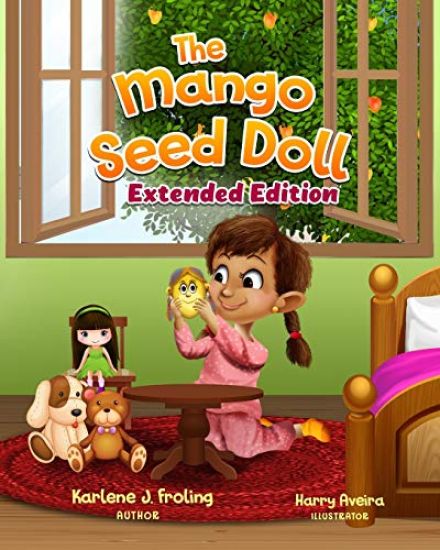
Should I stand up to subtle bullying or ignore their rude remarks?Unkind words of insults can affect self-esteem, self-confidence and can be as simple as 'Why are your ears SO big' Start the conversation about how children can deal with this common occurrence.In this colorfully illustrated children's story, a young girl being bullied finds a creative way out. Creating a mango seed doll only make things worse.Read along as KayLynne learns how to express herself and share that being unique and creative is something to celebrate.Buy the book and get the eBook for FREE Follow us on Instagram @KarleneJFrolingAuthor
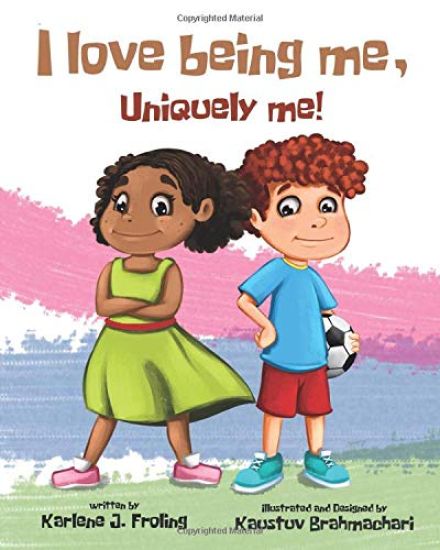
Loving oneself matters Our values and what we believe in matter.Is it okay to love yourself unapologetically?Self-acceptance from an early age helps children grow up to be bold, confident and kind. I Love Being Me, Uniquely Me features children of all ages from various cultures, who confidently embrace who they are and why they love being themselves.I love being me and I think you'll agree, Someone sweeter than me you'll not find.If you search high and low, you surely will see, Just one me-special, loving and kind.Yes-it is okay to love yourself unapologetically. Be proud to be YOU Don't try to fit in. Stand out by being YOU.Don't let social media and popular culture determine who our children are and what they should look like. Be YOU Buy the book and get the eBook FREE.Follow us on Instagram @KarleneJFrolingAutho
Mathematical modelling is an essential tool in present-day ecological research. Yet for many ecologists it is still problematic to apply modelling in their research. In our experience, the major problem is at the conceptual level: proper understanding of what a model is, how ecological relations can be translated consistently into mathematical equations, how models are solved, steady states calculated and interpreted. Many textbooks jump over these conceptual hurdles to dive into detailed formulations or the mathematics of solution. This book attempts to fill that gap. It introduces essential concepts for mathematical modelling, explains the mathematics behind the methods, and helps readers to implement models and obtain hands-on experience. Throughout the book, emphasis is laid on how to translate ecological questions into interpretable models in a practical way.The book aims to be an introductory textbook at the undergraduate-graduate level, but will also be useful to seduce experienced ecologists into the world of modelling. The range of ecological models treated is wide, from Lotka-Volterra type of principle-seeking models to environmental or ecosystem models, and including matrix models, lattice models and sequential decision models. All chapters contain a concise introduction into the theory, worked-out examples and exercises. All examples are implemented in the open-source package R, thus taking away problems of software availability for use of the book. All code used in the book is available on a dedicated website.
Mathematical modelling is an essential tool in present-day ecological research. Yet for many ecologists it is still problematic to apply modelling in their research. In our experience, the major problem is at the conceptual level: proper understanding of what a model is, how ecological relations can be translated consistently into mathematical equations, how models are solved, steady states calculated and interpreted. Many textbooks jump over these conceptual hurdles to dive into detailed formulations or the mathematics of solution. This book attempts to fill that gap. It introduces essential concepts for mathematical modelling, explains the mathematics behind the methods, and helps readers to implement models and obtain hands-on experience. Throughout the book, emphasis is laid on how to translate ecological questions into interpretable models in a practical way.The book aims to be an introductory textbook at the undergraduate-graduate level, but will also be useful to seduce experienced ecologists into the world of modelling. The range of ecological models treated is wide, from Lotka-Volterra type of principle-seeking models to environmental or ecosystem models, and including matrix models, lattice models and sequential decision models. All chapters contain a concise introduction into the theory, worked-out examples and exercises. All examples are implemented in the open-source package R, thus taking away problems of software availability for use of the book. All code used in the book is available on a dedicated website.