

Kirjahaku
Etsi kirjoja tekijän nimen, kirjan nimen tai ISBN:n perusteella.
1000 tulosta hakusanalla Karol Birchfield



The achievements of John Paul II in recent years cannot be overstated. Led by this man and his profound contribution to Catholic social thought, the Catholic Church has become the world's single greatest voice for democracy and human rights. Protestants, too, have found in Pope John Paul II a brave and steadfast Christian pastor. Few people, however, know the Pope's background or the philosophy behind his thinking. Written by Rocco Buttiglione, one of the Pope's closest friends and counselors, this volume is the standard work for all who want to understand the philosophical mind of Karol Wojtyla, the man who became Pope John Paul II. Based on an accurate reading of all of Wojtyla's works and of all relevant secondary literature, this English edition of Buttiglione's book provides a complete introduction to the Pope's philosophy and his original contribution to the philosophy of freedom. The early chapters give biographical information on Wojtyla and examine his early philosophical formation. The middle chapters explore in depth two of the Pope's central philosophical and theological conceptions--human love and the acting person.The closing chapters look at Wojtyla's role at the Second Vatican Council, examine his poetic works, and place his thought in dialogue with contemporary philosophy. New to this English edition of Buttiglione's work are a foreword by Michael Novak, an appendix published for the third edition of The Acting Person, and an afterword that updates the book with a survey of secondary literature on the Pope's thought published between 1982 and 1996.
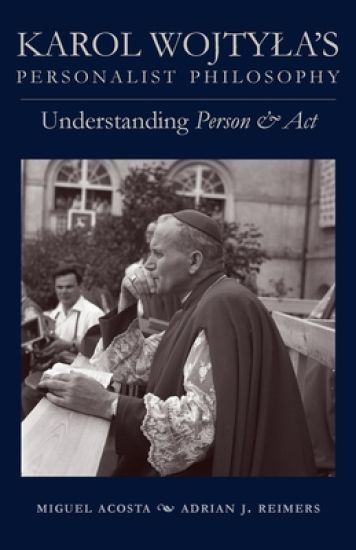
Karol Wojtyla's Personalist Philosophy
Miguel Acosta; Adrian J. Reimers
The Catholic University of America Press
2019
nidottu
An important milestone of 20th Century philosophy was the rise of personalism. After the crimes and atrocities against millions of human beings in two World Wars, especially the Second, some philosophers and other thinkers began to seek arguments showing the value of each human being, to expose and denounce the folly of political structures that violate the inalienable rights of the individual person.Karol Wojty?a appeals to the ancient concept of 'person' to emphasize the particular value of each human being. The person is unique because of their subjectivity by which they possesses an unrepeatable interior world in the history of humanity. Their rational nature grants them a special character among living beings, among which is the transcendence to the infinite. Wojty?a magisterially shows how each human being's personhood is rooted in a conscious and free subjectivity, which is marked also by personal and social responsibility. Wojty?a's original philosophical analysis takes for its starting point the human act, in which consciousness and experience consolidate voluntary choices, which are objectively efficacious. By their acts, the person determines their own personhood. This self-dominion manifests the person and enables them to live together in a community in which one's neighbor can be a companion on the voyage of life.This work provides a clear guide to Karol Wojty?a's principal philosophical work, Person and Act, rigorously analyzing the meaning that the author intended in his exposition. An important feature of the work is that the authors rely on the original Polish text, Osoba i czyn, as well as the best translations into Italian and Spanish, rather than on a flawed and sometimes misleading English edition of the work.Besides the analysis of Wojty?a's masterwork, this volume offers three chapters examining the impact of Wojty?a's anthropology on the relationship between faith and reason.

How does a happy little girl in red polka dot shoes evolve into a catatonic young mother needing experimental electroshock treatment? An unfortunate accident propels a family into circumstances of nightmare proportions. Karol is left to her own devices when her once loving parents turn into strangers. Trapped in their own dysfunction, they fail to provide their children with basic needs such as food, clothing, sleep and safety. Hunger, fear, and shame become Karol's constant companions. Every day she faces the threat of physical, mental, and sexual abuse never knowing when they will strike again. Hop onto the rollercoaster and hold on tight. Get an up close and personal view into the life of a child in crisis who no one, with few exceptions, reaches out to help. Remember, it's not where you start out in life; but where you end up. Follow Karol as she battles the aftermath of her childhood before finding the fairy tale life she thought existed only in her dreams.
Foundations of Geometry: Euclidean and Bolyai-Lobachevskian Geometry. Projective Geometry. By Karol Borsuk and Wanda Szmielew
Karol Borsuk
Hassell Street Press
2021
sidottu
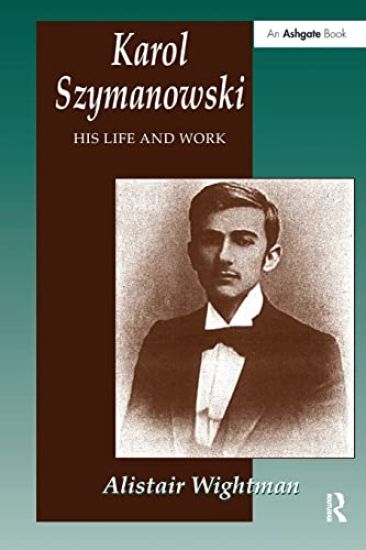
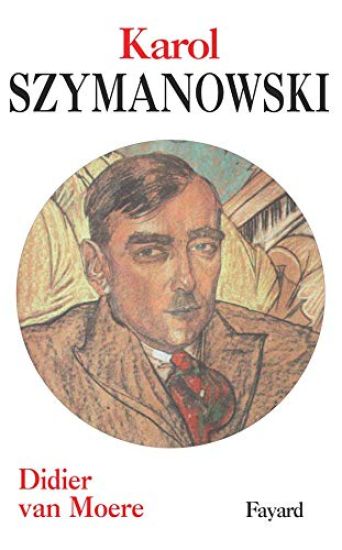
The music of the Polish composer Karol Szymanowski (1882-1937) has enjoyed a resurgence of interest in recent years. Despite wide recognition in his own lifetime, Szymanowski’s works were somewhat overlooked in the decades following his death. Outside Poland, changing fashions militated against acceptance of his achievement, and subsequent generations of Polish composers regarded his music as too reactionary to provide a basis on which to found a national musical identity. In this full-scale study of Karol Szymanowski’s life and music, Alistair Wightman explores the composer’s position as a constant outsider in his own country, yet a ’good European’ in the ways in which he responded positively to a diverse range of musical talents, in particular as Stravinsky, Strauss, Berg, Hindemith, Prokofiev and Ravel. The book throws light on Szymanowski’s relationship to the Polish musical establishment, the reception of his works at home and abroad, his work as an educationalist, and the essentially European dimension of his art, drawing on letters, polemical writings, verse, theatrical sketches and the memoirs of family, friends and contemporaries. All of Szymanowski’s significant works are discussed, illustrated with nearly 140 music examples. Evaluation is made of the close links existing between the composer’s musical and literary works from the earliest stages of his career, as well as the various ideological strands that went together to form the unique, humanistic synthesis, characteristic of his mature work.

It's Probably Nothing: A Memoir by Karol-Ann Coleman: How a routine mammogram changed one teacher's life
Karol-Ann Coleman
Createspace Independent Publishing Platform
2003
nidottu
Karol-Ann Coleman tells her story at a time when it seems uncommon for women at 35 to be diagnosed with breast cancer. After being told by several health care professionals that her type of breast cancer is "probably nothing", it became a daily mantra in her meetings, consultations, conversations, and interactions. Karol-Ann shares a year of her experience as a newlywed, a teacher, and a woman who was unsure about motherhood in the beautiful community of Pacifica, California.
Sister Karol's Book of Spells, Blessings, & Folk Magic
Karol Jackowski
Red Wheel/Weiser
2019
nidottu
A guide to folk magic from diverse spiritual traditions ranging from Catholicism to Wicca and moreAnyone seeking to mend a broken heart, turn enemies into friends, or find a guardian angel will find encouragement in this uplifting, inspiring, and entertaining book. Author Karol Jackowski introduces, explains, and explores the nature of spells, prayers, and blessings and offers practical suggestions for their use. Readers will learn how to cast spells, create altar space, and most crucially how to live their best spiritual and magical lives.Karol draws from a variety of spiritual and folk magic traditions with a focus on the power of positive thought. The first half of the book provides magical and spiritual instruction, while the second half consists of Sister Karol's personal book of spells and rituals, derived mainly from Catholic folk magic, but also from Buddhist, Jewish, Native American, and Wiccan influences.
The music of the Polish composer Karol Szymanowski (1882-1937) has enjoyed a resurgence of interest in recent years. Despite wide recognition in his own lifetime, Szymanowski’s works were somewhat overlooked in the decades following his death. Outside Poland, changing fashions militated against acceptance of his achievement, and subsequent generations of Polish composers regarded his music as too reactionary to provide a basis on which to found a national musical identity. In this full-scale study of Karol Szymanowski’s life and music, Alistair Wightman explores the composer’s position as a constant outsider in his own country, yet a ’good European’ in the ways in which he responded positively to a diverse range of musical talents, in particular as Stravinsky, Strauss, Berg, Hindemith, Prokofiev and Ravel. The book throws light on Szymanowski’s relationship to the Polish musical establishment, the reception of his works at home and abroad, his work as an educationalist, and the essentially European dimension of his art, drawing on letters, polemical writings, verse, theatrical sketches and the memoirs of family, friends and contemporaries. All of Szymanowski’s significant works are discussed, illustrated with nearly 140 music examples. Evaluation is made of the close links existing between the composer’s musical and literary works from the earliest stages of his career, as well as the various ideological strands that went together to form the unique, humanistic synthesis, characteristic of his mature work.
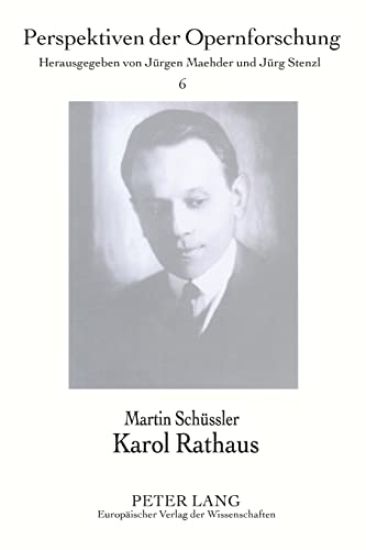
Karol Rathaus (geboren 1895 in Tarnopol, gestorben 1954 in New York), Schuler von Franz Schreker in Wien und Berlin, war in den fruhen 30er Jahren ein bekannter Komponist von Sinfonik, Kammermusik, Schauspielmusiken und Partituren fur den Tonfilm. Rathaus gehoerte zu jenen, deren Karriere von den Nationalsozialisten abrupt unterbrochen wurde. In seiner neuen Heimat, den USA, wandelte sich Rathaus vom ambitionierten Komponisten zum komponierenden Padagogen. Sein kunstlerisches Werk der Vorkriegszeit blieb zunachst vergessen und wird erst heute allmahlich wieder bekannt. Dieses Buch ist die erste Gesamtdarstellung von Biographie und Werk des Komponisten. Zugleich ist es nicht nur ein facettenreicher Beitrag zur Exil- und Emigrationsforschung, sondern enthalt auch, begrundet in Rathaus' ausserordentlich vielseitigem Schaffen, zahlreiche Dokumente von bekannten Zeitgenossen aus Literatur, Film- und Theaterkunst in Europa und den USA.

Karol Wojtylas Theorie der Teilhabe als sozialphilosophische Grundlage personalistischer Pädagogik
Hans Ernst; Gisela Ernst
BoD - Books on Demand
2023
sidottu
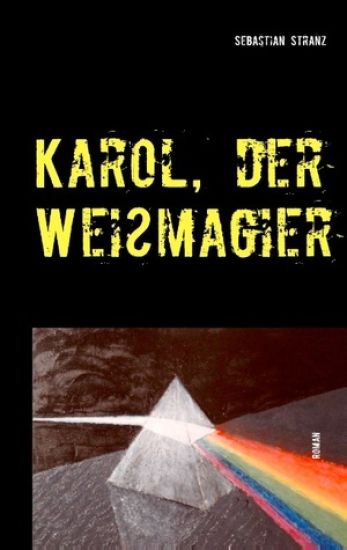
Karol, Sch ler der wei magischen Loge, beklagt sich an seinem 40. Geburtstag bei seinem Meister. Er ist unzufrieden mit seinem Leben, er hat das Gef hl, nicht recht voranzukommen, er m chte nicht nur geistiges Wissen ansammeln, sondern es auch anwenden. Unmittelbar darauf berschlagen sich die Ereignisse. Karol findet die wahre Liebe, er bekommt eine gro e Aufgabe bertragen, und er erkennt durch seine therapeutische Arbeit mit dem alkoholabh ngigen Pawel das eigentliche Wesen der Wei en Magie. Im zweiten Teil findet Karol unverhofft zu einer verborgenen Stadt der wei magischen Bruderschaft. Voller Faszination lernt er dieses Wirklichkeit gewordene Utopia von Tag zu Tag mehr kennen. Gleichzeitig entdeckt er aber auch seine inneren Fesseln des Egos, die er erst ablegen muss, ehe er wirklich bereit ist, ein Teil davon zu werden.

Karol Radziszewski
Sternberg Press
2021
pokkari
Karol Radziszewski's montage of queer archival materials that formulate new ways of understanding history, memory, and legislation in Eastern Europe. In 1989, a great political change awaited Poland: with the fall of the Berlin wall and the flourishing of capitalism, the people behind the Iron Curtain would be set free. Karol Radziszewski was nine years old, living in Bialystok, and, in a graph-paper notebook, he drew pages and pages of princesses in corrective eyewear, dogs with mermaid tails, and mysterious seductresses, whose exceptionally firm bosoms would be, sooner or later, bedecked in arrows shot into a heart or a flame. Karol knows that the secrets of these notebooks were off limits to everyone. Today these drawings reemerge as self-portraits of this adult artist: full-fledged works capping off Radziszewski's enormous queer archive. For he himself is a man of many faces: artist, curator, film director, and avid collector, skillfully navigating between the visual and performative arts. But above all, he is the creator of the Queer Archives Institute, a never-ending performance and informal organization grappling with the suppressed, yet surprisingly beautiful queer memory of Central and Eastern Europe. The artist's special montage of archival materials--self-made, ready-made, or inspiration for artistic extrapolation--formulates new ways of understanding history, memory, or legislation. He blurs facts with fantasies, cobbling together documentation from scraps of memories. He leaves false trails to suggest alternative paths of remembering. The secret performativity of Karol Radziszewski's archive is not merely in its tales of the past, but above all, in the queer potential of the future: in its revolutionary nature, its change, and its promise of freedom. Contributors Michal Grzegorzek, Fanny Hauser, Jo o Laia, lisabeth Lebovici, Katarzyna Przyluska-Urbanowicz, Dorota Sajewska, Barbara Steiner, Wojciech Szymański