Kirjojen hintavertailu. Mukana 11 238 394 kirjaa ja 12 kauppaa.

Kirjahaku

Etsi kirjoja tekijän nimen, kirjan nimen tai ISBN:n perusteella.

1000 tulosta hakusanalla Karsten Harries

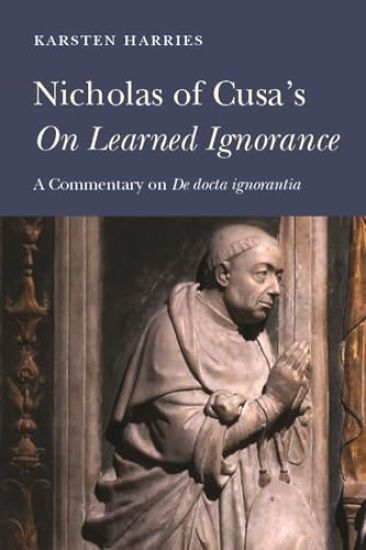
Nicholas of Cusa's "On Learned Ignorance

Nicholas of Cusa's "On Learned Ignorance

Karsten Harries

THE CATHOLIC UNIVERSITY OF AMERICA PRESS
2024
sidottu
This is the first commentary to have been written on Nicholas of Cusa's most famous work, On Learned Ignorance. This fact testifies to the difficulty of what has long been recognized to be the most significant philosophical text produced by the Renaissance. While there are many passages in the work that can be cited in support of Cassirer's celebration of Cusanus as the first modern philosopher, that judgment is challenged by the way his work is rooted in a faith and a tradition likely to strike us as thoroughly medieval. This commentary shows how closely the two are linked. Despite the many ways in which what the cardinal has to say belongs to a past that the progress of reason would seem to have left irrecoverably behind, it yet provides us with a continuing challenge. Key to On Learned Ignorance is the incommensurability of the infinite and the finite, of God and creation. Cusanus lets us recognize the essential transcendence of reality, so different from the ontology implied by Descartes' insistence on clear and distinct understanding, which has presided over the progress of science and has helped shape our world. What makes Cusanus' thought important is not the way it anticipates modernity, but the way it challenge often taken for granted presuppositions of our worldview, most importantly a distinctly modern self-assertion or self-elevation that has made our human reason the measure of reality. If it is impossible to deny the countless ways in which our science and technology have given us ever deeper insights into the mysteries of nature and improved our lives, it is equally impossible to deny that this very progress today endangers this fragile earth and the quality of our lives. Cusanus can help us preserve our humanity.
Between Nihilism and Faith

Between Nihilism and Faith

Karsten Harries

De Gruyter
2010
sidottu
If the Enlightenment turned to reason to reoccupy the place left vacant by the death of God, the history of the last two centuries has undermined the confidence that reason will bind freedom and keep it responsible. We cannot escape this history, which has issued in a pervasive nihilism and has rendered all appeals to the ethical questionable. Nor could Kierkegaard. The specter of nihilism haunts all of his writings, as it haunts already German romanticism, to which he is so indebted. To exorcize it is his most fundamental concern. And it is the same fundamentally religious concern that makes Kierkegaard so relevant to our situation: What today is to make life meaningful? If not reason, does the turn to the aesthetic promise an answer? To really choose is to bind freedom. Either-Or calls us to make such a choice, i.e. to be authentic. But what does it mean to be authentic? How are we today to think of such an authentic choice? As autonomous action? As a blind leap? As a leap of faith? Either/Or circles around these questions.
The Antinomy of Being

The Antinomy of Being

Karsten Harries

De Gruyter
2021
isokokoinen pokkari
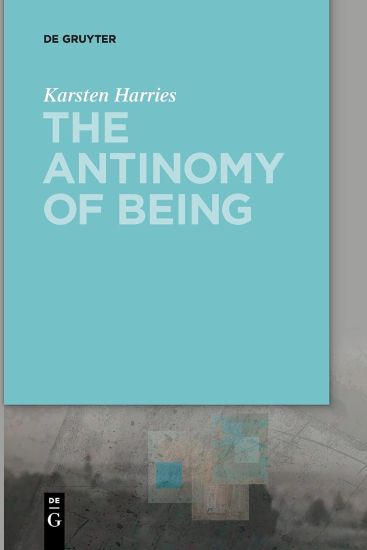
The word "antinomy" lets us think of Kant. One thing this book attempts to show is that Kant's antinomies open a way towards an overcoming of that nihilism that is a corollary of the understanding of reality that presides over our science and technology. But when I am speaking of the antinomy of Being I am thinking not so much of Kant, as of Heidegger. Not that Heidegger speaks of an antinomy of Being. But his thinking of Being leads him and will lead those who follow him on his path of thinking into this antinomy. At bottom, however, I am concerrned with neither Heidegger’s nor Kant’s thought: I shall try to show that our thinking inevitably leads us into some version of this antinomy whenever it attempts to grasp reality in toto, without loss. All such attempts will fall short of their goal. And that they do so, I will claim, is not something to be grudgingly accepted, but embraced as a necessary condition of living a meaningful life. That is why the antinomy of Being matters and should concern us all.
The Antinomy of Being

The Antinomy of Being

Karsten Harries; Dermot Moran

De Gruyter
2019
sidottu
One thing this book attempts to show is that Kant's antinomies open a way towards an overcoming of that nihilism that is a corollary of the understanding of reality that presides over our science and technology. But when Harries is speaking of the antinomy of Being he is not so much thinking of Kant, as of Heidegger. Not that Heidegger speaks of an antinomy of Being. But his thinking of Being leads him and will lead those who follow him on his path of thinking into this antinomy. At bottom, however, the author is neither concerned with Heidegger’s nor Kant’s thought. He shows that our thinking inevitably leads us into some version of this antinomy whenever it attempts to grasp reality in toto, without loss. All such attempts will fall short of their goal. And that they do so, Harries claims, is not something to be grudgingly accepted, but embraced as a necessary condition of living a meaningful life. That is why the antinomy of Being matters and should concern us all.
Walt Whitman and British Socialism

Walt Whitman and British Socialism

Kirsten Harris

Routledge
2019
nidottu
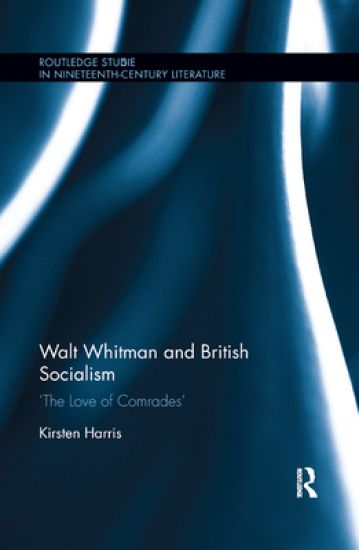
This is the first sustained examination of Walt Whitman’s influence on British socialism. Harris combines a contextual historical study of Whitman’s reception with focused close readings of a variety of poems, books, articles, letters and speeches. She calls attention to Whitman’s own demand for the reader to ‘himself or herself construct indeed the poem, argument, history, metaphysical essay’, linking Whitman’s general comments about active reading to specific cases of his fin de siècle British socialist readership. These include the editorial aims behind the Whitman selections published by William Michael Rossetti, Ernest Rhys, and W. T. Stead and the ways that Whitman was interpreted and appropriated in a wide range of grassroots texts produced by individuals or groups who responded to Whitman and his poetry publicly in socialist circles.Harris makes full use of material from the C. F. Sixsmith and J. W. Wallace and the Bolton Whitman Fellowship collections at John Rylands, the Edward Carpenter collection in the Sheffield Archives, and the Archives of Swan Sonnenschein & Co. at the University of Reading. Much of this archive material – little of which is currently available in digital form – is discussed here in full for the first time. Accordingly, this study will appeal to those with interest in the archival history of nineteenth-century literary culture, as well as the connections to be made between literary and political culture of this era more generally.
Walt Whitman and British Socialism

Walt Whitman and British Socialism

Kirsten Harris

Routledge
2016
sidottu
This is the first sustained examination of Walt Whitman’s influence on British socialism. Harris combines a contextual historical study of Whitman’s reception with focused close readings of a variety of poems, books, articles, letters and speeches. She calls attention to Whitman’s own demand for the reader to ‘himself or herself construct indeed the poem, argument, history, metaphysical essay’, linking Whitman’s general comments about active reading to specific cases of his fin de siècle British socialist readership. These include the editorial aims behind the Whitman selections published by William Michael Rossetti, Ernest Rhys, and W. T. Stead and the ways that Whitman was interpreted and appropriated in a wide range of grassroots texts produced by individuals or groups who responded to Whitman and his poetry publicly in socialist circles.Harris makes full use of material from the C. F. Sixsmith and J. W. Wallace and the Bolton Whitman Fellowship collections at John Rylands, the Edward Carpenter collection in the Sheffield Archives, and the Archives of Swan Sonnenschein & Co. at the University of Reading. Much of this archive material – little of which is currently available in digital form – is discussed here in full for the first time. Accordingly, this study will appeal to those with interest in the archival history of nineteenth-century literary culture, as well as the connections to be made between literary and political culture of this era more generally.
Changing Space, Changing City

Changing Space, Changing City

Peter Ahmad; Badenhorst Willem; Beavon Keith; Claire Bénit-Gbaffou; Charlton Sarah; Yasmeen Dinath; Teresa Dirsuweit; Everatt David; Gotz Graeme; Kirsten Harrison; Harrison Philip; Huchzermeyer Marie; Hilton Judin; Karam Aly; Kihato Caroline; Neil Klug; Kuljian Christa; Karina Landman; Pauline Larsen; Hannah le Roux; Mabin Alan; Miriam Maina; Puleng Makhetha; Malaza Nqobile; Adrian Masson; Mathetha Mokonyama; Khangelani Moyo; Brian Mubiwa; Yusuf Patel; Herman Pienaar; Naomi Roux; Margot Rubin; Samadia Sadouni; Rashid Seedat

Wits University Press
2014
sidottu
As the dynamo of South Africa’s economy, Johannesburg commands a central position in the nation’s imagination, and scholars throughout the world monitor the city as an exemplar of urbanity in the global South.This richly illustrated study offers detailed empirical analyses of changes in the city’s physical space, as well as a host of chapters on the character of specific neighbourhoods and the social identities being forged within them. Informing all of these is a consideration of underlying economic, social and political processes shaping the wider Gauteng region.A mix of respected academics, practising urban planners and experienced policymakers offer compelling overviews of the rapid and complex spatial developments that have taken place in Johannesburg since the end of apartheid, along with tantalising glimpses into life on the streets and behind the high walls of this diverse city.The book has three sections. Section A provides an overview of macro spatial trends and the policies that have infl uenced them. Section B explores the shaping of the city at district and suburban level, revealing the peculiarity of processes in different areas. This analysis elucidates thelarger trends, while identifying shifts that are not easily detected at the macro level. Section C is an assembly of chapters and short vignettes that focus on the interweaving of place and identity at a micro level.With empirical data supported by new data sets including the 2011 Census, the city’s Development Planning and Urban Management Department’s information system, and Gauteng City-Region Observatory’s substantial archive, the book is an essential reference for planning practitioners, urban geographers, sociologists, and social anthropologists, among others.
Who Is Kamala Harris?

Who Is Kamala Harris?

Kirsten Anderson

Penguin Workshop
2021
pokkari
On November 7, 2020, Kamala Harris, a senator from California, became the first woman and the first African-American and South Asian-American person to be elected to the vice presidency. While her nomination for this position was not unexpected, her rise to national prominence was one filled with unexpected turns and obstacles. After failing her first bar exam to become a lawyer, she tried again and passed. From there, she quickly rose through the legal ranks, serving as district attorney of San Francisco, then California’s attorney general, and soon, senator. As a politician, Kamala Harris has been a vocal champion of progressive reforms and women’s rights. This exciting story details the defining moments of what led to her nomination and all the monumental ones since that have shaped her career and the future of America.
¿Quién Es Kamala Harris?

¿Quién Es Kamala Harris?

Kirsten Anderson; Who Hq

Penguin Workshop
2022
nidottu
La inspiradora historia de la vicepresidenta Kamala Harris contada en el nuevo formato Who HQ que aborda temas de actualidad. The inspiring story of Vice President Kamala Harris told in the new Who HQ Now format for trending topics -- now in Spanish El 7 de noviembre de 2020, Kamala Harris, una senadora de California, se convirti en la primera mujer y la primera persona afroamericana y surasi tica-estadounidense en ser elegida para la vicepresidencia. Si bien su nominaci n para este puesto no fue inesperada, su ascenso al protagonismo nacional estuvo lleno de giros y obst culos inesperados. Despu s de reprobar su primer examen de oposici n para convertirse en abogada, lo intent de nuevo y lo aprob . A partir de ah , r pidamente ascendi en los rangos legales, sirviendo como fiscal de distrito de San Francisco, luego como fiscal general de California y pronto como senadora. Como pol tica, Kamala Harris ha sido una destacada defensora de las reformas progresistas y los derechos de la mujer. Esta emocionante historia detalla los momentos decisivos que la llevaron a su nominaci n y todos los momentos importantes que han dado forma a su carrera y al futuro de Estados Unidos. On November 7, 2020, Kamala Harris, a senator from California, became the first woman and the first African-American and South Asian-American person to be elected to the vice presidency. While her nomination for this position was not unexpected, her rise to national prominence was one filled with unexpected turns and obstacles. After failing her first bar exam to become a lawyer, she tried again and passed. From there, she quickly rose through the legal ranks, serving as district attorney of San Francisco, then California's attorney general, and soon, senator. As a politician, Kamala Harris has been a vocal champion of progressive reforms and women's rights. This exciting story details the defining moments of what led to her nomination and all the monumental ones since that have shaped her career and the future of America.
Professioner under pres

Professioner under pres

Mai Aggerbeck; Simon Bo Anderschou; Martin Blok Johansen; Niels Dalgaard; Karen Frederiksen; Søren Gytz Olesen; Gitte Sommer Harrits; Steen Juul Hansen; Jens Erik Kristensen; Jens H. Lund; Kirsten Maibom; Hans Jørgen Stausgaard; Lennart G. Svensson; Flemming Svith; Lars Thorup Larsen

Gyldendal
2014
nidottu
Professioner under pres indeholder både refleksioner over og analyser af status som selvstændigt fænomen, men også analyser af samspillet mellem en intensiveret politisk og administrativ styring samt de professionelle statuspositioner. Det centrale spørgsmål i bogen er, hvad der grundlæggende konstituerer den status, en profession i praksis kan gøre krav på, samt hvorvidt og hvorledes denne status udfordres gennem nye former for styring af den professionelle praksis. For at besvare dette spørgsmål kræves der både teorier om professioner og samtidig empiriske analyser på tværs af forskellige professioner og institutionelle kontekster. Derfor rummer bogen en variation af bidrag, lige fra rene teoretiske artikler om professioner til detaljerede empiriske studier af konkrete problemstillinger i den professionelle praksis. Bogens bidrag falder overordnet i to dele. Første del stiller skarpt på professionernes status, såvel generelt og teoretisk som for specifikke professioner. Et afgørende spørgsmål er her, hvilken rolle professionelle vidensformer spiller i den proces, hvorved en profession adskiller sig fra andre tilgrænsende faggrupper. Den anden del tager mere direkte fat i spørgsmålet om styring af professioner, herunder hvorledes professionel praksis udvikler sig i lyset af – og i visse tilfælde i kontrast til – nye statslige styringsformer.
Ny pædagogisk opslagsbog

Ny pædagogisk opslagsbog

Lars Jakob Muschinsky; Martha Mottelson; Christina Jørgensen; Lone Bæk Brønsted; Sally Anderson; Johnny Baltzersen; Martin Bayer; Carsten Bendixen; Jens Bjerg; Anders Bæk Brønsted; Peter Bæk; Staf Callewaert; Tekla Canger; Birgitte Elle; Tomas Ellegaard; Jan Thorhauge Frederiksen; Frans Gregersen; Kirsten Grønbæk Hansen; Gitte Sommer Harrits; Jesper Holst; Noona Elisabeth Jensen; Rie Jungemann; Jan Kampmann; Noemi Katznelson; Birgit Kirkebæk; John Benedicto Krejsler; Jens Erik Kristensen; Suzanne Krogh; Kristian Larsen

Gyldendal
2014
nidottu
Pædagogik handler om opdragelse, uddannelse og undervisning og gennemsyrer derfor stort set hele vores hverdag. Pædagogik præger også i stigende grad en lang række fag og professioner og er genstand for megen forskning og mange politiske og kulturelle diskussioner. De udtryk, begreber, teorier og tankegange, der knytter sig til pædagogik, lever derfor en ofte omtumlet tilværelse mellem det hverdagsagtige og det videnskabelige, mere præcist beskrivende. Ny pædagogisk opslagsbog består af en lang række introducerende, perspektiverende og begrebsafklarende fremstillinger af aktuelle begreber, fænomener og tankegange i det pædagogiske univers. Bogen giver dermed indsigt i de forskellige begreber og stof til diskussion og eftertanke. Den leverer gennem sine opslag og sammenhængen mellem dem en række bud på, hvordan pædagogiske spørgsmål kan analyseres, reflekteres og foldes ud i en tid, der efterspørger stadig mere dokumentation og begrundelse for pædagogiske handlinger. Pædagogisk opslagsbog udkom første gang i 1978 og er siden blevet en klassiker i den pædagogiske verden, genoptrykt og revideret mange gange. Denne bog er en selvstændig, nyskrevet udgave ud fra den gamle bogs koncept. Bogens artikler er af forskellig længde og er forfattet af forskere og undervisere fra forskellige universiteter og professionshøjskoler. Bogen er velegnet til undervisningen på professionsuddannelserne og andre pædagogiske uddannelser samt til selvstændig brug af de studerende i forbindelse med fx opgaveskrivning. Lone Bæk Brønsted, Christina Jørgensen og Martha Mottelson er alle undervisere på Professionshøjskolen UCC. Lars Jakob Muschinsky er tidligere rektor for Zahles Seminarium og nuværende udviklingskonsulent ved Professionshøjskolen UCC.
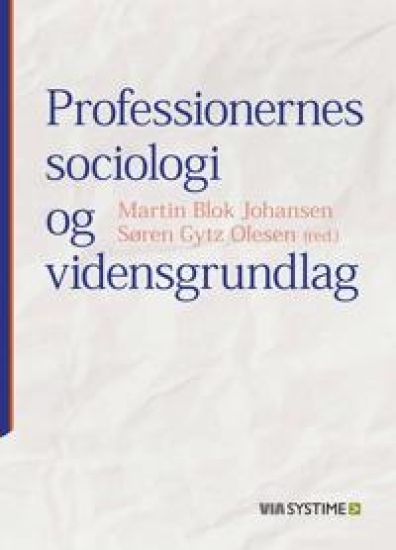
Professionernes sociologi og vidensgrundlag

Professionernes sociologi og vidensgrundlag

Anne Marie Pahuus; John Benedicto Krejsler; Kaspar Villadsen; Lars Thorup Larsen; Marie Østergaard Møller; Martin D. Munk; Sven Erik Nordenbo; Lene Storgaard Brok; Kirsten Beedholm Poulsen; Gitte Sommer Harrits; Anders Buch; Karin Anna Petersen; Andreas Rasch-Christensen; Martin Blok Johansen; Søren Gytz Olesen; Alexander von Oettingen; Katrin Erna Hjort; Jette Steensen; Hans Jørgen Staugård; Jens-Christian Smeby; Katja Brøgger; Lars Inge Terum; John Matthias Gulløv; Harald Grimen; Tom Skauge; Lars Gjelstad; Jens Erik Kristensen

Gyldendal
2012
nidottu
I takt med ændringer i den danske velfærdsmodel, kommer også velfærdsstatens professionelle under større pres. Prestigen omkring professio­nerne er ikke længere given, og vidensgrundlaget, som professionelle bygger deres autoritet og arbejde på, defineres ikke længere alene af de professionelle selv. Denne antologi tematiserer den udvikling, professionerne gennemgår, i forhold til velfærdsstatens udvikling. Antologien tematiserer forandringer i professio­nernes rekruttering, status og identitet, herunder spørgsmål om professionernes muligheder for fortsat at spille en afgørende rolle i forhold til velfærdsstatens udvikling. Bogen henvender sig til forskere, undervisere og studerende ved universiteter og profes­sionshøjskoler, politiske beslutningstagere og aktører i det professionelle felt. Med bidrag af Martin Blok Johansen, Alexander von Oettingen, Anne Marie Pahuus & Cecilie Eriksen, Jens­ Christian Smeby & Lars Inge Terum, Tom Skauge, Harald Grimen & Anne Elizabeth Stie, Katrin Hjort, Lars Thorup Larsen, Hans Jørgen Staugård, Gitte Sommer Harrits, Søren Gytz Olesen, Jette Steensen, John Benedicto Krejsler, Kirsten Beedholm, Lene Storgaard Brok, Marie Østergaard Møller, Kaspar Villadsen, Anders Buch, John Gulløv og Andreas Rasch ­Christensen