Kirjojen hintavertailu. Mukana 11 244 527 kirjaa ja 12 kauppaa.

Kirjahaku

Etsi kirjoja tekijän nimen, kirjan nimen tai ISBN:n perusteella.

1000 tulosta hakusanalla Kaspar Mühlemann

Christoph Schlingensief und seine Auseinandersetzung mit Joseph Beuys
Diese Studie untersucht Christoph Schlingensiefs kunstlerische Auseinandersetzung mit dem Lebenswerk von Joseph Beuys. Unter Berucksichtigung des Gesamtwerkes von Schlingensief befasst sich die Arbeit mit den kunstlerischen Verfahren, die fur die zahlreichen Ruckgriffe auf Beuys zur Anwendung kamen. Des Weiteren werden die Theaterarbeiten Eine Kirche der Angst vor dem Fremden in mir (2008) und Mea Culpa (2009), die beide dem Beuys'schen Motto "Zeige deine Wunde" folgen, im Detail nach Beuys-Referenzen durchforscht. Dabei stehen die asthetische Form und die inhaltliche Funktion der Bezugnahmen im Brennpunkt einer eingehenden Analyse, die den jeweiligen szenischen Kontext ebenso beachtet wie den ubergeordneten Aufbau der Stucke.
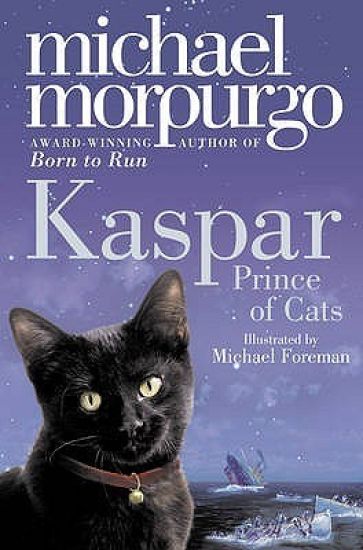
Kaspar

Kaspar

Michael Morpurgo

Harpercollins Publishers
2010
pokkari
A heart-warming, colour-illustrated novel about Kaspar the Savoy cat, from the award-winning author of Born to Run and The Amazing Story of Adolphus Tips
Kaspar

Kaspar

Michael Morpurgo

HARPERCOLLINS PUBLISHERS
2024
nidottu
Some cats really do have nine lives: after a stay at the legendary Savoy hotel, Kaspar the cat sets sail – on none other than the Titanic . . . ‘A cracking narrative’ Observer They say cats have nine lives, and that’s certainly true of Kaspar. From the glamorous suites of the Savoy Hotel to a crowded lifeboat and the hustle and bustle of New York City, Kaspar proves that no cat is too small for big adventures. But then this is no ordinary cat. He’s Kaspar, Prince of Cats – and the only cat to survive the sinking of the Titanic . . .
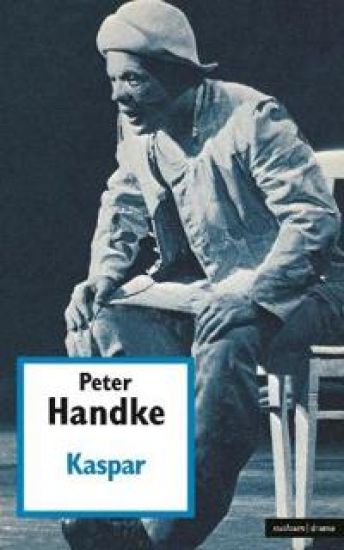
Kaspar

Kaspar

Peter Handke

Methuen Drama
1972
nidottu
'Kaspar is based on the historical case of a 16-year-old boy who appeared from nowhere in Nuremberg in 1828 and who had to be taught to speak from scratch . . . Handke's play is a downright attack on the way language is used by a corrupt society to depersonalise the individual'. - Michael Billington, the Guardian.'Handke's most sustained study in social indoctrination . . . there could be no better introduction to Handke.' - Irving Wardle, The Times.Kaspar is the most extraordinary and impressive play to date by Peter Handke. First staged in Germany in 1968, it was hailed by Max Frisch as 'the play of the decade'. The central character is Kaspar, a figure based on the historical Kaspar Hauser, an autistic adolescent, who is guided and taught until he speaks 'normally', by the voices of unseen prompters. As the words begin to coincide with reality, Kaspar learns to manipulate both. In the latter part of the play the tension between the individual and 'the others' is further expressed through the image of the original Kaspar surrounded by a host of identical 'Kaspars'.Having chosen language as a vehicle, Peter Handke explores it as a means of oppression - a means of creating artificial uniformity by teaching people to comprehend the world only in terms of the speech patterns they are given.
Kaspar Hauser

Kaspar Hauser

M. Kitchen

Palgrave Macmillan
2001
sidottu
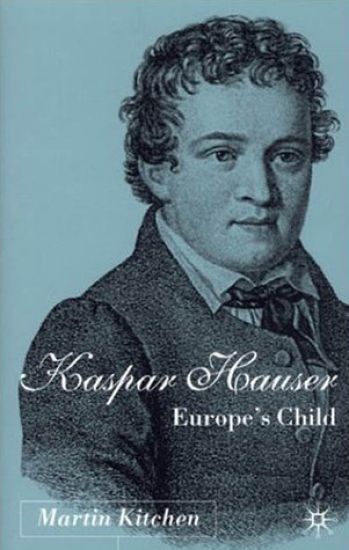
On Whit Monday 1828 a strange youth, barely able to speak and hardly able to walk appeared in Nuremberg. This new case of a 'wild man' excited widespread curiosity, and many prominent figures wanted to test their pedagogical and medical theories on such a promising subject. Who was he? Was he, as many claimed, the rightful heir to the Grand Duchy of Baden, or was he simply an ingenious fraud? This book examines the many ramifications of this fascinating case, and offers many insights into the social, political and intellectual life of Biedermeier Germany.
Kaspar and Other Plays

Kaspar and Other Plays

Peter Handke

Picador USA
1970
nidottu
Nobel Prize winner Peter Handke's first full-length drama, hailed in Europe as "the play of the decade" and compared in importance to Waiting for Godot Kaspar is the story of an autistic adolescent who finds himself at a complete existential loss on the stage, with but a single sentence to call his own. Drilled by prompters who use terrifyingly funny logical and alogical language-sequences, Kaspar learns to speak "normally" and eventually becomes creative--"doing his own thing" with words; for this he is destroyed. In Offending the Audience and Self-Accusation, one-character "speak-ins," Handke further explores the relationship between public performance and personal identity, forcing us to reconsider our sense of who we are and what we know.
Kaspar Hauser and Karl König

Kaspar Hauser and Karl König

Karl König

Floris Books
2012
nidottu
Kaspar Hauser was a young man who appeared on the streets of Nuremberg in Germany in the early nineteenth century. His innocence and mysterious background captured the hearts of many at the time.2012 marks the 200th anniversary of Kaspar Hauser's birth. This timely book draws together Karl König's thoughts on the enigma of Kaspar Hauser, as well as exploring König's deep connection to the young man.The book includes König's essay 'The Story of Kaspar Hauser', as well as essays from Peter Selg on 'König, Wegman and Kaspar Hauser' and Richard Steel on how König spoke of Kaspar Hauser in his diaries, notes and letters.
Kaspar Hauser

Kaspar Hauser

M. Kitchen

Palgrave Macmillan
2001
nidottu
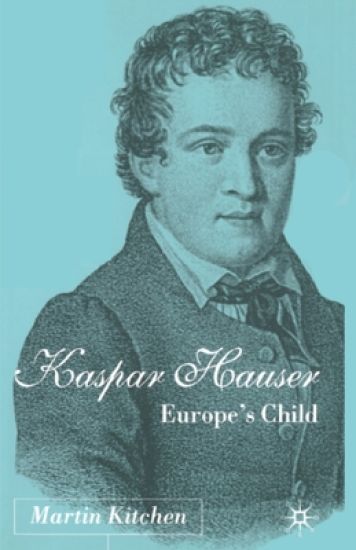
On Whit Monday 1828 a strange youth, barely able to speak and hardly able to walk appeared in Nuremberg. This new case of a 'wild man' excited widespread curiosity, and many prominent figures wanted to test their pedagogical and medical theories on such a promising subject. Who was he? Was he, as many claimed, the rightful heir to the Grand Duchy of Baden, or was he simply an ingenious fraud? This book examines the many ramifications of this fascinating case, and offers many insights into the social, political and intellectual life of Biedermeier Germany.
Kaspar und Heini in der Heilen Welt

Kaspar und Heini in der Heilen Welt

Lord Schadt

Createspace Independent Publishing Platform
2014
nidottu
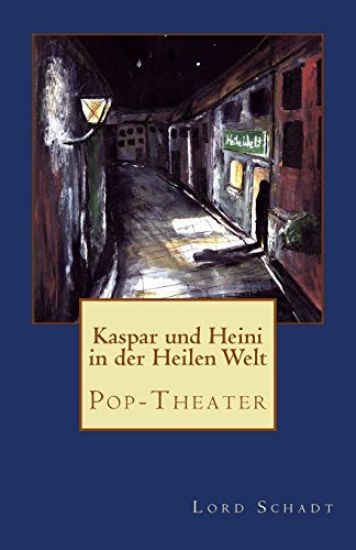
Eine Nacht in einer Kneipe. Der Wirt Achim wartet auf G ste. Zuerst kommt Kaspar und betrinkt sich, dann kommt sein Freund Heini und trinkt mit. Sie reden ber Liebe, Politik, Urlaub und Musik. Dann gehen sie wieder. Das St ck besteht ausschlie lich aus deutschsprachigen Songzitaten von Mozart bis Rammstein. Ein Meisterwerk des postmodernen, popliterarischen Unterhaltungstheaters. Das Buch ist ein ideales Geburtstagsgeschenk f r Musiker und alle Freundinnen und Freunde der deutschen Popmusik.
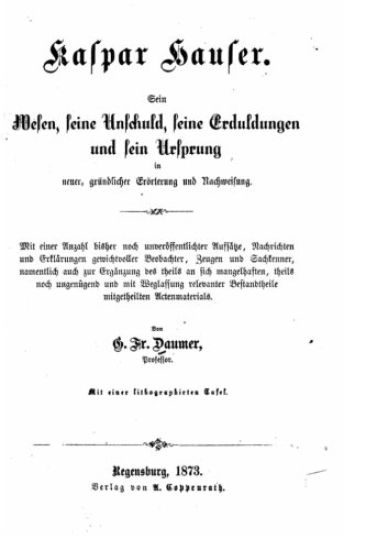
Kaspar Hauser. Sein wesen, seine unschuld, seine erduldungen und sein ursprung in neuer, gründlicher erörterung und nachweisung
Kaspar Hauser. Sein wesen, seine unschuld, seine erduldungen und sein ursprung in neuer, gr ndlicher er rterung und nachweisung by G. F. Daumer. This book is a reproduction of the original book published in 1873 and may have some imperfections such as marks or hand-written notes.
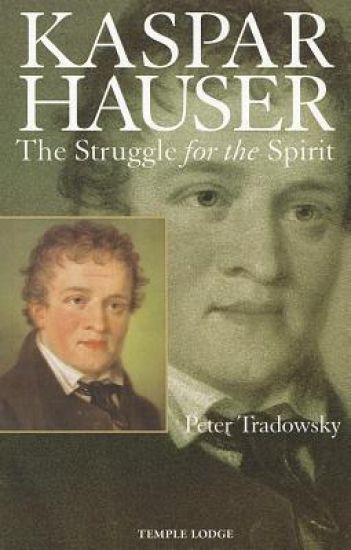
Kaspar Hauser

Kaspar Hauser

Peter Tradowsky

Temple Lodge Publishing
2012
nidottu
'Here lies Kaspar Hauser, riddle of his time. His birth was unknown, his death mysterious.' (Inscription on Kaspar Hauser's tombstone.) In 1828 a teenage boy was discovered on the streets of Nuremberg. Barely able to walk, he clutched a letter in his hand. This youth, Kaspar Hauser, who couldn't properly speak or write, was soon to become an international phenomenon known as 'the Child of Europe'. The story of Kaspar Hauser presents many mysteries. According to his account, the young boy spent most of his life confined in a darkened space. Unable to stand up, and with no knowledge of his captors, he was fed a diet of bread and water. Eventually released from this macabre prison, he survived an assassination attempt only to be stabbed to death in 1833. Why was a child kept in such squalid circumstances? Who were his parents? Who was responsible for such a cruel attack on childhood? Who murdered him? In this seminal work Peter Tradowsky addresses these questions through the insights of anthroposophy. His analysis reveals some of the secrets of Kaspar Hauser's short life, and the occult significance of his incarnation, spiritual nature and individuality.
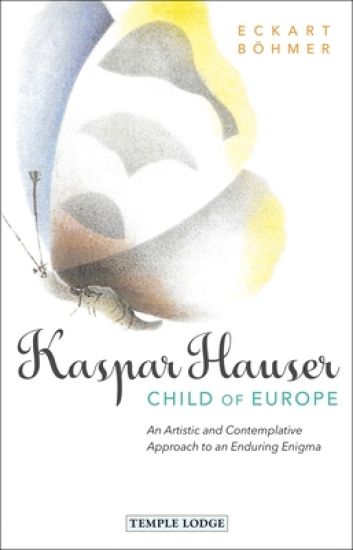
Kaspar Hauser, Child of Europe

Kaspar Hauser, Child of Europe

Eckart Böhmer

Temple Lodge Publishing
2019
nidottu
`From time to time in the history of humanity, extraordinary individualities appear, carrying with them great tasks which are difficult to assess. Through this lens, the events around Kaspar Hauser (1812-1833) can be seen as signposts to one of the most important mysteries of modern times, which will radiate far into the future. Kaspar’s appearance and the essence of his being are deeply connected with the question of the identity of the human being itself.’ – From the Foreword. This book offers a unique, creative approach to the mystery of Kaspar Hauser – the teenage boy who was found abandoned on the streets of Nuremberg, barely able to walk, speak or write. Introducing the subject with a historical overview, Eckart Böhmer goes on to offer multiple artistic approaches to comprehending the enigma of Kaspar Hauser’s brief and tragic life. He presents poems from his cycle I not human, I Kaspar, a short story entitled `Crossing the Border’, and a play about Hauser’s mentor, `Feuerbach or an Example of a Crime Against the Human Consciousness Soul’. These are followed by transcripts of two lectures held during the Kaspar Hauser Festival in New York, which reflect on esoteric research carried out in the last twenty years. The volume concludes with short meditations followed by an interview with the author on his biographical connections to the theme. Inspired by the Kaspar Hauser Festival in Ansbach and the Kaspar Hauser Research Circle, this valuable book offers many imaginative gems for deeper contemplation.