Kirjojen hintavertailu. Mukana 11 244 527 kirjaa ja 12 kauppaa.

Kirjahaku

Etsi kirjoja tekijän nimen, kirjan nimen tai ISBN:n perusteella.

1000 tulosta hakusanalla Katherine Anne Porter

Pale Horse, Pale Rider: The Selected Stories of Katherine Anne Porter
From the gothic Old South to revolutionary Mexico, few writers have evoked such a multitude of worlds, both exterior and interior, as powerfully as Katherine Anne Porter. This collection gathers together the best of her Pulitzer Prize-winning short fiction, including 'Pale Horse, Pale Rider', where a young woman lies in a fever during the influenza epidemic, her childhood memories mingling with fears for her fiancé on his way to war, and 'Noon Wine', a haunting story of tragedy and scandal on a small dairy farm in Texas. In all of the compelling stories collected here, harsh and tragic truths are expressed in prose both brilliant and precise.
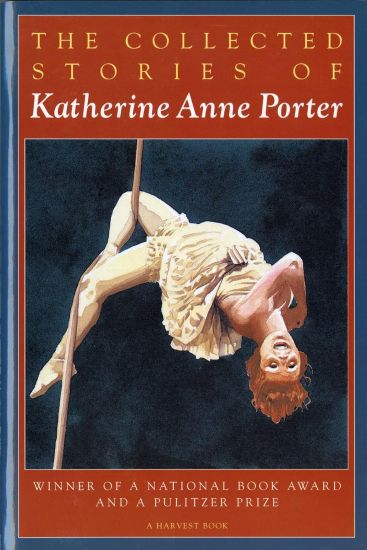
The Collected Stories of Katherine Anne Porter: A Collection

The Collected Stories of Katherine Anne Porter: A Collection

Katherine Anne Porter

Mariner Books Classics
1979
nidottu
The Collected Stories of Katherine Anne Porter compiles three books of her short fiction into one National Book Award and Pulitzer Prize-winning volume.From the gothic Old South to revolutionary Mexico, few writers have evoked such a multitude of worlds, both exterior and interior, as powerfully as Katherine Anne Porter. This collection gathers together the best of her award-winning short stories, including &#8220Pale Horse, Pale Rider,&#8221 where a young woman lies in a fever during the 1918 influenza epidemic, her childhood memories mingling with fears for her boyfriend on his way to war, and &#8220Noon Wine,&#8221 a haunting story of tragedy and scandal on a small dairy farm in Texas. This volume includes the collections Flowering Judas, Pale Horse, Pale Rider, and The Leaning Tower, as well as four stories not available elsewhere in book form.
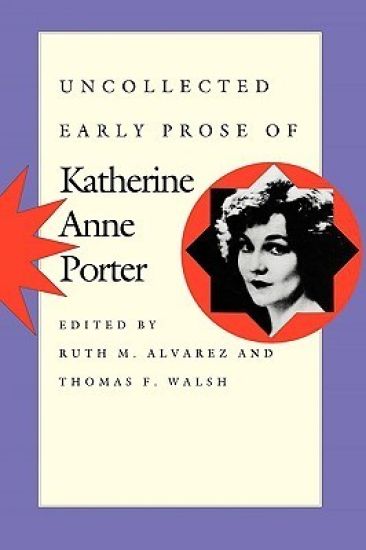
Uncollected Early Prose of Katherine Anne Porter

Uncollected Early Prose of Katherine Anne Porter

Katherine Anne Porter

University of Texas Press
1993
pokkari
This volume brings together twenty-nine pieces dating from before 1932, none of which appeared in Porter's collected works and many of which are published here for the first time. Both fiction and essays are covered. All these pieces belong to Porter's apprenticeship as a creative writer. Thus, they offer new insights into her artistic development and her relationship with Mexico, a place that, as she later said, "influenced everything I did afterward."
Katherine Anne Porter

Katherine Anne Porter

Janis P. Stout

University of Virginia Press
1995
sidottu
Katherine Anne Porter's life (1890-1980) closely parallelled that of her century, not only in its span but in its interests and contradictions. She was a Communist sympathiser who later became quasi-fascist, a cosmopolitan who embraced Southern agrarianism, a femme fatale and a feminist.
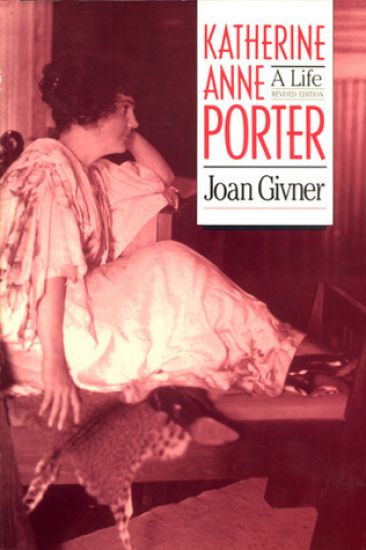
Katherine Anne Porter

Katherine Anne Porter

Joan Givner

University of Georgia Press
1991
pokkari
My life has been incredible, Katherine Anne Porter used to say, "I don't believe a word of it." Author of the best-selling novel, Ship of Fools, winner of the Pulitzer Prize and the National Book Award for her short stories, Porter was both the first lady of American letters and a woman whose indomitable will forged a life that, as biographer Joan Givner makes clear, was not only incredible but may have been her most creative fiction of all.Born Callie Porter in the log-cabin poverty of rural Texas, she, like Jay Gatsby, invented her own history, changing her name and "acquiring" a lineage of statesmen to become an aristocratic daughter of the Old South. Strikingly beautiful and gilded by her idealized background, Porter lived a life of drama and passion that spanned nine decades and witnessed some of this century's most tumultuous events. She traveled from revolutionary Mexico in the 1920s to Berlin at Hitler's rise and to Paris at the start of World War II; from Hollywood in the forties to Washington during the Kennedy era. Somehow, by design or coincidence, she was always right in the eye of the storm when history was being made. By the end of her life, she had risen from rags to riches, anonymity to renown—all on her own terms, all on the strength of her talent, her miraculous stamina, her wit, grit, and often ruthless determination.As evocative of her era as it is of the woman herself, this book is a remarkable portrait of an artist who crafted her life to appear as elegant and structured as her short stories and who, in so doing, sometimes edited out of her experience the hard, cold facts that until now have remained obscure. Givner has recovered that experience to reveal the true version of Porter's childhood and family background, her first "hidden" marriage, her innumerable love affairs, her quarrels with Hart Crane and other friends, and her ultimate achievement of wealth and celebrity.For this revised edition, Givner has provided an updated prologue and epilogue, incorporating new material to further illuminate Porter's life and fiction. Givner offers accurate information on Porter's battle with tuberculosis, an account of Porter's betrayal of her close friend Josephine Herbst during a mendacious interview with FBI agents, and new insight into her relationship with William Goyen. Recently discovered candid photographs of Porter have also been included.
This Strange, Old World and Other Book Reviews by Katherine Anne Porter

This Strange, Old World and Other Book Reviews by Katherine Anne Porter

Katherine Anne Porter

University of Georgia Press
2008
pokkari
Between 1920 and 1958 Katherine Anne Porter published more than sixty-five book review, many of which are now largely inaccessible. Although several such pieces have appeared in earlier collections of Porter's nonfiction writings, never have so many of Porter's reviews—nearly fifty—been made available in a single volume. Collectively the review reveal Porter's opinions on topics ranging from the nature of art and the place of the artist in politics and society to feminism and the role of female artists. Particularly evident in the reviews are the critical principles that guided her own work as well as her judgments of the works of other writers.In her introductory essay Darlene Harbour Unrue provides important biographical information on Porter, traces her career as a reviewer, and links critical assumptions in the reviews to the themes and techniques of Porter's fiction. Other scholars as well have regarded Porter's critical reviews as valuable tools both for analyzing the fiction and for constructing a portrait of Porter the artist, primarily because Porter produced so little fiction (three collections of short stories and novellas, Flowering Judas, The Leaning Tower, and Pale Horse, Pale Rider, and a novel, Ship of Fools). In the preface to the first collection of her nonfiction writings, The Days Before, Porter herself urged readers to look closely at her nonfiction, for there they would discover "the shape, direction, and connective tissue of a continuous, central interest and preoccupation of a lifetime."Most of the reviews—which appeared in such publications as the New York Herald Tribune, the New York Times, the Nation, and New Masses—she apparently undertook for financial reasons, but occasionally she would agree to review a friend's latest offering. She published no reviews after the success of her best-selling novel, Ship of Fools.Porter's scope as a reviewer was impressively broad. Because she lived in Mexico City during the revolution, had known Diego Rivera, and had studied "primitive" Mexican art, she was often called on to review books on Mexican art and on the revolution. Porter also reviewed many books by or about women. Her reviews of the Short Novels of Colette and Katharine Anthony's translation of Catherine the Great's memoirs are particularly noteworthy for her comments about women artists and her expression of admiration for women who flout traditional roles.These collected reviews illustrate the evolution of one of the most important American writers of the twentieth century and will interest not only Porter scholars but also anyone who appreciates her fiction.
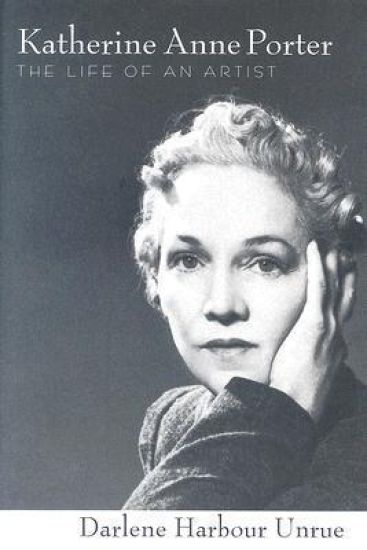
Katherine Anne Porter

Katherine Anne Porter

Darlene Harbour Unrue

University Press of Mississippi
2005
sidottu
In this biography of American writer Katherine Anne Porter, the author brings to light new information concerning the scant facts that Porter herself revealed about her background, drawing on archival and personal papers to offer an intimate study of the author's turbulent personal life.
Katherine Anne Porter and the Art of Rejection

Katherine Anne Porter and the Art of Rejection

L. Nance

The University of North Carolina Press
1967
nidottu
In the first book-length study of Porter's work, Nance defines a central thematic pattern--a principle of rejection--that unifies her fiction. This study is largely devoted to the explication of this theme in the individual works, though necessarily it reaches beyond this theme and into a general consideration of Porter's literary career and biography.Originally published in 1964.A UNC Press Enduring Edition -- UNC Press Enduring Editions use the latest in digital technology to make available again books from our distinguished backlist that were previously out of print. These editions are published unaltered from the original, and are presented in affordable paperback formats, bringing readers both historical and cultural value.
Katherine Anne Porter Remembered

Katherine Anne Porter Remembered

Darlene Unrue

The University of Alabama Press
2010
sidottu
Katherine Anne Porter Remembered is a collection of reminiscences and memoirs by contemporaries, friends, and associates of Porter offering a revealing and intimate portrait of the elusive and complex American writer. From a fractured and vagabond girlhood in Texas, Porter led a wildly itinerant life that took her through five marriages, innumerable love affairs, and homes in Colorado, New York, Paris, Mexico, Louisiana, California, and Maryland. With very little formal education, she grew through sheer force of will to become a major American writer of short stories and the author of several books including Flowering Judas and other stories; Ship of Fools; Pale Horse; Pale Ride; Noon Wine; and The Collected Stories of Katherine Anne Porter, which won both the Pulitzer Prize and the National Book Award. Because of Porter's own dissembling and half-truths about her life, as well as the numerous factual errors that persist in biographical entries and literary dictionaries, a complete and accurate portrait of her life has been hard to establish. The 63 reminiscences gathered in this book paint a vivid portrait of Porter and are testaments to her extraordinary beauty, her gift for mesmerizing and charming audiences and friends, her yearnings for a lasting home, her delusions about love, the astonishing range and scope of her reading, her sharp tongue and vindictiveness, and her final paranoid renunciations of friends and family. Along the way, Porter formed friendships with Eudora Welty, Elizabeth Hardwick, Flannery O'Connor, and Cleanth Brooks whose remembrances of her are included in this volume.
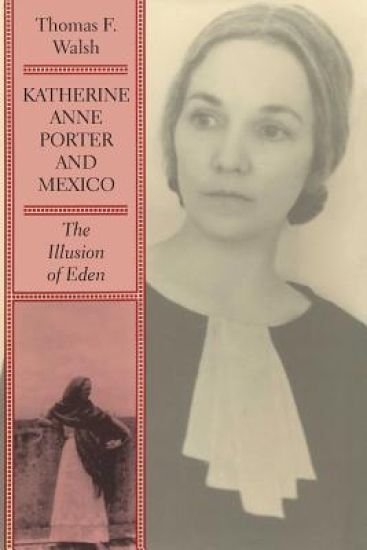
Katherine Anne Porter and Mexico

Katherine Anne Porter and Mexico

Thomas F. Walsh

University of Texas Press
2014
nidottu
In 1920, an unknown journalist named Katherine Anne Porter first sojourned in Mexico. When she left her "familiar country" for the last time in 1931, she was the celebrated author of Flowering Judas and Other Stories and had accumulated a wealth of experiences and impressions that would inspire numerous short stories, essays, and reviews, as well as the opening section of her only novel, Ship of Fools.In this perceptive study of Porter's Mexican experiences, Thomas Walsh traces the important connections between those events and her literary works. Separating fact from the fictions that Porter constantly created about her life, he follows the active role that she played in Mexican political and intellectual life-even to the discovery of a plot to overthrow the Mexican government, which eventually figured in Flowering Judas.Most important, Walsh discerns how the great swings between depression and elation that characterized Porter's emotional life influenced her alternating visions of Mexico. In such works as "Xochimilco," Porter saw Mexico as an earthly Eden where hopes for a better society could be realized, but in other stories, including "The Fiesta of Guadalupe," she depicts Mexico as a place of hopeless oppression for the native peoples.Mexico, Porter once said, gave her back her Texas past. Given the unhappiness of that past, her feelings toward Mexico would always be ambivalent, but her Mexican experiences influenced all her subsequent works to some degree, even those pieces not specifically Mexican in setting. Walsh's study, then, is an essential key for anyone seeking greater understanding of the life or works of Katherine Anne Porter.
Truth and Vision in Katherine Anne Porter's Fiction

Truth and Vision in Katherine Anne Porter's Fiction

Darlene Harbour Unrue

University of Georgia Press
2008
pokkari
My stories are fragments of a larger plan, Katherine Anne Porter once wrote. And on another occasion she praised a critic who perceived that all her work, from the very beginning, was part of an "unbroken progression, all related."In Truth and Vision in Katherine Anne Porter's Fiction, Darlene Unrue examines the encompassing themes that underlie Porter's shorter fiction and that combined to create the haunting events of her complex metaphorical novel, Ship of Fools. Porter believed that men and women are compelled toward discovering the truth about their existence, but that the nature of our world makes those truths difficult to discern. In her writing, Unrue finds, Porter explored not only this basic human need to confront the truth, but also the bewilderment and suffering that are so often the results of failing to fulfill that need.Often in Porter's fiction the movement toward truth is obstructed by the hollow beliefs and illusions that abound in the world—by the seductions of ideology and dogmatic religion, by romantic love or the vision of a golden past. Clinging to such illusions, using them to lend a false coherence to their lives, Porter's characters are led away from the hard realization that truth requires accepting the existence of the unknowable at the center of life, and that what is knowable lies within themselves.Drawing on essays, reviews, letters, and notes, as well as on the intricate fabric of the fiction, this study traces Porter's pursuit of the truth through the creation of a body of fiction in which, from fragments of life, she could assemble an honest vision of the world.
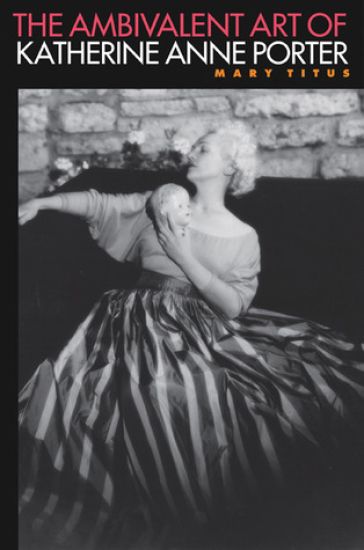
The Ambibalent art of Katherine Anne Porter

The Ambibalent art of Katherine Anne Porter

Mary Titus

University of Georgia Press
2012
pokkari
During a life that spanned ninety years, Katherine Anne Porter (1890-1980) witnessed dramatic and intensely debated changes in the gender roles of American women. Mary Titus draws upon unpublished Porter papers, as well as newly available editions of her early fiction, poetry, and reviews, to trace Porter’s shifting and complex response to those cultural changes. Titus shows how Porter explored her own ambivalence about gender and creativity, for she experienced firsthand a remarkable range of ideas concerning female sexuality. These included the Victorian attitudes of the grandmother who raised her; the sexual license of revolutionary Mexico, 1920s New York, and 1930s Paris; and the conservative, ordered attitudes of the Agrarians.Throughout Porter’s long career, writes Titus, she “repeatedly probed cultural arguments about female creativity, a woman’s maternal legacy, romantic love, and sexual identity, always with startling acuity, and often with painful ambivalence.” Much of her writing, then, serves as a medium for what Titus terms Porter’s “gender-thinking”—her sustained examination of the interrelated issues of art, gender, and identity.Porter, says Titus, rebelled against her upbringing yet never relinquished the belief that her work as an artist was somehow unnatural, a turn away from the essential identity of woman as “the repository of life,” as childbearer. In her life Porter increasingly played a highly feminized public role as southern lady, but in her writing she continued to engage changing representations of female identity and sexuality. This is an important new study of the tensions and ambivalence inscribed in Porter’s fiction, as well as the vocational anxiety and gender performance of her actual life.