
Kirjahaku
Etsi kirjoja tekijän nimen, kirjan nimen tai ISBN:n perusteella.
1000 tulosta hakusanalla Katherine E. Lindfors


Radicalization, and the terrorism that is frequently linked to it, have been subject to much study and governmental intervention. Nevertheless, the processes that lead to radicalization remain thinly conceptualized although governments and their agencies worldwide have invested heavily in counter and de-radicalization programs. There are at least 34 anti-radicalization programs worldwide, most of which were initiated post-2001, with a focus on Muslims and Muslim communities. These policies and programs have led to interventions in the daily lives of thousands, often in ways that push the boundaries of human rights law and norms. However, the effectiveness of these programs is unclear. This book compares anti-radicalization programs that target Islamic extremism in the UK, Saudi Arabia, Indonesia, the Netherlands and Pakistan. It looks particularly at the ways in which the program tactics differ depending on the gender of the target, arguing that the gendered way in which anti-radicalization is pursued helps to reveal its limitations. These programs fail to take into account how masculinity and femininity inform the radicalization process. Moreover, the programs tend to link men's radicalization to excessive, but flawed, masculinity, and women's radicalization to passivity, which consequentially limits understandings of the various modes of belief, belonging, and behavior of those they are trying to engage. Solutions for male de-radicalization hinge on particular ideals of masculinity that few men can obtain, while the de-radicalization of women is seen as a rescue mission. Although the rhetoric of battling terrorism is often couched in a narrative of "women's rights" and "liberal values", the book demonstrates that the consequences of the programs often run counter to such ideals. The book's findings are applicable not just to de-radicalization programs, but also to broader counter-radicalization agendas that address resilience and community engagement. The book also highlights the way in which anti-radicalization measures hew to or differ from older programs addressing right-wing extremism, anti-cult measures, and sectarianism. Ultimately, Gender, Religion, Extremism proposes an alternative way of implementing anti-radicalization efforts that are rooted in a feminist peace--one that is transformative, inclusive, and sustainable.

Ethnicity and the Mixed Marriage Crisis in Ezra 9-10
Katherine E. Southwood
Oxford University Press
2012
sidottu
This book aims to bring a new way of understanding Ezra 9-10, which has become known as an intermarriage 'crisis', to the table. A number of issues, such as ethnicity, religious identity, purity, land, kinship, and migration, orbit around the central problem of intermarriage. These issues are explored in terms of their modern treatment within anthropology, and this information is used to generate a more informed, sophisticated, understanding of the chapters within Ezra itself. The intermarriage crisis in Ezra is pivotal for our understanding of the postexilic community. As the evidence from anthropology suggests, the social consciousness of ethnic identity and resistance to the idea of intermarriage which emerges from the text point to a deeper set of problems and concerns, most significantly, relating to the complexities of return-migration. In this study Katherine E. Southwood argues that the sense of identity which Ezra 9-10 presents is best understood by placing it within the larger context of a return migration community who seek to establish exilic boundaries when previous familiar structures of existence have been rendered obsolete by decades of existence outside the land. The complex view of ethnicity presented through the text may, therefore, reflect the ongoing ideology of a returning separatist group. The textualization of this group's tenets for Israelite identity, and for scriptural exegesis, facilitated its perpetuation by preserving a charged nexus of ideas around which the ethnic and religious identities of later communities could orbit. The multifaceted effects of return-migration may have given rise to an increased focus on ethnicity through ethnicity being realized in exile but only really being crystallized in the homeland.

What do the trickster Rabbit, slave descendants, off-the-books economies, and French citizens have to do with each other? Plenty, says Katherine Browne in her anthropological investigation of the informal economy in the Caribbean island of Martinique. She begins with a question: Why, after more than three hundred years as colonial subjects of France, did the residents of Martinique opt in 1946 to integrate fully with France, the very nation that had enslaved their ancestors? The author suggests that the choice to decline sovereignty reflects the same clear-headed opportunism that defines successful, crafty, and illicit entrepreneurs who work off the books in Martinique today.Browne draws on a decade of ethnographic fieldwork and interview data from all socioeconomic sectors to question the common understanding of informal economies as culture-free, survival strategies of the poor. Anchoring her own insights to longer historical and literary views, the author shows how adaptations of cunning have been reinforced since the days of plantation slavery. These adaptations occur, not in spite of French economic and political control, but rather because of it. Powered by the "essential tensions" of maintaining French and Creole identities, the practice of creole economics provides both assertion of and refuge from the difficulties of being dark-skinned and French.This powerful ethnographic study shows how local economic meanings and plural identities help explain work off the books. Like creole language and music, creole economics expresses an irreducibly complex blend of historical, contemporary, and cultural influences.

What if a lifesaving medical device causes loss of life along its supply chain? That's the question Katherine E. Standefer finds herself asking one night after being suddenly shocked by her implanted cardiac defibrillator.In this gripping, intimate memoir about health, illness, and the invisible reverberating effects of our medical system, Standefer recounts the astonishing true story of the rare diagnosis that upended her rugged life in the mountains of Wyoming and sent her tumbling into a fraught maze of cardiology units, dramatic surgeries, and slow, painful recoveries. As her life increasingly comes to revolve around the internal defibrillator freshly wired into her heart, she becomes consumed with questions about the supply chain that allows such an ostensibly miraculous device to exist. So she sets out to trace its materials back to their roots.From the sterile labs of a medical device manufacturer in southern California to the tantalum and tin mines seized by armed groups in the Democratic Republic of the Congo to a nickel and cobalt mine carved out of endemic Madagascar jungle, Lightning Flowers takes us on a global reckoning with the social and environmental costs of a technology that promises to be lifesaving but is, in fact, much more complicated.Deeply personal and sharply reported, Lightning Flowers takes a hard look at technological mythos, healthcare, and our cultural relationship to medical technology, raising important questions about our obligations to one another, and the cost of saving one life.

Gynecologic Imaging, An Issue of Magnetic Resonance Imaging Clinics of North America
Katherine E. Maturen
Elsevier - Health Sciences Division
2017
sidottu
This issue of MRI Clinics of North America focuses on Imaging of the Female Pelvis, and is edited by Katherine Maturen. Articles will include: MR Imaging of Adnexal Mass Characterization; MR Imaging of Abnormal Placentation; MR Imaging of the Pelvic Floor; MR-Pathologic Correlation of Ovarian Neoplasms; MR Imaging of Benign Uterine Pathologies; MR Imaging for Gynecologic Brachytherapy; MR Imaging of Mullerian Fusion Anomalies; MR Imaging in Cervical Cancer; MR Imaging in Female Pelvic Emergencies; MR Imaging in Endometrial Cancer; MR Imaging of the Female Perineum; PET/MR in Gynecologic Oncology; MR Imaging of Vulvar and Vaginal Cancer; and more!
This book focuses on the expressions used to describe Job’s body in pain and on the reactions of his friends to explore the moral and social world reflected in the language and the values that their speeches betray.A key contribution of this monograph is to highlight how the perspective of illness as retribution is powerfully refuted in Job’s speeches and, in particular, to show how this is achieved through comedy. Comedy in Job is a powerful weapon used to expose and ridicule the idea of retribution. Rejecting the approach of retrospective diagnosis, this monograph carefully analyses the expression of pain in Job focusing specifically on somatic language used in the deity attack metaphors, in the deity surveillance metaphors and in the language connected to the body and social status. These metaphors are analysed in a comparative way using research from medical anthropology and sociology which focuses on illness narratives and expressions of pain.Job's Body and the Dramatised Comedy of Moralising will be of interest to anyone working on the Book of Job, as well as those with an interest in suffering and pain in the Hebrew Bible more broadly.
Job's Body and the Dramatised Comedy of Moralising
Katherine E. Southwood
TAYLOR FRANCIS LTD
2022
nidottu
This book focuses on the expressions used to describe Job’s body in pain and on the reactions of his friends to explore the moral and social world reflected in the language and the values that their speeches betray.A key contribution of this monograph is to highlight how the perspective of illness as retribution is powerfully refuted in Job’s speeches and, in particular, to show how this is achieved through comedy. Comedy in Job is a powerful weapon used to expose and ridicule the idea of retribution. Rejecting the approach of retrospective diagnosis, this monograph carefully analyses the expression of pain in Job focusing specifically on somatic language used in the deity attack metaphors, in the deity surveillance metaphors and in the language connected to the body and social status. These metaphors are analysed in a comparative way using research from medical anthropology and sociology which focuses on illness narratives and expressions of pain.Job's Body and the Dramatised Comedy of Moralising will be of interest to anyone working on the Book of Job, as well as those with an interest in suffering and pain in the Hebrew Bible more broadly.

Using the historic Minnesota state government shutdown of 2011 as a backdrop, Interfaith Advocacy describes the work of the Joint Religious Legislative Coalition, an interfaith advocacy group that brings together leaders from Catholic, Protestant, Jewish, and Muslim traditions to advocate on behalf of a range of policies. As the nation’s first statewide interfaith lobbying group, the story of the JRLC facilitates an examination of the role of political advocacy groups in state level American politics: what they are, how and why they form, how they mobilize citizens to participate in the political process, how they work to influence government, and what their impact is on American democracy. With research based on two years of in-depth interviews, participant observation, and analysis of archival records, this volume offers proof that it is possible to build successful long term political coalitions among improbable allies. The book investigates both the strengths and weaknesses of this model of advocacy and concludes that the presence of religious advocacy groups in the political process offers substantial benefits of representation, concern for underrepresented issues and groups, and the development of networks of social capital. Interfaith Advocacy is grounded in the theoretical literature of political science but also accessible to all readers who have an interest in political advocacy, state politics, or religion and politics.

What was "information" in the early eighteenth century, and what influence did the emergence of information, as potential physical and psychological threat, have on readers of the period? Recent scholarship in eighteenth-century print culture and in twenty-first-century media studies and theory offers a unique opportunity to reconsider how and why information is figuratively imagined during the eighteenth century as an abstract yet bodily entity that can flood, suffocate, and incapacitate readers. Focusing on 1678 to 1722 -- a period that experienced impressive innovations in communication -- this study reveals that the term "information" undergoes a significant transformation with social, cultural, and literary consequences. By investigating discussions of information and media that are evident in works by literary authors, the author finds that writers like John Bunyan, Aphra Behn, Jonathan Swift, and Daniel Defoe confront the idea of information overload and provide case studies in literacy reform that operate on institutional, generic, and consumer levels. For example, while in Defoe's Journal of the Plague Year information is infectious and citizens depend upon comets and phantoms to construct reader-controlled, decentralized media, in Swift's Tale of a Tub commonplace books and collections demonstrate a new type of organizational, or secretarial, impulse in society.

What was information in the early eighteenth century, and what influence did the emergence of information, as potential physical and psychological threat, have on readers of the period? Recent scholarship in eighteenth-century print culture and in twenty-first-century media studies and theory offers a unique opportunity to reconsider how and why information is figuratively imagined during the eighteenth century as an abstract yet bodily entity that can flood, suffocate, and incapacitate readers. Focusing on 1678 to 1722 -- a period that experienced impressive innovations in communication -- this study reveals that the term information undergoes a significant transformation with social, cultural, and literary consequences. By investigating discussions of information and media that are evident in works by literary authors, the author finds that writers like John Bunyan, Aphra Behn, Jonathan Swift, and Daniel Defoe confront the idea of information overload and provide case studies in literacy reform that operate on institutional, generic, and consumer levels. For example, while in Defoe's Journal of the Plague Year information is infectious and citizens depend upon comets and phantoms to construct reader-controlled, decentralized media, in Swift's Tale of a Tub commonplace books and collections demonstrate a new type of organizational, or secretarial, impulse in society.

Medical, popular, and literary understanding about the imagination converged when Thomas Willis asserted that he had discovered the area of the brain that facilitated imagining. Taking this 'discovery' as paradigmatic, Novel Notions examines the reverberations of the medical investigation of the imagination in early British novels by Daniel Defoe, Henry Fielding, Laurence Sterne, and Ann Radcliffe. It argues that one of the novel's central features was a mapping of the terrain of human cognition, imagination, and creation, as a continuation of early modern medicine's account of perceptual experience. All the novels discussed reveal a simultaneous anxiety and excitement about medicine's understanding of the relationship between the imagination and perceptual experience through narrators who reflect on the nature of authoring.
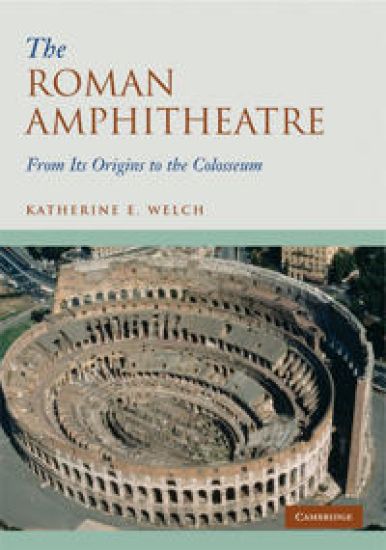
This is the first book to analyze the evolution of the Roman amphitheatre as an architectural form. Katherine Welch addresses the critical period in the history of this building type: its origins and dissemination under the Republic, from the third to first centuries BC; its monumentalization as an architectural form under Augustus; and its canonization as a building type with the Colosseum (AD 80). She explores the social and political contexts of each of these phases in detail. The study then shifts focus to the reception of the amphitheatre and the games in the Greek East, a part of the Empire that was, initially, deeply fractured about the new realities of Roman rule.


In The Footprints Of The Good Shepherd: New York, 1857-1907
Katherine E. Conway
Kessinger Pub
2007
pokkari


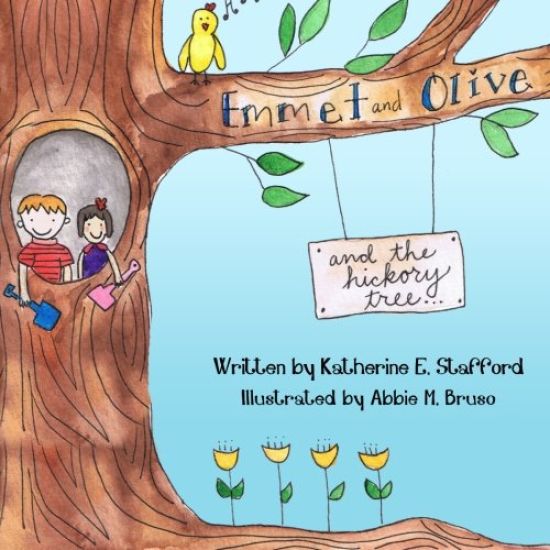
Meet Emmet and Olive, cousins and best friends who create a truly extraordinary tree From cupcakes to fishing poles, watch as it grows some of their favorite things Beautifully illustrated by Abbie M. Bruso and playfully written by Katherine E. Stafford, it's a fantastical read with a very special ending. Complete with excavators and butterflies for boys and girls alike, and written and illustrated with love