

Kirjahaku
Etsi kirjoja tekijän nimen, kirjan nimen tai ISBN:n perusteella.
1000 tulosta hakusanalla Kathleen W. Kelly

After the deaths of both her husband and her son, Kathleen Larson's only family is her wicked daughter-in-law, Tillie, and her son's much kinder ex-wife, Carol. A widow from Homewood, Alabama and a crossing guard for the past 20 years, she is nearing sixty-eight and has only just begun to dream of her retirement. But after an accident leaves Kathleen temporarily disabled, Tillie has other plans. Several forged documents and one tall-tale later, Kathleen finds herself locked up at Lakeside Nursing Home, a run-down memory care facility run by a fake doctor with a criminal past. It's now up to Carol to find Kathleen before Tillie steals her home and her money.

Fund Raising and Public Relations
Kathleen S. Kelly
Routledge Member of the Taylor and Francis Group
1991
sidottu
This is the first scholarly work to place the function of fund raising within the field of public relations, redefining it as a specialization responsible for the management of communication between a charitable organization and its donor publics. Combining her academic interest in communication with her experience as a fund raiser, the author has produced one of the few critical studies on fund raising, challenging current perspectives and employing systems theory and the concept of organizational autonomy to lead to a new and different approach. Until now, fund raising has been an anomaly, without an academic home and with few general theories to guide practitioner behavior. This book theoretically grounds fund raising and develops a theory that provides a fuller understanding of one of the fastest growing occupations in the nonprofit sector.
Effective Fund-Raising Management
Kathleen S. Kelly
Routledge Member of the Taylor and Francis Group
1997
sidottu
In a ground-breaking departure from existing works, almost all of which are how-to manuals based on anecdotal evidence, this is the first academic textbook on fund raising. By integrating practical knowledge with social science theory and research, it presents a comprehensive approach to the function, from its legal and ethical principles to the managerial process by which gifts are raised. Territory previously uncharted in the literature is explored, such as the historical and organizational contexts of contemporary practice. Explanations of programs, techniques, and publics introduce a new system for understanding fund raising's major concepts. Unlike efforts in established fields, most of the material represents original scholarship undertaken to produce a first-time text. The book's main purpose is to teach students about fund raising--a high-demand, high-paying occupation that will continue to expand into the 21st century as the need for trained practitioners exceeds the supply. During the last decade, fund-raising education moved into the formal classroom and away from an apprenticeship tradition of senior practitioners mentoring newcomers. Yet until now, there has not been a textbook to support this evolving professionalism. Faculty have been reluctant to define fund raising as an academic subject in the absence of a theory-based teaching resource, and courses usually have been assigned to part-time instructors hired from the practice. This textbook addresses the void. It is designed for graduate and upper-level undergraduate courses dealing with fund raising as a primary or secondary subject. Among its features, each chapter points out research gaps and opportunities--such as problems and theories for master's theses and doctoral dissertations--and ends with a list of suggested readings. The text is appropriate for the diverse academic areas in which fund raising, nonprofit management, and philanthropy are taught, including public administration, management, arts and humanities, education, social work, economics, and sociology. Because of its public relations orientation, it is particularly suited for courses offered in that discipline. Additional audiences are practitioners enrolled in professional development programs; CEOs, trustees, and others interested in self-study; and scholars who need serious literature on the subject.
Effective Fund-Raising Management
Kathleen S. Kelly
Routledge Member of the Taylor and Francis Group
1997
nidottu
In a ground-breaking departure from existing works, almost all of which are how-to manuals based on anecdotal evidence, this is the first academic textbook on fund raising. By integrating practical knowledge with social science theory and research, it presents a comprehensive approach to the function, from its legal and ethical principles to the managerial process by which gifts are raised. Territory previously uncharted in the literature is explored, such as the historical and organizational contexts of contemporary practice. Explanations of programs, techniques, and publics introduce a new system for understanding fund raising's major concepts. Unlike efforts in established fields, most of the material represents original scholarship undertaken to produce a first-time text. The book's main purpose is to teach students about fund raising--a high-demand, high-paying occupation that will continue to expand into the 21st century as the need for trained practitioners exceeds the supply. During the last decade, fund-raising education moved into the formal classroom and away from an apprenticeship tradition of senior practitioners mentoring newcomers. Yet until now, there has not been a textbook to support this evolving professionalism. Faculty have been reluctant to define fund raising as an academic subject in the absence of a theory-based teaching resource, and courses usually have been assigned to part-time instructors hired from the practice. This textbook addresses the void. It is designed for graduate and upper-level undergraduate courses dealing with fund raising as a primary or secondary subject. Among its features, each chapter points out research gaps and opportunities--such as problems and theories for master's theses and doctoral dissertations--and ends with a list of suggested readings. The text is appropriate for the diverse academic areas in which fund raising, nonprofit management, and philanthropy are taught, including public administration, management, arts and humanities, education, social work, economics, and sociology. Because of its public relations orientation, it is particularly suited for courses offered in that discipline. Additional audiences are practitioners enrolled in professional development programs; CEOs, trustees, and others interested in self-study; and scholars who need serious literature on the subject.

This is the first scholarly work to place the function of fund raising within the field of public relations, redefining it as a specialization responsible for the management of communication between a charitable organization and its donor publics. Combining her academic interest in communication with her experience as a fund raiser, the author has produced one of the few critical studies on fund raising, challenging current perspectives and employing systems theory and the concept of organizational autonomy to lead to a new and different approach. Until now, fund raising has been an anomaly, without an academic home and with few general theories to guide practitioner behavior. This book theoretically grounds fund raising and develops a theory that provides a fuller understanding of one of the fastest growing occupations in the nonprofit sector.

Breakfast With Bogart: "Adventures with a Little Frog in the Countryside"
Kathleen McColloch; Kelly Hayward
Kathleen McColloch
2020
sidottu
Certified naturalist, Kelly Hayward, and author, Kathleen McColloch tell the true story of Kelly and husband, Terry, who exchange life in the city for the intriguing dance of nature that surrounds their new cottage in the country. Each day, the Hayward's enjoy watching the various creatures that happily populate the meadow and pond just outside their window glass. Then they meet the exception, one little frog that insists on moving into the Hayward's kitchen. As they tell it, life with their new little friend, Bogart, becomes a daily adventure they wish to share with a wider audience after they discovered that people of all ages appreciate its magic.Kelly and Kathleen feel this story is unique and unlike most picture books involving animal characters because the story is told from the viewpoint of two adults, though it is evident that they are well in touch with their "inner child."The photos do not involve any manipulation or posing of animals and represent the actual experiences of Kelly and her husband as told to Kathleen. The frog, Bogart, remains free to enter and leave the house at all times through a slightly open window.Though the story often suggests what certain animal behaviors seem to indicate about the animal's thinking, there is no attempt to assign totally human traits to the story's animal "characters" unlike those in picture books that employ cartoon illustrations.
Fearless Feedback
Kathleen Marron Amy Kosterlitz; Lori Siegworth Kelly Ross; Rebecca Glenn Penny Handscomb
Master Coach Author Press
2019
pokkari
Do you seek a feedback process that can be tailored to equip leaders to accomplish their professional goals? Do you need a practical guide for mining stakeholder feedback and framing it in ways that make leaders hungry for the insights? Are you tired of being constrained by cookie-cutter 360-degree feedback tools used in organizations, tools that can be tone deaf to the underlying emotions? Do you wish you could uncover the fears which inhibit the change a leader needs, so they can design actions for future growth? Then Fearless Feedback is your answer Among many things, this book provides: A practical seven-step framework on how to structure stakeholder feedback for leaders; An actionable guide with specific dos and don'ts;Intriguing dialogue between coach, leader, and stakeholder (articulating the unspoken thoughts and underlying emotions); and Tested techniques, tips, tools, and templates

Performing Virginity and Testing Chastity in the Middle Ages
Kathleen Coyne Kelly
Routledge
2000
sidottu
This book challenges the belief that female virginity can be reliably and unambiguously defined, tested and verified. Kelly analyses a variety of medieval Western European texts - including medical treatises and their Classical antecedents - and historical and legal documents. The main focus is the representation of both male and female virgins in saints' legends and romances. The author also makes a comparative study of examples from contemporary fiction, television and film in which testing virginity is a theme. Performing Virginity and Testing Chastity in the Middle Ages presents a compelling and provocative study of the parodox of bodily and spiritual integrity as both presence and absence.

Performing Virginity and Testing Chastity in the Middle Ages
Kathleen Coyne Kelly
Routledge
2014
nidottu
This book challenges the belief that female virginity can be reliably and unambiguously defined, tested and verified. Kelly analyses a variety of medieval Western European texts - including medical treatises and their Classical antecedents - and historical and legal documents. The main focus is the representation of both male and female virgins in saints' legends and romances. The author also makes a comparative study of examples from contemporary fiction, television and film in which testing virginity is a theme. Performing Virginity and Testing Chastity in the Middle Ages presents a compelling and provocative study of the parodox of bodily and spiritual integrity as both presence and absence.

Unlike William Shakespeare, Jane Austen, Charles Dickens, and other great authors who have enjoyed continued success in Hollywood, Geoffrey Chaucer has largely been shunted to the margins of the cinematic world. Chaucer on Screen: Absence, Presence, and Adapting the Canterbury Tales, edited by Kathleen Coyne Kelly and Tison Pugh, investigates the various translations of Chaucer and the Canterbury Tales to film and television, tracing out how the legacies of the great fourteenth-century English poet have been revisited and reinterpreted through visual media. Contributors to this volume address the question of why Chaucer is so rarely adapted to the screen, and then turn to the occasional, often awkward, attempts to adapt his narratives, including such works as Michael Powell and Emeric Pressburger's lyrical A Canterbury Tale (1944), Pier Paolo Pasolini's still-controversial I racconti di Canterbury (1972), Bud Lee's soft-core The Ribald Tales of Canterbury (1985), Brian Helgeland's A Knight's Tale (2001), and BBC television productions, among others. Chaucer on Screen aims to rethink some of the premises of adaptation studies and to erase the ideological lines between textual sources and visual reimaginings in the certainty that many pleasures, scholarly and otherwise, can found in multiple media across disparate eras.


Nina's Corner
Kathleen E Kelly; Joyce Marie Taylor
Createspace Independent Publishing Platform
2008
pokkari


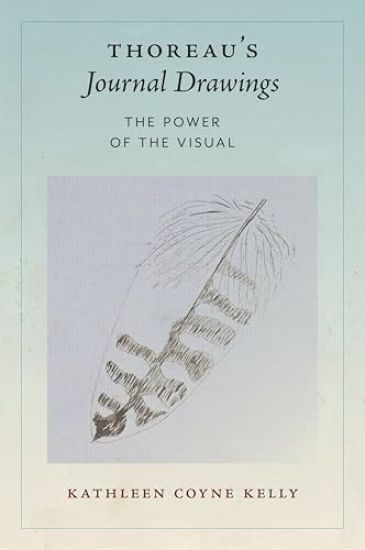
Examining journal drawings as an integral—and often delightful—feature of Thoreau’s work In 1850, Henry David Thoreau began to draw in his Journal—a hedgehog’s quill, a locust’s wing, a goldenrod leaf. The sketches reflect his efforts to train his eye to observe more carefully, to look closely enough that he could see what was in front of him—with intention and attention. As Thoreau worked to combine the vivid language of a writer with the precision of a scientist, his drawings became more vital to the process. For him, writing and drawing were not separate activities; they were part of the same active, hands-on process of learning about the natural world. Thoreau’s Journal Drawings offers a sustained examination of an understudied aspect of the Journal, emphasizing visual as well as textual analysis. It places Thoreau’s illustrated entries in the broader context of nineteenth-century scientific illustration, nature writing, and visual culture, while also offering close readings of key passages in which text and image work in tandem. The book opens up new possibilities for interpretation—both within the Journal and in the larger project of Thoreau’s thinking. Ultimately, Thoreau’s illustrated Journal offers a case study in the complexities of representing the natural world through both language and image. His practice raises enduring questions about how we document, interpret, and mediate the more-than-human world across different forms of expression. To read the later volumes of Henry David Thoreau’s Journal without attending to his drawings is to overlook a vital dimension of his practice as both writer and observer.
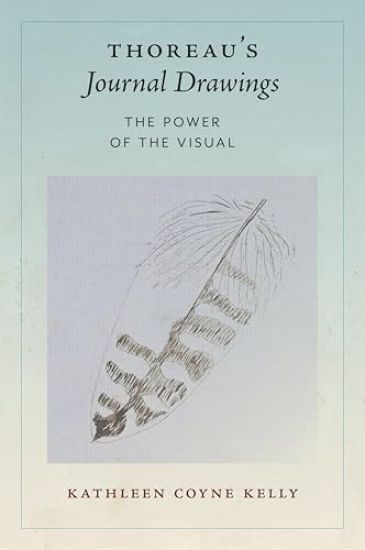
Examining journal drawings as an integral—and often delightful—feature of Thoreau’s work In 1850, Henry David Thoreau began to draw in his Journal—a hedgehog’s quill, a locust’s wing, a goldenrod leaf. The sketches reflect his efforts to train his eye to observe more carefully, to look closely enough that he could see what was in front of him—with intention and attention. As Thoreau worked to combine the vivid language of a writer with the precision of a scientist, his drawings became more vital to the process. For him, writing and drawing were not separate activities; they were part of the same active, hands-on process of learning about the natural world. Thoreau’s Journal Drawings offers a sustained examination of an understudied aspect of the Journal, emphasizing visual as well as textual analysis. It places Thoreau’s illustrated entries in the broader context of nineteenth-century scientific illustration, nature writing, and visual culture, while also offering close readings of key passages in which text and image work in tandem. The book opens up new possibilities for interpretation—both within the Journal and in the larger project of Thoreau’s thinking. Ultimately, Thoreau’s illustrated Journal offers a case study in the complexities of representing the natural world through both language and image. His practice raises enduring questions about how we document, interpret, and mediate the more-than-human world across different forms of expression. To read the later volumes of Henry David Thoreau’s Journal without attending to his drawings is to overlook a vital dimension of his practice as both writer and observer.
Social Startup Success: How the Best Nonprofits Launch, Scale Up, and Make a Difference
Kathleen Kelly Janus
Hachette Go
2021
pokkari
With business advice from an expert entrepreneur, learn how to identify and leverage the key factors that will bring sustainability and success to your startup. In order to make a difference, any modern nonprofit needs to achieve multimillion-dollar annual revenues. After surveying more than 200 high-performing entrepreneurs across the country--including the leaders of Teach for America, City Year, Donors Choose, charity: water, and Hot Bread Kitchen--Kathleen Kelly Janus is here to show you how to reach and sustain lasting organizational growth. Janus asked a simple question: "What is the key to nonprofit success?" The answers she received reveal five key strategies responsible for the most successful social startups: Testing IdeasMeasuring ImpactFunding ExperimentationLeading CollaborativelyTelling Compelling Stories In these uncertain times, we need every bit of creativity and determination to find better solutions. The stories in Social Startup Success and the tools it recommends will help you to make your organization--whether a fledging startup or a large, well-established operation--thrive.

Kathleen Kelly Janus, a lecturer at the Stanford University Program on Social Entrepreneurship and the founder of the successful social enterprise Spark, set out to investigate what makes a startup succeed or fail. She surveyed more than 200 high-performing social entrepreneurs and interviewed dozens of founders. Social Startup Success shares her findings for the legions of entrepreneurs working for social good, revealing how the best organizations get over the revenue hump. How do social ventures scale to over $2 million, Janus's clear benchmark for a social enterprise's sustainability? Janus, tapping into strong connections to the Silicon Valley world where many of these ventures are started or and/or funded, reveals insights from key figures such as DonorsChoose founder Charles Best, charity:water's Scott Harrison, Reshma Saujani of Girls Who Code and many others. Social Startup Success will be social entrepreneurship's essential playbook; the first definitive guide to solving the problem of scale.

Safety Wise: Health and Safety AIDS for Girl Scout Leaders
Kathleen Kelly
Literary Licensing, LLC
2013
nidottu