

Kirjahaku
Etsi kirjoja tekijän nimen, kirjan nimen tai ISBN:n perusteella.
1000 tulosta hakusanalla Kathrin Schwarz


Funktionen des Darstellenden Spiels im Unterricht der Grundschule
Kathrin Schwarz
Grin Verlag
2007
pokkari
Examensarbeit aus dem Jahr 2001 im Fachbereich Pädagogik - Schulpädagogik, Note: 2,7, Freie Universität Berlin (Erziehungswissenschaft und Psychologie / Grundschulpädagogik), Veranstaltung: Examen, Sprache: Deutsch, Abstract: In den letzten Jahren vermehren sich die Forderungen nach neuen Lernformen im Unterricht der Grundschule. Es gibt eine Vielzahl von Möglichkeiten, den Unterricht für die Schüler und den Lehrer interessanter und wirksamer zu gestalten als es der Frontalunterricht vermag. Wochenplanunterricht, handlungsorientierter und auch fächerübergreifender Unterricht sind nur einige Stichworte. Auch die Musisch-Ästhetische Erziehung bemüht sich um ein Unterrichtsprinzip, bei welchem die Schüler spielerisch und experimentell tätig werden können und der Einsatz des Körpers sowie aller Sinne Beachtung findet. In dieser Arbeit wird das Darstellende Spiel - ein wesentlicher Bereich der Musisch-Ästhetischen Erziehung - als eine innovative und produktive Lernform für den Unterricht der Grundschule vorgestellt. Ziel wird es sein, die pädagogischen Funktionen dieses Unterrichtsmittels darzulegen und auf den Stellenwert des Darstellenden Spiels für den Unterricht der Grundschule aufmerksam zu machen.


Die britischen Romane "Trainspotting" und "High Fidelity" zwischen Pop und Kult
Ann-Kathrin Schwarz
GRIN Verlag
2022
nidottu

Die Vernetzung von Informationen, die Wissen entstehen l sst, war der origin re Entstehungskontext des Internets und seiner popul rsten Anwendung, des World Wide Webs. Aus dieser Perspektive stellt das Internet sowohl einen riesigen Speicher von Informationen als auch - erm glicht durch seine Struktur des (Mit-)Teilens und Vernetzens - ein Medium zur Erzeugung, Organisation, Repr sentation und Vermittlung von Wissen dar. Mit seinen Anwendungen bildet es die Infrastruktur, auf die Wissenspraktiken zur ckgreifen. Diese Infrastruktur ist von ihrer Entstehung bis zu ihren Zukunftsaussichten Gegenstand des vorliegenden Bandes, welcher im Stile eines Casebooks auch die juristischen Grundlagen und Herausforderungen herausarbeitet. Das Buch wendet sich insbesondere an Studierende der Bibliotheks- und Informationswissenschaft sowie Besch ftigte in Informationseinrichtungen.


Wir sind jetzt vier! und andere Geschichten
Regina Schwarz; Katja Reider; Kathrin Lena Orso
Oetinger Media GmbH
2022
cd

Französische und deutsche Kulturauffassung - Die Entstehung des Gegensatzes von Zivilisation und Kultur nach Norbert Elias
Dominic Vaas; Olaf Schwarz; Kathrin Anton
Grin Publishing
2007
pokkari

Design Science and Its Importance in the German Mathematics Educational Discussion
Marcus Nührenbörger; Bettina Rösken-Winter; Chun Ip Fung; Ralph Schwarzkopf; Erich Christian Wittmann; Kathrin Akinwunmi; Felix Lensing; Florian Schacht
Springer International Publishing AG
2016
nidottu
This ICME-13 Topical Survey reviews the state-of-the-art by first exploring the roots and scope of design science. Second, it presents two examples of current design science projects that focus on substantial learning environments including a student and a teacher perspective. Subsequently, the book elaborates on how empirical research can be conceptualised within design science. Lastly, it explores developments in design science from a national and international perspective, while also discussing current trends in design research. Within the German-language tradition, considering ‘mathematics education as a design science’ primarily draws on the works of Wittmann. The core of this approach constitutes designing and investigating learning environments that involve substantial mathematics.
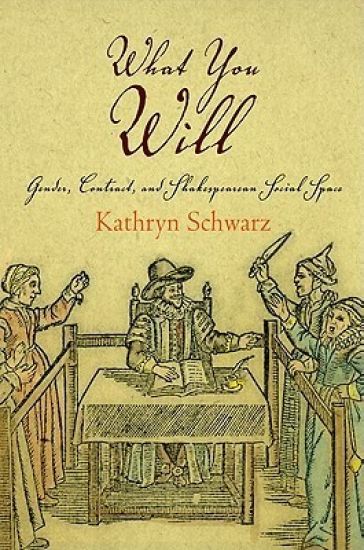
In What You Will Kathryn Schwarz traces a curious pattern in sixteenth- and seventeenth-century representations of femininity: women pose a threat when they conform too willingly to social conventions. Exemplary texts describe chaste women who kill their rapists, constant wives who make marriage a debilitating obligation, and devoted mothers who destroy the fitness of children. These cautionary tales draw attention to the more ordinary, necessary choices that take prescribed roles as a mandate for purposeful acts. For early modern narratives, writes Schwarz, intentional compliance poses a complex problem: it sustains crucial tenets of order and continuity but unsettles the hierarchical premises from which those tenets derive. Feminine will appears as a volatile force within heterosociality, lending contingent security to a system that depends less on enforced obedience than on contract and consent. The book begins with an examination of early modern disciplines that treat will as an aspect of the individual psyche, of rhetoric, and of sexual and gendered identities. Drawing on these readings, Schwarz turns to Shakespearean works in which feminine characters articulate and manage the values that define them, revealing the vital force of conventional acts. Her analysis engages with recent research that has challenged the premise of feminine subordination, both by identifying alternative positions and by illuminating resistance within repressive structures. Schwarz builds on this awareness of disparate modes and sites of action in formulating the book's central questions: With what agency, and to what effect, do feminine subjects inhabit the conventions of femininity? In what sense are authenticity and masquerade inseparable aspects of social performance? How might coercive systems produce effective actors? What possibilities emerge from the paradox of prescribed choice? Her conclusions have implications not only for early modern scholarship but also for histories of gender and sexuality, queer studies, and theories of the relationship between subjectivity and ideological constraint.
In Tough Love Kathryn Schwarz takes up a range of literary, historical, and theoretical texts in order to examine the relationship between Amazon myth and the social conventions that governed gender and sexuality during the early modern period. Imagined as embodiments of female masculinity, amazonian figures stimulated both homoerotic and heteroerotic response, and Schwarz shows that their appearance in narratives disrupted assumptions concerning identity, gender, domesticity, and desire. Despite seeming to function as signs for what is outside the social-the alien, the exotic, the other-Amazons in sixteenth- and seventeenth-century texts were often represented in conventionally domestic roles, as mothers and lovers, wives and queens, Schwarz demonstrates. She traces this pattern in works by Shakespeare, Spenser, Sidney, Raleigh, and Jonson, as well as in such materials as conduct manuals, explorers’ accounts, court spectacles, and political tracts. Through readings of these texts, Schwarz shows that the Amazon myth provided a language both for setting forth and for challenging the terms of social logic. In representations of Amazon encounters, she argues, homosocial bonds became indistinguishable from heterosexual desires, masculine agency attached itself as logically to women as it did to men, and sexual difference was made nearly impossible to sustain or define. Schwarz’s analysis unveils the Amazon as a theoretical term, one that illuminates the tensions and paradoxes through which ideologies of the domestic take shape. Tough Love contributes to the ongoing discussion of gendered identity and sexual desire in the early modern period. It will interest students of queer theory, cultural studies, early modern history, feminism, and literature.
In Tough Love Kathryn Schwarz takes up a range of literary, historical, and theoretical texts in order to examine the relationship between Amazon myth and the social conventions that governed gender and sexuality during the early modern period. Imagined as embodiments of female masculinity, amazonian figures stimulated both homoerotic and heteroerotic response, and Schwarz shows that their appearance in narratives disrupted assumptions concerning identity, gender, domesticity, and desire. Despite seeming to function as signs for what is outside the social-the alien, the exotic, the other-Amazons in sixteenth- and seventeenth-century texts were often represented in conventionally domestic roles, as mothers and lovers, wives and queens, Schwarz demonstrates. She traces this pattern in works by Shakespeare, Spenser, Sidney, Raleigh, and Jonson, as well as in such materials as conduct manuals, explorers’ accounts, court spectacles, and political tracts. Through readings of these texts, Schwarz shows that the Amazon myth provided a language both for setting forth and for challenging the terms of social logic. In representations of Amazon encounters, she argues, homosocial bonds became indistinguishable from heterosexual desires, masculine agency attached itself as logically to women as it did to men, and sexual difference was made nearly impossible to sustain or define. Schwarz’s analysis unveils the Amazon as a theoretical term, one that illuminates the tensions and paradoxes through which ideologies of the domestic take shape. Tough Love contributes to the ongoing discussion of gendered identity and sexual desire in the early modern period. It will interest students of queer theory, cultural studies, early modern history, feminism, and literature.

Mit einem spektakulären Bauprojekt wollte die UNESCO in den 1950er Jahren der Idee internationaler Völkerverständigung durch Kultur Ausdruck verleihen. Für dessen Realisierung wandte sie sich an die führenden Vertreter moderner Architektur, die CIAM, vertreten durch Walter Gropius, Le Corbusier, Marcel Breuer u. a. Die Publikation legt durch eine detaillierte Quellenrecherche die Netzwerkstrukturen beider Organisationen offen. Sie zeigt auf, wie die UNESCO einen internationalen Kulturkanon auf der Basis moderner kunsttheoretischer Ideen und Konzepte der Vorkriegszeit zu etablieren versuchte. Dabei arbeitet sie nicht zuletzt das Interesse der CIAM an dem prestigeträchtigen Bauprojekt heraus: eine für alle Welt sichtbare Ablösung des historischen Akademismus durch die moderne Architektur.



Die Spamproblematik nach deutschem und europäischen Recht
Kathrin Schwartz
Grin Publishing
2008
pokkari


Kunst andersARTig - der etwas andere Kunstunterricht in Klasse 7-10
Katrin Schwarz
Buch Verlag Kempen
2017
lehtivihko, moniste

Kunst andersArtig - der etwas andere Kunstunterricht in Klasse 7-10
Katrin Schwarz
Buch Verlag Kempen
2017
lehtivihko, moniste