Kirjojen hintavertailu. Mukana 11 244 527 kirjaa ja 12 kauppaa.

Kirjahaku

Etsi kirjoja tekijän nimen, kirjan nimen tai ISBN:n perusteella.

1000 tulosta hakusanalla Katy Shaw

Crunch Lit

Crunch Lit

Katy Shaw

Bloomsbury Academic
2015
sidottu
The financial crisis of 2008 quickly gave rise to a growing body of fiction: "crunch lit". Populated by a host of unsympathetic characters and centred around banking institutions, these 'recession writings' take the financial crisis as their central narrative concern to produce a new wave of literary and popular writings that satirise the origins and effects of modern life, consumer culture and the credit boom. Examining a range of texts from such writers as John Lanchester, Jonathan Franzen, Don DeLillo, Sebastian Faulks and Bret Easton Ellis, this book offers the first wide-ranging guide to this new genre. Exploring the key themes of the genre and its antecedents in fictional representations of finance by the likes of Dickens, Conrad, Zola and Trollope, Crunch Lit also includes a timeline of key historical events, guides to further and online resources and biographies of key authors. Supported by online resources, the book is an essential read for students of 21st century literature and culture.
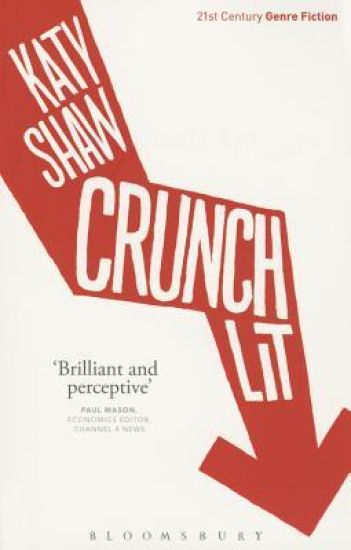
Crunch Lit

Crunch Lit

Katy Shaw

Bloomsbury Academic
2015
nidottu
The financial crisis of 2008 quickly gave rise to a growing body of fiction: "Crunch Lit". These 'recession writings' take the financial crisis as their central narrative concern and explore its effects on consumer culture, gender roles and contemporary communities. Examining a range of texts including Sebastian Faulks' A Week in December, Adam Haslett's Union Atlantic, and John Lanchester's Capital, this book offers the first wide-ranging guide to these new millennial writings.
David Peace

David Peace

Katy Shaw

LIVERPOOL UNIVERSITY PRESS
2024
sidottu
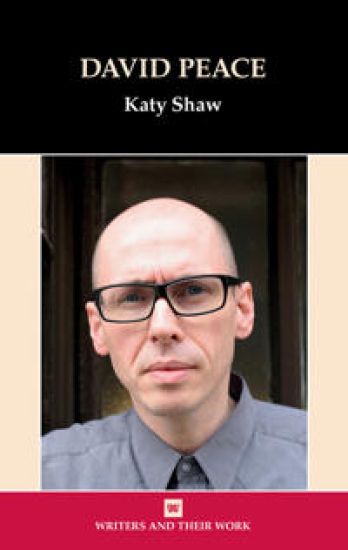
As a Northern Ballard and the father of ‘Yorkshire noir’, David Peace offers the twenty-first-century reader unique novelized histories of events we think we know well. This new study provides a comprehensive introduction to the author and an overview of the debates surrounding his work to date. Approaching Peace in the context of a British social realist tradition, Katy Shaw presents and examines a new chronology of his work, moving from the Ripper and the UK miners’ strike to Leeds United and twentieth-century Tokyo. Offering the first analysis of adaptations of Peace’s writings for the screen and stage, and featuring an exclusive interview with the author reflecting on two decades of writing, this book is a must-read for students, critics and fans alike.
David Peace

David Peace

Katy Shaw

Sussex Academic Press
2018
nidottu
David Peace is an emerging author who is widely read and taught, and whose novels are increasingly translated into commercial film (The Damned United, March 2009) and television (Channel 4 adaptation of the Red Riding Quartet, March 2009). Dr Katy Shaw's book provides a challenging but accessible critical introduction to his work through a detailed analysis of his writing, as well as the socio-cultural contexts of its production and dissemination. The author explores Peace's attempts to capture the sensibilities of late twentieth century society and contributes to an ongoing debate in the media about Peace's representations. Influenced by critical theory, the text will be the first secondary resource concerning this rising star of contemporary British literature. While UK readers will seek insight into the socio-cultural contexts of England's regions (and in particular his writing on the Yorkshire Ripper and the 1985 -- 5 miners' strike), Peace also has a following in the US where both The Damned United and Red Riding are set to receive a national cinema release in 2009/10. This broad international appeal and readership will be explored and discussed, especially in the context of crime fiction and social engagement. This text is the first critical resource concerning this author and will cover the full body of Peace's writings to date, the debates this work has generated, and the often contentious representations offered by his novels.
Hauntology

Hauntology

Katy Shaw

Springer Nature Switzerland AG
2018
nidottu
Post-millennial writings function as a useful prism through which we can understand contemporary English culture and its compulsion to revisit the immediate past. The critical practice of hauntology turns to the past in order to make sense of the present, to understand how we got to this place and how to build a better future. Since the Year 2000, popular culture has been inundated with representations of those who occupy a space between being and non-being and defy ontological criteria. This Pivot explores a range of contemporary English literatures - from the poetry of Simon Armitage and the drama of Jez Butterworth, to the fiction of Zadie Smith and the stories of David Peace - that collectively unite to represent a twenty-first century world full of specters, reminiscence and representations of spectral encounters. These specters become visible and significant as they interact with a range of social, political and economic discoursesthat continue to speak to the contemporary period. The enduring fascination with the spectral offers valuable insights into a contemporary English culture in which spectral manifestations signal towards larger social anxieties as well as to specific historical events and recurrent cultural preoccupations. The specter confronts the contemporary with the necessity of participation, encouraging the realisation that we must engage with it in order to create meaning. Narrative agency is the primary motivating force of its return, and the repetition of the specter functions to highlight new meanings and perspectives. Harnessing hauntology as a lens through which to consider the specters haunting twenty-first century English writings, this Pivot examines the emergence of a vein of hauntological literature that profiles the pervasive presence of the past in our new millennium.
Hauntology

Hauntology

Katy Shaw

Springer International Publishing AG
2018
sidottu
Post-millennial writings function as a useful prism through which we can understand contemporary English culture and its compulsion to revisit the immediate past. The critical practice of hauntology turns to the past in order to make sense of the present, to understand how we got to this place and how to build a better future. Since the Year 2000, popular culture has been inundated with representations of those who occupy a space between being and non-being and defy ontological criteria. This Pivot explores a range of contemporary English literatures - from the poetry of Simon Armitage and the drama of Jez Butterworth, to the fiction of Zadie Smith and the stories of David Peace - that collectively unite to represent a twenty-first century world full of specters, reminiscence and representations of spectral encounters. These specters become visible and significant as they interact with a range of social, political and economic discoursesthat continue to speak to the contemporary period. The enduring fascination with the spectral offers valuable insights into a contemporary English culture in which spectral manifestations signal towards larger social anxieties as well as to specific historical events and recurrent cultural preoccupations. The specter confronts the contemporary with the necessity of participation, encouraging the realisation that we must engage with it in order to create meaning. Narrative agency is the primary motivating force of its return, and the repetition of the specter functions to highlight new meanings and perspectives. Harnessing hauntology as a lens through which to consider the specters haunting twenty-first century English writings, this Pivot examines the emergence of a vein of hauntological literature that profiles the pervasive presence of the past in our new millennium.
David Peace

David Peace

Katy Shaw

LIVERPOOL UNIVERSITY PRESS
2026
nidottu
As a Northern Ballard and the father of ‘Yorkshire noir’, David Peace offers the twenty-first-century reader unique novelized histories of events we think we know well. This new study provides a comprehensive introduction to the author and an overview of the debates surrounding his work to date. Approaching Peace in the context of a British social realist tradition, Katy Shaw presents and examines a new chronology of his work, moving from the Ripper and the UK miners’ strike to Leeds United and twentieth-century Tokyo. Offering the first analysis of adaptations of Peace’s writings for the screen and stage, and featuring an exclusive interview with the author reflecting on two decades of writing, this book is a must-read for students, critics and fans alike.
Celebrate to Motivate: The Art of Inspiring Students, Staff, and the School Community (the Power of Celebration in Schools)
Celebrations enrich the lives of students, staff members, and school communities. The authors provide powerful, compelling stories; proven strategies; and practical tools for embedding celebration into school culture. Drawing on insights from schools and districts, this book empowers K-12 teachers and administrators to create a celebratory environment that inspires educators, motivates student learning, and actively engages the entire school community. K-12 teachers and administrators can use this book to: Gauge the impact of celebration practices through reflections and surveys Develop daily classroom rituals to recognize individual accomplishments Plan yearly schoolwide events to mark community achievements and successes Inspire continued improvement and excellence through regular celebratory practices Unite students, staff, and family in supportive community networks of mutual celebration Contents: Introduction Chapter 1: A Culture of Celebration Chapter 2: Celebrate to Motivate Students Chapter 3: Celebrate to Motivate Staff Chapter 4: Celebrate to Motivate the Community Epilogue References and Resources Index
Anchor Your Vision: Navigational Tools and Strategies for Every Stage in a PLC at Work(r) (Tools to Move Your Vision to Action)
In Anchor Your Vision: Navigational Tools and Strategies for Every Stage in a PLC at Work(R), authors Creswell, McClain, and Traicoff guide educators to create, live, and achieve their mission, vision, collective commitments, and goals. With the book's practical tools and action steps, leaders will sharpen collective focus, shift belief into action, and circumvent common roadblocks to becoming and sustaining a highly effective PLC. K-12 school and district leaders can use this book to: Reflect on the why behind their work as a PLC Assess their current reality and determine next steps for implementing the foundational pillars of a PLC Engage all staff to create, implement, and monitor the foundational pillars of a PLC Identify opportunities and use tools for celebrating along the journey Create a motto that rallies staff to the foundational pillars of a PLC Hire and onboard new staff through the lens of the foundational pillars Contents: Introduction Chapter 1: The Why Chapter 2: Mission Chapter 3: Vision Chapter 4: Collective Commitments Chapter 5: Goals Chapter 6: Motto Chapter 7: Hiring, Connecting, and Maintaining Epilogue References and Resources Index
Katy

Katy

Jacqueline Wilson

Puffin
2016
pokkari
"I'll be famous at something some day, you mark my words."Katy Carr is a daredevil. You'll always find her outdoors, climbing on the garage roof, or up a tree, cycling, skateboarding... Anything to get away from her new stepmother, Izzie. But, when Katy's involved in a terrible accident, her life is changed forever. Inspired by the much-loved classic, What Katy Did, bestselling children's favourite Jacqueline Wilson creates an irresistible modern version for the twenty-first-century. As seen on CBBC!
Katy

Katy

Joan Mueller; Lisa Mueller

Masthof Press
2024
pokkari
Drawing on extensive documented Mennonite history, family records, and a host of other resources, the authors present colorful characters based on their own family tree. Travel with little Katy and her family in 1874 as they leave their Ukrainian village and journey across Europe to board a steamship and endure a perilous ocean voyage. Then follow Katy and her cousins on an exciting adventure across the United States to the unknowns of the Dakota Territory. Chapter book series intended for ages 8-12. Book 1 in the "Roses of the Valley" series.
Katy's Debate

Katy's Debate

Kim Vogel Sawyer

Zondervan
2010
nidottu
New Club, New Crush … New Mom? Just as Katy is feeling settled in her new school, everything falls apart at home. Her father, believing she needs a mother, starts courting a woman Katy refuses to accept. Tensions rise as Katy schemes to send the woman packing. Meanwhile, the pressure builds at school as Katy joins the debate team, encounters a teammate’s scorn, and faces her growing feelings for a boy her father will never accept. Can Katy prove she doesn’t need a mother’s guidance even as she discovers more of what the world offers?
Katy's New World

Katy's New World

Kim Vogel Sawyer

Zondervan
2010
nidottu
Katy has always enjoyed life in her small Mennonite community, but she longs to learn more than her school can offer. After getting approval from her elders, Katy starts her sophomore year at the public high school in town, where she meets new friends and encounters perspectives much different than her own. But as Katy begins to find her way in the outside world, her relationships at home become restrained. Can she find a balance between her two worlds?
Katy's Decision

Katy's Decision

Kim Vogel Sawyer

Zondervan
2011
nidottu
After This Summer, Katy’s Life May Change ForeverKaty is looking forward to the best summer ever. Her closest friend, Shelby, comes to stay with her when an accident forces her to miss her family’s mission trip. But when Katy’s aunt faces a serious illness and needs the girls to run the fabric store, Katy’s plans fall apart. Suddenly what should have been a summer of relaxation becomes filled with long hours at the shop.But then a Mennonite boy visits her community for the summer. His presence complicates her life, as do her feelings for Bryce, her non-Mennonite crush. Katy has several decisions to make by the time August arrives, the largest being whether she will attend school in the fall and follow her dreams, or continue on in her Mennonite life to help her family. Katy struggles to choose between the two worlds she loves, but the final decision may be out of her hands.
Katy's Debate

Katy's Debate

Sawyer Kim Vogel

Zondervan
2015
nidottu
New club, new crush … new mom? Just as Katy is feeling settled in her new school, everything falls apart at home. Her father, believing she needs a mother, starts courting a woman Katy refuses to accept. Tensions rise as Katy schemes to send the woman packing. Meanwhile, the pressure builds at school as Katy joins the debate team, encounters a teammate’s scorn, and faces her growing feelings for a boy her father will never accept. Can Katy prove she doesn’t need a mother’s guidance even as she discovers more of what the world offers?
Katy's New World

Katy's New World

Sawyer Kim Vogel

Zondervan
2015
nidottu
Katy has always enjoyed life in her small Mennonite community, but she longs to learn more than her school can offer. After getting approval from her elders, Katy starts her sophomore year at the public high school in town, where she meets new friends and encounters perspectives much different than her own. But as Katy begins to find her way in the outside world, her relationships at home become restrained. Can she find a balance between her two worlds?
Katy's Homecoming

Katy's Homecoming

Sawyer Kim Vogel

Zondervan
2015
nidottu
Just one perfect night Katy gets the chance of a lifetime—she’s been elected to the homecoming court, and there are rumors her crush, Bryce, might ask her to go with him. What could be more perfect? For one unforgettable night she would be able to experience life as many other teenage girls do—a stunning gown, gorgeous hair, jewelry, and makeup. Except Katy’s Mennonite community prohibits dancing as well as fancy dresses and makeup, and her father would not approve.When an opportunity arises that could allow her to attend without her father knowing, Katy must decide: Will she hold tight to her convictions, or will she sacrifice her principles for one special night?