

Kirjahaku
Etsi kirjoja tekijän nimen, kirjan nimen tai ISBN:n perusteella.
1000 tulosta hakusanalla Keith (EDT) Sagar

Human Development and the International Development Strategy for the 1990s
Keith (EDT) Griffin; J. (EDT) Knight
Palgrave Macmillan
1990
pokkari
The present decade has brought a sharp deterioration in living conditions in many developing countries, especially in Africa and Latin America. Incomes per capita have declined and social expenditure has been cut, with setbacks in nutrition, school enrolment and health services as a result. The burden of economic adjustment tends to fall most heavily on the poor and on vulnerable groups, such as children. This is not only a tragedy in itself but also a waste of human resources and it has led to renewed attention to the role of human resources in the process of development. This is, of course, not a new issue. It has long been understood that the realization of the full potential of human beings is both a means and an end in itself and that the reduction of poverty should be a primary aim of development. But all too often development tends to bypass the poor unless steps are taken to ensure that they share its benefits; and in times of austerity their position tends to worsen further. Hence, the present search for ways to alleviate poverty, combat hunger and uphold educational and health standards, even in times of economic distress.This book, containing studies commissioned by the United Nations, focuses on the dynamic interaction between the economic and social variables in development. It presents and develops the case for greater attention to the human factor by identifying and assessing the fundamental role of education, health, work opportunities and social participation in economic and social progress.

This survey was commissioned by the Academy of the Social Sciences in Australia for the Australian Bicentenary. It attempts to provide an overview of the structure and nature of contemporary Australian society, together with a consideration of future changes.


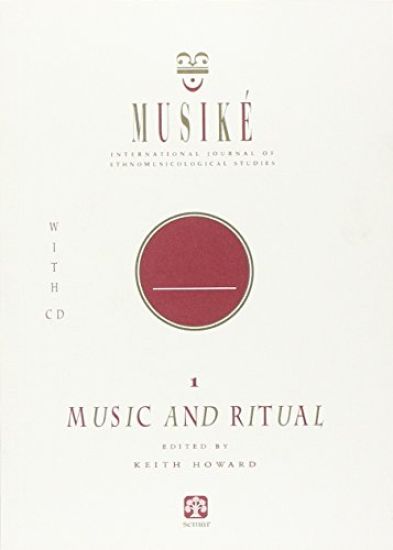
"Musike: Volume One: Music and Ritual", this book also includes a CD-ROM. .


Advances in Manufacturing Technology XXXV
Mahmoud (EDT) Shafik; Keith (EDT) Case; Mahmoud (EDT) Shafik
Ios Pr Inc
2022
pokkari



Surgical Applied Anatomy
Frederick Treves; Arthur (EDT) Keith; W. Colin (EDT) Mackenzie
Kessinger Pub
2007
pokkari

The Life Sciences in Eighteenth-Century French Thought
Jacques Roger; Keith Rodney (EDT) Benson; Robert (TRN) Ellrich
Stanford University Press
1998
sidottu
This masterwork of intellectual history has been widely acclaimed since its publication in 1963. Though its main focus is on the question of animal generation, it is broadly conceived and situates the life sciences within the larger context of French Enlightenment thought and the history of institutions.Comments on the French Edition"It fashions a standard of incredible breadth against which all subsequent histories of the biological sciences must be measured. In fact, it must become one of the seminal works in the interpretation of eighteenth-century science."-Journal of the History of Biology"Roger's classic work is foundational for all of us working in the field, and although it was first published in 1963, it still [1996] remains the authoritative work on the subject."-Timothy Lenoir,Stanford University"Impressive by its excellence as well as by its size and scope. . . . The style with which the material is presented is spirited throughout."-Isis"Roger's perspective is broad enough to be of vital concern to anyone interested in the French Enlightenment. . . . It is one of the few modern classics that has not 'aged'. . . . It is a great shame that until now it has been available only to those who have a good mastery of French." -Paul L. FarberOregon State University"A most interesting and valuable book. . . . One feels that Roger's conclusions are not the product of prejudices or preconceptions, but have been forced upon him by the historical materials themselves." -J. S. WilkieHistory of Science"Even though I work more in the physical sciences than in the life sciences, I use Roger's book regularly because of its great scope. . . . When I have students write papers on eighteenth-century topics I usually send them to Roger, but since few undergraduates can read French, it is often inaccessible to them."-Thomas L. HankinsUniversity of Washington

The Magic Tower and Other One-Act Plays
Tennessee Williams; Terrence (FRW) McNally; Thomas (EDT) Keith
New Directions Publishing Corporation
2011
pokkari

William Keith Brooks, A Sketch Of His Life
Some of His Former Pupils and Associates; William E. (EDT) Castle; Ross G. (EDT) Harrison
Kessinger Pub
2008
pokkari

Political Communication Yearbook, 1984
Keith R. (EDT) Sanders
Southern Illinois Univ Pr
1985
sidottu


Enteral Feeding in Long Term Care
Keith N. (EDT) Apelgren; Richard E. (EDT) Dean
Pluribus Pr
1991
pokkari


A Physical, Historical, Political, and Descriptive Geography
Keith Johnston; E. G. (EDT) Ravenstein
Kessinger Pub
2009
pokkari

A Physical, Historical, Political, and Descriptive Geography
Keith Johnston; E. G. (EDT) Ravenstein
Kessinger Pub
2009
sidottu