Bivouac Blues is the sixth collection from New Jersey singer-songwriter, musician, author, and educator Keith Charles Dovoric. It contains all-new lyrics, poems, and a short story.
To celebrate twenty-five years of excellent song-craft, NJ singer-songwriter, musician, author, and educator Keith Charles Dovoric has compiled a volume that, for the first time, captures every era of his uncompromisingly prolific career. With over 200 songs, and featuring compositions he has penned with The SUDs, Palomino, and Asylum Avenue, along with unreleased material, Broken Pilgrim Songs (named for the author's long-standing, self-publishing moniker) is the definitive collection of Mr. Dovoric's work.
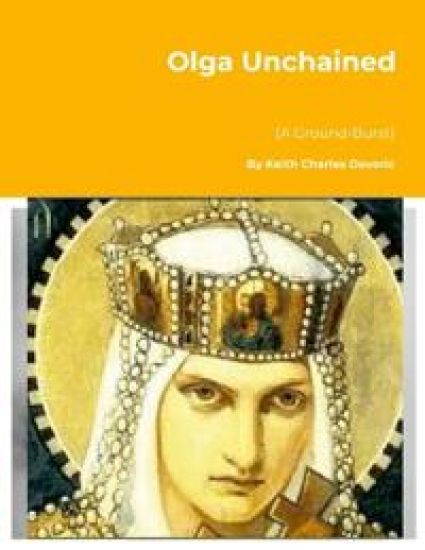
NJ-born-and-based singer-songwriter, author and educator Keith Charles Dovoric has been composing and performing original music since age 13. 'Olga Unchained' is Mr. Dovoric's nineteenth book. Mr. Dovoric is known for his mordant wit and the literary craftsmanship of his lyrics and prose. He lives with his wife and children in suburban Essex County, NJ.
Keith Charles Dovoric is a NJ-born-and-based singer-songwriter, composer, author and educator. He has been composing original music and lyrics and for over thirty years. "Exeunt Cathar" is his fourteenth published volume.
A working artist for over two decades, NJ-native Keith Charles Dovoric marries the traditions of musicianship and lyric-writing to craft an unexpectedly fresh breath of literary songcraft. Presaged by the likes of the "rock poets" (Dylan, Cohen, Springsteen, Zevon) as well as the giants of written verse (Dorothy Parker, T.S. Eliot), and featuring over 180 songs, Another Day, Another Delusion: Selected Lyrics is the ideal distillation of a writer, musician, and performer whose provocative compositions -- not to mention jaundiced world-view -- have set him apart from the cookie-cutter ethos of middlebrow pop culture. "This compendium is the upshot of ten years' worth of assemblage, blood, glory, misery, malignancy, and squalor. I feel it presents me well, for lack of better terms. I'm very pleased with it."
Keith Charles Dovoric, a NJ-based singer-songwriter, musician, author, educator, and driving force behind The Overman, has been composing, recording and performing songs and poems for nearly thirty years. He has published nine books and recorded eight albums, with a ninth in the works. Some of the Songs, in its revised edition, marks a cogent compendium of Mr. Dovoric's very best work and highlights a still-burgeoning career as a singular and uncompromising artist. Echoes of Dylan, Cohen, Zevon and Prine ring throughout, but Mr. Dovoric still manages to establish a unique musical and literary voice that resides well outside the mainstream of vapid pop-cultural convention.
Keith Charles Dovoric is a NJ-born-and-bred singer-songwriter with over twenty-five years of composing, recording, performing, and publishing experience. Inspired by the likes of Dylan Thomas, T.S. Eliot and Dorothy Parker -- as well as Bob Dylan, the Doors, and Warren Zevon -- Mr. Dovoric demonstrates a finely-honed, well-crafted, and refreshingly oblique approach to rock and folk rock-inspired lyric-writing, betraying many cultural and literary influences. Ransom Notes on Sunny Days, featuring over eighty works (including five previously-unpublished lyrics and one poem), captures Mr. Dovoric's strengths, proving to be the ideal primer to this hard-to-pigeonhole writer and performer.
Keith C. Dovoric has been composing, recording, and performing his own material for twenty-five years. The fourth book by the NJ-based singer-songwriter, poet, essayist, social critic, and teacher, Clemency for Tyrants contains forty-six songs and poems, all of which are previously unpublished. ""I feel that this content represents a quantum leap in my writing, and yet it fits very well alongside my previous work. I'm proud and happy to share it.""
The work of a highly-prolific and hard-to-categorize artist, "Saccharin and Squalor" is the fifth Lulu paperback by singer-songwriter, musician, poet, essayist, and teacher Keith Charles Dovoric. It is at once a natural progression of his previous work, "Clemency for Tyrants," and a maturation of the themes and images of that compelling work.
The latest collection from singer-songwriter, musician, poet, essayist, and teacher Keith Charles Dovoric, "Some of the Songs" represents a fine distillation of, and primer for, this singular artist's most memorable works.(Volume contains 80 songs, three of which are previously unpublished.)
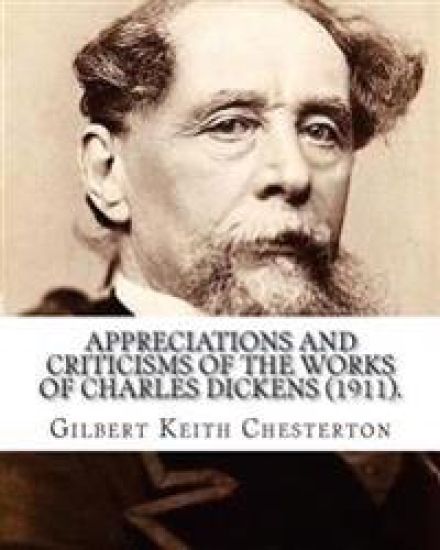
Gilbert Keith Chesterton, KC*SG (29 May 1874 - 14 June 1936), better known as G. K. Chesterton, was an English writer, poet, philosopher, dramatist, journalist, orator, lay theologian, biographer, and literary and art critic. Chesterton is often referred to as the "prince of paradox". Time magazine has observed of his writing style: "Whenever possible Chesterton made his points with popular sayings, proverbs, allegories-first carefully turning them inside out." Chesterton is well known for his fictional priest-detective Father Brown, and for his reasoned apologetics. Even some of those who disagree with him have recognised the wide appeal of such works as Orthodoxy and The Everlasting Man.Chesterton, as a political thinker, cast aspersions on both Progressivism and Conservatism, saying, "The whole modern world has divided itself into Conservatives and Progressives. The business of Progressives is to go on making mistakes. The business of the Conservatives is to prevent the mistakes from being corrected."Chesterton routinely referred to himself as an "orthodox" Christian, and came to identify this position more and more with Catholicism, eventually converting to Catholicism from High Church Anglicanism. George Bernard Shaw, Chesterton's "friendly enemy" according to Time, said of him, "He was a man of colossal genius."Biographers have identified him as a successor to such Victorian authors as Matthew Arnold, Thomas Carlyle, Cardinal John Henry Newman, and John Ruskin.. Charles John Huffam Dickens ( 7 February 1812 - 9 June 1870) was an English writer and social critic. He created some of the world's best-known fictional characters and is regarded by many as the greatest novelist of the Victorian era.His works enjoyed unprecedented popularity during his lifetime, and by the twentieth century critics and scholars had recognised him as a literary genius. Born in Portsmouth, Dickens left school to work in a factory when his father was incarcerated in a debtors' prison. Despite his lack of formal education, he edited a weekly journal for 20 years, wrote 15 novels, five novellas, hundreds of short stories and non-fiction articles, lectured and performed extensively, was an indefatigable letter writer, and campaigned vigorously for children's rights, education, and other social reforms. Dickens's literary success began with the 1836 serial publication of The Pickwick Papers. Within a few years he had become an international literary celebrity, famous for his humour, satire, and keen observation of character and society. His novels, most published in monthly or weekly instalments, pioneered the serial publication of narrative fiction, which became the dominant Victorian mode for novel publication.The instalment format allowed Dickens to evaluate his audience's reaction, and he often modified his plot and character development based on such feedback. For example, when his wife's chiropodist expressed distress at the way Miss Mowcher in David Copperfield seemed to reflect her disabilities, Dickens improved the character with positive features. His plots were carefully constructed, and he often wove elements from topical events into his narratives.Masses of the illiterate poor chipped in ha'pennies to have each new monthly episode read to them, opening up and inspiring a new class of readers.
As you walk with the Lord, His voice is always with you. In his new collection of poetry, Walking Voice, author James Hannibal captivates hearts of believers with reflections of the nature of God found in a relationship with Him. Through insightful expressions of God's faithfulness, this poetic devotional explores the majesty of our Heavenly Father and His work through the Holy Spirit. Each poem sheds light on God's power and presence in the Christian life, filling you with faith, the wonder of God's glory, and encouragement for tough days. Discover the amazing life found within the spirituality of Christianity as Hannibal's poems of biblical commentary paint vivid pictures of heaven, the resurrection of Christ, and the kingdom of God. Walking Voice opens your heart to the love and grace of Jesus Christ, offering hope and emotional healing for the deepest pain, heartbreak, and challenges in your spiritual walk.
The transition from foraging, farming and the neolithic village to the city-state is a complex and fascinating period. Studies on the prehistory of the Near East by nineteenth and twentieth century pioneers in the field transformed archaeology through the creation of the 'Ages System' of Stone, Bronze and Iron. The Near East provides a developmental account of this period contextualised by discussion of the emergence of archaeology as a discipline.The Near East details the causes and effects - enviromental, organizational, demographic and technological - of the world's first village farming cultures some eight thousand years ago. Charles Maisels explains how cities such as Uruk and Ur, Nippur and Kish formed as a result of geological factors and the role of key organizational features of Sumerian society in introducing the world's first script, system of calculation and literature.
The Emergence of Civilisation is a major contribution to our understanding of the development of urban culture and social stratification in the Near Eastern region. Charles Maisels argues that our present assumptions about state formation, based on nineteenth century speculations, are wrong. His investigation illuminates the changes in scale, complexity and hierarchy which accompany the development of civilisation. The book draws conclusions about the dynamics of social change and the processes of social evolution in general, applying those concepts to the rise of Greece and Rome, and to the collapse of the classical Mediterranean world.










![Monody to the Memory of ... C. Nisbet. [by Charles Keith.]](/covers/9781241021535.jpg)