Today, developmental and evolutionary biologists are focusing renewed attention on the developmental process, specifically those genetic and cellular factors which influence variation in individual body shape or metabolism. They are attempting to understand better how evolutionary trends and patterns within individuals might be limited and controlled. In this important work, the author reviews the classical literature on embryology, morphogenesis, and palaeontology, and presents recent genetic and molecular studies on development. The result is a unique perspective on a set of problems of fundamental importance to developmental and evolutionary biologists.
From an acclaimed biologist, a view of science as a great intellectual adventure “Thomson loves biology and literature with equal passion. . . . Writing with rare eloquence, he mourns the current death of literary merit in scientific literature, drawing a parallel between the demise of cogent expression and the fate of the loons on his favorite New Hampshire lake.”—Charles Solomon, Los Angeles Times The great Piltdown fraud, the mystery of how a shark swims with an asymmetric tail, the debate over dinosaur extinction, the haunting beauty of a loon on a northern lake—these are only a few of the subjects discussed by Keith Stewart Thomson in this wide-ranging book. At once instructive and entertaining, the book celebrates the aesthetic, literary, and intellectual aspects of science and conveys what is involved in being a scientist today—the excitement of discovery and puzzle solving, the debate over what to read and what to write, and the element of promotion that seems to be necessary to stimulate research and funding. Keith Thomson, a well-known biologist who writes a column for the distinguished bimonthly magazine American Scientist, here presents some of his favorite essays from that periodical in a book of three parts, each introduced by a new essay. In the first section, “The Uses of Diversity,” he ponders such questions as why we care passionately and expensively about the dusky seaside sparrow and how and why we rescued the flowering tree Franklinia from extinction. The second section, “On Being a Scientist,” includes an autobiographical account of Thomson’s life and his views on what makes being a scientist special and interesting. The last section, “The Future of Evolution,” gives examples of how the study of evolution is entering one of the most dramatic stages in its own development. Thomson presents science as a great intellectual adventure—a search of why things are as they are—most rewarding when it is accompanied by an appreciation of the subtleties and aesthetic qualities of the objects studied. His book will enable nonscientists to open their minds to the pleasures of science and scientists to become more articulate and passionate about what they do.
A history of the early days of fossil hunting in America, replete with high adventure, ruthless competitors, and amazing scientific discoveries The uncovering in the mid-1700s of fossilized mastodon bones and teeth at Big Bone Lick, Kentucky, signaled the beginning of a great American adventure. The West was opening up and unexplored lands beckoned. Unimagined paleontological treasures awaited discovery: strange horned mammals, birds with teeth, flying reptiles, gigantic fish, diminutive ancestors of horses and camels, and more than a hundred different kinds of dinosaurs. In this exciting book, Keith Thomson tells the story of the grandest period of fossil discovery in American history, the years from 1750 to 1890. The volume begins with Thomas Jefferson, whose keen interest in the American mastodon led him to champion the study of fossil vertebrates. The book continues with vivid descriptions of the actual work of prospecting for fossils—a pick in one hand, a rifle in the other—and enthralling portraits of Joseph Leidy, Ferdinand Hayden, Edward Cope, and Othniel Marsh among other major figures in the development of the science of paleontology. Shedding new light on these scientists’ feuds and rivalries, on the connections between fossil studies in Europe and America, and on paleontology’s contributions to America’s developing national identity, The Legacy of the Mastodon is itself a fabulous discovery for every reader to treasure.
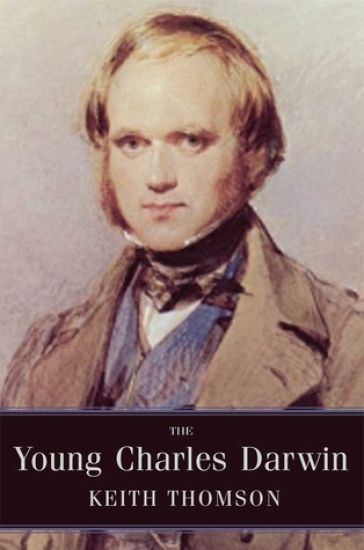
An investigation of Charles Darwin as a young naturalist and how he arrived at his revolutionary ideas What sort of person was the young naturalist who developed an evolutionary idea so logical, so dangerous, that it has dominated biological science for a century and a half? How did the quiet and shy Charles Darwin produce his theory of natural selection when many before him had started down the same path but failed? This book is the first to inquire into the range of influences and ideas, the mentors and rivals, and the formal and informal education that shaped Charles Darwin and prepared him for his remarkable career of scientific achievement. Keith Thomson concentrates on Darwin’s early life as a schoolboy, a medical student at Edinburgh, a theology student at Cambridge, and a naturalist aboard the Beagle on its famous five-year voyage. Closely analyzing Darwin’s Autobiography and scientific notebooks, the author draws a fully human portrait of Darwin for the first time: a vastly erudite and powerfully ambitious individual, self-absorbed but lacking self-confidence, hampered as much as helped by family, and sustained by a passion for philosophy and logic. Thomson’s account of the birth and maturing of Darwin’s brilliant theory is fascinating for the way it reveals both his genius as a scientist and the human foibles and weaknesses with which he mightily struggled.
A distinguished scholar urges scientists and religious thinkers to become colleagues rather than adversaries in areas where their fields overlap “Refreshingly modest and nondogmatic. . . . Brims with lively anecdotes.”—John Horgan, Wall Street Journal Each age has its own crisis—our modern experience of science-religion conflict is not so very different from that experienced by our forebears, Keith Thomson proposes in this thoughtful book. He considers the ideas and writings of Thomas Jefferson and Charles Darwin, two men who struggled mightily to reconcile their religion and their science, then looks to more recent times when scientific challenges to religion (evolutionary theory, for example) have given rise to powerful political responses from religious believers. Today as in the eighteenth century, there are pressing reasons for members on each side of the religion-science debates to find common ground, Thomson contends. No precedent exists for shaping a response to issues like cloning or stem cell research, unheard of fifty years ago, and thus the opportunity arises for all sides to cooperate in creating a new ethics for the common good.
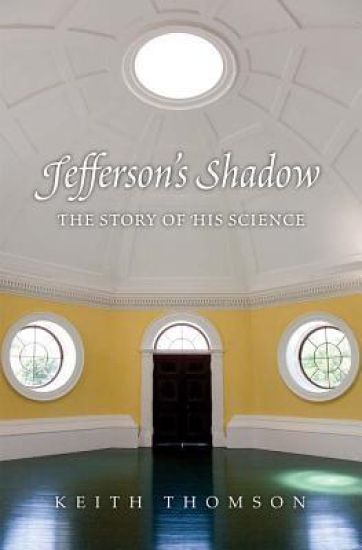
A unique account of Thomas Jefferson’s passion for science, the influence of science on his vision for America, and the amazing extent of his scientific contributions In the voluminous literature on Thomas Jefferson, little has been written about his passionate interest in science. This new and original study of Jefferson presents him as a consummate intellectual whose view of science was central to both his public and his private life. Keith Stewart Thomson reintroduces us in this remarkable book to Jefferson’s eighteenth-century world and reveals the extent to which Jefferson used science, thought about it, and contributed to it, becoming in his time a leading American scientific intellectual. With a storyteller’s gift, Thomson shows us a new side of Jefferson. He answers an intriguing series of questions—How was Jefferson’s view of the sciences reflected in his political philosophy and his vision of America’s future? How did science intersect with his religion? Did he make any original contributions to scientific knowledge?—and illuminates the particulars of Jefferson’s scientific endeavors. Thomson discusses Jefferson’s theories that have withstood the test of time, his interest in the practical applications of science to societal problems, his leadership in the use of scientific methods in agriculture, and his contributions toward launching at least four sciences in America: geography, paleontology, climatology, and scientific archaeology. A set of delightful illustrations, including some of Jefferson’s own sketches and inventions, completes this impressively researched book.
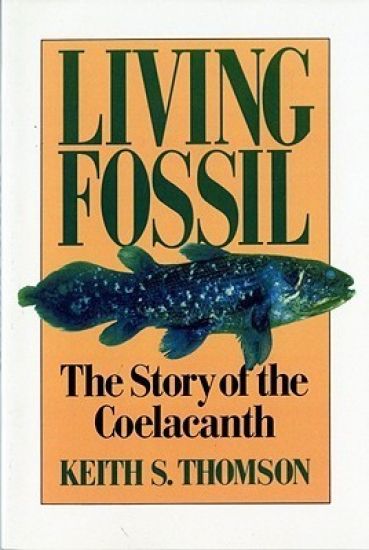
The story of the discovery of a coelacanth, a fish thought to be extinct for seventy million years, and its study by an eccentric icthyologist is dramatically presented in a work that discusses the specie's habits, habitat, number, diet, reproduction, and more
"He knows you, long before you see him if at all, before he comes soundlessly white teeth, like the bones he exposes and cleans with such precision." Drenched in sadness and snow, the poems that make up Stewart's second collection have the running theme of tragic heart ache and pain. Set in a landscape of bleak and cold winter, Stewart lays open his soul once again and sees himself and his actions through the eyes of a terrifying central character, the wolf-ghost. This is a brutal and hard journey to undertake with him, his shocking desires of death and violence are entwined with the reader as witness to horrific acts born out of self loathing, bitterness and above all the blame for worlds falling apart. Following on from his first collection of poems "We Are Weapon", Stewart presents an even harder read with "The Wolf-Ghost", dark and often disturbing Stewart writes of ruin and hopelessness in the blackest hours of the long nights of winter.
Title: Narrative of the Second Campaign in China.Publisher: British Library, Historical Print EditionsThe British Library is the national library of the United Kingdom. It is one of the world's largest research libraries holding over 150 million items in all known languages and formats: books, journals, newspapers, sound recordings, patents, maps, stamps, prints and much more. Its collections include around 14 million books, along with substantial additional collections of manuscripts and historical items dating back as far as 300 BC.The HISTORY OF ASIA collection includes books from the British Library digitised by Microsoft. This series includes ethnographic and general histories of distinct peripheral coastal regions that comprise South and East Asia. Other works focus on cultural history, archaeology, and linguistics. These books help readers understand the forces that shaped the ancient civilisations and influenced the modern countries of Asia. ++++The below data was compiled from various identification fields in the bibliographic record of this title. This data is provided as an additional tool in helping to insure edition identification: ++++ British Library Mackenzie, Keith Stewart; 1842. 12 . ORW.1986.a.3648
Keith Stewart, already in his early forties and discontent with New York’s corporate grind, moved upstate and started a one-man organic farm in 1986. Today, having surmounted the seemingly endless challenges to succeeding as an organic farmer, Keith employs seven to eight seasonal interns and provides 100 varieties of fresh produce to the shoppers and chefs who flock twice weekly, May to December, to his stand at Union Square Greenmarket in Manhattan—the only place where his produce is sold. It’s a Long Road to a Tomato opens a window into the world of Keith’s Farm, with essays on Keith’s development as a farmer, the nuts and bolts of organic farming for an urban market, farm animals domestic and wild, and the political, social, and environmental issues relevant to agriculture today—and their impact on all of us.
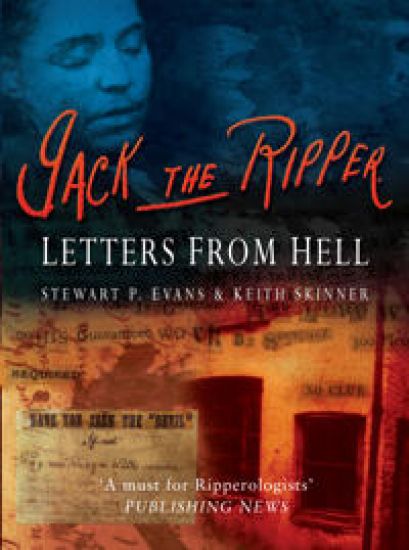
This is the first publication of the 208 surviving letters, all allegedly from the killer with all the key letters reproduced for the first time in colour. It will allow the reader to solve the Ripper mystery by comparing handwriting.
Presenting conclusions garnered from a careful survey of all the documents associated with Jack the Ripper--including the gore-spattered letters written by the killer--the authors offers a thorough examination of the compelling serial murder case. Reprint.
A precise and accessible presentation of linear model theory, illustrated with data examples Statisticians often use linear models for data analysis and for developing new statistical methods. Most books on the subject have historically discussed univariate, multivariate, and mixed linear models separately, whereas Linear Model Theory: Univariate, Multivariate, and Mixed Models presents a unified treatment in order to make clear the distinctions among the three classes of models. Linear Model Theory: Univariate, Multivariate, and Mixed Models begins with six chapters devoted to providing brief and clear mathematical statements of models, procedures, and notation. Data examples motivate and illustrate the models. Chapters 7-10 address distribution theory of multivariate Gaussian variables and quadratic forms. Chapters 11-19 detail methods for estimation, hypothesis testing, and confidence intervals. The final chapters, 20-23, concentrate on choosing a sample size. Substantial sets of excercises of varying difficulty serve instructors for their classes, as well as help students to test their own knowledge. The reader needs a basic knowledge of statistics, probability, and inference, as well as a solid background in matrix theory and applied univariate linear models from a matrix perspective. Topics covered include: A review of matrix algebra for linear modelsThe general linear univariate modelThe general linear multivariate modelGeneralizations of the multivariate linear modelThe linear mixed modelMultivariate distribution theoryEstimation in linear modelsTests in Gaussian linear modelsChoosing a sample size in Gaussian linear models Filling the need for a text that provides the necessary theoretical foundations for applying a wide range of methods in real situations, Linear Model Theory: Univariate, Multivariate, and Mixed Models centers on linear models of interval scale responses with finite second moments. Models with complex predictors, complex responses, or both, motivate the presentation.