Kirjojen hintavertailu. Mukana 11 244 527 kirjaa ja 12 kauppaa.

Kirjahaku

Etsi kirjoja tekijän nimen, kirjan nimen tai ISBN:n perusteella.

1000 tulosta hakusanalla Keith Tudor

Transactional Analysis Proper—and Improper

Transactional Analysis Proper—and Improper

Keith Tudor

TAYLOR FRANCIS LTD
2024
sidottu
Transactional Analysis Proper—and Improper: Selected and New Papers offers a critical reading of transactional analysis (TA), which analyses, deconstructs, and reconstructs its foundational theory.Keith Tudor’s work is detailed, informative, and critical, and written with deep affection for TA and its founder, Eric Berne. Beginning with its philosophical foundations, Tudor considers TA’s ontological assumptions about the essence of human beings, its method and methodology, and its treatment philosophy. A series of chapters then review and advance TA’s theory of transactions, ego states, life scripts, and psychological games, and the book concludes with two chapters which both honor TA’s traditions and look forward to what TA might do differently.This book offers a unique ‘insider but independent’ perspective on transactional analysis. It will be essential reading for students and practitioners of transactional analysis and encourages free, independent, and critical thinking about TA and its place in the world.
Transactional Analysis Proper—and Improper

Transactional Analysis Proper—and Improper

Keith Tudor

TAYLOR FRANCIS LTD
2024
nidottu
Transactional Analysis Proper—and Improper: Selected and New Papers offers a critical reading of transactional analysis (TA), which analyses, deconstructs, and reconstructs its foundational theory.Keith Tudor’s work is detailed, informative, and critical, and written with deep affection for TA and its founder, Eric Berne. Beginning with its philosophical foundations, Tudor considers TA’s ontological assumptions about the essence of human beings, its method and methodology, and its treatment philosophy. A series of chapters then review and advance TA’s theory of transactions, ego states, life scripts, and psychological games, and the book concludes with two chapters which both honor TA’s traditions and look forward to what TA might do differently.This book offers a unique ‘insider but independent’ perspective on transactional analysis. It will be essential reading for students and practitioners of transactional analysis and encourages free, independent, and critical thinking about TA and its place in the world.
Mental Health Promotion

Mental Health Promotion

Keith Tudor

Routledge
1995
nidottu
Mental health promotion is an emerging field of interest to many health professionals. This book traces its history, defines it and distinguishes it from mental illness prevention. Mental health is viewed as a positive concept and seperate from mental illness and psychopathology. Based on original research, the conceptual analysis developed in the book offers policy makers and practitioners a coherent and comprehensive framework within which to design and implement practice. Mental Health Promotion: * offers a new conceptual paradigm for mental health promotion * applies it to policy, assessment, consultation, education and training * provides a comprehensive, international literature review Suitable for a wide variety of courses at student and professional level in psychiatry, nursing, social work and community work, Mental Health Promotion is a significant addition to the study of health promotion.
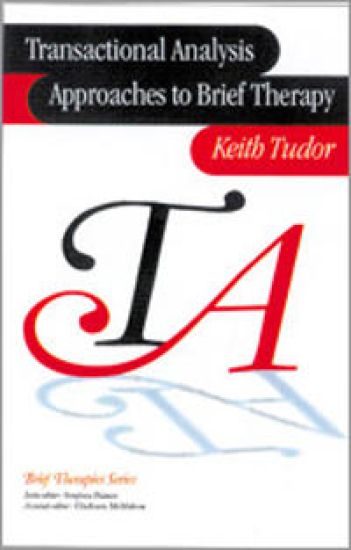
Transactional Analysis Approaches to Brief Therapy
`This book, edited by Keith Tudor (who is also one of the ten contributors) is excellent reading for a number of reasons: for those who know nothing about TA, it is a highly informative and readily accessible introduction. For those who read or studied it some time ago, it is an excellent refresher. I am impressed by the diversity of people and applications of TA, and the developments outlined in this book are, certainly for me, cause for hope because, as well as offering frameworks for making 'simple' sense of humans in action – and human inaction – TA is a complex and profound system that offers people a way of solving the problems of the present, re-evaluating the struggles of the past, and reshaping the future with permission and power based on a greater sense of self' - Nurturing Potential `I wholeheartedly recommend this book to all therapists as enriching and interesting reading' - European Association for Transactional Analysis Newsletter `It is a book which would offer helpful introductions to both the practice of transactional analysis, and the attitude needed when planning brief therapy of any kind' - The Jounal of Analytical Psychology Of all the approaches to therapy, transactional analysis is arguably one of those most suited to time-limited work. At a time when short-term therapy is increasingly dominant as a form of practice, Transactional Analysis Approaches to Brief Therapy provides an insightful guide which both informs and challenges. Rather than a single theory, TA has developed as a group of four schools which share a common philosophy, but place different emphasis on what occurs during the therapeutic process. Written by therapists at the leading edge of developments in TA, the book presents and differentiates each of these four approaches. Through transcripts and commentaries, it shows how theory applies to practice, for example in treating post-traumatic stress or in achieving a one-session cure. The book also includes a useful glossary of TA terms, as well as an appendix of Eric Berne's short script-questionnaire. In some ways critical of the zeitgeist of short-termism and the commercial pressures for therapy to be brief, the book seeks a balance between the challenge TA offers as an actionistic approach to quick and efficient therapy and the importance of relationship in therapy which is time-conscious. It will be enlightening reading for all those training and those already trained as therapists and counsellors in TA.
Transactional Analysis Approaches to Brief Therapy
`This book, edited by Keith Tudor (who is also one of the ten contributors) is excellent reading for a number of reasons: for those who know nothing about TA, it is a highly informative and readily accessible introduction. For those who read or studied it some time ago, it is an excellent refresher. I am impressed by the diversity of people and applications of TA, and the developments outlined in this book are, certainly for me, cause for hope because, as well as offering frameworks for making 'simple' sense of humans in action – and human inaction – TA is a complex and profound system that offers people a way of solving the problems of the present, re-evaluating the struggles of the past, and reshaping the future with permission and power based on a greater sense of self' - Nurturing Potential `I wholeheartedly recommend this book to all therapists as enriching and interesting reading' - European Association for Transactional Analysis Newsletter `It is a book which would offer helpful introductions to both the practice of transactional analysis, and the attitude needed when planning brief therapy of any kind' - The Jounal of Analytical Psychology Of all the approaches to therapy, transactional analysis is arguably one of those most suited to time-limited work. At a time when short-term therapy is increasingly dominant as a form of practice, Transactional Analysis Approaches to Brief Therapy provides an insightful guide which both informs and challenges. Rather than a single theory, TA has developed as a group of four schools which share a common philosophy, but place different emphasis on what occurs during the therapeutic process. Written by therapists at the leading edge of developments in TA, the book presents and differentiates each of these four approaches. Through transcripts and commentaries, it shows how theory applies to practice, for example in treating post-traumatic stress or in achieving a one-session cure. The book also includes a useful glossary of TA terms, as well as an appendix of Eric Berne's short script-questionnaire. In some ways critical of the zeitgeist of short-termism and the commercial pressures for therapy to be brief, the book seeks a balance between the challenge TA offers as an actionistic approach to quick and efficient therapy and the importance of relationship in therapy which is time-conscious. It will be enlightening reading for all those training and those already trained as therapists and counsellors in TA.
Group Counselling

Group Counselling

Keith Tudor

SAGE Publications Ltd
1999
sidottu
`Group Counselling is an exceptionally practical and useful guide for anyone involved, or anticipating involvement, in groupwork' - Clive Lloyd, Therapeutic Communities This book provides a comprehensive examination of theories and concepts relating to group counselling and shows how differing theoretical frameworks can be used as a basis for practice. Organized around the counselling process, the book considers the practicalities of establishing and running a group, raising awareness of its life cycle, its cultural location and many other diverse issues. Special emphasis is placed on the importance of therapeutic attitudes and philosophies as a basis for practice, and humanistic and existential approaches to group counselling are given particular attention. The author encourages readers to be aware of their conceptual framework and how it influences their work.
Group Counselling

Group Counselling

Keith Tudor

SAGE Publications Ltd
1999
nidottu
`Group Counselling is an exceptionally practical and useful guide for anyone involved, or anticipating involvement, in groupwork' - Clive Lloyd, Therapeutic Communities This book provides a comprehensive examination of theories and concepts relating to group counselling and shows how differing theoretical frameworks can be used as a basis for practice. Organized around the counselling process, the book considers the practicalities of establishing and running a group, raising awareness of its life cycle, its cultural location and many other diverse issues. Special emphasis is placed on the importance of therapeutic attitudes and philosophies as a basis for practice, and humanistic and existential approaches to group counselling are given particular attention. The author encourages readers to be aware of their conceptual framework and how it influences their work.
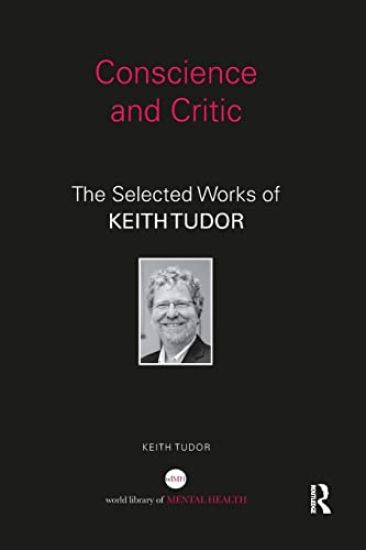
Conscience and Critic

Conscience and Critic

Keith Tudor

Routledge
2018
nidottu
Conscience and Critic: The Selected Works of Keith Tudor brings together 35 years of Keith Tudor’s finest contributions to the field of mental health. Covering a wide range of subjects that encompass psychotherapy, social policy and positive mental health or wellbeing, Keith reflects on practice and theory from his wealth of experience in various fields of practice, including probation, counselling, field, hospital and psychiatric social work, psychotherapy, supervision, and education and training.Over the span of his professional career, Keith’s concerns and contributions have focused on the interface between psyche and society. This is reflected in his writings on the politics of disability, mental health reform, class-conscious therapeutic practice, the application and critique of theory, health and professional regulation and registration.Conscience and Critic will be of interest to psychotherapists and mental health practitioners, as well as students of psychotherapy.
Conscience and Critic

Conscience and Critic

Keith Tudor

Routledge
2016
sidottu
Conscience and Critic: The Selected Works of Keith Tudor brings together 35 years of Keith Tudor’s finest contributions to the field of mental health. Covering a wide range of subjects that encompass psychotherapy, social policy and positive mental health or wellbeing, Keith reflects on practice and theory from his wealth of experience in various fields of practice, including probation, counselling, field, hospital and psychiatric social work, psychotherapy, supervision, and education and training.Over the span of his professional career, Keith’s concerns and contributions have focused on the interface between psyche and society. This is reflected in his writings on the politics of disability, mental health reform, class-conscious therapeutic practice, the application and critique of theory, health and professional regulation and registration.Conscience and Critic will be of interest to psychotherapists and mental health practitioners, as well as students of psychotherapy.
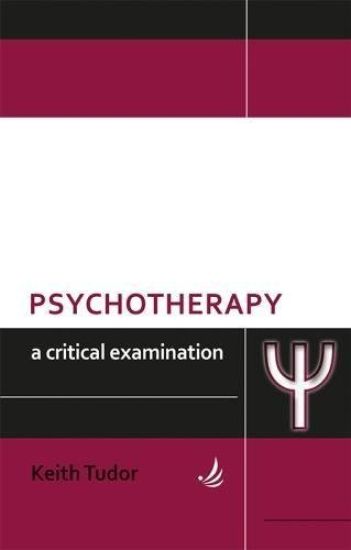
Psychotherapy: A critical examination
The aim of the series is to subject the varied psy professions to rigorous critique by leading proponents in their fields. In this book, internationally acknowledges academic and psychotherapist, teacher and supervisor Keith Tudor focuses his spotlight on psychotherapy.
Person-Centred Therapy

Person-Centred Therapy

Keith Tudor; Mike Worrall

Routledge
2006
sidottu
The person-centred approach is one of the most popular, enduring and respected approaches to psychotherapy and counselling. Person-Centred Therapy returns to its original formulations to define it as radically different from other self-oriented therapies.Keith Tudor and Mike Worrall draw on a wealth of experience as practitioners, a deep knowledge of the approach and its history, and a broad and inclusive awareness of other approaches. This significant contribution to the advancement of person-centred therapy:Examines the roots of person-centred thinking in existential, phenomenological and organismic philosophy.Locates the approach in the context of other approaches to psychotherapy and counselling.Shows how recent research in areas such as neuroscience support the philosophical premises of person-centred therapy.Challenges person-centred therapists to examine their practice in the light of the history and philosophical principles of the approach.Person-Centred Therapy offers new and exciting perspectives on the process and practice of therapy, and will encourage person-centred practitioners to think about their work in deeper and more sophisticated ways.
Person-Centred Therapy

Person-Centred Therapy

Keith Tudor; Mike Worrall

Routledge
2006
nidottu
The person-centred approach is one of the most popular, enduring and respected approaches to psychotherapy and counselling. Person-Centred Therapy returns to its original formulations to define it as radically different from other self-oriented therapies.Keith Tudor and Mike Worrall draw on a wealth of experience as practitioners, a deep knowledge of the approach and its history, and a broad and inclusive awareness of other approaches. This significant contribution to the advancement of person-centred therapy:Examines the roots of person-centred thinking in existential, phenomenological and organismic philosophy.Locates the approach in the context of other approaches to psychotherapy and counselling.Shows how recent research in areas such as neuroscience support the philosophical premises of person-centred therapy.Challenges person-centred therapists to examine their practice in the light of the history and philosophical principles of the approach.Person-Centred Therapy offers new and exciting perspectives on the process and practice of therapy, and will encourage person-centred practitioners to think about their work in deeper and more sophisticated ways.
Dictionary of Person-centred Psychology

Dictionary of Person-centred Psychology

Keith Tudor; Tony Merry

PCCS Books
2006
nidottu
This dictionary provides a comprehensive guide to key concepts in person-centred psychology. Whilst the person-centred approach to counselling and psychotherapy is one of the most popular today, it is also widely misunderstood. Definitions in this dictionary clarify concepts fundamental to the approach, summarise key and current debates within the approach, and, with extensive referencing, provide starting points for further study. Further entries also emphasise the relationship between the person-centred and other approaches to psychology, as well as the social and cultural context of therapy. The book also includes entries on terms which have particular meaning within the person-centred approach. This is an essential resource for all those wanting to understand the history of current developments within person-centred psychology.
The Person-Centred Approach

The Person-Centred Approach

Louise Embleton Tudor; Keemar Keemar; Keith Tudor; Joanna Valentine; Mike Worrall

BLOOMSBURY PUBLISHING PLC
2004
nidottu
In this essential text, the highly regarded Temenos team present a new introduction to the person-centred approach for the Twenty-first-century. Giving a broad and unbiased account, they illustrate how the approach has developed since the death of Carl Rogers and explore how the person-centred philosophy can be an effective working model for both counselling and psychotherapy and for understanding, living and working in a complex contemporary world. The Person-Centred Approach is essential reading for trainees, whether new to counselling or more experienced, and is a vital resource for practitioners wishing to keep at the forefront of the latest developments in the field.
Co-Creative Transactional Analysis

Co-Creative Transactional Analysis

Graeme Summers; Keith Tudor

Routledge
2019
sidottu
Co-creative transactional analysis is an approach to a particular branch of psychology which, as the phrase suggests, emphasises the "co-" (mutual, joint) aspect of professional relationships, whether therapeutic, educative and/or consultative - and, by implication, of personal relationships. The "co-" of co-creative acknowledges the transactional, inter-relational, mutual, joint, and co-operative, as well as partnership. Developed by the authors over some fifteen years, the co-creative approach has found a resonance not only amongst psychotherapists, but also educationalists, consultants and coaches. The book itself represents and reflects the co-creative approach in that it is based on a critical dialogue between the authors themselves about their collaborative and independent work, as well as between invited contributors and the authors.
Eco-Centred Therapy

Eco-Centred Therapy

Bernie Neville; Keith Tudor

TAYLOR FRANCIS LTD
2023
sidottu
Offering a much-needed update of Rogerian theory and practice, and based on insights from cultural studies and ecopsychology, this book breaks new ground by questioning the relevance of certain ways of thinking about counselling and psychotherapy not least in the current planetary emergency.In response to the growing need for therapists to address increasing anxieties about the climate crisis, Bernie Neville and Keith Tudor address the issue in terms that help therapists reflect on their practice. Based on the authors’ previous publications and incorporating new material, this book presents and explores ideas that have been largely neglected in person-centred literature. It re-visions person-centred psychology (PCP) from what has become predominantly its application to individuals to a broader perspective on and about life and the living world. Further, it takes a philosophical and cultural perspective to re-present and re-vision PCP as a 'we' psychology, an eco-psychology, and an eco-therapy.This book will be of interest to those working in the fields of person-centred therapy, ecopsychology, and ecotherapy as well as those involved in the education, training, and supervision of counsellors and psychotherapists.
Eco-Centred Therapy

Eco-Centred Therapy

Bernie Neville; Keith Tudor

TAYLOR FRANCIS LTD
2023
nidottu
Offering a much-needed update of Rogerian theory and practice, and based on insights from cultural studies and ecopsychology, this book breaks new ground by questioning the relevance of certain ways of thinking about counselling and psychotherapy not least in the current planetary emergency.In response to the growing need for therapists to address increasing anxieties about the climate crisis, Bernie Neville and Keith Tudor address the issue in terms that help therapists reflect on their practice. Based on the authors’ previous publications and incorporating new material, this book presents and explores ideas that have been largely neglected in person-centred literature. It re-visions person-centred psychology (PCP) from what has become predominantly its application to individuals to a broader perspective on and about life and the living world. Further, it takes a philosophical and cultural perspective to re-present and re-vision PCP as a 'we' psychology, an eco-psychology, and an eco-therapy.This book will be of interest to those working in the fields of person-centred therapy, ecopsychology, and ecotherapy as well as those involved in the education, training, and supervision of counsellors and psychotherapists.
Ecotherapy

Ecotherapy

David Key; Keith Tudor

KARNAC BOOKS
2023
pokkari
Ecotherapy: A Field Guide presents an extensive review of the field of ecotherapy that unearths a number of ambiguities in the way this therapy is understood and described. The review explores six themes derived from a critical analysis of the findings: human and nature; therapy and therapeutic; wilderness and wild; physical and meta-physical; culture and indigeneity; and the skin-bound self and the ecological Self. Throughout their exploration, the authors privilege traditions which predate the modern interest in this subject. They propose a new metatheory for ecotherapy practice that aims to bring some cohesion to the field, honour its heritage, and support its future development. Ultimately, the guide argues that great care should be taken in how ecotherapy is practiced and described, as many of the terms currently being used are culturally inappropriate and therapeutically counterproductive.
Mental Health Promotion

Mental Health Promotion

Tudor Keith

TAYLOR FRANCIS LTD
1995
sidottu
Mental health promotion is an emerging field of interest to many health professionals. This book traces its history, defines it and distinguishes it from mental illness prevention. Mental health is viewed as a positive concept and seperate from mental illness and psychopathology. Based on original research, the conceptual analysis developed in the book offers policy makers and practitioners a coherent and comprehensive framework within which to design and implement practice. Mental Health Promotion: * offers a new conceptual paradigm for mental health promotion * applies it to policy, assessment, consultation, education and training * provides a comprehensive, international literature review Suitable for a wide variety of courses at student and professional level in psychiatry, nursing, social work and community work, Mental Health Promotion is a significant addition to the study of health promotion.