Kirjahaku
Etsi kirjoja tekijän nimen, kirjan nimen tai ISBN:n perusteella.
1000 tulosta hakusanalla Kellee McCoy
Creating Effective Post-Conflict Transition Organizations
Kellie J McCoy
Hutson Street Press
2025
sidottu
Creating Effective Post-Conflict Transition Organizations
Kellie J McCoy
Hutson Street Press
2025
pokkari
Farming Across Borders
Timothy P. Bowman; Kristin Hoganson; Laura Hooton; Josh MacFadyen; Todd Meyers; Peter S Morris; Andrew Dunlop; Alicia Marion Dewey; John Weber; Sonia Hernandez; Rosa E Cobos; Matt Caire-Perez; Paige Raibmon; Jason McCollom; Thomas D Isern; Suzzanne Kelley; Anthony Carlson; Stephen Mumme; Tisa Anders
Texas A M University Press
2017
sidottu
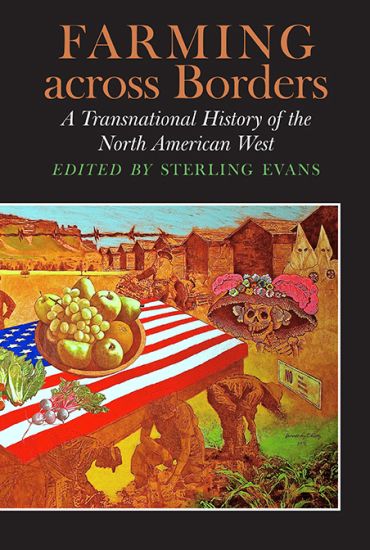
Farming across Borders uses agricultural history to connect the regional experiences of the American West, northern Mexico, western Canada, and the North American side of the Pacific Rim, now writ large into a broad history of the North American West. Case studies of commodity production and distribution, trans-border agricultural labor, and environmental change unite to reveal new perspectives on a historiography traditionally limited to a regional approach.Sterling Evans has curated nineteen essays to explore the contours of “big” agricultural history. Crops and commodities discussed include wheat, cattle, citrus, pecans, chiles, tomatoes, sugar beets, hops, henequen, and more. Toiling over such crops, of course, were the people of the North American West, and as such, the contributing authors investigate the role of agricultural labor, from braceros and Hutterites to women working in the sorghum fields and countless other groups in between.As Evans concludes, “society as a whole (no matter in what country) often ignores the role of agriculture in the past and the present.” Farming across Borders takes an important step toward cultivating awareness and understanding of the agricultural, economic, and environmental connections that loom over the North American West regardless of lines on a map. In the words of one essay, “we are tied together . . . in a hundred different ways.”

Live Cadaver: The True Story Of Kellee Kendell And Scandalous Treachery In The Medical Community
Phyllis Marks Jd; Kellee Kendell
Kellee Kendell
2005
nidottu
From Fear to Faith in 30 Days
Kellee Southern; Apostle Veryl Howard; Jamytta Bell
Angel B. Enterprises LLC
2015
pokkari
Over the past three decades, China has undergone a historic transformation. Once illegal, its private business sector now comprises 30 million businesses employing more than 200 million people and accounting for half of China's Gross Domestic Product. Yet despite the optimistic predictions of political observers and global business leaders, the triumph of capitalism has not led to substantial democratic reforms. In Capitalism without Democracy, Kellee S. Tsai focuses on the activities and aspirations of the private entrepreneurs who are driving China's economic growth. The famous images from 1989 of China's new capitalists supporting the students in Tiananmen Square are, Tsai finds, outdated and misleading. Chinese entrepreneurs are not agitating for democracy. Most are working eighteen-hour days to stay in business, while others are saving for their one child's education or planning to leave the country. Many are Communist Party members. "Remarkably," Tsai writes, "most entrepreneurs feel that the system generally works for them." Tsai regards the quotidian activities of Chinese entrepreneurs as subtler and possibly more effective than voting, lobbying, and protesting in the streets. Indeed, major reforms in China's formal institutions have enhanced the private sector's legitimacy and security in the absence of mobilization by business owners. In discreet collaboration with local officials, entrepreneurs have created a range of adaptive informal institutions, which in turn, have fundamentally altered China's political and regulatory landscape. Based on years of research, hundreds of field interviews, and a sweeping nationwide survey of private entrepreneurs funded by the National Science Foundation, Capitalism without Democracy explodes the conventional wisdom about the relationship between economic liberalism and political freedom.
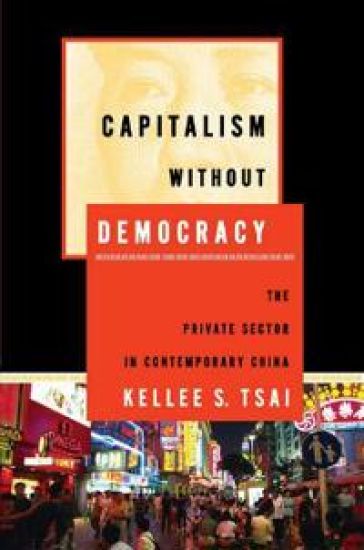
Over the past three decades, China has undergone a historic transformation. Once illegal, its private business sector now comprises 30 million businesses employing more than 200 million people and accounting for half of China's Gross Domestic Product. Yet despite the optimistic predictions of political observers and global business leaders, the triumph of capitalism has not led to substantial democratic reforms. In Capitalism without Democracy, Kellee S. Tsai focuses on the activities and aspirations of the private entrepreneurs who are driving China's economic growth. The famous images from 1989 of China's new capitalists supporting the students in Tiananmen Square are, Tsai finds, outdated and misleading. Chinese entrepreneurs are not agitating for democracy. Most are working eighteen-hour days to stay in business, while others are saving for their one child's education or planning to leave the country. Many are Communist Party members. "Remarkably," Tsai writes, "most entrepreneurs feel that the system generally works for them." Tsai regards the quotidian activities of Chinese entrepreneurs as subtler and possibly more effective than voting, lobbying, and protesting in the streets. Indeed, major reforms in China's formal institutions have enhanced the private sector's legitimacy and security in the absence of mobilization by business owners. In discreet collaboration with local officials, entrepreneurs have created a range of adaptive informal institutions, which in turn, have fundamentally altered China's political and regulatory landscape. Based on years of research, hundreds of field interviews, and a sweeping nationwide survey of private entrepreneurs funded by the National Science Foundation, Capitalism without Democracy explodes the conventional wisdom about the relationship between economic liberalism and political freedom.
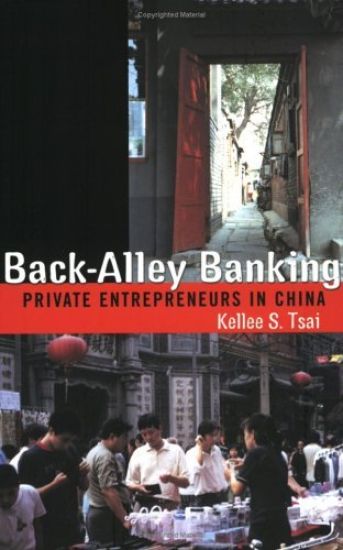
Chinese entrepreneurs have founded more than thirty million private businesses since Beijing instituted economic reforms in the late 1970s. Most of these private ventures, however, have been denied access to official sources of credit. State banks continue to serve state-owned enterprises, yet most private financing remains illegal. How have Chinese entrepreneurs managed to fund their operations? In defiance of the national banking laws, small business owners have created a dizzying variety of informal financing mechanisms, including rotating credit associations and private banks disguised as other types of organizations. Back-Alley Banking includes lively biographical sketches of individual entrepreneurs; telling quotations from official documents, policy statements, and newspaper accounts; and interviews with a wide variety of women and men who give vivid narratives of their daily struggles, accomplishments, and hopes for future prosperity. Kellee S. Tsai's book draws upon her unparalleled fieldwork in China's world of shadow finance to challenge conventional ideas about the political economy of development. Business owners in China, she shows, have mobilized local social and political resources in innovative ways despite the absence of state-directed credit or a well-defined system of private property rights. Entrepreneurs and local officials have been able to draw on the uncertainty of formal political and economic institutions to enhance local prosperity.

INTEGRATION is a multi-sensory experience, presented as an illustrated book of lyrics selected from Kellee Maize's most-downloaded albums. INTEGRATION is a hardcover gift book with 4-color photographs and graphic elements throughout, to enhance the message of the lyrics. Appealing to the social media Facebook Generation, Kellee's poetic rap is grounded in feminist spirituality, and is a new voice in today's evolving hip hop world. Her take on life is that we are all made of the same energy and therefore are one, that we are standing on the brink of realizing our oneness...and that music and art will usher in this peaceful revolution.
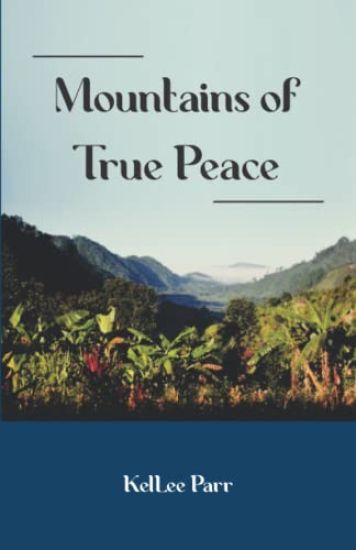
The True Story of a Young Man's Journey in Guatemala"About twenty miles from the border, we noticed cars being pulled over to the side of the road. There were several armed men in military camouflage clothing out in the road, stopping traffic. We were terrified especially after the accusation and warning at the customs office." KelLee Parr tells his story as he accompanied four other young college graduates on their three-year volunteer service with Mennonite Central Committee. The five drove two pickup trucks from Pennsylvania to Guatemala to start their work with the indigenous people. They observed first hand one of the most trying times during the civil war in Guatemala. This book, a part of a series, covers the first nine months of the lifechanging experiences from the fall of 1979 until the summer of 1982. The story reveals the intimate dealings with culture shock, new awareness of others less fortunate, and introspective understanding of who are true Christian servants.

For over a hundred years they've been told there is nothing beyond the wall but death and despair. And no one has wanted to leave... until now.Sadie Keane struggled daily with the laws that have been put in place since the wall was built. Unfortunately, as a sworn officer of the law, not to mention the president of the city's daughter, she has no choice but to uphold them. But when Sadie learns about a secret exit from the city, all she can think about is leaving to find her friends who were banished by her father. Will Sadie risk everything to find life in the world of death and destruction beyond the wall? And if she leaves will she ever be able to return?- - -The Wall is the first book in a new series set in the Ravaged Land world. You do not need to have read the Ravaged Land or Ravaged Land: Divided series to enjoy this one but each book within a series but be read in order.



When there is more to be afraid of than just the dark.After the creatures destroyed everything and took countless lives, Lucy and her friends were left with what remained of her childhood home. With everything taken away, they didn't know how they were going to make it on their own.When they decide to strike out in search of help, they soon find out that they aren't the only ones working to survive in the devastation left by the creatures that still roam the night. The group quickly learns the lengths they'll need to go to if they hope to survive the new world.Will they have what it takes to make it in a world filled with nothing but evil?Grab the thrilling conclusion to Creatures today